Source Daily Wear Evil Eye Necklace for wedding, party, and gift
Compare 30 listings of Daily Wear Evil Eye Necklace featuring stainless steel, cubic zirconia, and various chain lengths. Buyers can evaluate gold and silver options suitable for wedding, anniversary, and daily occasions with customizable designs.
Key considerations
Products List
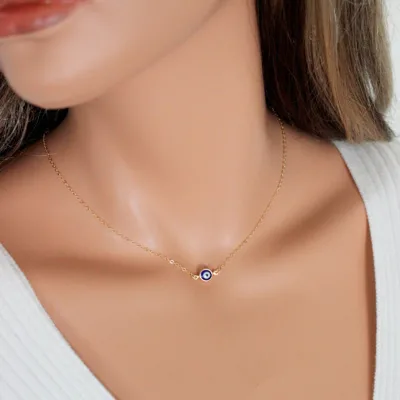
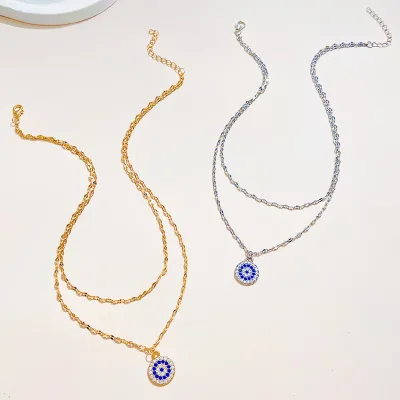
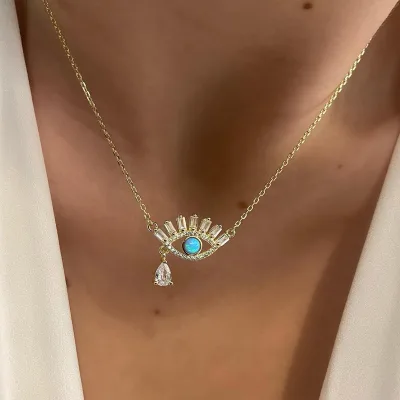
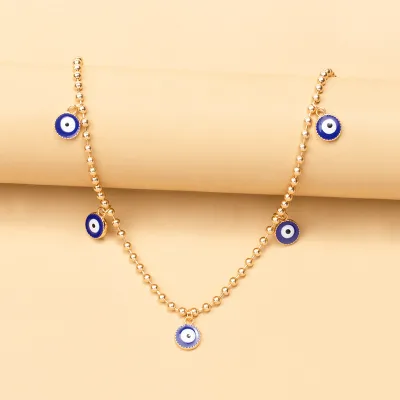
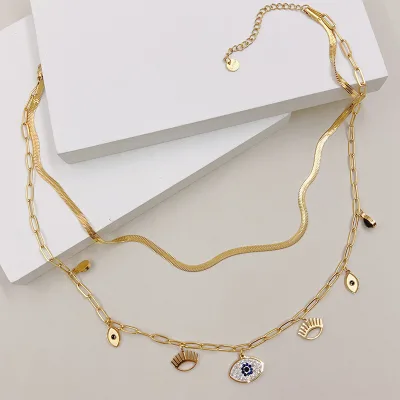
Fashion Pendant Necklaces Women Double-Layer Gold-Plated Evil Eye Necklace
$0.35 - $0.52
MOQ: 10 pieces
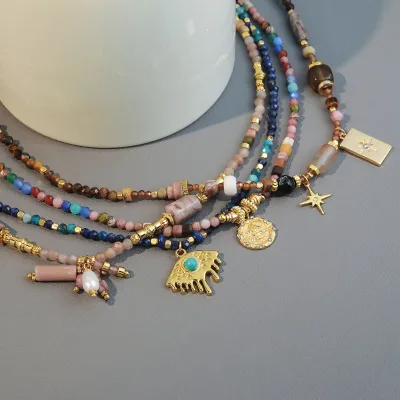
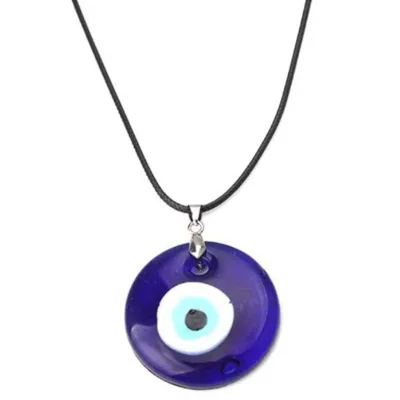





Comprehensive Sourcing Guide
Strategic Sourcing Guide for Daily Wear Evil Eye Necklaces
Understanding Product Specifications and Design Variations
When sourcing daily wear evil eye necklaces, buyers must first navigate a complex landscape of technical specifications that define the physical characteristics of the product. The core keyword implies a specific aesthetic—protective symbolism often rendered in metallic finishes—but the actual market offerings vary significantly in dimensions, materials, and construction. Based on observed market data, the physical length of these necklaces is not uniform. Buyers will encounter products ranging from specific measurements like 16+2 inches and 18 inches to metric equivalents such as 41-50 cm, 43.4+5 cm, and 41 cm+5 cm. Some listings indicate a "free size" or adjustable lengths like 50+5 cm, while others specify a fixed 45 cm. This variance necessitates a clear definition of requirements before engaging with suppliers, as the "daily wear" designation often correlates with adjustable chains to accommodate different necklines and body types.
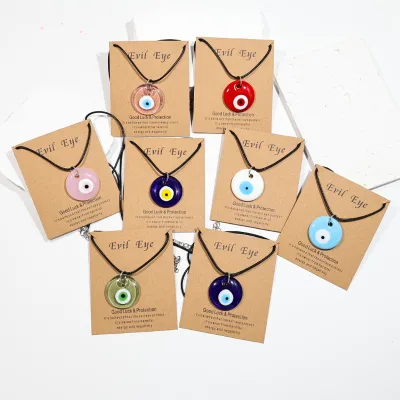
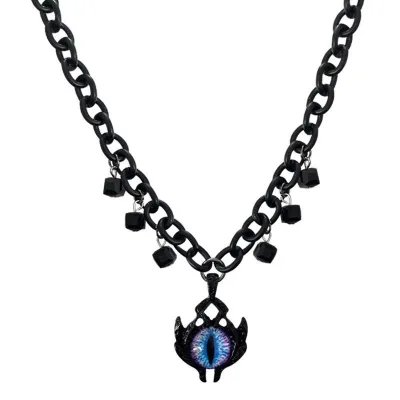
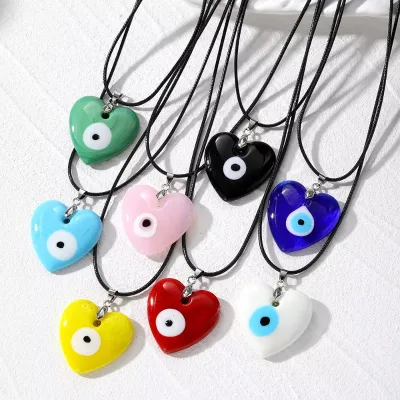
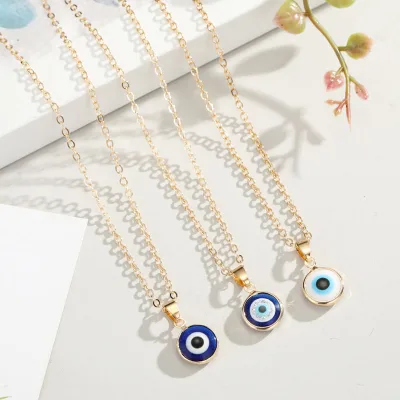
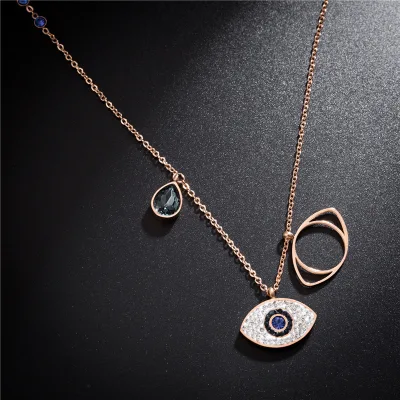
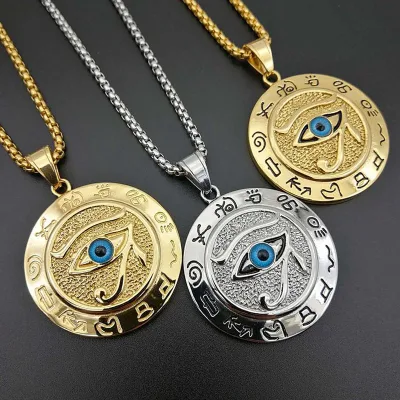
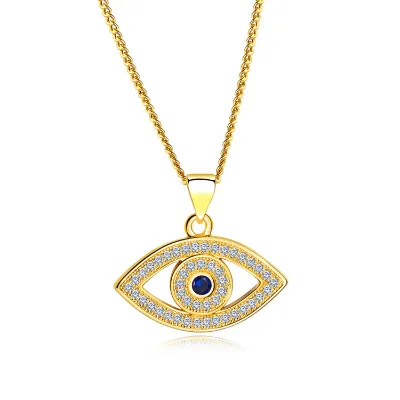
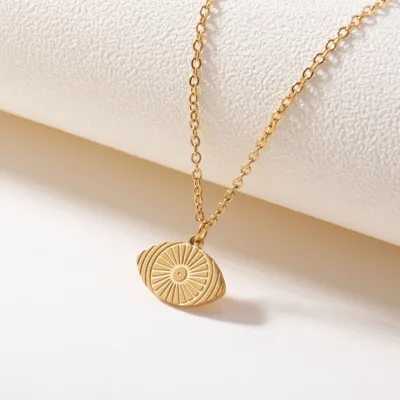
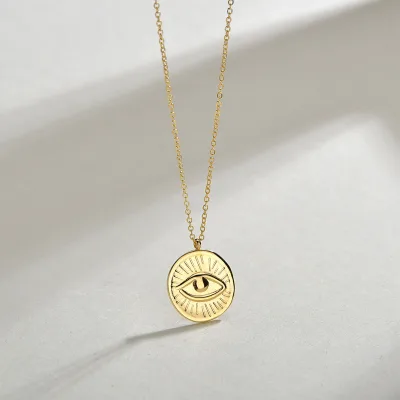
The visual identity of the evil eye motif is equally diverse. The design attributes observed include "Popularity," "Trendy," "Vintage," and "Unique 3D Design." These descriptors suggest that the market offers everything from classic, flat representations to more intricate, dimensional interpretations. The shape pattern is explicitly noted as "eye," confirming the central motif, but the execution varies. Regarding color, the market presents a broad spectrum. Standard metallic options include Gold and Silver, often listed as "C1," "C2," or "C3" in supplier catalogs. More complex colorways include combinations like "Treasure blue with yellow eye," "Clear pink," and "Clear green." Some suppliers list numeric color codes (1 through 8) or specific alphanumeric codes like "01 white k0020" and "02 kc gold 0014." This variety allows buyers to target specific consumer demographics, from those seeking neutral, versatile jewelry to those looking for vibrant, statement pieces.
The material composition is a critical technical factor. The primary material identified in the supply chain is Stainless Steel, which is highly relevant for daily wear due to its durability and resistance to tarnish. The plating is often categorized simply as "Other," implying a need for further verification regarding the specific plating process (e.g., PVD, gold plating, rhodium) to ensure longevity. The jewelry type is consistently classified as "Pendant Necklaces" under the broader "NECKLACES" category. The gender specification is listed as "Unisex," though some entries note suitability specifically for "Female," indicating that marketing and sizing may be tailored differently depending on the target segment.
Compliance, Environmental Standards, and Safety Verification
For buyers in the B2B sector, compliance is not merely a formality but a prerequisite for market access, particularly in regions with strict regulations regarding jewelry materials. The evil eye necklace, being a piece of jewelry worn close to the skin, must adhere to rigorous safety standards. A key observation from the available data is the "Environmental Standard" which explicitly states "No Lead, No Nickel." This is a critical selling point and a compliance baseline. Lead and nickel are common allergens and are heavily regulated in markets like the European Union and North America. The absence of these metals suggests a commitment to hypoallergenic properties, which is essential for "Daily" and "Wedding" occasions where the jewelry is worn for extended periods.
However, buyers must not assume that every listed product automatically meets these standards without verification. The data indicates that while "No Lead, No Nickel" is a stated attribute, it is an observation of specific listings rather than a universal guarantee for all 30 observed products. Therefore, the procurement strategy must include a mandatory request for third-party test reports. Buyers should verify that the "Stainless Steel" used is of a grade that inherently resists corrosion and does not require heavy plating that might chip and expose base metals. The "Custom Logo" feature, which is available via "Laser by Free," introduces another compliance dimension. Laser engraving must be performed in a way that does not compromise the structural integrity of the metal or introduce contaminants.
Furthermore, the "prod_standard" field mentions lengths of "17 inches-19 inches or Customized." While this is a sizing standard, it also implies a level of manufacturing consistency. Buyers should inquire about the quality control protocols used to ensure that the "No Lead, No Nickel" claim holds true across all production batches. The "OEM&ODM" availability suggests that customization is possible, but any custom design or material change must undergo the same rigorous safety testing as the standard offerings. The "Polybags" packing method is standard, but buyers should ensure that the packaging materials themselves do not contain restricted substances that could migrate to the jewelry during storage or transport.
Cost Drivers and Pricing Structure Analysis
The pricing structure for daily wear evil eye necklaces is influenced by several distinct factors, creating a wide observed range of 0.23 to 12 USD. This significant variance is not random but is driven by the interplay of material quality, design complexity, and order volume. The lower end of the price spectrum likely corresponds to basic stainless steel pieces with simple plating and minimal customization. In contrast, the higher end reflects products with "Unique 3D Design," specific color combinations like "Treasure blue with yellow eye," or those featuring "Cubic Zirconia" stones. The inclusion of stones adds material cost and labor intensity, as setting stones requires precision and additional quality checks.
The Minimum Order Quantity (MOQ) is another primary driver of unit cost. The observed MOQ range spans from 2 to 200 units, with specific listings noting an MOQ of 30 PCS. Suppliers offering lower MOQs (e.g., 2 or 30 units) often charge a premium per unit to cover the fixed costs of setup and small-batch production. Conversely, suppliers requiring higher volumes (up to 200 units) can offer more competitive pricing due to economies of scale. Buyers must calculate the total landed cost, which includes the unit price, shipping fees, and any potential tariffs. The "Single gross weight" of 0.020 kg indicates that the items are lightweight, which generally keeps shipping costs manageable, but the "Single package size" of 10x8x3 cm must be considered for logistics planning, especially when shipping large volumes.
Customization is a significant cost variable. While "Custom Logo" is offered as "Laser by Free," this often applies only to standard designs. Complex customizations, such as altering the "Design" from "Trendy" to a bespoke "Vintage" style or changing the "Chain type" from "Regular chain" to a specific pattern, will incur additional tooling and labor costs. The "Payment" terms, which include T/T, Bank Transfer, Western Union, and Paypal, also impact the financial flow. Buyers should negotiate payment terms that align with their cash flow, understanding that suppliers may offer discounts for upfront payments or bulk orders. The "Suit to" attribute, targeting "Jewelry Wholesaler, Distributor," suggests that the pricing structure is designed for B2B margins, meaning the listed prices are likely wholesale rates rather than retail prices.
Typical Applications and Market Positioning
The application of daily wear evil eye necklaces extends beyond simple adornment, serving functional and symbolic roles in various consumer contexts. The "Occasion" attributes highlight "Wedding," "Anniversary," "Gift," "Party," and "Daily" use. This versatility positions the product as a staple in the fashion jewelry category. For "Daily" wear, the durability of stainless steel and the hypoallergenic nature of the "No Lead, No Nickel" composition are paramount. These necklaces are designed to withstand exposure to water, sweat, and cosmetics, making them suitable for active lifestyles.
The "Wedding" and "Anniversary" occasions suggest a higher perceived value. In these contexts, the "Color" and "Design" become critical. A "Gold" or "Silver" necklace with a "Unique 3D Design" might be marketed as a premium gift, while a "Vintage" style could appeal to those seeking a timeless aesthetic. The "Usage" is explicitly listed as "Decoration," but the symbolic nature of the evil eye motif adds an emotional layer, often associated with protection and good fortune. This makes the product an attractive choice for "Gift" giving, where the buyer seeks an item that is both beautiful and meaningful.
The target audience is broad, ranging from "Unisex" to specifically "Female" consumers. The "Style" is described as "Fashion," indicating that these products align with current trends. The "Design" attributes of "Popularity" and "Trendy" suggest that the product is responsive to market shifts, allowing buyers to stock items that are currently in demand. The "Suit to" attribute, mentioning "Jewelry Wholesaler, Distributor," indicates that the supply chain is structured to support retail networks. Buyers should consider how the product fits into their existing inventory mix. For instance, a distributor might focus on the "Regular chain" variety for mass-market appeal, while a boutique might prioritize the "Cubic Zirconia" or "3D Design" options for a higher-end clientele.
Supplier Evaluation and Operational Capabilities
Evaluating suppliers for daily wear evil eye necklaces requires a deep dive into their operational capabilities and geographical footprint. The "Place of Origin" is consistently identified as "Guangdong, China" and "Zhongshan City, China." These regions are known for their robust manufacturing ecosystems, particularly in the jewelry sector. Guangdong is a major hub for export-oriented manufacturing, offering access to a wide range of suppliers and supply chain efficiencies. Zhongshan City is also a recognized center for jewelry production, often specializing in specific types of metalwork and plating.
When assessing suppliers, buyers should verify their capacity for "OEM&ODM" services. The data indicates that "OEM&ODM" is "Warmly Welcome," suggesting flexibility in production. However, buyers must distinguish between suppliers who can simply apply a logo and those who can fully customize the design, material, and packaging. The "Customization" attribute being "Available" is a positive sign, but the extent of this customization should be clarified. Can the supplier alter the "Chain type"? Can they modify the "Length" beyond the standard 16+2 inches or 41-50 cm?
The "Shipment" methods listed include DHL, FedEx, and UPS, which are reliable international carriers. Buyers should evaluate the supplier's experience with these carriers to ensure timely delivery. The "Single package size" and "Single gross weight" are useful for calculating shipping costs, but buyers should also inquire about bulk packaging options to optimize logistics. The "Payment" options are diverse, but buyers should assess the security and reliability of the chosen method. For new relationships, starting with a smaller order via a secure platform like PayPal or a letter of credit might be prudent before committing to larger T/T transfers.
Quality Control and Long-Term Procurement Strategy
Ensuring consistent quality is the cornerstone of a successful long-term procurement strategy. The "prod_prop" data provides a snapshot of product attributes, but it does not guarantee that every unit in a production run will meet these standards. Buyers must implement a robust quality control (QC) protocol. This should include pre-production samples to verify the "Design," "Color," and "Length" against the agreed specifications. Post-production inspections should focus on the "Plating" quality, ensuring it is even and free from defects, and the "Stone" setting, if applicable, to prevent loss or damage.
The "Environmental Standard" of "No Lead, No Nickel" must be validated through regular testing. Buyers should request certificates of analysis (CoA) or third-party test reports for each batch. This is particularly important for "Daily wear" items, as the risk of skin irritation is higher with prolonged contact. The "Custom Logo" application should also be inspected for clarity and durability. Over time, the laser engraving should not fade or wear off, especially given the "Stainless Steel" material.
Long-term procurement considerations involve building a relationship with suppliers who can scale with demand. The "MOQ" range of 2 to 200 suggests that suppliers are flexible, but buyers should negotiate volume-based pricing tiers. As order volumes increase, the unit cost should decrease. Buyers should also monitor the "Lead time" and "Production capacity" to ensure that the supplier can meet demand during peak seasons, such as before "Wedding" seasons or holidays. The "Suit to" attribute, targeting "Jewelry Wholesaler, Distributor," implies that the supplier is experienced in handling B2B relationships, but buyers should still establish clear communication channels and service level agreements (SLAs) to manage expectations.
In conclusion, sourcing daily wear evil eye necklaces requires a balanced approach that considers technical specifications, compliance, cost, and supplier capabilities. By leveraging the observed data and maintaining a rigorous quality control process, buyers can build a reliable supply chain that delivers high-quality, compliant, and fashionable jewelry to their customers. The diversity in design, color, and material offers ample opportunity for differentiation, but success depends on careful selection and continuous monitoring of the supply chain.
FAQs
What materials are used for daily wear evil eye necklaces?
Stainless steel is the primary material used for these necklaces, ensuring durability for daily wear. The products often feature plating categorized as other, with options including gold and silver finishes to suit various style preferences.
Which lengths are available for these pendant necklaces?
Available lengths vary significantly, including 16+2 inches, 18 inches, 41-50 cm, and 43.4+5 cm. Some listings specify a free size or adjustable options like 50+5 cm, while others offer fixed lengths such as 45 cm.
Can I customize the logo on these necklaces?
Custom logos are available via laser engraving, often offered for free on standard designs. Buyers should verify if complex customizations beyond the logo, such as design changes, incur additional tooling or labor costs.
What are the environmental standards for these jewelry items?
Many listings specify an environmental standard of no lead and no nickel to ensure safety. This makes the jewelry hypoallergenic and suitable for sensitive skin, though buyers should request third-party test reports to verify compliance.
How much is the minimum order quantity for these necklaces?
The minimum order quantity ranges from 2 to 200 units depending on the supplier. Specific listings may require an MOQ of 30 pieces, with higher volumes often yielding more competitive pricing due to economies of scale.
Which colors are offered for the evil eye motif?
Colors include standard metallic options like gold and silver, as well as specific codes such as C1, C2, and C3. More complex variations include treasure blue with yellow eye, clear pink, and clear green.
Where are these necklaces manufactured?
The place of origin is consistently identified as Guangdong, China, and Zhongshan City, China. These regions are known for robust manufacturing ecosystems in the jewelry sector, offering efficient supply chains for export.