Source Deep Learning AI GPU Server for training, inference, and HPC
Compare 30 Deep Learning AI GPU Server units from verified Chinese manufacturers. These systems support enterprise applications with options for AMD EPYC and ARM-based processors, offering configurations for training, inference, and high-performance computing tasks.
Key considerations
Products List
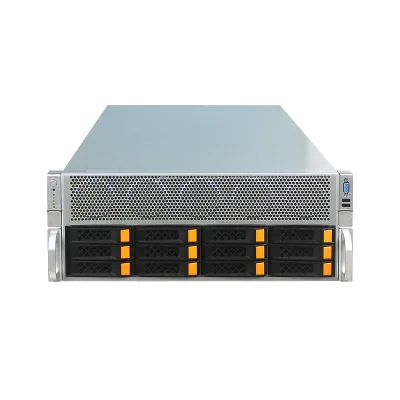


7u Rackmount GPU Server Case Support 8/10 GPU for Ai Deep Learning Training and Hpc
$2000.00 - $3000.00
MOQ: 1 Pieces


7u Rackmount GPU Server Case 10-Bay Hot-Swap Ai Deep Learning Chassis
$2000.00 - $3500.00
MOQ: 2 Pieces


8GPU Server Case for Artificial Intelligence Computing and Deep Learning
$664.88 - $670.79
MOQ: 1 Pieces

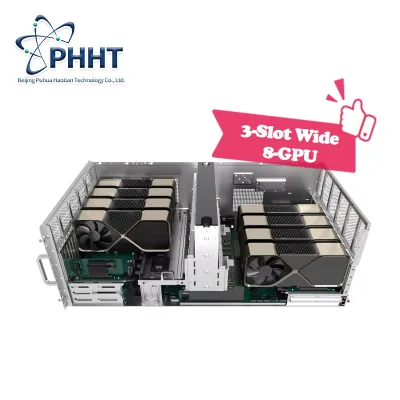
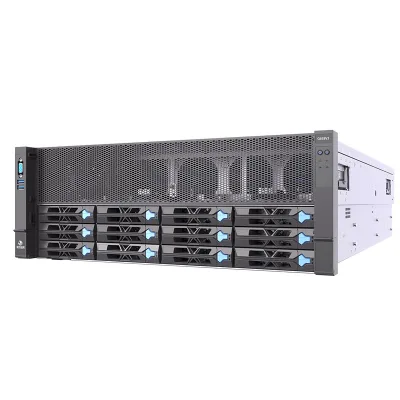
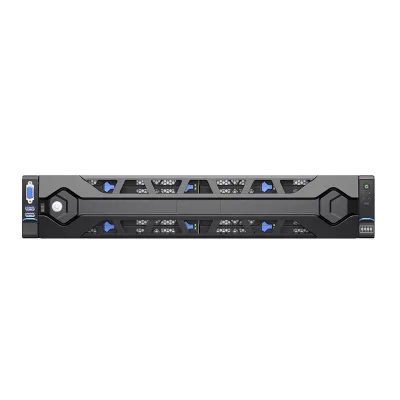
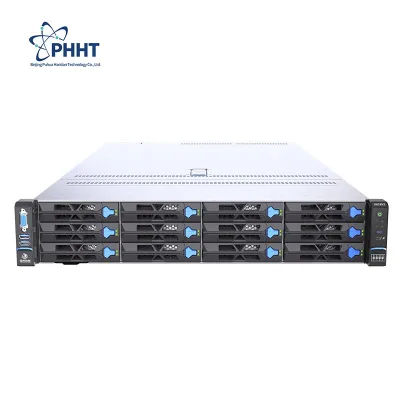


Efficient High Performance Server with GPU for Network Virtualization
$800.00 - $10000.00
MOQ: 1 Pieces

High Performance Server for Efficient Network Virtualization and Ai Tasks
$800.00 - $10000.00
MOQ: 1 Pieces

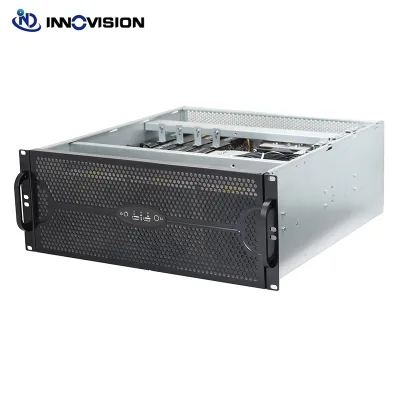


Comprehensive Sourcing Guide
Strategic Sourcing Guide for Deep Learning AI GPU Servers
Understanding Core Architectural Requirements for AI Workloads
When sourcing hardware for deep learning applications, buyers must prioritize the intersection of processor architecture, memory bandwidth, and thermal management. The provided product data indicates a diverse range of configurations, including systems utilizing AMD EPYC processors and ARM-based architectures, both of which serve distinct computational needs. For deep learning, the instruction system is typically CISC, as observed in the X86 server specifications, which offers the necessary flexibility for complex matrix operations. However, the presence of ARM-based options suggests a growing market for energy-efficient inference tasks.
A critical observation from the available data is the variation in processor types listed as "Other" alongside specific high-performance brands. Buyers must verify that the "Other" classification does not imply legacy or insufficient hardware for training large neural networks. The system architecture is confirmed as X86 Server in several listings, which remains the industry standard for high-performance computing (HPC) and AI training. The maximum memory capacity is listed as "Other" in some contexts, while others specify a supporting memory capacity of 1TB or a maximum of 16GB. For deep learning, where datasets are massive, the 1TB specification is a critical baseline, whereas 16GB is likely insufficient for training and may only serve inference or development purposes.
The cooling system is another vital specification. The observed "Air Cooling" system is standard for many rack-mounted units, but buyers must assess whether air cooling is sufficient for the thermal output of high-density GPU clusters. In high-performance scenarios, liquid cooling is often preferred, though the provided data points to air cooling as a common attribute. The physical dimensions vary significantly, with standard sizes ranging from 800mm x 445mm x 400mm to 900mm x 447mm x 312mm. These dimensions dictate the rack space requirements and airflow management within the data center.
Evaluating Physical Form Factors and Rack Integration
The physical deployment of AI servers is governed by the form factor and rack unit (RU) specifications. The data reveals a mix of 4U, 5U, and 7U rack units, indicating that buyers have options for varying densities of GPU expansion. The 4U form factor is explicitly mentioned, which is a common standard for servers housing multiple high-profile GPUs, providing ample space for cooling and power distribution. The 5U and 7U configurations offer even more expansion slots, with one listing specifying 7 slots for system expansion. This is crucial for deep learning, where models often require multiple GPUs working in parallel.
The chassis type is consistently identified as "Rack-Mounted, Server Chassis," confirming that these units are designed for data center environments rather than standalone workstations. The installation method is noted as "Horizontal," which is the standard orientation for rack servers. The size specifications, such as E-ATX motherboard support, ensure compatibility with high-end components. However, the "Single package size" of 105x60x31 cm suggests that the packaging dimensions may differ from the unit's operational footprint, a factor that must be considered for logistics and warehouse planning.
The following table summarizes the observed physical specifications to assist in comparing potential units:
| Specification | Observed Value | Relevance to Deep Learning |
|---|---|---|
| Rack Unit | 4U, 5U, 7U | Determines GPU density and cooling headroom. |
| Chassis Type | Rack-Mounted | Essential for data center integration. |
| Expansion Slots | 7 Slots | Critical for multi-GPU configurations. |
| Form Factor | Rackmount, E-ATX | Ensures motherboard compatibility with high-end parts. |
| Dimensions | 800-900mm (L) x 445-447mm (W) x 220-400mm (H) | Impacts rack space and airflow design. |
| Gross Weight | 25.000 kg | Affects rack load distribution and handling. |
Compliance, Certification, and Material Standards
In the B2B procurement of enterprise-grade servers, material integrity and adherence to standards are paramount. The product data specifies "Steel" as the primary material, which is the industry norm for chassis durability and electromagnetic interference (EMI) shielding. The "Private mold" attribute is listed as "No," suggesting that these units utilize standard or semi-standard chassis designs rather than fully custom, proprietary enclosures. This can be beneficial for buyers seeking easier maintenance and part availability, though it may limit unique aesthetic or specific thermal customization.
The "Product Standard" dimensions vary across listings, ranging from 445(W) x 800(D) x 400(H) mm to D900 x W447 x H312 mm. These variations highlight the importance of verifying the exact standard against the buyer's existing rack infrastructure. A mismatch in depth or width can lead to installation failures or compromised airflow. Furthermore, the "Product Origin" is consistently listed as "China," specifically from the Guangdong province. While this provides insight into the supply chain geography, buyers must independently verify the specific manufacturing certifications and quality control protocols of the facility, as the provided text does not list specific ISO or safety certifications.
Network connectivity is another area requiring verification. The data mentions "1GbE" as a connectivity option. For deep learning, where data transfer between nodes and storage is a bottleneck, 1GbE is often insufficient. Buyers should verify if 10GbE, 25GbE, or InfiniBand options are available, as the provided data only confirms the presence of 1GbE in some configurations. The "Network Connectivity" attribute is also linked to the "Max. CPUs" in one instance, suggesting a potential integration point for high-speed interconnects that must be validated during the technical review.
Cost Drivers and Pricing Dynamics
The observed price range for these units spans from $99 to $310,000 USD, a massive variance that reflects the difference between basic server chassis and fully configured, high-end AI workstations. The minimum order quantity (MOQ) ranges from 1 to 100 units, offering flexibility for both pilot projects and large-scale deployments. The "Selling Units" are listed as "Single item," indicating that the pricing is typically per unit, though bulk discounts may apply based on the MOQ.
Several factors drive the cost of deep learning servers. The "Processor Type" is a primary driver; systems with AMD EPYC processors or high-end X86 CPUs will command higher prices than those with "Other" or ARM-based processors. Similarly, the "Storage Type" significantly impacts cost. The data lists "NVMe SSD" and "Hybrid Storage" options. NVMe SSDs offer the high throughput required for rapid data loading during training, whereas hybrid storage combines cost-effective HDDs with faster SSDs. The "RAID Support" and "Storage Capacity" (ranging from 320-499GB to >1TB) are also critical cost determinants.
The "Power Supply" is another cost driver. The data specifies "Redundant PSU" as a feature, which is essential for enterprise-level applications to ensure uptime. Redundant power supplies increase the initial cost but reduce the risk of data loss and downtime. Additionally, the "Customization" attribute is marked as "Available," which implies that buyers can request specific configurations, likely at a premium. The "Packing" details, ranging from simple cardboard boxes to complex setups with PE bags and pearl cotton, also influence the final price, particularly for international shipping where damage protection is critical.
Typical Applications and Performance Expectations
The "Application" field is explicitly defined as "Enterprise Level," confirming that these servers are designed for business-critical operations rather than consumer use. The "Operating System Support" is listed as "Windows Server," which is a common platform for enterprise AI deployment. However, buyers should verify if Linux distributions, which are often preferred for deep learning frameworks like TensorFlow and PyTorch, are also supported, as the provided data does not explicitly mention Linux.
The "Number of CPU Threads" and "Max. CPUs" attributes suggest that these systems are built for multi-threaded workloads. Deep learning training is inherently parallelizable, requiring high core counts and efficient thread management. The "Instruction System" being CISC aligns with the need for complex instruction sets in AI workloads. The "Storage Capacity" of >1TB and the use of "NVMe SSD" indicate that these systems are capable of handling large datasets, a prerequisite for training modern deep learning models.
The "System Expansion Slot" count of 7 slots is particularly relevant for GPU expansion. Deep learning models often require multiple GPUs to accelerate training times. A 7-slot configuration allows for significant GPU density, enabling the parallel processing of large matrices. The "Cooling System" of "Air Cooling" must be sufficient to dissipate the heat generated by these high-performance components. If the thermal load exceeds the capacity of air cooling, buyers may need to consider liquid cooling solutions or enhanced airflow management strategies.
Supplier Evaluation and Quality Control Protocols
When evaluating suppliers for deep learning AI servers, buyers must look beyond the basic product specifications. The "Place of Origin" is Guangdong, China, a major manufacturing hub, but this does not guarantee uniform quality. Buyers should request detailed information on the supplier's quality control processes, including testing procedures for thermal performance, power stability, and network throughput. The "Single Gross Weight" of 25.000 kg provides a baseline for handling, but buyers should verify if this weight includes the power supply and storage drives, as these components add significant mass.
The "Customization" availability is a key differentiator. Suppliers offering customization can tailor the server to specific AI workloads, such as optimizing the chassis for specific GPU sizes or adding specialized cooling solutions. However, customization can also introduce lead time variability. Buyers should establish clear timelines and milestones for custom orders. The "Product Packing" details, such as "Case + PE Bag + Pearl Cotton + Accessory Box," indicate a level of care in packaging, but buyers should confirm if this is sufficient for long-distance shipping and if insurance options are available.
Quality control should also extend to the "Network Connectivity" and "Storage Type" verification. Buyers should request test results for network latency and storage read/write speeds to ensure the server meets the performance requirements of their deep learning pipelines. The "System Architecture" being X86 is a standard, but buyers should verify the specific chipset and motherboard quality to ensure long-term reliability.
Long-Term Procurement and Scalability Considerations
Procuring deep learning servers is a long-term investment that requires careful planning for scalability and maintenance. The "Rack Unit" and "Form Factor" must align with the buyer's future expansion plans. A 4U or 5U chassis may offer room for additional GPUs, but a 7U unit provides even more flexibility. The "System Expansion Slot" count of 7 slots is a strong indicator of scalability, allowing for future upgrades without replacing the entire chassis.
The "Power Supply" type, specifically "Redundant PSU," is crucial for long-term reliability. Redundancy ensures that if one power supply fails, the server continues to operate, preventing data loss and downtime. Buyers should also consider the power consumption and cooling requirements of the server over its lifecycle. The "Air Cooling" system may need to be supplemented or upgraded as the server ages or as the workload increases.
The "Storage Capacity" and "RAID Support" are also important for long-term data management. As deep learning models grow in size, the need for additional storage and faster data access will increase. Buyers should plan for the possibility of expanding storage capacity or upgrading to all-NVMe configurations. The "Operating System Support" for Windows Server should be verified for long-term compatibility with AI frameworks and updates.
Finally, the "Customization" option should be leveraged to future-proof the investment. Buyers can request specific configurations that align with their long-term roadmap, such as support for next-generation GPUs or enhanced network interfaces. By carefully evaluating these factors, buyers can ensure that their procurement of deep learning AI servers meets both current and future enterprise needs.
FAQs
What processor types are available for these deep learning servers?
Available processors include AMD EPYC, ARM-based, and X86 architectures. The system supports CISC instruction systems and can be configured with up to 16GB of memory or 1TB supporting capacity depending on the specific model selected.
Which rack unit sizes are offered for these server chassis?
The servers come in 4U, 5U, and 7U rack unit configurations. These form factors are designed for rack-mounted installation and provide varying levels of expansion slots to accommodate multiple GPUs for deep learning workloads.
Can I customize the storage and cooling systems for my needs?
Customization is available for storage types like NVMe SSD or hybrid storage and cooling systems such as air cooling. Buyers can request specific configurations to meet enterprise-level requirements while ensuring the chassis remains steel-based for durability.
How much does a Deep Learning AI GPU Server cost?
Prices range from 99 to 310,000 USD depending on the configuration and specifications. The cost varies based on factors like processor type, memory capacity, storage type, and whether redundant power supplies are included in the final build.
What is the minimum order quantity for these servers?
The minimum order quantity ranges from 1 to 100 units per transaction. This flexibility allows buyers to purchase single items for pilot projects or order larger batches for enterprise-level deployments without strict volume constraints.
Where are these deep learning servers manufactured and shipped from?
These servers originate from Guangdong, China, with a consistent product origin of China. The manufacturing location ensures access to established supply chains, though specific lead times and shipping details must be verified with individual suppliers.
What network connectivity options are supported by these units?
The servers support 1GbE network connectivity as a standard feature. While this is confirmed in the data, buyers should verify if higher-speed options like 10GbE are available for specific deep learning applications requiring faster data transfer.