Source Dental Lab Agar Mixer for Orthodontics, Labs, and Duplicating
Explore 30 verified listings for the Dental Lab Agar Mixer, featuring models like Um-R-1702 and Um-Lz-16. Buyers can compare specifications, pricing, and customization options from suppliers in Hebei and Tianjin to find the right equipment for orthodontic and general lab applications.
Key considerations
Products List


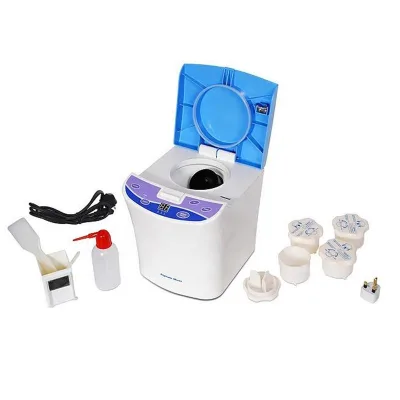
28rpm Dental Lab Agar-Stirring Duplicating Equipment Dental Agar Mixer
$300.00 - $400.00
MOQ: 1 Pieces


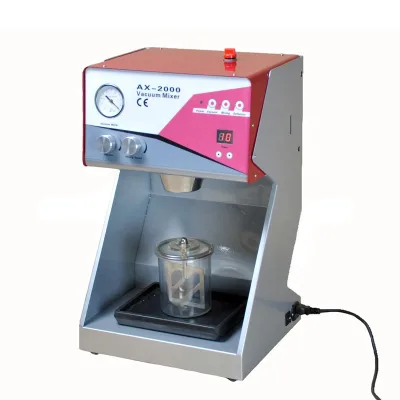
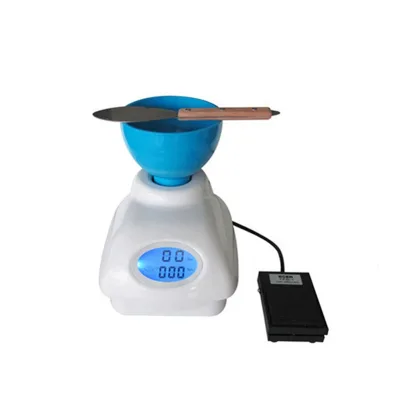

$999.00 - $999999.00
MOQ: 1 Pieces

$999.00 - $999999.00
MOQ: 1 Pieces

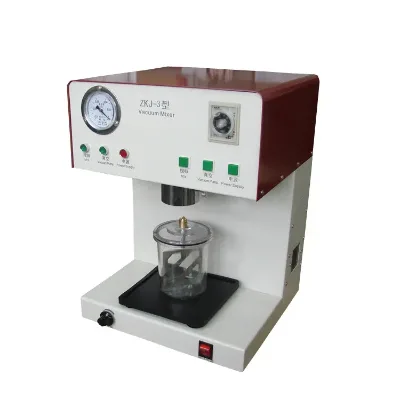
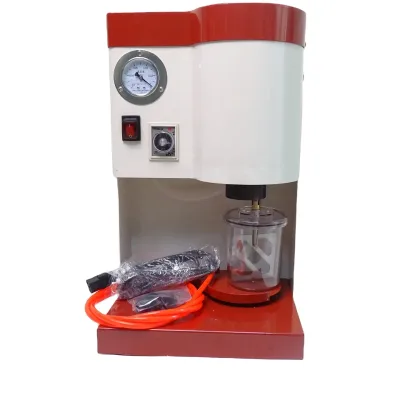


50L Small Vacuum Mixer Dental Dental Vacuum Mixer Dental Lab Vacuum Mixer
$1386.00 - $48970.00
MOQ: 1 Pieces


Comprehensive Sourcing Guide
Strategic Sourcing Guide for Dental Lab Agar Mixers
Understanding the Product Category and Core Functionality
The dental laboratory environment relies heavily on precision equipment to ensure the accuracy of prosthetic and orthodontic restorations. Among these tools, the Dental Lab Agar Mixer serves a critical role in the fabrication of custom trays and the duplication of models. These machines are specifically designed to handle agar, a hydrocolloid material that requires precise temperature control and consistent mixing to achieve the desired viscosity. The primary function of an agar mixer is to dissolve agar powder in water and maintain it at a specific temperature, typically near the boiling point, to prevent premature gelation while ensuring a homogenous mixture.
In the context of current market offerings, these devices are often categorized under specialized instrument equipment or mechanic equipment. They are distinct from standard dental drills or general-purpose mixers, as they are engineered for the specific rheological properties of agar. The observed product attributes indicate that these units are frequently labeled as "Dental Agar Mixer," "Dental Lab Agar Mixer," or "Dental Agar Mixing Machine." Some listings also refer to them as "Dental Duplicating Machines" or "Dental Vacuum Mixers," suggesting a convergence of functions where mixing and vacuum degassing may be integrated to eliminate air bubbles, which is crucial for high-fidelity model duplication.
The nature of these instruments is defined as specialized equipment, often non-disposable and intended for continuous use in professional settings. The typical voltage requirements observed in the market range from 220V to 110V, indicating that buyers must verify the electrical compatibility of the unit with their local power infrastructure. Power consumption is another key specification, with some models listing a consumer power range of 350-400W. This energy profile suggests that while the units are not high-power industrial machines, they require stable electrical supply to maintain the precise thermal conditions necessary for agar processing.
Technical Specifications and Operational Parameters
When evaluating a Dental Lab Agar Mixer, buyers must scrutinize the technical specifications to ensure the unit meets the operational demands of their specific laboratory workflow. The physical dimensions and capacity are fundamental constraints. For instance, the amount of agar a machine can process is a critical metric; observed data points to a capacity range of 2-5kgs per batch. This capacity dictates the throughput of the laboratory and determines whether the machine is suitable for small-scale private practices or high-volume clinical laboratories.
Model identification is another vital aspect of technical evaluation. The market features various model numbers, such as Um-R-1702, Um-R-1701, Um-Ax-2008, and Um-Lz-16. These alphanumeric codes often denote specific feature sets, such as the presence of a vacuum system, the type of heating element, or the material of the mixing chamber. The model designation "dental agar duplicating machine" or "dental vibrator" in some listings suggests that the device may incorporate vibration mechanisms to assist in the degassing process or to settle the agar evenly.
Material construction is paramount for durability and hygiene. The observed material specification for these units is consistently metal, which provides the necessary structural integrity to withstand the heat and mechanical stress of the mixing process. Metal construction also facilitates easier cleaning and sterilization, which is essential in a clinical environment. Furthermore, the condition of the equipment is typically listed as "New," ensuring that buyers receive units with full functional warranties and no prior wear.
The electrical and thermal specifications require careful verification. While some listings mention a voltage of 220V/110V, the specific frequency (50Hz or 60Hz) is often not explicitly stated in general summaries but must be confirmed with the supplier. The heating mechanism must be capable of maintaining a stable temperature to keep the agar in a liquid state without degrading its properties. Additionally, features such as "Waterproof" ratings may be present, indicating a design that can withstand the humid environment of a dental lab or accidental spills, though the specific IP rating should be verified against the actual product datasheet.
Compliance, Certification, and Regulatory Standards
Navigating the regulatory landscape is a non-negotiable aspect of sourcing medical and dental equipment. The primary certification observed in the current market data for these mixers is the CE mark. This certification indicates that the product complies with the health, safety, and environmental protection standards for products sold within the European Economic Area. For buyers operating in regions that recognize CE certification as a baseline for safety, this is a crucial verification point. However, the presence of a CE mark does not automatically guarantee compliance with other regional standards, such as FDA approval in the United States or specific national standards in other Asian or African markets.
Beyond the CE mark, buyers must investigate the specific standards to which the equipment is manufactured. Some listings reference "1set/carton" or "1set/box" under the "prod_standard" field, which appears to refer to packaging standards rather than manufacturing safety standards. This distinction is important; buyers should not confuse packaging instructions with regulatory compliance. Instead, they should request documentation regarding the electrical safety standards (such as IEC 60601 for medical electrical equipment) and material safety standards that ensure the device does not leach harmful substances into the agar or the dental models.
The origin of the product is also a factor in compliance. The majority of the observed listings indicate the place of origin as Hebei, China (Mainland), with some specifying Tianjin. While China is a major manufacturing hub for dental equipment, the specific factory location can influence the consistency of quality control and the ease of communication regarding regulatory documentation. Buyers should verify that the supplier can provide the necessary test reports and conformity declarations that correspond to the CE certification claimed.
It is also essential to check for any additional certifications related to the specific application. For instance, if the mixer is used for duplicating models that will be used for surgical guides, there may be additional biocompatibility or sterility requirements. The "Nature" of the equipment is described as "Specialized Instrument Equipment," which implies it is a Class I or Class II medical device depending on the jurisdiction. Buyers must ensure that the supplier's certification covers the specific use case of the device in their local regulatory framework.
Cost Drivers and Procurement Economics
The pricing of dental lab agar mixers is influenced by a complex interplay of factors, including technical complexity, material quality, and brand positioning. The observed price range in the market is exceptionally wide, spanning from $42.9 to $999,999. This vast disparity suggests that the market includes both basic, entry-level units and highly specialized, industrial-grade systems with advanced features. The lower end of the spectrum likely represents simple mixing units with basic heating elements, while the upper end may include integrated vacuum systems, digital controls, and robust industrial housings.
When analyzing cost, buyers should look beyond the sticker price and consider the total cost of ownership. This includes the cost of maintenance, energy consumption, and the lifespan of the equipment. The power consumption of 350-400W is a relatively low operational cost, but the efficiency of the heating element will impact long-term electricity bills. Furthermore, the durability of the metal construction and the availability of replacement parts are critical cost drivers. A cheaper unit that requires frequent repairs or has a short lifespan will ultimately be more expensive than a higher-priced unit with a longer warranty and better build quality.
The Minimum Order Quantity (MOQ) is another economic factor. The observed MOQ range is consistently 1 set, which is highly favorable for small laboratories or individual practitioners. This low barrier to entry allows buyers to test the equipment without committing to large inventory volumes. However, buyers should be aware that while the MOQ is low, the price per unit may not be negotiable for single-unit purchases. Bulk orders might offer volume discounts, but the specific discount structure is not provided in the general market data and must be negotiated directly with the supplier.
Shipping and packaging costs also play a significant role in the final cost. The packaging is described variously as "1set/Carton," "Wood Carton," "Standard Package," "Solid Carton," or "Exporting Carton." The choice of packaging affects the safety of the product during transit and the associated shipping costs. Wooden cartons or reinforced export cartons may incur higher shipping fees but provide better protection against damage, which is crucial for delicate electronic equipment. Buyers should factor in the risk of transit damage when comparing the total landed cost of different suppliers.
Typical Applications and Departmental Integration
The Dental Lab Agar Mixer is primarily utilized in the Orthodontic Department and general Dental Lab settings. Its core application lies in the creation of custom impression trays and the duplication of master models. In orthodontics, agar is often used to create flexible trays that can be adapted to the patient's arches with high precision. The mixer ensures that the agar is at the correct temperature and consistency to flow smoothly into the tray without trapping air bubbles, which could compromise the fit of the final appliance.
Beyond orthodontics, these mixers are essential for model duplication. In this process, a master model is used to create a negative mold, from which multiple positive copies can be cast. The agar mixer prepares the hydrocolloid material that forms the mold. The "Dental Duplicating Machine" designation in some listings suggests that the unit may be part of a larger system that includes the molding and casting steps. The integration of vacuum mixing capabilities, as hinted at by the "Dental Vacuum Mixer" label, is particularly valuable in this application, as it removes air bubbles that could lead to defects in the duplicated models.
The versatility of these machines is further highlighted by their classification as "Mechanic Equipment" and "Specialized Equipment." This indicates that they are not limited to a single type of procedure but are adaptable to various laboratory tasks. The "Usage" field specifies "Dental Lab," confirming their intended environment. However, the specific workflow integration depends on the model's features. For example, a unit with a vacuum function may be preferred for high-precision duplications, while a basic mixer might suffice for simple tray fabrication.
Buyers should also consider the compatibility of the mixer with other laboratory equipment. The voltage requirements (220V/110V) and power consumption (350-400W) must align with the laboratory's electrical infrastructure. Additionally, the physical footprint of the machine, which can be inferred from the packaging dimensions (e.g., 372952mm, though this likely refers to a component or a specific model's compact size), must fit within the available workspace. The "Waterproof" feature is particularly relevant in a lab environment where water and cleaning agents are frequently used, ensuring the equipment can withstand the humid conditions.
Supplier Evaluation and Quality Assurance
Selecting the right supplier is as critical as selecting the right machine. The market data indicates a concentration of suppliers from Hebei, China (Mainland), and Tianjin. While these regions are known for manufacturing, buyers must conduct due diligence to ensure the supplier's reliability. The "OEM: Accept" attribute suggests that many suppliers are willing to customize the product with the buyer's branding, which is a positive sign of flexibility and experience in the B2B market. However, OEM capabilities should be verified to ensure the supplier has the capacity to maintain quality standards during customization.
Quality control is a paramount concern. The "Condition: New" and "Non-Disposable" attributes indicate that the equipment is intended for long-term use. Buyers should request detailed quality assurance documentation, including factory inspection reports and material certificates. The "Certification: CE" is a baseline requirement, but buyers should also ask for specific test results related to the heating element's stability, the mixing mechanism's durability, and the electrical safety of the unit. The "Feature: Waterproof" claim should be substantiated with a specific IP rating or test report to ensure it meets the laboratory's hygiene standards.
Lead times and delivery capabilities are also key evaluation criteria. The observed "Delivery Time: 7 Days" suggests a relatively quick turnaround for standard orders. However, this lead time may vary depending on the customization level, the specific model, and the shipping destination. Buyers should clarify whether the 7-day lead time includes production, packaging, and shipping, or if it refers only to the production time. The "MOQ: 1set" allows for small orders, but buyers should confirm if expedited shipping is available for urgent needs.
Supplier reputation and after-sales support are equally important. Buyers should inquire about the warranty period, the availability of spare parts, and the technical support provided. The "Packing: 1set/Carton" or "Wood Carton" options indicate that the supplier has experience in packaging for international shipping, but buyers should verify the packaging standards to ensure the equipment arrives in perfect condition. The "Nature: Specialized Instrument Equipment" classification implies that the supplier should have expertise in this specific niche, and buyers should assess their technical knowledge through pre-sales consultations.
Long-Term Procurement and Strategic Considerations
Sourcing a Dental Lab Agar Mixer is not just a one-time transaction but a strategic decision that impacts the laboratory's long-term efficiency and product quality. The "Usage Times: Non-Disposable" attribute underscores the need for equipment that can withstand years of daily operation. Buyers should prioritize models with a proven track record of durability and reliability. The metal construction and the specific model numbers (e.g., Um-R-1702, Um-Ax-2008) should be cross-referenced with user reviews and industry feedback to ensure they meet the demands of a busy laboratory.
Customization options, such as the "OEM: Accept" feature, offer a pathway to brand alignment and product differentiation. For laboratories that wish to offer branded services or integrate the equipment into a specific workflow, the ability to customize the machine is a significant advantage. However, buyers must ensure that customization does not compromise the safety or performance of the device. The "Customization: Available" attribute should be leveraged to tailor the machine to specific laboratory needs, such as adjusting the mixing speed or temperature range.
Future-proofing the procurement decision involves considering the scalability of the equipment. As the laboratory grows, the demand for agar mixing may increase. The capacity of 2-5kgs per batch is a good starting point, but buyers should evaluate whether the supplier offers larger models or additional units that can be integrated into the workflow. The "Type: Dental Drill & Accessories" classification in some listings may be a misclassification, as agar mixers are distinct from drills, but it highlights the need for buyers to clearly define the equipment category to avoid confusion in future procurement.
Finally, the environmental and sustainability aspects of the equipment should be considered. The "Waterproof" feature and the metal construction suggest a design that is easy to clean and maintain, reducing the need for harsh chemicals and water waste. The energy efficiency of the 350-400W power consumption is also a positive factor in reducing the laboratory's carbon footprint. By selecting a high-quality, efficient, and durable agar mixer, buyers can ensure a sustainable and cost-effective operation for years to come.
FAQs
What certifications do dental lab agar mixers have?
Most units carry CE certification for European safety compliance. Buyers should verify specific test reports for their local regulations as the CE mark is the primary standard observed in the market data.
Which model numbers are available for these mixers?
Available models include Um-R-1702, Um-R-1701, Um-Ax-2008, and Um-Lz-16. Each model may feature distinct specifications such as vacuum capabilities or specific mixing capacities for different laboratory needs.
Can I customize the dental agar mixing machine?
Customization is available for these specialized instruments. Buyers should contact suppliers directly to discuss specific branding or feature modifications since OEM acceptance is noted for certain models.
What is the typical capacity for agar mixing?
The machines can process between 2 to 5 kilograms of agar per batch. This capacity range supports both small private practices and larger clinical laboratories requiring consistent throughput.
How long is the delivery time for these units?
The standard delivery time is approximately 7 days from the order date. This lead time applies to the new condition units originating from Hebei or Tianjin in China.
What is the minimum order quantity for purchase?
The minimum order quantity is 1 set for most listings. This low threshold allows individual practitioners to purchase single units without needing to meet bulk inventory requirements.