Source Dental Snack Rawhide Chicken Wraps for puppies, adults, and seniors
Compare 30 listings for Dental Snack Rawhide Chicken Wraps suitable for puppies and adult pets. Buyers can evaluate customization options, protein content, and packaging sizes from suppliers in China.
Key considerations
Products List




Comprehensive Sourcing Guide
Strategic Sourcing Guide for Dental Snack Rawhide Chicken Wraps
Understanding Product Specifications and Variability
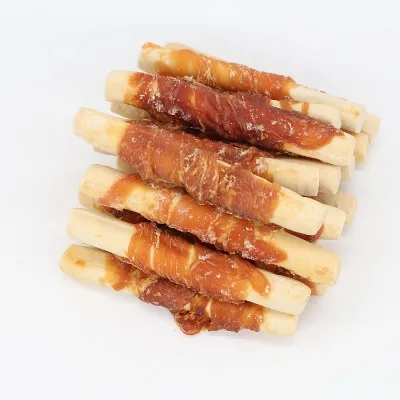
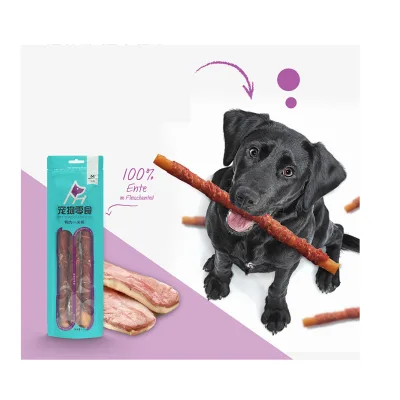
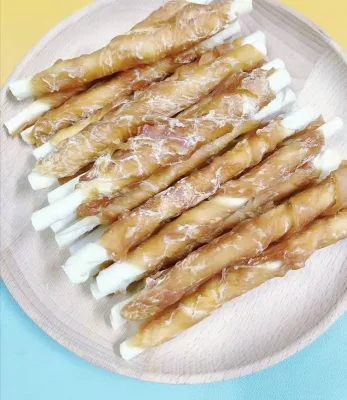
When sourcing Dental Snack Rawhide Chicken Wraps, buyers must first navigate the complex landscape of product specifications. The market presents a wide array of configurations, and assuming uniformity across all listings can lead to procurement errors. Based on available product data, the core product category includes items explicitly labeled as "Chicken Wrapped Rawhide Sticks" and "Chicken Wrapped Rawhide Rolls." These are distinct from general "Chicken Flavor Dog Treats," which may lack the structural rawhide component essential for dental cleaning.
A critical observation in the current market is the significant variance in physical dimensions and packaging. For instance, specific product models such as DSMS121 are associated with packaging dimensions of 9.02 x 5.71 x 2.64 inches, while model DSMS116 utilizes a footprint of 7.83 x 6.97 x 2.6 inches. Similarly, model DSMS147 is listed with dimensions of 9.17 x 5.39 x 2.24 inches. These variations are not merely cosmetic; they impact shipping costs, shelf space requirements, and the final unit economics for the buyer.
Furthermore, the specification of the raw material itself varies by model. While some entries indicate a standard weight of 299g or 300g, others specify a 500g standard. The "Spec" attribute in the data ranges from 0-99g up to 500g-999g, indicating that a single supplier may offer a portfolio ranging from small training treats to large dental chews. Buyers must verify the exact weight and size requirements for their specific target demographic, whether it be puppies or adult pets, as the "Application" attribute explicitly lists both categories. The "Appearance" is consistently noted as "Dry," which is a crucial factor for shelf stability and texture, but the "Flavour" is predominantly "Chicken," which serves as the primary attractant for the canine consumer.
Nutritional Composition and Protein Content Analysis
The nutritional profile of Dental Snack Rawhide Chicken Wraps is a primary differentiator in this sector. The data reveals a wide spectrum of protein content, ranging from a minimum of 20% to as high as 85% crude protein. This variance suggests that not all products labeled as "Chicken Wrapped" offer the same nutritional density. For example, one product listing specifies a minimum crude protein of 20%, while another, potentially a higher-grade variant, lists a minimum of 75% or even 85%.
Buyers must carefully cross-reference the "Crude Protein" claims with the "Crude Fat" and "Crude Fiber" values to ensure the product aligns with their brand's nutritional promises. The observed data includes minimum crude fat values of 0.5%, 4%, and specific maximum crude fiber limits of 0.2%, 1%, and 2%. High-protein formulations, such as those claiming 70% or 85% protein, often correlate with lower fiber content, which may be desirable for dogs with sensitive digestive systems. However, the "Moisture" content also plays a vital role in preservation and texture. The data indicates moisture levels ranging from a maximum of 14% to 18%. A lower moisture content generally implies a harder texture, which is beneficial for dental cleaning, but it must be balanced against the risk of the rawhide becoming too hard for puppies or older dogs.
The "Feature" attribute frequently highlights "All Natural" and "Protein-Rich" claims. While these are marketing descriptors, they must be substantiated by the analytical data provided in the product specifications. A product claiming to be "All Natural" should ideally have minimal artificial additives, though the specific ingredient list is not provided in the summary data. Buyers should request full ingredient transparency to verify that the "Chicken" flavoring is derived from actual meat or high-quality meat meal rather than synthetic flavorings, especially given the high protein claims.
Compliance, Standards, and Certification Verification
In the realm of pet food and treats, compliance is non-negotiable. The supplied data indicates that the "Standard" for these products is often defined as "Customer's Requirement," which implies a high degree of customization. This flexibility is advantageous for private label buyers but requires rigorous due diligence to ensure that the custom standard meets the regulatory requirements of the destination market.
The origin of these products is listed as China, with specific provinces mentioned as Zhejiang and Fujian. While these regions are known for manufacturing, the specific location does not automatically guarantee compliance with international safety standards. The data mentions "ISO22000" and "BSCI" in the background information, but these are flagged as low-confidence facts. Therefore, buyers should not assume that a supplier possesses these certifications based solely on product listings. Instead, the procurement strategy must include a formal request for valid, up-to-date certificates of analysis and third-party audit reports.
Buyers must verify that the "Customization" options offered by the supplier include the ability to meet specific safety standards required by their target market. For instance, if the destination market requires specific heavy metal testing or pathogen screening, the supplier must demonstrate the capability to perform these tests or provide results from an accredited third-party laboratory. The "Shelf Life" is consistently noted as 18 months in the provided data, which is a strong indicator of product stability, but this claim must be supported by accelerated shelf-life testing data to ensure the product remains safe and palatable throughout the stated period.
Cost Drivers and Pricing Dynamics
The pricing landscape for Dental Snack Rawhide Chicken Wraps is dynamic, with observed listed prices ranging from $0.21 to $7.90 USD. This wide range reflects the diversity in product specifications, packaging sizes, and customization levels. The minimum order quantity (MOQ) also varies significantly, with observed ranges from 100 to over 10,000 units. This variability suggests that buyers can access the market at different scales, from small boutique brands to large-scale retailers.
Several factors drive the cost of these products. First, the protein content is a major cost driver. Products with higher crude protein percentages, such as those at 75% or 85%, typically command a higher price point due to the cost of raw materials. Second, the packaging dimensions and weight directly influence logistics costs. Larger packages, such as those measuring 12.05 x 6.77 x 5.31 inches, will incur higher shipping fees compared to more compact units. Third, the level of customization required, such as specific branding, unique shapes, or tailored nutritional profiles, adds to the production cost.
Buyers should also consider the "Standard" weight variations. A product listed at 299g versus one at 500g will have different unit costs, but the cost per gram may vary significantly depending on the production efficiency and raw material sourcing. The "Customized" packing attribute indicates that buyers can optimize packaging for their supply chain, potentially reducing waste and shipping costs, but this customization may come with a higher MOQ or a setup fee.
Supplier Evaluation and Operational Capabilities
Evaluating suppliers for Dental Snack Rawhide Chicken Wraps requires a focus on their ability to manage the "Customization" aspect while maintaining consistent quality. The data shows multiple product models (e.g., R005, RM088, RM096, DM011, RM044, RM13, DSMS121, DSMS116, VARC023, DSMS147, DSBE035), indicating that suppliers often have extensive catalogs. However, the presence of many models does not guarantee that a single supplier can produce all of them to the same standard.
Buyers should assess the supplier's production capacity and lead times. While specific lead times are not provided in the data, the "Customization: Available" attribute suggests that the production process involves a setup phase. Buyers must inquire about the time required to implement custom standards, such as specific packaging dimensions or unique nutritional formulations. The "Product Origin" being China suggests a robust manufacturing base, but buyers should verify the specific factory's capacity to handle their order volume, especially given the high MOQs observed in some listings.
Additionally, the "Application" attribute listing both "Puppy Pet" and "Adult Pet" suggests that the supplier has the capability to produce treats for different life stages. However, buyers must ensure that the supplier can adjust the hardness and size of the rawhide to suit these different demographics safely. A supplier that cannot differentiate between puppy and adult treats may pose a safety risk, particularly if the rawhide is too hard for younger dogs.
Quality Control and Long-Term Procurement Strategy
Implementing a robust quality control (QC) strategy is essential for sourcing Dental Snack Rawhide Chicken Wraps. Given the variability in "Crude Protein," "Crude Fat," and "Moisture" levels, buyers should establish clear acceptance criteria for each batch. The "Shelf Life" of 18 months is a significant asset, but it requires strict adherence to storage conditions and packaging integrity. Buyers should verify that the packaging materials used, such as those with dimensions like 9.02 x 5.71 x 2.64 inches, provide adequate protection against moisture and pests.
Long-term procurement considerations should focus on building a relationship with a supplier who can consistently meet the "Customer's Requirement" standard. This involves regular audits, sample testing, and performance reviews. The "All Natural" and "Protein-Rich" features are marketing assets that must be backed by consistent quality. If a supplier's product fails to meet the stated protein content or moisture limits, it could damage the buyer's brand reputation.
Buyers should also consider the scalability of the supply chain. The observed MOQ range of 100 to 10,003 units indicates that suppliers can accommodate both small and large orders. However, as the buyer scales up, they should negotiate better terms based on volume. The "Customized" packing option allows for flexibility, but buyers should ensure that the packaging design remains consistent to maintain brand identity. Finally, buyers should monitor the market for changes in raw material costs, particularly chicken, which can impact the final price and the feasibility of maintaining high protein content.
Comparative Analysis of Product Models
To facilitate decision-making, the following table summarizes key attributes of the observed product models. This comparison highlights the diversity in specifications and helps buyers identify the most suitable options for their specific needs.
| Product Model | Primary Feature | Crude Protein (Min) | Moisture (Max) | Standard Weight | Packaging Dimensions (Inches) | Application |
|---|---|---|---|---|---|---|
| R005 | All Natural | 20% | 18% | Not Specified | Not Specified | Puppy, Adult |
| RM088 | Protein-Rich | 58% | Not Specified | Not Specified | Not Specified | Puppy, Adult |
| RM096 | Protein-Rich | 75% | Not Specified | Not Specified | Not Specified | Puppy, Adult |
| DM011 | All Natural | 85% | 14% | Not Specified | Not Specified | Puppy, Adult |
| RM044 | Protein-Rich | 70% | Not Specified | Not Specified | Not Specified | Puppy, Adult |
| RM13 | All Natural | 58% | Not Specified | Not Specified | Not Specified | Puppy, Adult |
| DSMS121 | Customized | Not Specified | Not Specified | 299g | 9.02 x 5.71 x 2.64 | Puppy, Adult |
| DSMS116 | Customized | Not Specified | Not Specified | 500g | 7.83 x 6.97 x 2.6 | Puppy, Adult |
| VARC023 | Customized | Not Specified | Not Specified | Not Specified | Not Specified | Puppy, Adult |
| DSMS147 | Customized | Not Specified | Not Specified | 300g | 9.17 x 5.39 x 2.24 | Puppy, Adult |
| DSBE035 | Customized | Not Specified | Not Specified | 42g | 12.05 x 6.77 x 5.31 | Puppy, Adult |
This table illustrates that while the core product type remains consistent, the specific attributes vary significantly. Buyers must select models that align with their brand's nutritional goals and logistical requirements. The presence of multiple models with different protein levels and weights underscores the importance of detailed specification verification before placing an order. By carefully analyzing these attributes, buyers can ensure they source high-quality Dental Snack Rawhide Chicken Wraps that meet both their operational needs and consumer expectations.
FAQs
What customization options are available for Dental Snack Rawhide Chicken Wraps?
Customization is available for these products, allowing buyers to specify unique requirements. Suppliers can adjust specifications, packaging dimensions, and nutritional profiles to meet customer needs. This flexibility supports private label strategies and specific market demands.
How does the crude protein content vary across different product models?
Crude protein content varies significantly, ranging from a minimum of 20% to as high as 85% depending on the specific model. Higher protein formulations often correlate with lower fiber content and may command higher prices due to raw material costs.
Which packaging dimensions are commonly observed for these dental treats?
Common packaging dimensions include 9.02 x 5.71 x 2.64 inches and 7.83 x 6.97 x 2.6 inches. Specific models like DSMS121 and DSMS116 utilize these distinct footprints, which impact shipping costs and shelf space requirements for buyers.
Can these treats be used for both puppies and adult dogs?
Yes, the application attribute explicitly lists suitability for both puppy and adult pets. Buyers should verify hardness and size specifications to ensure safety, as rawhide texture must be appropriate for different life stages and jaw strengths.
What is the typical shelf life for Dental Snack Rawhide Chicken Wraps?
The shelf life is consistently noted as 18 months in the provided data. This duration indicates product stability, but buyers should verify accelerated shelf-life testing data to ensure safety and palatability throughout the stated period.
How do pricing and MOQ levels vary for these products?
Listed prices range from 0.21 to 7.9 USD, while minimum order quantities vary from 100 to over 10,000 units. These ranges reflect differences in product specifications, packaging sizes, and the level of customization required by the buyer.
Where are these products typically manufactured?
Products originate from China, with specific provinces mentioned as Zhejiang and Fujian. Buyers should verify factory capacity and compliance capabilities, as the origin location does not automatically guarantee adherence to international safety standards.