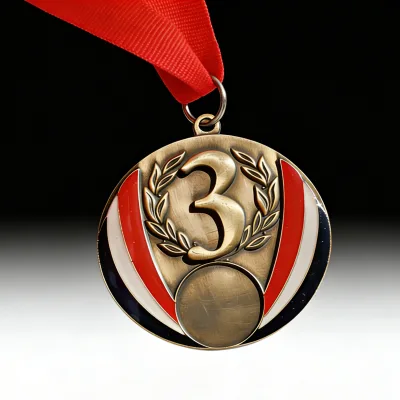
Source Die-Cast Polished Sport Medal for Marathons, Promotions, and Awards
Find and compare 30 die-cast polished sport medal options featuring zinc alloy construction, custom logos, and ribbon accessories. These wholesale medals support marathon events, promotional gifts, and personal collections with flexible MOQs and artwork services.
Key considerations
Products List



Comprehensive Sourcing Guide
Die-Cast Polished Sport Medal Sourcing Guide
The die-cast polished sport medal represents a specialized category of promotional and commemorative metalwork where the casting process defines the structural integrity while the polishing technique determines the final aesthetic finish. Buyers in this sector must distinguish between standard casting methods and those that specifically require a post-casting polish to achieve a high-luster surface, as this distinction directly impacts the production timeline and unit cost. The observed market data indicates that these items are frequently manufactured from zinc alloy, a material chosen for its ability to capture fine details during the die-casting process while remaining cost-effective for large-volume orders.
Procurement decisions for this category hinge on the specific application, ranging from running marathons and sporting events to corporate promotions and personal decorations. The product listings reveal a strong correlation between the "polished" attribute and the "custom design" requirement, suggesting that the finishing process is often tailored to accommodate intricate logos and custom shapes. Buyers should recognize that while the core material is consistent, the combination of plating options—such as gold, silver, copper, or antique nickel—along with the polishing intensity creates a wide spectrum of visual outcomes that must be aligned with the event's branding guidelines.
Product Scope and Observed Listing Signals
The product scope for die-cast polished sport medals encompasses a variety of shapes, including round and square configurations, with dimensions typically ranging from 35mm to 150mm depending on the specific model and intended prestige. Observed listing signals indicate that these items are often marketed with specific nicknames like "medallion" and are frequently paired with accessories such as ribbons, which are essential for the ceremonial presentation of the award. The presence of "soft enamel" characteristics in some listings suggests that buyers may encounter variations where the polished metal serves as a base for colored enamel fills, adding depth and contrast to the design.
Commercial signals in the market show a significant variance in Minimum Order Quantities (MOQ), with some suppliers offering low thresholds as low as 10 pieces while others require orders of 50 to 300 pieces. This variability allows buyers to source small batches for prototype validation or large runs for major sporting events, but it necessitates careful negotiation to align the order volume with the supplier's production capacity. The observed price range of 0.1 to 5 USD per unit reflects the impact of these volume tiers, as well as the complexity of the custom design and the specific plating requirements chosen for the final product.
Technical Specifications to Verify
When verifying technical specifications, the thickness of the medal is a critical parameter that influences durability and perceived value, with observed data pointing to a standard thickness of approximately 3mm for many models. Buyers must confirm that the die-casting process used by the supplier can consistently maintain this thickness across the entire surface, especially in areas with intricate detailing or thin edges, to prevent warping or breakage during handling. The "polished" technique requires specific attention to the surface finish, ensuring that the metal is free of casting pores and that the luster is uniform before any subsequent plating or enamel application is performed.
The customization capabilities of the supplier are another vital technical aspect, as the ability to produce custom shapes and logos is a primary driver for this product category. Listings confirm that "custom design" and "custom logo" services are standard, but buyers should verify the supplier's capacity to handle complex geometries, such as the transition between round and square shapes, without compromising the structural integrity of the die-cast metal. Additionally, the compatibility of the chosen plating, whether it be gold, nickel, or black dye, with the polished substrate must be validated to ensure adhesion and long-term color retention, particularly for medals intended for outdoor use or frequent handling.
Compliance and Safety Documentation
Compliance and safety documentation for die-cast sport medals primarily focus on material safety and the chemical composition of the plating and enamel layers used in the finishing process. While specific certification names are not universally mandated for all promotional items, buyers should request evidence that the zinc alloy and any applied coatings comply with international safety standards regarding heavy metals and toxic substances, especially if the medals are intended for children or will be in prolonged skin contact. The "antique" and "nickel" plating options observed in the market require particular scrutiny to ensure that the chemical treatments used to achieve these finishes do not contain prohibited substances under the regulations of the destination market.
Documentation regarding the production origin, specifically the Zhong Shan, China manufacturing hub, should be accompanied by clear labeling of the product's material composition and any relevant safety warnings. Buyers must ensure that the supplier provides a Material Safety Data Sheet (MSDS) or equivalent documentation for the plating chemicals and enamel materials used, as these are often the source of regulatory non-compliance in the promotional goods sector. Furthermore, if the medals are to be used in international competitions or distributed across borders, verifying that the packaging and the product itself meet the import standards of the target region is essential to avoid customs delays or product seizures.
Cost Drivers and Commercial Terms
The cost of die-cast polished sport medals is driven by several key factors, including the complexity of the custom design, the thickness of the metal, and the specific plating and finishing techniques employed. The observed MOQ ranges from 10 to 300 pieces, which significantly influences the unit price; lower quantities often incur higher per-unit costs due to the setup time required for custom molds and the limited efficiency of small-batch production runs. Buyers should anticipate that the "free artwork service" offered by some suppliers may come with limitations on the number of revisions or the complexity of the design, which can affect the overall project timeline and cost structure.
Commercial terms regarding sample availability and lead times are critical for procurement planning, with observed sample times ranging from 5 to 7 working days and production times extending from 10 to 15 working days. These timelines can vary based on the order volume and the specific customization requirements, such as the need for multiple plating colors or the inclusion of soft enamel. Buyers must factor in these lead times when scheduling event dates, as the "about" nature of the production time estimates suggests potential variability that could impact the final delivery schedule. Additionally, the packaging specifications, such as 1 piece per OPP bag and 100 pieces per carton, should be considered in the total logistics cost calculation.
Supplier Qualification and Quality Control
Supplier qualification for die-cast polished sport medals requires a thorough assessment of their manufacturing capabilities, specifically their experience with zinc alloy casting and the polishing processes necessary to achieve a high-quality finish. Buyers should verify that the supplier has a dedicated quality control team that inspects the medals for surface defects, plating uniformity, and dimensional accuracy before packaging. The observation of "custom design" and "customized" attributes in the product listings indicates that the supplier must have the flexibility to adapt their production line to unique client requirements, which is a strong indicator of a mature and capable manufacturing partner.
Quality control protocols should also include rigorous testing of the adhesion of the plating and the durability of the enamel, if applicable, to ensure the medals withstand the rigors of handling and distribution. Buyers should request a sample of the finished product to evaluate the tactile feel of the polished surface and the visual consistency of the color, as these are often the first indicators of quality issues that may not be apparent in digital images. Establishing a clear communication channel for feedback and revisions during the sample phase is essential to ensure that the final production run meets the buyer's expectations for both aesthetic and functional performance.
Long-Term Procurement Checks
Long-term procurement checks for die-cast polished sport medals involve establishing a consistent relationship with the supplier to ensure that quality and pricing remain stable over multiple order cycles. Buyers should monitor the supplier's ability to maintain the "polished" finish and the integrity of the die-cast metal across different production batches, as variations in the casting process or plating chemistry can lead to inconsistencies in the final product. Regular audits of the supplier's quality control processes and a review of their production capacity are necessary to ensure they can meet the demands of future events without compromising on the quality of the medals.
It is also important to track the supplier's responsiveness to changes in design or material requirements, as the market for promotional sports medals is dynamic and often requires quick adaptations to new branding trends or event themes. Buyers should maintain a record of the specific models, such as LK-medal-0121 or LK-medal-11, that have performed well in previous orders to streamline the reordering process and reduce the risk of errors. By maintaining a detailed history of procurement data, including lead times, defect rates, and cost fluctuations, buyers can make more informed decisions and negotiate better terms with their suppliers for future projects.
FAQs
What customization options are available for these medals?
Custom design and logo options are available for these medals. Buyers can request specific shapes, colors, and plating finishes like gold or silver. The product supports custom artwork services to meet unique branding needs for sporting events.
How is the production time calculated for custom orders?
Production time is approximately 10 to 15 working days after sample approval. Sample creation takes about 5 to 7 working days depending on the specific model. This timeline applies to standard zinc alloy casting processes for sport medals.
Which specifications define the size and thickness of the medals?
Standard specifications range from 35 to 150mm in diameter with a thickness of 3mm. Specific models like LK-medal-0121 follow these dimensions. Buyers should verify exact measurements against the product model number before placing bulk orders.
Can I get a free sample before placing a large order?
Free samples are available for qualified buyers to evaluate quality. The sample time is typically about 5 to 7 working days. This allows verification of the casting technique, plating finish, and overall design before committing to the minimum order quantity.
What is the minimum order quantity for these sport medals?
The minimum order quantity varies by model, ranging from 10 to 50 pieces. Some listings indicate an MOQ of 10 pieces while others require 50 pieces. Buyers must check the specific product model to confirm the exact threshold for their order.
Which materials and techniques are used to make these medals?
These medals are made from zinc alloy using a casting technique. The surface is often polished or plated with gold, silver, or copper. Some designs feature soft enamel and are suitable for running, marathons, and other sporting competitions.
How are the medals packaged for shipping and protection?
Packaging typically includes one piece per OPP bag and 100 pieces per carton. This standard packing ensures protection during transit. Buyers can request custom packaging solutions if they have specific requirements for retail display or event distribution.