Source Die-Casting Aluminum Candy Mold for Electronics, Hardware, and Home Use
Find and compare 30 Die-Casting Aluminum Candy Mold options from China. Evaluate specifications such as wall thickness, hardness, and surface treatment to select the right tool for electronic, hardware, and home use applications.
Key considerations
Products List



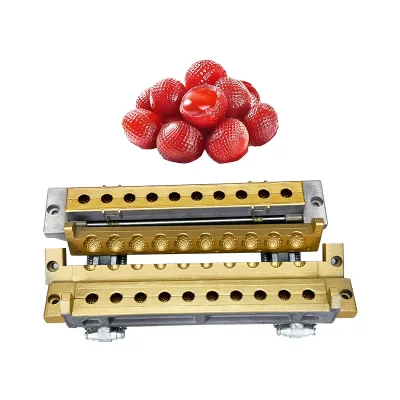
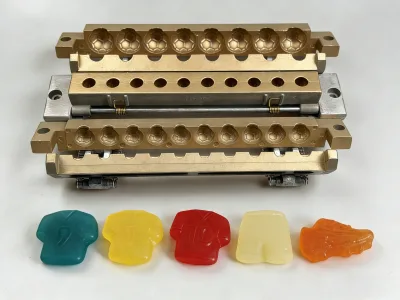
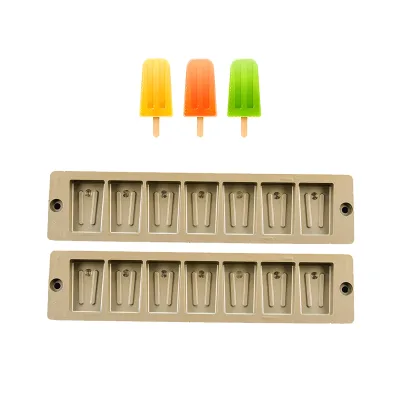
Hard Candy Moulds Aluminum Die Casting Candy Moulds Confectionery Machinery
$12.00 - $15.00
MOQ: 100 pieces
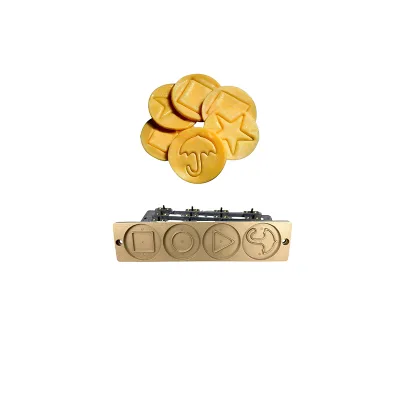
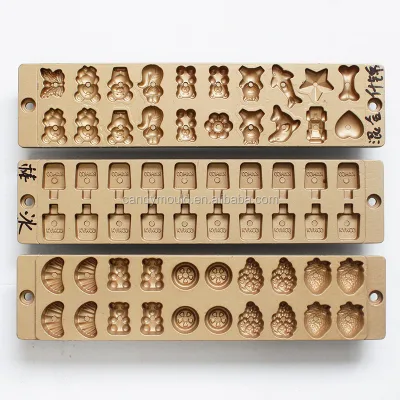
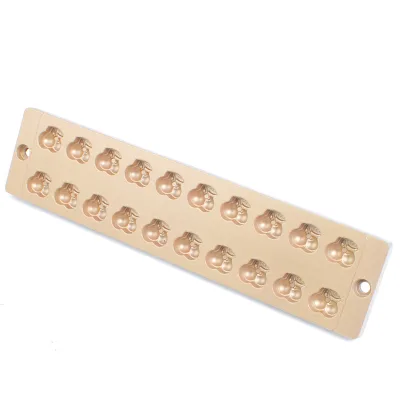
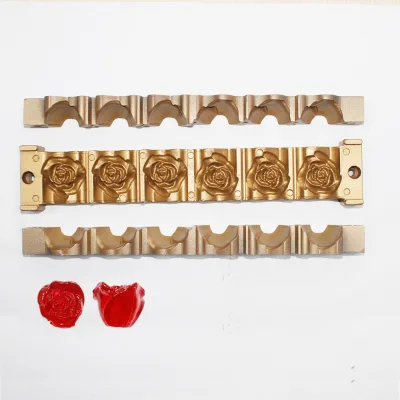
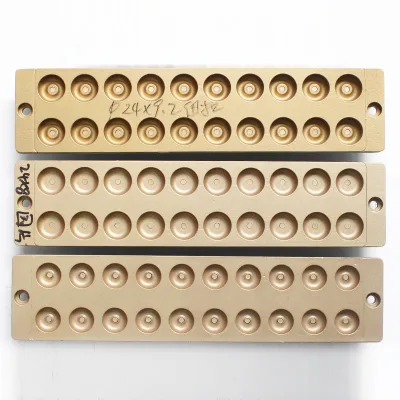
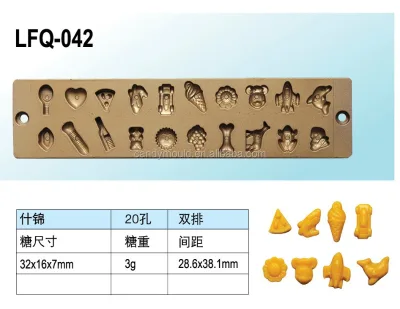
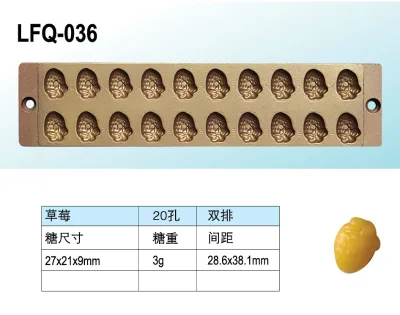


High Precision OEM Factory Customized Aluminum Alloy Die Casting Molds
$100.00 - $300.00
MOQ: 1 Pieces


Comprehensive Sourcing Guide
Die-Casting Aluminum Candy Mold Sourcing Guide
Aluminum candy molds produced by die casting occupy a narrow but demanding niche: they must combine food-contact suitability, dimensional repeatability across every cavity, and the durability to survive repeated thermal cycling in high-output candy lines. Because the tooling is itself a manufactured mold rather than a finished consumer good, procurement risk concentrates in areas buyers of standard parts rarely encounter — casting porosity, cavity alignment, edge finish, and the qualification of the casting process itself. A disciplined sourcing approach treats the purchase as a tooling procurement, not a commodity buy.
This guide walks through the decisions that matter when sourcing a Die-Casting Aluminum Candy Mold: understanding what the observed market listings actually signal, verifying the technical specifications that determine molding quality, assembling the right compliance file, negotiating commercial terms with realistic cost drivers in view, qualifying the supplier's process capability, and building the checks that protect the relationship over multiple reorder cycles. Each section frames one decision so that a buyer team can divide the verification work across technical, quality, and commercial functions.
Product Scope and Observed Listing Signals
The listings observed in this category cluster around dedicated candy tooling: aluminum molds for hard candies, including 3D and 4D shapes, sold as single items with typical packaged dimensions in the range of roughly 320×74 mm to 370×60 mm. Stated machinery capacity figures in the 80–300 kg/h range indicate that these molds are intended for integration with pouring lines — the listings themselves note suitability for both pouring machines and manual use. Applications cited span the mold's own use as a candy tool, with the broader mold-family attributes (automotive, household appliances, electronics, hardware) reflecting the suppliers' general die casting mold capabilities rather than this product's function. Buyers should treat these product attributes as observations about how suppliers position their offerings, not as verified performance guarantees for any individual listing.
Several listing signals help separate serious tooling suppliers from generic traders. Products described as customized or available for customization indicate the supplier works to customer cavity designs rather than only selling stock patterns. Mould life stated in terms of shot counts, demoulding described as automatic, and surface treatment noted as heat treatment all suggest the supplier thinks in tooling terms. Observed price points range from a few dollars to roughly two thousand dollars, which likely reflects the difference between small single-cavity molds and multi-cavity production tooling — buyers should expect price to scale with cavity count and complexity rather than treating the spread as a discount opportunity.
Technical Specifications to Verify
Start with the material and geometry. Listings consistently describe aluminum construction, which is the correct material class for candy molds because it conducts heat rapidly and releases product cleanly. Verify the specific alloy grade and temper rather than accepting "aluminum" at face value, since candy tooling depends on thermal response and surface hardness. Observed listings cite average wall thickness above 3 mm and usage hardness above HRC45 — a notably high hardness for aluminum, which suggests these figures may refer to the finished mold surface treatment or to a specific supplier's specification. Either way, confirm in writing how hardness is achieved (heat treatment is the cited surface treatment) and how it is measured, because a soft mold surface will score and galle under automatic demoulding.
Cavity accuracy and dimensional consistency are the specifications that directly determine product quality in hard candy production. Verify cavity-to-cavity dimensional tolerance, the seam line quality on multi-part 3D/4D molds, and surface finish in the cavity itself, since any roughness will telegraph onto the candy surface and impede release. Confirm the stated overall dimensions (observed examples include 320×74 mm and 370×60 mm, with customization available) against your pouring machine's mold mounting interface — mold width, thickness, and clamping geometry must match the machine, and "other sizes can be customized" means the burden of interface verification falls on the buyer. Finally, confirm the demoulding method in detail: automatic demoulding implies compatibility with ejection or stripping mechanisms on your line, which should be validated before tooling is finalized.
Compliance and Safety Documentation
Because these molds contact food during production, the compliance file should begin with food-contact safety of the aluminum alloy and any surface treatment, and extend to the general product certifications. Observed listings cite CE, RoHS, FCC, and REACH, and one listing references CE, RoHS, and ISO 9000 as its stated standard set. Request the actual certificates rather than accepting logo claims on the product page, and check that each certificate covers the specific mold model or material being quoted, not just a family of unrelated products. REACH documentation is particularly relevant for a European market entry, and RoHS matters if any coatings or surface treatments are applied to the casting.
Process-quality certification is the second half of the file. An ISO 9001-classified quality management system (referenced in category knowledge as low-confidence background, so verify directly) indicates the supplier has structured controls over casting parameters, inspection, and corrective action — attributes that matter more for tooling than for simple parts because mold quality compounds across thousands of shots. Ask for the supplier's material test documentation for the aluminum stock, evidence of heat treatment process control, and dimensional inspection reports for a first-article mold. Buyers exporting to regulated markets should also confirm which declarations the supplier can genuinely support versus which they expect the importer to obtain.
Cost Drivers and Commercial Terms
The observed price range — from roughly one dollar to over two thousand dollars across the category — reflects fundamentally different products, so the first cost decision is scoping what you are actually buying. Drivers that legitimately push price upward include cavity count, 3D/4D cavity complexity, customization to your design, heat treatment and polishing operations, and the mold's rated shot life. MOQ observations in this category range from 1 to 200 units, and for custom tooling an MOQ of one mold is normal and expected — a supplier quoting an unusually high MOQ on custom tooling may actually be steering you toward stock molds. Quote multiple cavity counts and designs in parallel so you can see how cost scales rather than negotiating a single data point.
Commercial terms should be negotiated around tooling-specific realities. Observed listings mention a 6-month warranty in one case; for production tooling, clarify what the warranty covers — casting defects and premature wear are reasonable inclusions, while wear from normal use at rated shot counts is not. Packing is consistently described as wooden boxes or steel boxes, which is appropriate for heavy tooling; confirm whether packing costs are included and whether the wooden packing meets any ISPM-classified treatment requirements for your destination market. Payment structure on custom tooling typically involves a deposit against design finalization and a balance after first-article approval — agree on what "approval" means in writing, with defined dimensional criteria, before releasing the balance.
Supplier Qualification and Quality Control
Qualify suppliers on demonstrated die casting mold capability, not on candy-industry marketing. The observed listings show suppliers whose broader portfolios span automotive, household appliance, electronic, and hardware die casting molds — a diversified tooling supplier can be legitimate, but ask specifically how many candy molds they have produced and whether they can show cavity-level workmanship. Origin is consistently listed as China, with one listing specifying Fujian province; where a province is cited, it can inform expectations about regional supply chain density for aluminum casting and machining, but should never substitute for direct capability verification. Prioritize suppliers who responded to technical questions with drawings, tolerance tables, and heat treatment details over those who only restate listing attributes.
Quality control should be staged rather than left to the end. Agree on a first-article inspection protocol: dimensional report against approved drawings, cavity surface finish check, seam line evaluation on 3D/4D cavities, and a trial casting run — ideally witnessed or video-recorded — using your actual candy recipe and pouring temperature. For production orders of multiple molds, define sampling and inspection criteria so cavity consistency is verified per unit, not just on the golden sample. Build an incoming inspection step on your side as well: check dimensions, surface condition, and any transport damage immediately on receipt, since wooden-case shipping of heavy aluminum tooling can produce edge impacts that only show up as candy defects weeks later.
Long-Term Procurement Checks
A candy mold is a consumable at the scale of a production line, so plan procurement around mold life and replacement cadence rather than one-off purchases. Track actual shot counts against the supplier's rated mold life from the first production run; observed listings claim long service life and "mould life" figures, but only your own wear data will show whether hard candy abrasion and thermal cycling match the rating. When reorders are needed, hold the approved drawings, heat treatment parameters, and first-article reports on file so a repeat order can be compared directly to the original qualification — this is also your protection if the supplier's process or personnel change between orders.
Finally, maintain the relationship in a way that keeps your options open. Confirm in writing that your cavity designs remain your intellectual property and that the supplier will not supply your molds to other buyers. Periodically request updated material and compliance certificates, since certification scopes can lapse or change. Where customization is a stated capability, test it early with a low-risk design revision so you know the supplier's engineering responsiveness before a production emergency forces a rushed tooling change. A supplier who documents well, communicates clearly on technical points, and accepts inspection-based acceptance terms is far more valuable over years of reorders than the lowest initial quotation.
FAQs
What material is used for die casting aluminum candy molds?
The molds are manufactured from high-quality aluminum material. This choice ensures efficient heat dissipation and durability during the candy production process. The aluminum construction supports consistent molding results for both soft and hard candies, making it a reliable choice for industrial applications.
Can these molds be customized for specific candy shapes?
Yes, customization is available for these die casting molds. Buyers can request specific dimensions and designs to suit their unique candy products. The molds support custom specifications, allowing for tailored solutions that meet particular production requirements and branding needs for hard or soft candies.
What certifications do these aluminum candy molds hold?
These molds typically hold CE, RoHS, FCC, and REACH certifications. These standards ensure compliance with international safety and environmental regulations. The adherence to these certifications provides assurance regarding the quality and safety of the manufacturing process, which is critical for food-related tooling applications.
How is the warranty structured for these die casting molds?
The standard warranty period for these molds is six months. This coverage protects buyers against manufacturing defects during the initial operational phase. The warranty applies to the new condition of the product, ensuring that the aluminum die casting mold performs as expected under normal usage conditions.
What is the typical packaging method for these molds?
The molds are packaged in sturdy wooden boxes or steel cases. This protective packaging ensures safe transportation and prevents damage during shipping. The robust packing method is designed to safeguard the precision of the die casting mold, maintaining its integrity from the factory in China to the buyer's facility.
What is the average wall thickness of these molds?
The average wall thickness of these molds is greater than 3mm. This substantial thickness contributes to the structural strength and longevity of the die casting tool. The robust design helps withstand the pressures of the molding process, ensuring a long service life for the aluminum candy mold.