Source Diesel Engine Electronic Control Module for Generators
Find and compare 30 Diesel Engine Electronic Control Module options for standby, emergency, and common unit applications. Evaluate features like auto-start capabilities, LED indicators, and operating temperature ranges to select the right controller for your power system needs.
Key considerations
Products List


$330.00 - $500.00
MOQ: 1 Pieces


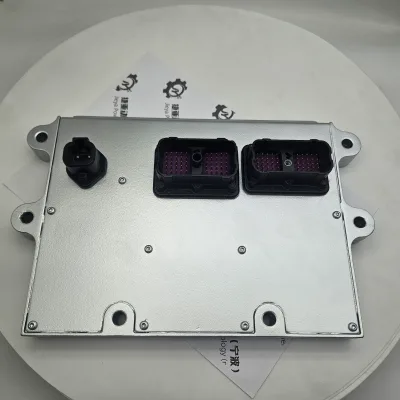


Automatic Engine Control Module Qsx15 Diesel Engine Ecm 3681541 Electronic Control Module
$980.00 - $2000.00
MOQ: 1 Pieces


Diesel Engine Parts Ecm ECU Electronic Control Module 4359433 4934710 2897462
$920.00 - $1130.00
MOQ: 1 Pieces


Dci11 Diesel Engine ECU Ecm Electronic Control Module D5010222531 0281020103
$260.00 - $275.00
MOQ: 1 Pieces


Diesel Engine Parts Ecm ECU Electronic Control Module 4359433 4934710 2897462
$1150.00 - $1180.00
MOQ: 1 Pieces
Comprehensive Sourcing Guide
Diesel Engine Electronic Control Module Sourcing Guide
Procuring a Diesel Engine Electronic Control Module requires a disciplined approach to aligning technical specifications with operational requirements. These modules serve as the central nervous system for generator sets, managing critical functions such as automatic start sequences, mains-to-generation switchover, and engine governor control. Buyers must recognize that the market contains diverse product types, ranging from intelligent auto-start control modules to specific electronic governors, each tailored to distinct generator architectures. Understanding the functional distinction between a general controller and a specialized governor is the first step in defining accurate procurement specifications.
The sourcing landscape for these components is characterized by significant variation in origin, certification, and intended application. Suppliers may list products originating from the United Kingdom or various regions in China, such as Fujian or Shandong, indicating a global supply chain with differing quality assurance protocols. Buyers should not assume uniformity across listings; instead, they must verify the specific model number, operating voltage, and environmental tolerances for each potential supplier. This guide provides a structured framework for evaluating these modules based on observed market signals, technical verification steps, and commercial due diligence.
Product Scope and Observed Listing Signals
The current market for diesel engine electronic control modules exhibits a wide price range, typically observed between $12 and $2,000 USD, reflecting the disparity between basic control units and advanced intelligent controllers. This variance is often driven by the complexity of the module, such as whether it includes LED indicators, supports automatic switchover, or integrates with specific generator types like diesel engines. Buyers should interpret this range as an indicator of feature depth rather than a direct correlation to reliability, as both entry-level and high-end modules can serve common, standby, or emergency crew applications depending on the installation context.
Listing signals also reveal significant diversity in product packaging and physical attributes, which can impact logistics and inventory management. Observed data indicates that modules are packed in cartons, boxes, or individually wrapped units, with weights ranging from 0.8 kg to 1.0 kg. Some listings specify standard dimensions of 25.00 cm x 25.00 cm x 10.00 cm, while others emphasize high-quality construction or specific colors like orange. Buyers must treat these attributes as observational data points to be verified against their own storage and handling capabilities, rather than assuming all suppliers adhere to the same packaging standards or physical specifications.
Technical Specifications to Verify
Verifying the operating environment is critical for ensuring the longevity and reliability of the electronic control module. Key parameters to confirm include the operating temperature range, which may vary from -15°C to +55°C or extend to -40°C to +85°C depending on the specific model, and the relative humidity tolerance, often cited as 0% to 95% non-condensing. Buyers must match these environmental ratings to the actual conditions of the installation site, whether it is a land-based facility, a marine environment, or a trailer-mounted unit, to prevent premature failure due to thermal stress or moisture ingress.
Electrical and mechanical specifications require precise alignment with the existing generator infrastructure. The operating voltage is a fundamental constraint, with many modules designed for 24 ± 6 V DC systems, while others may support different configurations. Buyers should also verify the installation method, which is typically fixed, and the cooling method, often air-cooled for these compact units. Additionally, the specific model number, such as DSE4620 or Denyo Controller variants, must be cross-referenced with the generator’s manual to ensure compatibility with the engine’s electronic governor and communication protocols, avoiding costly integration errors.
Compliance and Safety Documentation
Certification status is a primary indicator of a supplier’s commitment to quality and regulatory adherence. Observed listings frequently cite certifications such as CE, ISO, and RoHS, with some specifically mentioning ISO9001 for quality management systems. Buyers should request valid certificates for each batch or model, verifying that the issuing body is accredited and that the certification covers the specific electronic control module being purchased. The presence of these certifications suggests that the manufacturer adheres to recognized standards for safety, environmental impact, and quality control, reducing the risk of procuring non-compliant hardware.
Warranty and quality guarantees provide a contractual safety net for the buyer. Most suppliers offer a one-year warranty or quality guarantee, which should be explicitly stated in the purchase agreement. Buyers must clarify the terms of this warranty, including whether it covers parts, labor, or replacement units, and what conditions might void the coverage, such as improper installation or operation outside specified environmental limits. A clear warranty policy is essential for mitigating the financial risk associated with potential defects in electronic components, ensuring that the buyer has recourse in case of early failure.
Cost Drivers and Commercial Terms
The minimum order quantity (MOQ) for diesel engine electronic control modules typically ranges from 1 to 20 units, offering flexibility for both single-unit replacements and bulk procurement. Buyers should evaluate whether the supplier’s MOQ aligns with their inventory strategy, noting that lower MOQs may come with higher per-unit costs, while larger orders might unlock volume discounts. Understanding the MOQ structure is crucial for cash flow management, especially for organizations that maintain spare parts inventories for emergency crew or standby units, where immediate availability is more critical than cost optimization.
Customization options and stock availability are significant factors influencing the total cost of ownership. Many suppliers indicate that customization is available, allowing buyers to tailor modules to specific generator configurations or branding requirements. However, customized orders may involve longer lead times and higher costs compared to standard off-the-shelf items. Buyers should also verify stock status, as some listings indicate availability while others may require production runs, impacting the urgency of the procurement and the ability to maintain operational continuity for critical power systems.
Supplier Qualification and Quality Control
Supplier origin and manufacturing capability are key indicators of product consistency. Listings show origins in the United Kingdom, Fujian, and Shandong, each representing different manufacturing ecosystems with varying levels of technological maturity and quality control processes. Buyers should conduct due diligence on the supplier’s manufacturing facilities, requesting information about their production lines, testing procedures, and quality assurance protocols. This verification helps ensure that the electronic control modules meet the required performance standards and are not subject to the variability often associated with unverified manufacturing sources.
Quality class and product attributes should be assessed through objective verification rather than relying solely on marketing claims. While some listings describe products as "high quality" or specify features like LED indicators, buyers must validate these claims through sample testing or third-party inspection reports. Establishing a clear quality control plan, including incoming inspection criteria and functional testing protocols, is essential for maintaining the integrity of the procurement process. This proactive approach minimizes the risk of receiving defective units and ensures that the installed modules perform reliably under the specified operating conditions.
Long-Term Procurement Checks
Establishing a robust supplier relationship is vital for long-term procurement success. Buyers should prioritize suppliers who demonstrate transparency in their specifications, certifications, and warranty terms. Regular communication and performance reviews can help identify potential issues early, such as delays in delivery or inconsistencies in product quality. By maintaining a structured evaluation process, buyers can build a reliable supply chain that supports the ongoing maintenance and operation of their diesel generator sets, ensuring minimal downtime and optimal performance over the lifecycle of the equipment.
Continuous monitoring of market trends and technological advancements is necessary to stay ahead of obsolescence. As generator technology evolves, electronic control modules may require updates or replacements with newer models that offer enhanced features or better compatibility. Buyers should stay informed about industry developments and maintain a list of qualified suppliers who can provide future-proof solutions. This strategic approach ensures that the procurement process remains agile and responsive to changing operational needs, supporting the long-term reliability and efficiency of the power generation infrastructure.
FAQs
What is the warranty period for this controller?
The warranty period is one year for this controller. This guarantee covers quality issues and ensures reliability for diesel engine generator applications.
Can the controller operate in extreme temperatures?
Yes, the controller can operate in temperatures ranging from minus 40 to plus 85 degrees Celsius. This wide range supports use in harsh environments.
Which certifications does the product hold?
The product holds CE, RoHS, and ISO9001 certifications. These standards confirm compliance with safety and quality management requirements for industrial use.
How is the product packaged for shipping?
The product is packed in cartons or individual boxes. This packaging method ensures safe transport and protection during international logistics operations.
What is the operating voltage requirement?
The operating voltage requirement is 24 plus or minus 6 volts DC. This specification ensures compatibility with standard diesel generator electrical systems.
Is customization available for this module?
Customization is available for this module to meet specific project needs. Buyers can request tailored solutions while maintaining the core intelligent control functions.
Where is the product originally manufactured?
The product originates from the United Kingdom and Fujian China. These locations indicate the manufacturing sources for different variants of the controller.