Source Digital Automatic Ph Controller for Drying Equipment, Boiler Water Pump, and Production
Find 30 listings for the Digital Automatic Ph Controller suitable for drying equipment, boiler water pumps, and production environments. Buyers can compare models like PH-018 and PH-301 with features such as LCD displays and ISO certifications to find the right fit.
Key considerations
Products List


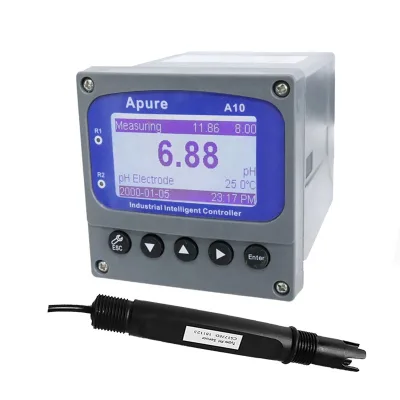


Automatic Online Digital pH Meter Controller for Waste Water and Swimming Pool
$98.00 - $165.00
MOQ: 1 Pieces


Digital pH Meter Dual Relay pH Controller for Hydroponic Solution Management
$100.80 - $125.40
MOQ: 50 Pieces


Comprehensive Sourcing Guide
Strategic Sourcing Guide for Digital Automatic pH Controllers
Understanding Core Technical Specifications and Performance Metrics
When sourcing a Digital Automatic Ph Controller, the primary objective is to identify equipment that delivers precise measurement and reliable control within your specific operational environment. The market offers a variety of models, each defined by distinct technical parameters that must align with your process requirements. A critical observation in the current supply landscape is the variation in resolution capabilities. Some units in the catalog demonstrate a high-resolution capability of 0.01pH, while others specify a range of PH:0.01pH, indicating that buyers must verify the decimal precision required for their specific chemical processes.
The measuring range is another fundamental specification. For general industrial applications, a standard range of 0.00 to 14.00pH is observed, covering the full spectrum of acidity and alkalinity. However, the accuracy of the device is often listed as "Type" in general descriptions, which necessitates a direct inquiry to the supplier to confirm the specific tolerance levels for your batch. The display interface is equally important for user interaction. Many modern controllers utilize an LCD display type, with some featuring a backlit 3.5-bit LCD to ensure readability in low-light industrial settings.
Power supply requirements vary significantly across different product lines. While some units operate on a standard AC 220V ±10% at 50HZ, others are designed for DC 24V operation, offering flexibility for integration with different plant electrical systems. The control output is typically managed via relay control, providing Hi, Lo, On, and Off states to manage dosing pumps or valves. It is essential to distinguish between devices that offer a digital output signal type and those that may rely on analog signals, as this dictates compatibility with your existing automation infrastructure. The physical dimensions also vary; for instance, some panel-mount units adhere to a standard size of 96 x 96 x 130mm (height x width x depth), while others may have different form factors.
Compliance, Certification, and Regulatory Standards
Navigating the compliance landscape is a non-negotiable aspect of B2B procurement for industrial instrumentation. Buyers must verify that the Digital Automatic Ph Controller meets the necessary safety and quality standards for their target market. The supply chain data indicates the presence of several key certifications. ISO certification is frequently cited, suggesting adherence to international quality management systems. Additionally, the CCC (China Compulsory Certification) mark is observed, which is mandatory for products sold within the Chinese domestic market. For international export, particularly to Europe, the CE certification is a critical requirement, ensuring the product meets EU safety, health, and environmental protection standards.
Beyond product-specific certifications, buyers should be aware of broader manufacturing standards. While ISO9000 is mentioned in background contexts, it is crucial to confirm the specific version and scope of the quality management system in place at the manufacturing facility. The physical standards of the product are also documented; for example, some units are described with standard dimensions of 165mm x 158mm x 121mm, while others, such as probes or sensors, may follow a standard of Φ 22mm x 120mm. These dimensional standards are vital for ensuring the equipment fits into existing control panels or piping systems.
Environmental conditions play a significant role in compliance and operational safety. The equipment must be rated to operate within specific temperature and humidity ranges. Observed specifications indicate an operating temperature range of 0°C to 50°C and a maximum humidity of ≤85%RH. Failure to match these environmental ratings with your facility's conditions can lead to premature failure or inaccurate readings. Furthermore, the IP Rating is a key indicator of ingress protection, though specific values should be confirmed for each model to ensure resistance to dust and water in wet industrial environments.
Cost Drivers and Pricing Structure Analysis
The pricing structure for digital automatic pH controllers is influenced by a complex interplay of factors, including customization levels, material quality, and functional complexity. The observed price range in the market spans from $1 to $1,100, reflecting a vast disparity between basic sensors, standalone controllers, and integrated systems. This wide range suggests that buyers should not rely on a single price point but rather analyze the cost drivers specific to their needs.
One of the primary cost drivers is the level of customization. The market data shows that some products offer "Available" customization, while others are listed as "Non-Customized." Customized units, particularly those supporting OEM (Original Equipment Manufacturer) branding, often command a higher price due to the additional engineering and tooling costs involved. The brand name, such as Apure, can also influence pricing, as established brands may include a premium for perceived reliability and after-sales support.
Material composition is another significant factor. The material of the probe and housing determines durability and resistance to corrosive chemicals. While some listings describe the material simply as "Type," high-end controllers typically utilize specialized alloys or high-grade plastics that resist degradation. The load power requirements, such as 750W or 2200W for associated heating or cooling elements, also impact the overall system cost. Additionally, packaging costs vary; some units come in a standard box, while others use neutral packaging, which can affect shipping and handling expenses.
The Minimum Order Quantity (MOQ) is a critical financial consideration. The observed MOQ range spans from 1 to 500 units. Buyers seeking to test a new technology or replace a single unit can often source with an MOQ of 1, whereas bulk procurement for large-scale projects may require an MOQ of 500. This variability allows for flexibility in budgeting but requires careful negotiation to ensure the unit price aligns with the order volume. The single gross weight of 1.800 kg for certain models also influences logistics costs, as heavier units incur higher shipping fees.
Typical Applications and Operational Contexts
Digital automatic pH controllers are versatile instruments deployed across a wide array of industrial sectors. Their primary function is to maintain water chemistry within strict parameters, ensuring process efficiency and product quality. One of the most common applications is in drying equipment and boiler water pump systems. In these contexts, precise pH control prevents corrosion in boilers and ensures the effectiveness of drying processes. The operating principle typically relies on an electronic temperature sensor, which compensates for temperature variations to provide accurate pH readings.
The versatility of these controllers extends to various production environments. The cooling purpose is often listed as "Production," indicating their use in manufacturing lines where temperature and pH must be tightly regulated to prevent product spoilage or equipment damage. The detector type, often a magnet in specific configurations, suggests applications involving flow measurement or level detection in conjunction with pH control. The control type is predominantly digital, allowing for sophisticated programming and remote monitoring capabilities.
Specific models, such as the PH-018(485), PH-301, and PH-201, are designed for different application intensities. The PH-201W and Y532-A models may cater to specialized needs, while the SKP-04 and A10 models represent other variations in the product line. The usage scenarios are diverse, ranging from simple laboratory setups to complex industrial plants. The environmental condition requirements, such as the 0~50°C temperature range, make these devices suitable for both indoor and controlled outdoor environments. However, for harsher conditions, additional protection or specific IP-rated models must be selected.
Supplier Evaluation and Geographic Sourcing Considerations
Evaluating suppliers for digital automatic pH controllers requires a thorough assessment of their geographic location, production capabilities, and reputation. The supply chain data indicates that manufacturers are primarily located in key industrial hubs in China. Notable origins include Qingdao in Shandong Province, Yueqing in Zhejiang, and Shanghai. Each region has its own industrial specialization; for instance, Yueqing is known for electrical components, while Shanghai is a major center for advanced instrumentation.
When evaluating a supplier, buyers should verify the "place of origin" and "prod_origin" details to ensure the product meets regional quality expectations. The location of the factory can also impact lead times and shipping logistics. For example, sourcing from Qingdao may offer different shipping advantages compared to Shanghai or Yueqing. The supplier's ability to provide "customized support" is another critical evaluation metric. Suppliers offering OEM services can tailor the product to your specific branding and technical requirements, adding value to the procurement process.
The warranty period is a strong indicator of supplier confidence in their product. A standard warranty of 1 Year is observed in the market, but buyers should negotiate for extended coverage if the application involves critical processes. The packaging method, whether "Box" or "Neutral Packaging," can also reflect the supplier's attention to detail and commitment to product protection during transit. Buyers should request detailed product documentation, including the single package size (e.g., 27x26x27 cm) and single gross weight, to plan their logistics effectively.
Quality Control and Long-Term Procurement Strategy
Implementing a robust quality control (QC) strategy is essential for ensuring the long-term reliability of digital automatic pH controllers. The initial inspection should focus on verifying the product specifications against the purchase order. This includes checking the resolution, measuring range, and display type. For instance, confirming that the resolution is indeed 0.01pH and the measuring range covers 0.00 to 14.00pH is a basic but necessary step.
Long-term procurement considerations involve establishing a relationship with a supplier that can provide consistent quality over time. The "Accuracy" and "Material" specifications should be rigorously tested, as these directly impact the lifespan of the equipment. Buyers should request test results or certification documents that validate the product's performance under the specified environmental conditions. The "Operating Principle" of the electronic temperature sensor should be verified to ensure it functions correctly in the intended temperature range.
Maintenance and support are also critical components of a long-term strategy. The availability of spare parts, such as probes or sensors, should be confirmed before finalizing the purchase. The "Control output" mechanism, which includes relay control for Hi, Lo, On, and Off states, should be tested for reliability. Additionally, the "Power Supply" compatibility should be verified to prevent electrical issues. By focusing on these quality control aspects, buyers can mitigate the risks associated with equipment failure and ensure a stable supply chain for their Digital Automatic Ph Controller needs.
Final Procurement Recommendations and Verification Steps
To conclude the sourcing process for digital automatic pH controllers, buyers must adopt a methodical approach that prioritizes verification over assumption. The market data provides a foundation, but the final decision should be based on direct confirmation of all technical and compliance details. Start by defining your specific requirements for resolution, range, and power supply. Then, cross-reference these needs with the available product models, such as the PH-201 or A10, to identify potential candidates.
Next, conduct a thorough compliance check. Ensure that the supplier can provide valid ISO, CCC, or CE certifications as required by your market. Verify the environmental ratings to confirm the device can withstand your facility's temperature and humidity conditions. When evaluating cost, consider the total cost of ownership, including the MOQ, shipping costs based on weight and dimensions, and the potential for customization.
Finally, establish a clear communication channel with the supplier to discuss warranty terms, after-sales support, and delivery timelines. By adhering to these verification steps and leveraging the observed data points, buyers can make informed decisions that align with their operational goals and budget constraints. The diversity of the market, from the 1-unit MOQ to the 500-unit bulk orders, offers flexibility, but success lies in the precision of the selection process.
FAQs
What resolution does the Digital Automatic Ph Controller offer?
The device offers a resolution of 0.01pH for precise measurement. This high precision ensures accurate readings within the 0.00 to 14.00pH measuring range required for industrial processes.
Which certifications are available for these controllers?
Available certifications include ISO, CCC, and CE for regulatory compliance. These marks verify that the product meets international quality management systems and safety standards for various markets.
Can I find customized support for this equipment?
Customized support is available for specific models including OEM options. Buyers can request tailored branding or specifications, though some units are listed as non-customized standard products.
Where are the manufacturers of these controllers located?
Manufacturers are primarily located in Qingdao, Shanghai, and Yueqing in China. These industrial hubs provide access to factories specializing in electrical components and advanced instrumentation for export.
What is the typical price range for these units?
The observed price range spans from 1 to 1100 USD depending on the model. Costs vary based on features like display type, power supply, and whether the unit is customized.
How is the product packaged for shipping?
Products are typically packed in boxes or neutral packaging. The single package size is often around 27x26x27 cm with a gross weight of 1.800 kg for logistics planning.
What power supply options are supported?
The controller supports AC 220V ±10% 50HZ and DC 24V power supplies. This flexibility allows integration with different plant electrical systems and varying operational environments.