Source Digital Temperature Probe for Industrial, Medical, and Household Use
Find 30 verified listings for the Digital Temperature Probe suitable for industrial, medical, and household applications. Buyers can compare specifications, customization options, and pricing from multiple suppliers in China.
Key considerations
Products List




Comprehensive Sourcing Guide
Strategic Sourcing Guide for Digital Temperature Probes
Selecting the right Digital Temperature Probe requires a disciplined approach that balances technical precision with supply chain reliability. In the industrial and commercial sectors, temperature measurement is not merely a convenience but a critical control parameter for process safety, product quality, and regulatory compliance. Buyers must navigate a landscape where specifications vary significantly between medical, industrial, and general-purpose applications. This guide outlines the essential factors for evaluating digital temperature probes, ensuring that procurement decisions are grounded in verifiable data and established industry practices rather than marketing assertions.
Technical Specifications and Sensor Performance
The core of any Digital Temperature Probe lies in its sensor technology and the resulting measurement capabilities. The most prevalent sensor type observed in high-precision applications is the PT 100 (Platinum Resistance Thermometer), which offers superior stability and repeatability over a wide temperature range. For applications requiring broad operational flexibility, probes with a sensing range of -50°C to 110°C are available, accommodating environments from sub-zero storage to hot processing lines. However, specific use cases, such as medical monitoring, often demand a narrower, highly accurate range, typically spanning 32.0°C to 42.99°C.
Resolution and accuracy are the primary differentiators in probe selection. High-performance units offer a resolution of ±0.05°C or 0.1°C, allowing for the detection of minute thermal fluctuations. In contrast, general-purpose models may specify an accuracy of ±0.5°C or ±0.1°C (±0.2°F). Buyers must verify that the stated accuracy aligns with the tolerance requirements of their specific process. Furthermore, the display mechanism is a critical interface element; digital displays are standard, providing immediate readouts in Celsius or Fahrenheit. The choice of display should be validated against the operator's environment, ensuring readability under various lighting conditions.
| Feature Category | High-Precision Industrial | General Purpose / Medical |
|---|---|---|
| Sensor Type | PT 100 / Resistive | Resistive / Integrated |
| Accuracy | ≤0.5°C | ±0.1°C (±0.2°F) |
| Resolution | ±0.05°C | 0.1°C |
| Temperature Range | -50°C ~ 110°C | 32.0°C ~ 42.99°C |
| Display | Digital (C/F) | Digital (C) |
Compliance, Certification, and Material Safety
Regulatory compliance is non-negotiable when sourcing temperature probes, particularly for applications involving food, healthcare, or sensitive industrial processes. Buyers must verify that suppliers possess valid certifications such as CE and ISO, which indicate adherence to international safety and quality management standards. For products entering the European market, RoHS compliance is often required to ensure the absence of hazardous substances.
Material selection is intrinsically linked to safety and durability. In food processing and medical contexts, the probe housing and sensing element must be constructed from food-grade stainless steel or other approved materials to prevent contamination. The material must also withstand the intended environment, whether it involves exposure to moisture, chemicals, or physical impact. For industrial applications, an IP rating is essential to define the device's protection against dust and water ingress. While specific IP ratings vary by model, the presence of an IP rating is a mandatory verification point for any probe intended for harsh environments. Additionally, the product's origin, often listed as China or specific provinces like Hubei and Guangdong, should be cross-referenced with the supplier's quality control history to ensure consistent manufacturing standards.
Cost Drivers and Pricing Dynamics
The pricing of digital temperature probes is influenced by a complex interplay of factors, including sensor technology, material quality, customization requirements, and order volume. The observed market price range is extensive, spanning from $0.20 to $1,500 USD. This variance reflects the difference between simple, single-use disposable units and complex, industrial-grade instruments with advanced calibration features.
Customization is a significant cost driver. Suppliers offering OEM services, such as logo printing or custom packaging, often charge a premium. The availability of customized models, including specific color options like white, blue, or red, adds to the production complexity. Furthermore, the Minimum Order Quantity (MOQ) plays a crucial role in unit pricing. MOQs can range from a single unit to 2,000 units, with bulk orders typically securing a lower per-unit cost. Buyers should also consider the packaging requirements; standard export packaging, such as aluminum alloy boxes or cartons, may incur additional costs compared to basic polybag packaging. Understanding these variables allows buyers to negotiate effectively and align their budget with the necessary performance level.
Typical Applications and Usage Scenarios
Digital temperature probes serve a diverse array of industries, each with unique operational demands. In the industrial sector, these devices are critical for monitoring manufacturing processes, ensuring that temperature-sensitive reactions occur within specified parameters. The suggested calibration period of one year is a standard maintenance requirement for these high-stakes applications to maintain accuracy over time.
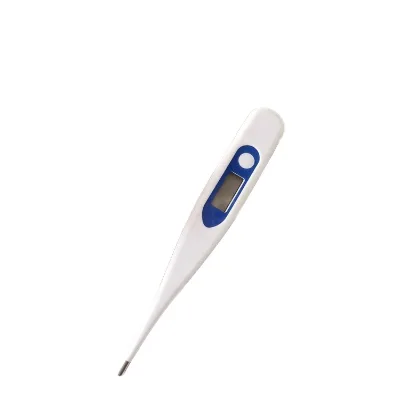
Conversely, in the household and medical sectors, the focus shifts to ease of use and patient safety. Probes designed for adults and children often feature compact dimensions, such as 134 x 22 x 14mm, and are constructed from durable plastic for safe handling. These devices typically have a shelf life of three years, ensuring reliability during storage and distribution. The contactless sensing type is another variation, suitable for applications where physical contact with the measured medium is impractical or unsafe. Whether the application is for industrial monitoring, medical diagnostics, or general household use, the selection must be driven by the specific environmental constraints and measurement precision required.
Supplier Evaluation and Production Capacity
Evaluating a supplier involves more than just reviewing product specifications; it requires an assessment of their production capabilities and logistical reliability. A key indicator of a supplier's ability to meet demand is their production capacity, which can range significantly. Some manufacturers report a daily capacity of up to 100,000 pieces, indicating a robust supply chain capable of handling large-scale orders. However, buyers must verify that this capacity is consistent and not merely a theoretical maximum.
The production process itself is another area of scrutiny. Integration of components and the use of standardized safety export packages are indicators of a mature manufacturing process. Buyers should inquire about the supplier's ability to support different business models, such as OBM (Original Brand Manufacturing) or OEM services. The port of loading is also a logistical consideration; major ports like Shanghai, Ningbo, and Qingdao offer efficient shipping options, but the specific location of the supplier's factory (e.g., Guangdong or Hubei) can impact lead times and freight costs. Ensuring that the supplier has a proven track record in the relevant industry sector is essential for mitigating supply chain risks.
Quality Control and Long-Term Procurement Considerations
Maintaining the integrity of temperature measurements over the lifecycle of the product is vital for long-term procurement success. Quality control measures should include rigorous testing of accuracy and resolution before shipment. The suggested calibration period of one year serves as a benchmark for maintenance schedules, but buyers should establish a protocol for regular re-verification, especially in critical applications.
Packaging plays a dual role in quality control and logistics. Products are often shipped in individual packages, polybags, or sturdy cartons designed to protect the device during transit. For sensitive instruments, aluminum alloy boxes provide an additional layer of protection. Buyers should also consider the warranty terms and the availability of after-sales support. While some products may list "Other" as the warranty type, clear communication regarding repair, replacement, and calibration services is necessary to ensure operational continuity. Finally, the HS code (9019200000) is a critical data point for customs clearance and tariff classification, ensuring that the procurement process remains compliant with international trade regulations. By focusing on these long-term considerations, buyers can secure a reliable supply of digital temperature probes that meet their technical and operational needs.
FAQs
What sensor types are available for digital temperature probes?
Digital temperature probes typically use PT 100 or resistive sensors for accurate measurement. These sensors support ranges from -50°C to 110°C or specific medical ranges like 32.0°C to 42.99°C depending on the application.
Can I get customized digital temperature probes with my logo?
Yes, customized options are available including logo printing and specific colors like white, blue, or red. Suppliers often offer OEM services to meet branding requirements for industrial or household use cases.
What certifications do digital temperature probes usually have?
Common certifications include CE, ISO, and RoHS to ensure safety and compliance. These standards verify that the product meets international requirements for materials and manufacturing processes in various markets.
How accurate are digital temperature probes for industrial use?
High-precision industrial probes offer accuracy of ±0.5°C or better with resolutions down to ±0.05°C. Medical models often specify ±0.1°C accuracy to ensure reliable readings for sensitive applications.
What is the suggested calibration period for these devices?
A one-year calibration period is suggested to maintain measurement accuracy over time. Regular re-verification is essential for critical industrial applications to ensure the device continues to meet performance standards.
Which materials are used for food-grade digital temperature probes?
Food-grade probes are constructed from stainless steel or other approved materials to prevent contamination. These materials ensure durability and safety when measuring temperatures in food processing or medical environments.