Source Digital Smart Air Fryer Oven for Kitchen, Home, and Bake
Explore 30 listings of Digital Smart Air Fryer Oven units with varying power ratings from 1000W to 1700W and capacities up to 5L. Buyers can compare features like touch screens, mechanical timers, and certifications including UL, CE, and GS for indoor kitchen and household baking applications.
Key considerations
Products List


3.5L Smart Air Fryer Oven with Touch Control 1500W Oil-Free Digital Cooker
$14.00 - $20.00
MOQ: 500 Pieces

Digital Touchscreen Smart Air Fryer 3.5L 1500W Oil-Free Oven for Healthy Cooking
$14.00 - $20.00
MOQ: 500 Pieces
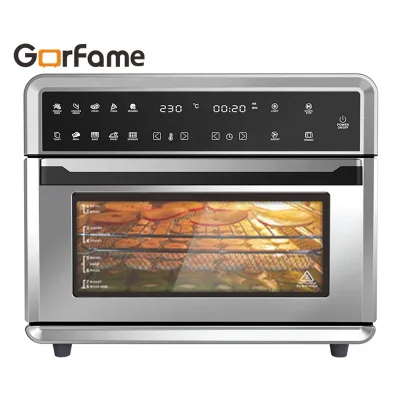


Air Fryer Hot Sell Kitchen Appliances Smart Silicone Digital Air Fryer Pot
$20.00 - $22.00
MOQ: 500 Pieces

Digital Air Fryer Digital Hot Sell Kitchen Appliance Electric Digital Air Fryer
$20.00 - $22.00
MOQ: 500 Pieces

Air Fryer Digital Hot Sell Kitchen Appliance Electric Digital Air Fryer
$20.00 - $22.00
MOQ: 500 Pieces


Fryer Air Touch Screen Dual Basket Air Fryer Electric Smart Air Fryers
$32.00 - $35.00
MOQ: 100 Pieces

Comprehensive Sourcing Guide
Digital Smart Air Fryer Oven Sourcing Guide
Sourcing digital smart air fryer ovens requires a nuanced understanding of the intersection between compact countertop appliances and larger, multi-functional oven systems. The market segment is characterized by a wide variance in capacity, control interfaces, and heating technologies, ranging from simple basket-style fryers to complex convection ovens with rotisserie capabilities. Buyers must distinguish between products that rely on basic mechanical timers and those equipped with advanced digital touchscreens, programmable presets, and smart connectivity features. This distinction directly impacts the user experience, the complexity of the manufacturing process, and the resulting price point. Understanding these operational modes is the first step in defining a precise procurement specification that aligns with your target market’s expectations for convenience and culinary performance.
The procurement landscape for these appliances is heavily influenced by customization potential and supply chain flexibility. Many manufacturers offer extensive customization options, allowing buyers to tailor product aesthetics, packaging, and even internal components to meet specific regional or brand requirements. However, this flexibility often comes with varying minimum order quantities (MOQs), which can range significantly depending on the complexity of the customization and the production volume. Buyers need to evaluate whether their order volume justifies the setup costs for custom molds or software interfaces, and whether the supplier has the capacity to maintain consistent quality across large batches. Balancing the desire for unique product differentiation with the economic realities of MOQs is a critical commercial decision that shapes the entire sourcing strategy.
Product Scope and Observed Listing Signals
The observed product listings reveal a diverse range of specifications that highlight the breadth of the Digital Smart Air Fryer Oven category. Products vary significantly in power consumption, with observed ratings including 1000W, 1500W, and 1700W units, indicating different heating speeds and energy efficiencies. Capacity also varies, with some models offering 2.3L volumes suitable for small households, while others provide 5L capacities for larger families or commercial-style home use. The physical dimensions and gross weights further illustrate this diversity, with some units measuring approximately 24.5x24.5x31.5cm and weighing 5.5kg, while larger models extend to 422x369x332mm and weigh up to 9kg. These physical attributes are crucial for logistics planning, warehouse storage, and determining the appropriate retail packaging dimensions.
Control mechanisms and user interfaces are another key differentiator observed in the market. While some models utilize mechanical timer controls, others feature sophisticated digital timer controls and touch screens, offering precise temperature and time management. The presence of features such as overheating protection, LED interior lighting, and oil collection systems adds value for consumers seeking safety and ease of use. Additionally, the materials used, such as non-stick baskets and powder-coated outer cases, play a significant role in durability and cleaning convenience. Buyers should carefully review these observed signals to ensure that the selected products match the functional requirements of their end-users, particularly regarding the balance between manual control simplicity and digital precision.
Technical Specifications to Verify
Verifying technical specifications is essential to ensure that the air fryer ovens meet performance expectations and integrate correctly with regional electrical standards. Buyers must confirm the voltage and frequency requirements, which are typically listed as 220-240V at 50-60Hz, to ensure compatibility with the target market’s power infrastructure. Power ratings should be validated against the actual heating element performance, as discrepancies can lead to undercooked food or excessive energy consumption. The temperature range, often observed between 80-200 Celsius, should be verified for accuracy and consistency across the entire cooking chamber, as uneven heating can compromise the quality of the air-frying process.
The timing devices and control modes require rigorous testing to ensure reliability and user-friendliness. Digital models should be checked for the accuracy of their timers, which may range from 30 minutes to 90 minutes or more, and the responsiveness of their touch screens or digital interfaces. Mechanical models should be tested for the smoothness of their timer knobs and the accuracy of their cut-off points. Additionally, the cooling systems and ventilation requirements should be assessed to prevent overheating during extended use. Buyers should also verify the material quality of the non-stick coatings and the structural integrity of the baskets and racks, as these components are subject to frequent handling and high temperatures.
Compliance and Safety Documentation
Compliance with safety and environmental standards is non-negotiable for air fryer ovens, given their electrical nature and high-temperature operation. Buyers must ensure that products carry the necessary certifications for their target markets, such as UL, ETL, CE, GS, and RoHS. These certifications indicate that the appliances have undergone rigorous testing for electrical safety, electromagnetic compatibility, and restricted hazardous substances. The presence of certifications like LFGB and CCC may also be required for specific regions, particularly in Europe and China, respectively. Buyers should request valid test reports and certificates from the supplier and verify their authenticity with the issuing bodies to avoid compliance risks.
Beyond electrical safety, documentation related to material safety and food contact compliance is critical. The non-stick coatings and internal materials must be free from harmful chemicals such as PFOA and PFOS, and should comply with food safety standards like LFGB. Buyers should also verify that the packaging materials, including gift boxes and cartons, meet environmental regulations and recycling requirements. Clear labeling of safety warnings, usage instructions, and maintenance guidelines in the local language is essential to prevent user accidents and reduce liability. Ensuring that all documentation is up-to-date and accurately reflects the product specifications is a key part of the due diligence process.
Cost Drivers and Commercial Terms
The cost of digital smart air fryer ovens is influenced by several factors, including the complexity of the control system, the quality of materials, and the level of customization. Models with touch screens, digital displays, and advanced presets typically command higher prices than those with mechanical controls. The power rating and capacity also affect the cost, as higher wattage and larger volumes require more robust heating elements and larger casings. Buyers should analyze the cost structure to understand how these technical features translate into price differences, allowing them to make informed decisions about product positioning and margin targets.
Commercial terms, particularly minimum order quantities (MOQs) and payment terms, play a significant role in the overall procurement cost. Observed MOQs can range from 1000 to 10000 pieces, depending on the supplier’s production capacity and the level of customization required. Higher MOQs may offer better unit prices but require greater capital investment and storage capacity. Buyers should negotiate flexible MOQs for initial orders to test the market, while establishing agreements for larger volumes to secure better pricing. Additionally, understanding the lead times, shipping terms, and warranty policies is essential for managing cash flow and customer satisfaction.
Supplier Qualification and Quality Control
Selecting a reliable supplier is crucial for ensuring consistent product quality and timely delivery. Buyers should conduct thorough due diligence on potential suppliers, including verifying their business licenses, production capabilities, and quality management systems. Factories with ISO certifications and experienced engineering teams are more likely to deliver high-quality products that meet international standards. Buyers should also assess the supplier’s ability to handle customization requests, as this indicates their flexibility and technical expertise. Visiting the factory or hiring a third-party inspection service can provide valuable insights into the production process and quality control measures.
Quality control procedures should be clearly defined and enforced throughout the production process. Buyers should establish detailed quality specifications, including acceptable tolerances for dimensions, weight, and performance metrics. Regular inspections, such as pre-production, during-production, and pre-shipment inspections, are essential to identify and rectify defects early. Suppliers should provide comprehensive testing reports for each batch, including electrical safety tests, temperature accuracy checks, and durability tests. Establishing a clear communication channel for addressing quality issues and implementing corrective actions is vital for maintaining long-term supplier relationships and product integrity.
Long-Term Procurement Checks
Long-term procurement success depends on continuous monitoring of supplier performance and market trends. Buyers should regularly review supplier metrics, including on-time delivery rates, defect rates, and responsiveness to issues. Establishing key performance indicators (KPIs) and conducting periodic supplier audits can help identify areas for improvement and ensure that suppliers remain aligned with your quality standards. Additionally, staying informed about technological advancements in air fryer ovens, such as new heating technologies or smart home integrations, can help you stay competitive in the market.
Building a resilient supply chain involves diversifying suppliers and maintaining strong relationships with key partners. Relying on a single supplier can pose risks related to capacity constraints, quality fluctuations, or geopolitical issues. By cultivating relationships with multiple qualified suppliers, buyers can mitigate these risks and ensure continuity of supply. Regularly reviewing and updating procurement strategies based on market feedback and performance data is essential for adapting to changing customer preferences and maintaining a competitive edge in the dynamic air fryer oven market.
FAQs
What power options are available for these air fryer ovens?
The available power options range from 1000W to 1700W depending on the specific model selected. Some units operate at 1000W while others reach 1500W or 1700W to suit different cooking capacities and speed requirements.
Can I customize the Digital Smart Air Fryer Oven design?
Customization is available for these units to meet specific buyer requirements. Buyers can request tailored features or branding options, though minimum order quantities may vary significantly based on the level of customization requested.
Which certifications do these appliances hold for safety compliance?
These appliances hold multiple safety certifications including UL, ETL, CE, GS, LFGB, EMC, CB, RoHS, and CCC. The specific certifications depend on the model, ensuring compliance with various international safety and environmental standards.
How does the timing device function on these ovens?
The timing devices function via either digital timer control or mechanical timer control depending on the model. Some units offer a 30-minute timer while others provide up to 90 minutes of precise cooking duration control.
What is the minimum order quantity for bulk purchases?
The minimum order quantity varies between 1000 and 10000 pieces depending on the specific product configuration. Buyers should verify the exact MOQ for their chosen model as it ranges significantly across the different air fryer oven variants.
Where are these digital smart air fryer ovens manufactured?
These products are manufactured in China Mainland. The origin is consistently listed as China for the various models, ensuring a centralized production source for the entire range of digital smart air fryer ovens.