Source Disposable Ladies Bikini Briefs for SPA, Hotel, and Daily Use
Compare 30 listings for Disposable Ladies Bikini Briefs made from non-woven fabric or cotton. Buyers can review specifications like size, sterilization status, and packing options to find suitable suppliers for beauty salons, hotels, and medical areas.
Key considerations
Products List


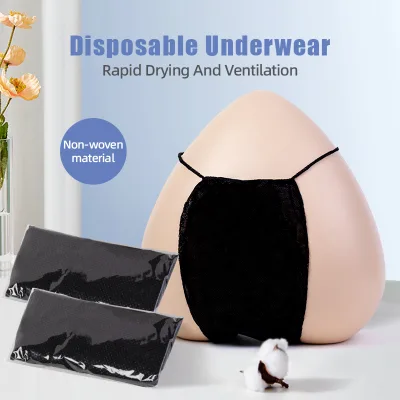
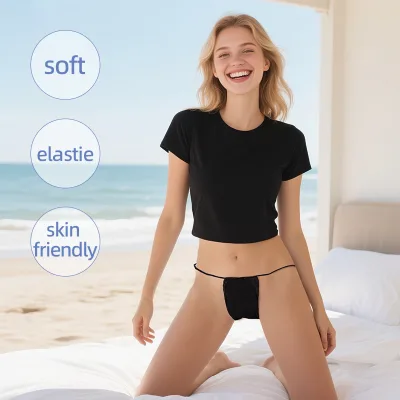
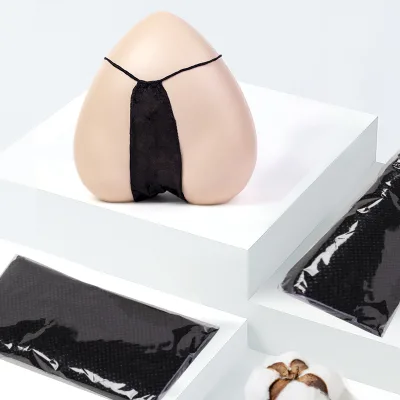
Disposable Panties for Breathable Women Sexy Brief Bikini SPA Nonwoven Underwear
$0.07 - $0.07
MOQ: 100000 piece


Disposable Non-Woven Women's Panties Ladies Underwear Women's Disposable Briefs Female's Knickers
$0.20 - $0.50
MOQ: 200000 Piece/pieces


Comprehensive Sourcing Guide
Strategic Sourcing Guide for Disposable Ladies Bikini Briefs
Understanding Product Specifications and Material Composition
When sourcing Disposable Ladies Bikini Briefs, the primary objective is to identify products that balance hygiene, comfort, and cost-efficiency. The market for these items is diverse, ranging from medical-grade disposable underwear to casual use products for travel and hospitality. A critical first step in the evaluation process is verifying the material composition. The supplied data indicates that the most common material used in this category is non-woven fabric, specifically utilizing technologies such as Spunbond. This material choice is fundamental as it dictates the product's breathability, strength, and liquid resistance.
Buyers must distinguish between different material grades available in the supply chain. While some listings specify "100% Cotton" for specific premium lines, the broader market heavily relies on synthetic non-woven options like SMS (Spunbond-Meltblown-Spunbond) and SBPP (Spunbond-Bonded Polypropylene). These materials are selected for their ability to provide a waterproof barrier while remaining lightweight. The weight of the fabric is a significant technical specification, with observed ranges falling between 20-50 grams per square meter (G/M2). This weight range suggests a product designed for single-use applications where durability is required for a short duration but excessive thickness is unnecessary.
The physical dimensions and sizing standards are equally critical for procurement success. The product specifications indicate a standard sizing range that typically spans from Small (S) to Extra Large (XL), with some suppliers offering an extended range up to 3XL. The style of the briefs often features elastic or tie closures, with customization options available for specific branding or fit requirements. Buyers should verify that the sizing charts provided by the supplier align with international standards, as discrepancies can lead to high return rates or customer dissatisfaction. The "Normal" size specification mentioned in some contexts likely refers to a standard cut, but the availability of custom designs allows for differentiation in the market.
Compliance, Certification, and Sterilization Protocols
In the realm of medical and personal hygiene products, compliance is not merely a formality but a prerequisite for market entry. The supplied facts highlight specific certifications that are relevant to this product category. Notably, CE and ISO13485 are cited as key certifications. ISO13485 is the international standard for quality management systems specific to medical devices, indicating that the manufacturer adheres to rigorous quality control processes essential for products used in healthcare settings. The CE marking signifies conformity with health, safety, and environmental protection standards for products sold within the European Economic Area.
However, buyers must exercise caution regarding sterilization claims. The data explicitly states that certain products are "Without Ethylene Oxide Sterilization." This is a vital distinction for procurement teams. Ethylene Oxide (EtO) sterilization is a common method for medical disposables to ensure a sterile environment. If a product is not EtO sterilized, it is generally intended for general hygiene, travel, or hotel use rather than for invasive medical procedures or sterile surgical environments. Procurement officers must clearly define the intended application of the briefs to ensure the supplier provides the correct sterilization status.
While some background information mentions OEKO-TEX and GOTS, these are not confirmed as standard attributes in the provided high-confidence facts. Therefore, buyers should not assume these certifications are present unless explicitly verified in the supplier's documentation. Instead, the focus should remain on the confirmed CE and ISO13485 certifications. When evaluating a supplier, request copies of their current certificates and verify their validity dates. Additionally, check if the supplier has a documented quality management system that aligns with the ISO13485 standard, as this ensures consistency in production and reduces the risk of batch failures.
Cost Drivers and Pricing Dynamics
The pricing structure for Disposable Ladies Bikini Briefs is influenced by several variables, including material costs, order volume, and customization requirements. The observed price range in the market is quite low, spanning from $0.01 to $0.50 USD per unit. This wide range suggests that the final price is highly dependent on the specific configuration of the order. Factors such as the type of non-woven fabric used, the complexity of the design (e.g., elastic vs. ties), and the inclusion of logo printing significantly impact the unit cost.
Volume is a primary driver of cost efficiency. The Minimum Order Quantity (MOQ) varies drastically, ranging from as low as 50 pieces to as high as 500,000 pieces. For small businesses or those testing the market, an MOQ of 50 pieces offers a low barrier to entry. However, larger organizations seeking to optimize their supply chain costs will benefit from ordering in bulk, potentially reaching the higher end of the MOQ spectrum to secure lower per-unit pricing. The supply ability of manufacturers, noted as 200 tons per month, indicates that large-scale production is feasible, but buyers must ensure their order volume aligns with the supplier's capacity to avoid delays.
Customization is another significant cost factor. The data confirms that customization is available, including custom designs and logo printing. While some listings mention "Without Logo Printing," the availability of this service implies that adding branding will incur additional setup and production costs. Buyers should clarify whether the quoted price includes the cost of mold creation for custom elastic patterns or if these are one-time fees. Furthermore, the choice of packaging—ranging from 1 piece per bag to 100 pieces per middle bag and 500 pieces per carton—can affect the overall logistics cost. Bulk packaging reduces shipping volume but may require more storage space at the destination.
Typical Applications and Market Segmentation
Disposable Ladies Bikini Briefs serve a wide array of applications, necessitating a clear understanding of the target market segment. The supplied facts identify several key use cases, including beauty salons, spas, hotels, travel, daily life, and medical areas. In the hospitality sector, these briefs are often provided to guests as part of a hygiene kit, offering a convenient and sanitary alternative to reusable undergarments. The "100% Cotton" variants mentioned in the data are particularly suited for these luxury or comfort-focused environments where skin sensitivity is a concern.
In the medical and healthcare sector, the application is more stringent. The products are used in hospitals and medical areas, where the risk of infection is a primary concern. Here, the non-woven material and the specific certifications (CE, ISO13485) become critical. The "Without Ethylene Oxide Sterilization" status suggests that these specific items may be intended for general patient use, such as in recovery rooms or for post-procedure care, rather than for sterile surgical fields. It is essential for buyers to match the product's sterilization status with the facility's infection control protocols.
The demographic scope is also broad, with products applicable to women, men, girls, boys, and infants. This versatility allows suppliers to cater to a diverse customer base. For instance, the "Message" occasion mentioned in the data might refer to promotional events or specific campaigns where these briefs are distributed as gifts or samples. Understanding the specific occasion and end-user is crucial for selecting the right product variant. A brief designed for a high-end spa may differ in material softness and packaging aesthetics from one designed for a hospital ward, even if the core function remains the same.
Supplier Evaluation and Production Capabilities
Evaluating a supplier for disposable underwear requires a deep dive into their production capabilities and operational stability. The data indicates that suppliers may operate multiple production lines, with one example citing 13 lines. This level of infrastructure suggests a capacity for high-volume output, which is beneficial for large procurement contracts. Buyers should verify the number of active production lines and the current utilization rate to ensure the supplier can meet delivery deadlines, especially during peak seasons.
The location of the manufacturing facility is another critical factor. The supplied facts place the origin in Hubei, China. While this provides a specific geographic context, buyers should also consider the logistics implications of sourcing from this region. Shipping methods, such as sea freight, are standard for this type of product due to its low value-to-weight ratio. The lead time for production is noted to be between 30 to 35 days. This timeline is a crucial planning parameter for procurement teams, as it dictates the reorder cycle and inventory management strategy.
Payment terms are another aspect of supplier evaluation. The standard terms observed include a 30% deposit in advance with the balance paid against the Bill of Lading (B/L) copy. This is a common arrangement in international trade that balances risk for both parties. Buyers should ensure that the payment terms are clearly defined in the contract and that the supplier has a history of honoring these agreements. Additionally, the availability of free samples is a significant advantage. Buyers should always request samples before placing a bulk order to verify the quality, fit, and material feel of the product.
Quality Control and Long-Term Procurement Strategy
Ensuring consistent quality is paramount in the disposable product sector. The "Quality Guarantee Period" is listed as two years, which is an unusual metric for single-use items and may refer to the shelf life or the warranty on the manufacturing process rather than the product itself. Buyers should clarify this term to understand what is actually being guaranteed. If it refers to shelf life, it implies the product remains usable for two years from the date of manufacture, which is a significant advantage for inventory management.
For long-term procurement, establishing a robust quality control (QC) protocol is essential. This should include regular inspections of incoming batches to check for defects such as tears, inconsistent stitching, or packaging errors. The "Characteristic" of the product, such as being waterproof and breathable, should be verified through spot testing. Buyers should also monitor the consistency of the fabric weight (20-50 G/M2) to ensure that the supplier is not cutting corners on material quality to reduce costs.
Sustainability and supply chain resilience are becoming increasingly important. While the products are disposable, the environmental impact of non-woven fabrics is a growing concern. Buyers should inquire about the recyclability of the materials or the use of biodegradable alternatives if available. Furthermore, diversifying the supplier base can mitigate risks associated with supply chain disruptions. Relying on a single supplier, even one with a high supply ability of 200 tons per month, can be risky. Developing relationships with multiple suppliers in the region can provide a buffer against production delays or quality issues.
In conclusion, sourcing Disposable Ladies Bikini Briefs requires a meticulous approach that balances technical specifications, compliance requirements, and cost considerations. By focusing on the verified facts regarding materials, certifications, and production capabilities, buyers can make informed decisions that ensure the delivery of high-quality products to their end users. The flexibility in customization and the wide range of applications make this category a versatile addition to any procurement portfolio, provided that the supplier is thoroughly vetted and the product specifications are clearly defined.
FAQs
What certifications do these disposable briefs hold?
The products hold CE and ISO13485 certifications for quality and safety. These standards ensure the manufacturer adheres to rigorous quality management systems essential for medical and hygiene applications.
Can I customize the design or logo on the briefs?
Customization is available for design and logo printing on these briefs. However, some listings specify without logo printing, so buyers must confirm specific branding requirements with the supplier before ordering.
What is the typical lead time for production?
The delivery time for these products typically ranges between 30 to 35 days. This timeline accounts for the production capacity of 13 lines and the specific order volume requested by the buyer.
How much is the minimum order quantity required?
The minimum order quantity can be as low as 50 pieces for small trials. Larger orders may require up to 500,000 pieces to optimize costs, depending on the specific supplier and product configuration.
Are these briefs sterilized with Ethylene Oxide?
The supplied facts indicate the products are without Ethylene Oxide sterilization. This means they are intended for general hygiene, travel, or hotel use rather than for sterile surgical environments.
Which materials are used to make these briefs?
The briefs are primarily made from non-woven fabric like SMS or SBPP. Some premium lines may use 100% cotton, but the standard weight ranges from 20 to 50 grams per square meter.
What sizes are available for these disposable briefs?
Standard sizes range from Small to Extra Large, with some options extending to 3XL. Custom designs are also available to meet specific fit requirements for different demographics.