Source Disposable PE Vacuum Seal Bag for Food, Electronics, Household
Explore 30 listings for the Disposable PE Vacuum Seal Bag, comparing features like moisture proofing, material structure, and customization options. Buyers can evaluate specifications for food, promotion, and household applications from verified manufacturers.
Key considerations
Products List


Reusable PE Vacuum Sealing Bag for Food Storage
$0.06 - $0.07
MOQ: 10000 Pieces
Guangdong Min Sun Environmental Protection Packaging Technology Co., Ltd.
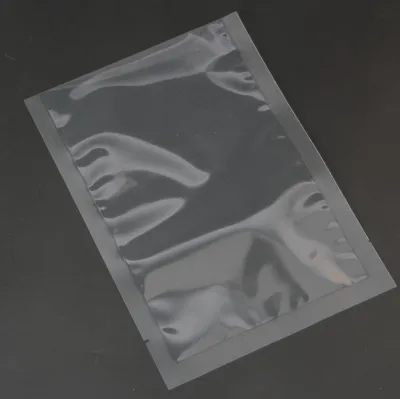


Hot sale transparent plastic PA vacuum sealed bags for food packaging bag
$0.02 - $0.90
MOQ: 10000 Pieces

Comprehensive Sourcing Guide
Strategic Sourcing Guide for Disposable PE Vacuum Seal Bags
Understanding Technical Specifications and Material Construction
When sourcing disposable PE vacuum seal bags, the primary focus must be on the material composition and structural integrity that ensure product safety and performance. Based on available industry data, the most common construction for these bags involves a multi-layer composite structure, specifically identified as PA/PE (Polyamide/Polyethylene). This combination is critical because Polyamide provides high tensile strength and excellent oxygen barrier properties, while Polyethylene offers superior sealing capabilities and moisture resistance. The raw materials are typically derived from High Pressure Polyethylene, processed through multiple extrusion techniques to create a uniform, durable film.
The physical attributes of the bag are equally important for operational efficiency. The hardness of the material is generally characterized as "soft," which facilitates easy handling and conformability around irregular product shapes during the vacuum sealing process. Transparency is a standard feature, allowing for immediate visual inspection of the contents without opening the package. The sealing mechanism is predominantly heat seal, a process that ensures a hermetic closure capable of withstanding the pressure differentials created during vacuuming. For specific applications requiring thermal resistance, such as high-temperature cooking, specialized models exist that maintain integrity under heat stress, though standard disposable variants are designed for ambient or refrigerated storage.
The manufacturing process often involves gravure printing, which allows for high-quality, multi-color branding up to ten colors. This capability supports both functional labeling and promotional branding, making these bags suitable for food packaging, promotional giveaways, and household applications. The bags are available in various shapes and sizes, with customization options extending to specific dimensions to fit unique product requirements. Whether the requirement is for a flat bag or a zipper-style closure, the underlying material science remains consistent in its reliance on polyethylene-based polymers to achieve the necessary barrier properties.
Compliance, Certification, and Regulatory Standards
Navigating the regulatory landscape is a non-negotiable aspect of sourcing disposable packaging, particularly when the end-use involves food contact. Buyers must verify that suppliers possess valid certifications that align with international and regional safety standards. In the context of the current market, specific certifications such as the QS Certificate are frequently cited as indicators of compliance with food safety regulations in certain regions. Additionally, quality management systems certified under ISO9001:2008 and environmental management systems under ISO14001:2004 are common benchmarks that suppliers may hold.
However, it is crucial to distinguish between observed certifications and universal mandates. While some product listings reference standards like SGS, RoHS, and CE, these are not automatically applicable to all disposable PE vacuum bags. The relevance of these standards depends heavily on the specific application; for instance, RoHS compliance is typically more pertinent to electronic component packaging than to food-grade bags. Therefore, procurement teams must not assume that a supplier's general certification covers every product in their catalog. Instead, buyers should request specific test reports or certificates of analysis (CoA) for the exact batch of bags intended for their use.
For food applications, the verification of food-grade compliance is paramount. The material must be free from harmful substances that could migrate into the food product. While the provided data mentions "High Pressure Polyethylene" as a raw material, which is generally considered safe for food contact, the final verification lies in the supplier's ability to demonstrate that their specific production process and additives meet the necessary regulatory thresholds. Buyers should explicitly ask for documentation confirming that the PA/PE structure used in the vacuum bags meets the specific food contact regulations of their target market, whether that be FDA, EU Framework Regulations, or local equivalents.
Cost Drivers and Pricing Dynamics
The pricing structure for disposable PE vacuum seal bags is influenced by a complex interplay of factors, including material costs, order volume, and customization requirements. The observed market data indicates a significant price range, spanning from as low as $0.01 to $3500 per unit or batch, reflecting the vast difference between single-unit samples and large-scale industrial orders. This wide variance underscores the importance of understanding the cost drivers rather than focusing solely on the unit price.
Material costs are a primary driver, with the price of polyethylene and polyamide fluctuating based on global commodity markets. The thickness of the film, which directly impacts the amount of raw material used, is a critical variable. Thicker bags offer better puncture resistance and barrier properties but come at a higher cost. Furthermore, the complexity of the printing process adds to the expense. While standard bags may be unprinted or feature simple branding, orders requiring custom designs with up to ten colors will incur higher setup and printing costs. The gravure printing process, while high quality, requires the creation of specific printing cylinders, which adds a fixed cost that is amortized over the order quantity.
Order volume is perhaps the most significant factor in determining the final unit price. The Minimum Order Quantity (MOQ) for these products varies widely, with observed ranges from 1,000 pieces to 50,000 pieces. Suppliers often offer tiered pricing structures where the unit cost decreases significantly as the order volume increases. For buyers with lower volume needs, the per-unit cost will be higher due to the fixed costs of setup and production runs. Conversely, large-scale buyers can leverage economies of scale to achieve more competitive rates. Additionally, packaging requirements, such as the use of cartons and pallets for bulk shipping, can influence the total landed cost, particularly for international procurement where logistics play a major role.
Typical Applications and Industry Use Cases
Disposable PE vacuum seal bags serve a diverse array of applications across multiple industries, driven by their versatility in barrier protection and ease of use. The primary application is in the food industry, where these bags are used to extend shelf life by removing oxygen and preventing moisture ingress. The "Moisture Proof" and "Shock Resistance" features make them ideal for packaging perishable goods, dry foods, and ready-to-eat meals. The ability to customize the bag size and shape allows manufacturers to tailor packaging to specific product dimensions, minimizing waste and optimizing storage space.
Beyond food, these bags are increasingly utilized in promotional and household sectors. The "Promotion Bag" designation highlights their use in marketing campaigns, where custom printing and branding turn functional packaging into a marketing tool. The "Disposable" nature of the product makes it suitable for single-use scenarios where hygiene is a priority, such as in the hospitality industry or for travel kits. In the electronics sector, the bags are employed for packaging electronic components, where moisture and static control are critical to preventing damage during storage and transit. The "Industrial Use" category often includes specific requirements for static dissipation or additional barrier layers, which must be verified with the supplier.
The "Vacuum Bag" style is particularly effective for applications requiring tight compression and airtight sealing. This is essential for food preservation, where the removal of air inhibits bacterial growth and oxidation. The "High temperature cooking bag" variant addresses the niche of sous-vide cooking and retort packaging, where the bag must withstand elevated temperatures without melting or leaking. For these specialized applications, the material structure and sealing integrity must be rigorously tested to ensure they meet the specific thermal and mechanical demands of the process.
Supplier Evaluation and Sourcing Criteria
Selecting the right supplier for disposable PE vacuum seal bags requires a comprehensive evaluation of their capabilities, reputation, and operational stability. The business type of the supplier is a key indicator; manufacturers are generally preferred over trading companies as they offer greater control over quality, production timelines, and customization options. A manufacturer's direct involvement in the production process ensures that the PA/PE structure and printing quality meet the specified standards. Buyers should verify the supplier's location, with major production hubs in China Mainland, including specific regions like Dongguan, Guangdong, and Hebei, being common origins for these products.
When evaluating potential suppliers, buyers should look for evidence of customization capabilities. The ability to accept custom orders, including tailored bag sizes, logos, and printing designs, is a strong indicator of a flexible and capable partner. The "Customized" status of the product model and standard suggests that the supplier is equipped to handle unique requirements rather than just offering off-the-shelf solutions. Additionally, the availability of samples is a critical step in the evaluation process. Many suppliers offer free samples, allowing buyers to physically assess the material quality, sealing strength, and print fidelity before committing to a large order.
Transparency in communication and documentation is another vital criterion. A reliable supplier should be able to provide clear information regarding their production process, raw material sources, and quality control measures. The presence of specific certifications, such as the QS Certificate or ISO standards, should be verified through official documentation rather than assumed from marketing materials. Buyers should also assess the supplier's logistical capabilities, including their packing methods (cartons and pallets) and their ability to handle large order volumes within the specified lead times. A supplier that can demonstrate a track record of meeting deadlines and maintaining consistent quality is essential for long-term procurement success.
Quality Control and Long-Term Procurement Considerations
Implementing a robust quality control (QC) strategy is essential to ensure that the disposable PE vacuum seal bags meet performance expectations and regulatory requirements. Quality control should begin at the raw material stage, verifying that the High Pressure Polyethylene and Polyamide meet specified purity and grade standards. During production, regular inspections should be conducted to monitor the consistency of the extrusion process, the accuracy of the gravure printing, and the integrity of the heat seals. The "Moisture Proof" and "Shock Resistance" features must be validated through standardized testing to ensure they perform as claimed under various conditions.
For long-term procurement, establishing a partnership based on continuous improvement and reliability is more valuable than securing a one-time low price. Buyers should consider the supplier's capacity for scalability and their ability to adapt to changing market demands. The flexibility to adjust order quantities, which can range from 1,000 to 50,000 pieces, allows buyers to manage inventory levels effectively and respond to fluctuations in demand. Additionally, the ability to customize the product standard and model number ensures that the packaging can evolve alongside product development and regulatory changes.
Sustainability and environmental considerations are becoming increasingly important in procurement decisions. While the product is disposable, the environmental impact of the materials and the production process should be evaluated. Suppliers with ISO14001 certification demonstrate a commitment to environmental management, which can be a significant factor for companies with sustainability goals. Buyers should also inquire about the recyclability of the PA/PE structure and the availability of eco-friendly alternatives if such options become available in the market.
In conclusion, sourcing disposable PE vacuum seal bags requires a balanced approach that considers technical specifications, regulatory compliance, cost dynamics, and supplier reliability. By focusing on these key areas and maintaining a rigorous evaluation process, buyers can secure a supply chain that delivers high-quality, safe, and cost-effective packaging solutions for their diverse applications. The ability to customize the product to specific needs, combined with the assurance of quality and compliance, ensures that the procurement strategy supports both immediate operational requirements and long-term business objectives.
FAQs
What material construction is used for these bags?
The bags typically use a PA/PE composite structure combining Polyamide and Polyethylene. This design ensures high tensile strength and excellent moisture resistance for food and electronic packaging applications.
Can I request a custom logo design on the bags?
Yes, custom logo designs are available for these products. Suppliers accept customized graphics up to ten colors using gravure printing to meet specific branding needs for promotional or food use.
What is the minimum order quantity for these bags?
The minimum order quantity varies between 1,000 and 10,000 pieces depending on the specific supplier and product model. Buyers should verify the exact MOQ before placing an order for custom sizes.
Which certifications do the manufacturers typically hold?
Manufacturers often hold QS Certificate, ISO9001:2008, and ISO14001:2004 certifications. Some suppliers also reference SGS, RoHS, or CE standards, though these depend on the specific application like food or electronics.
How are the bags packaged for shipment?
Bags are packed in cartons and placed on pallets for bulk shipping. This packing method ensures protection during transit and is standard for both domestic and international orders from Chinese manufacturers.
Can I get free samples before placing a large order?
Yes, free samples are available for evaluation before committing to a large purchase. Buyers can request these to verify material quality, sealing strength, and print fidelity for their specific needs.
What is the origin location for these plastic bags?
These bags originate from China Mainland, specifically from regions like Dongguan, Guangdong, and Hebei. Buyers should confirm the exact factory location when sourcing for logistics or compliance purposes.