Source Drive Safety Alcohol Tester for Police, Fleet, and Personal Use
Compare 30 Drive Safety Alcohol Tester models from Jiangsu, China, featuring semiconductor and fuel cell sensors with varying accuracy and testing times. Buyers can evaluate specifications like reading time, power options, and certifications to find the right device for law enforcement, commercial fleets, or personal monitoring.
Key considerations
Products List




Comprehensive Sourcing Guide
Drive Safety Alcohol Tester Sourcing Guide
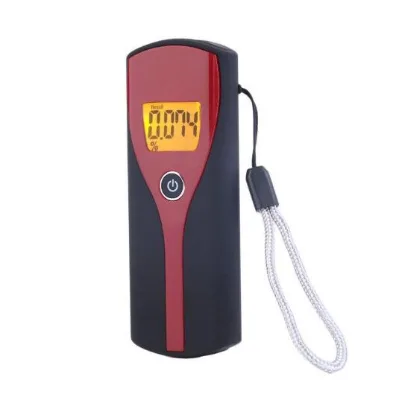
Selecting the right Drive Safety Alcohol Tester requires a clear understanding of the distinct technologies available in the market, as performance and application vary significantly between consumer-grade devices and professional-grade instruments. Buyers must distinguish between semiconductor sensors, which are common in lower-cost units, and fuel cell sensors, which offer higher precision and are often required for law enforcement or commercial fleet management. The decision hinges on whether the primary use case is casual self-monitoring or legally defensible breath alcohol concentration (BAC) measurement.
Procurement teams should also evaluate the physical form factor and power requirements against the operational environment. Portable handheld units powered by standard alkaline batteries offer convenience and long shelf life for field use, while rechargeable lithium-ion models provide sustainability and consistent performance for high-volume daily use. Understanding these hardware differences is essential for aligning the product with specific operational workflows, whether for roadside checkpoints, workplace safety programs, or personal vehicle monitoring.
Product Scope and Observed Listing Signals
The current market for drive safety alcohol testers includes a diverse range of devices, from simple strip-based urine tests to advanced digital breath analyzers. Observed listings indicate a wide price spectrum, ranging from approximately $0.20 to $7,000, reflecting the disparity between single-use diagnostic strips and high-precision, certified breath alcohol instruments. This broad range suggests that buyers must carefully define their technical requirements to avoid overpaying for unnecessary features or under-specifying for critical safety needs.
Inventory signals show that manufacturers offer extensive customization options, including OEM services and various packaging formats such as single pouches and cartons. The observed minimum order quantities (MOQ) vary from 1 to 5,000 units, indicating flexibility for both small-scale pilots and large-scale enterprise deployments. Buyers should note that while many products originate from regions like Jiangsu, China, the specific model numbers and sensor types vary widely, requiring rigorous verification of specifications before placing bulk orders.
Technical Specifications to Verify
Sensor technology is the most critical differentiator in alcohol testing devices. Buyers should prioritize devices equipped with Platinum Fuel Cell or Electrochemical Fuel Cell sensors for professional applications, as these provide superior accuracy and specificity compared to semiconductor sensors. For instance, high-end models may offer accuracy within ±0.005% BAC at 0.05% BAC, whereas semiconductor-based units may lack the precision required for legal or compliance purposes. Verifying the sensor type is the first step in ensuring the device meets the intended accuracy standards.
Response time and operational parameters are equally important for efficient workflow integration. Professional-grade testers often feature testing times of less than five seconds, with warm-up periods of approximately five seconds, ensuring rapid throughput in busy environments. Additionally, buyers should check the power source, as some devices use 3.7V lithium batteries with over 200 blowing times per charge, while others rely on 4x AAA alkaline batteries for extended standby life. Display types, such as LCD or white digital tubes, and data recording capabilities, including unlimited APP storage, also impact usability and data management.
Compliance and Safety Documentation
Regulatory compliance is non-negotiable for devices used in law enforcement or workplace safety programs. Buyers must verify that devices carry relevant certifications, such as CE and RoHS, which indicate adherence to European health, safety, and environmental protection standards. While some listings may claim certification, procurement teams should request official documentation and verify the validity of these certificates with the issuing bodies to ensure the devices are legally marketable and usable in their target jurisdictions.
Data integrity and device calibration are also key components of compliance. Advanced models often include features like 99-device records and unlimited APP storage, which are crucial for maintaining an audit trail of alcohol testing results. Buyers should ensure that the device’s software and hardware work together to prevent data tampering and that the device supports regular calibration checks. Understanding the legal requirements for BAC measurement in the buyer’s region is essential to selecting a device that will stand up to regulatory scrutiny.
Cost Drivers and Commercial Terms
The total cost of ownership for alcohol testers extends beyond the initial purchase price, encompassing maintenance, calibration, and replacement parts. Devices with fuel cell sensors typically have a higher upfront cost but offer longer sensor lifespans and more consistent performance, reducing long-term operational expenses. In contrast, semiconductor-based devices may be cheaper initially but might require more frequent replacement or recalibration, increasing the total cost over time. Buyers should evaluate these factors based on the expected volume of tests.
Commercial terms such as lead times and packaging also influence procurement planning. Observed lead times range from 15 to 25 days, which buyers must account for in their supply chain schedules. Packaging options, such as cartons containing 100 pieces per box, affect storage and logistics efficiency. Additionally, the availability of OEM services allows buyers to brand devices for corporate identity, but this may involve higher MOQs and longer production times. Negotiating these terms clearly is essential for budget accuracy and operational readiness.
Supplier Qualification and Quality Control
Supplier qualification is critical to ensuring the reliability and consistency of alcohol testing devices. Buyers should conduct thorough due diligence on manufacturers, verifying their production capabilities, quality management systems, and track record in the IVD and safety equipment sectors. Given that many products originate from specific regions like Jiangsu, China, buyers should assess the supplier’s ability to maintain consistent quality across large production runs, especially when dealing with high MOQs.
Quality control processes should include rigorous testing of sensor accuracy, response time, and durability. Buyers should request sample units for independent testing to verify claims such as 99% accuracy or specific testing times. Additionally, suppliers should provide clear documentation on shelf life, typically 24 months for reagents or sensors, and storage conditions to ensure product integrity. Establishing a robust quality assurance protocol with the supplier helps mitigate the risk of receiving defective or non-compliant devices.
Long-Term Procurement Checks
Long-term procurement success depends on the supplier’s ability to provide ongoing support, including firmware updates, calibration services, and spare parts availability. Buyers should establish clear service level agreements (SLAs) that define response times for technical issues and the availability of replacement sensors or batteries. This is particularly important for devices used in critical safety applications, where downtime can have significant operational and legal consequences.
Regular audits of supplier performance and product quality are essential to maintaining high standards over time. Buyers should monitor key performance indicators such as defect rates, customer satisfaction, and compliance with regulatory changes. By maintaining a proactive approach to supplier management, buyers can ensure that their drive safety alcohol testers continue to meet evolving safety and legal requirements, protecting their organization from liability and ensuring the well-being of their workforce.
FAQs
What sensor types are available for drive safety alcohol testers?
Drive safety alcohol testers utilize semiconductor, platinum fuel cell, or electrochemical fuel cell sensors. Semiconductor sensors offer flat-surfaced detection, while fuel cell models provide higher precision with accuracy up to ±0.005% BAC. Electrochemical sensors are also available for specific testing ranges, ensuring reliable results for various safety compliance needs.
How accurate are the Drive Safety Alcohol Tester devices?
Accuracy varies by sensor technology, with some models achieving 99% accuracy and others offering ±0.01% BAC at 0.05% BAC. Platinum fuel cell sensors provide ±0.005% BAC accuracy. These precision levels ensure reliable breath alcohol concentration measurements for safety monitoring and regulatory compliance in professional environments.
Can drive safety alcohol testers be customized for specific needs?
Yes, customization is available for drive safety alcohol testers. Buyers can select from optional units including degrees Celsius, permille, milligrams per liter, or grams per liter. OEM services are also supported, allowing for tailored branding and functional adjustments to meet specific organizational or regional safety requirements effectively.
What are the power options for portable alcohol testers?
Portable drive safety alcohol testers use various power sources depending on the model. Some devices operate on 3.7V/600mAh lithium batteries, while others use 2 or 4 AAA alkaline batteries. These power options ensure extended working times, with some models supporting over 200 blowing times on a full charge.
What certifications do these alcohol testing devices hold?
Selected Drive Safety Alcohol Tester models hold CE and RoHS certifications. These certifications indicate compliance with European health, safety, and environmental protection standards. Buyers should verify specific model certifications, as not all devices in the category may carry these marks, ensuring regulatory alignment for international procurement and deployment.
What is the typical lead time for ordering these testers?
The typical lead time for ordering drive safety alcohol testers ranges from 15 to 25 days. This timeframe applies to standard production and shipping processes. Buyers should account for this duration when planning inventory, especially for bulk orders or customized OEM requests, to ensure timely delivery for safety operations.