Source Driving Relay Valve for Trucks, Trailers, and Industrial Machinery
Find and compare 30 Driving Relay Valve options from verified Chinese manufacturers. These components include emergency brake valves and relays for heavy-duty applications, supporting OEM customization and global shipping needs; compare the available evidence and request quotations based on your requirements.
Key considerations
Products List
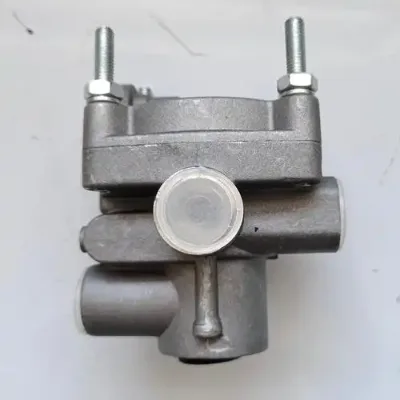


Relay Valve Brake System Relay Valve OEM9710021520 9710021510 9710025300 for Truck
$10.00 - $50.00
MOQ: 100 Pieces


$100.00 - $400.00
MOQ: 1 Pieces

$100.00 - $400.00
MOQ: 1 Pieces

$100.00 - $400.00
MOQ: 1 Pieces

$100.00 - $400.00
MOQ: 1 Pieces

$100.00 - $400.00
MOQ: 1 Pieces

$100.00 - $400.00
MOQ: 1 Pieces


Comprehensive Sourcing Guide
Driving Relay Valve Sourcing Guide
Procurement professionals seeking driving relay valves must first distinguish between pneumatic relay components and general electrical relays, as the supplied data indicates a mix of both categories. The observed listings include specific pneumatic units like the RE6 and HLT-3DO5 models, which are explicitly identified as relay valves and emergency brake valves for heavy-duty applications. Buyers should verify that the specific component matches the intended braking or control system, as the data also lists unrelated electrical starting relays for household appliances and hoisting machinery.
When evaluating the product scope, it is critical to confirm whether the item is a single unit or part of a larger assembly, as the "Selling Units" attribute confirms single-item availability for many listings. The data shows a wide variance in model numbers, ranging from specific part codes like 44530-1330 to generic descriptions like "trailer spare part." This inconsistency requires buyers to cross-reference the physical part number against their vehicle or machinery schematics to ensure compatibility, rather than relying solely on the generic title provided in the listing.
Product Scope and Observed Listing Signals
The market signals indicate a strong presence of Chinese manufacturing origins, with specific mentions of Anhui and Zhejiang provinces as key production hubs. Listings frequently cite "New" condition and "OEM" availability, suggesting that suppliers are prepared to manufacture components to original equipment specifications. However, the "Tent Type" attribute showing a value of zero and the varied "Color" options marked as "as Request" highlight that some listings may be generic templates rather than specific product descriptions. Buyers must scrutinize the "prod_model" field to ensure the specific valve type matches their technical requirements.
Commercial signals reveal a flexible minimum order quantity structure, with observed ranges starting from a single item up to 1000 units. The "Minimal Qty" attribute explicitly states 1, while other entries suggest bulk packaging by container or carton. This variability allows small buyers to test samples, but larger procurement teams should verify if the "Sample" option requires direct contact with the supplier for pricing. The "Business Type" is consistently listed as "Manufacture," which implies direct factory access, though buyers should confirm if the supplier acts as a trading company for specific models.
Technical Specifications to Verify
Technical verification must begin with the specific valve function, as the data distinguishes between "Relay Valve" and "Emergency Brake Valve" applications. The RE6 model and HLT-3DO5 are cited as specific standards, yet other entries list generic horsepower ratings like 1/8HP or 1/6HP, which are irrelevant for pneumatic braking systems. Buyers must ensure the "Electricity Type" and "Action Principle" align with the system design, as some listings describe electronic relays for household appliances rather than the pneumatic driving valves required for heavy machinery.
Dimensional and performance specifications require careful attention to the "Standard" and "Model" fields, which vary significantly across listings. While some products adhere to the "re6" standard, others reference "OEM" as a standard, which is a classification rather than a technical specification. The "Load" attribute mentions "High Power Relay," which may not apply to low-pressure pneumatic driving valves. Procurement teams should request detailed engineering drawings to confirm the "Number of Pole" and "Sealed Relay" characteristics match the operational environment of the intended vehicle or crane.
Compliance and Safety Documentation
Compliance verification is essential given the mix of certifications listed, including ISO/TS16949, CCC, ISO, and CE. The data explicitly links ISO/TS16949 to automotive contexts, which is critical for driving relay valves used in commercial vehicles. However, some entries list certifications alongside unrelated product attributes, such as "ISO9001" paired with "Condition:New" for hoisting machinery. Buyers must request valid, current certificates for the specific model being purchased to ensure the component meets the safety standards of the target market, particularly for export to regions like North America or Western Europe.
Safety documentation must also address the "Warranty" and "After-sales Service" terms, which are listed as 12 months and one year respectively. These terms provide a baseline for liability but do not replace the need for independent safety testing data. The "Lead Time" of within 15 workdays and "Date of Delivery" indicating goods in stock suggest immediate availability, but buyers should verify if these timelines apply to certified, compliant units or generic stock. Ensuring that the "Place of Origin" aligns with the certification body's jurisdiction is a necessary step to avoid regulatory hurdles during customs clearance.
Cost Drivers and Commercial Terms
Cost structures are influenced by the "Customization" availability and the "Business Type" of the supplier. Since customization is available, buyers should anticipate variable pricing based on specific model requirements, such as the "prod_packing" options ranging from boxes to containers. The observed price range of 0.2 to 100,000 USD indicates a vast disparity between simple components and complex assemblies, necessitating a clear definition of scope to avoid budget overruns. Buyers must clarify if the quoted price includes the "Sample" cost or if it is a separate fee, as the listing suggests samples require direct contact.
Commercial terms regarding delivery and dispatch are critical for supply chain planning. The "Place of Dispatch" is listed as Qingdao, a major port, which affects freight costs and transit times. While "Goods in Stock" is mentioned for some items, the "Lead Time" of 15 workdays may apply to customized orders. Buyers should negotiate clear Incoterms that account for the "Minimal Qty" of 1 versus bulk orders, as the "prod_packing" method changes significantly between single carton packaging and container loads. Understanding these variables is essential for accurate total landed cost calculations.
Supplier Qualification and Quality Control
Supplier qualification should focus on the "Business Type" and "Certification" alignment with the buyer's industry standards. The data confirms a "Manufacture" business type, which is preferable for custom valve production, but buyers must verify the specific factory's capacity to produce the "RE6" or "HLT-3DO5" models. The presence of multiple certifications like CCC and ISO/TS16949 suggests a robust quality management system, yet the "Low-confidence background" regarding IEC standards warns against assuming compliance without proof. Buyers should request a factory audit report to validate the production environment and quality control processes.
Quality control protocols must address the "Condition" and "After-sales Service" guarantees. The "New" condition is standard, but the "One Year" warranty and "After-sales Service" terms need to be explicitly defined in the contract. Buyers should establish a clear protocol for handling defective units, especially given the "Global" suitable market and the potential for shipping damage. The "Sample" contact requirement implies a pre-production verification step, which is a vital quality gate before committing to a larger order. Ensuring the supplier can provide test results for the specific "Action Principle" and "Voltage Relay" characteristics is mandatory for high-reliability applications.
Long-Term Procurement Checks
Long-term procurement strategies must account for the "Standard" and "Model" consistency over time. The data shows a mix of specific model numbers and generic descriptions, which can lead to supply chain disruptions if the supplier changes specifications without notice. Buyers should establish a formal change management process to ensure that any updates to the "prod_standard" or "prod_model" are communicated and approved before production. This is particularly important for critical components like driving relay valves where compatibility with existing vehicle systems is non-negotiable.
Sustainability and supply chain resilience are also key considerations for long-term partnerships. The "Suitable Market" is listed as "Global," indicating the supplier's ability to handle international logistics, but buyers should verify the "Lead Time" stability during peak demand periods. The "Place of Origin" in China offers cost advantages, but geopolitical factors and shipping routes from Qingdao should be monitored. Establishing a multi-year agreement with clear "After-sales Service" terms and "Warranty" extensions can mitigate risks associated with component obsolescence and ensure a steady supply of high-quality driving relay valves.
FAQs
What certifications are available for driving relay valves?
Driving relay valves are available with ISO, CCC, and ISO/TS16949 certifications. These documents verify compliance with international quality and safety standards. Buyers can request specific certification packages to meet regional regulatory requirements. The products are manufactured under strict quality control processes to ensure consistent performance and reliability in various industrial applications.
Can I customize the color of the Driving Relay Valve?
Yes, customization is available for the Driving Relay Valve. Buyers can request specific colors to match their equipment or branding needs. The manufacturer supports tailored production to accommodate unique design specifications. This flexibility ensures that the final product integrates seamlessly into existing systems while meeting aesthetic or functional requirements.
What is the warranty period for the Driving Relay Valve?
The Driving Relay Valve comes with a 12-month warranty. This coverage ensures protection against manufacturing defects and performance issues. After-sales service is provided for one year to address any concerns. Buyers receive reliable support and assurance regarding the product's durability and operational integrity during the warranty period.
How fast is the lead time for driving relay valves?
The lead time for driving relay valves is within 15 workdays. Goods are often available in stock for immediate dispatch. This quick turnaround supports urgent procurement needs and minimizes downtime. Buyers can rely on efficient production and logistics to receive their orders promptly without compromising on quality or specifications.
What is the minimum order quantity for driving relay valves?
The minimum order quantity for driving relay valves is one unit. This low MOQ allows buyers to test samples or order small batches. It supports flexible procurement strategies for various project sizes. Buyers can start with minimal investment while evaluating product performance before committing to larger volume orders for production use.
Where are the driving relay valves manufactured?
The driving relay valves are manufactured in China, specifically in Anhui and Zhejiang provinces. These regions are known for robust industrial manufacturing capabilities. The products are dispatched from Qingdao, ensuring efficient logistics. Buyers benefit from established supply chains and competitive production environments that support high-quality output and reliable delivery schedules.