Source Durable Garlic Press for Home Kitchen, Restaurants, and Catering
Compare 30 listings of Durable Garlic Press options from Chinese manufacturers. Buyers can evaluate features like stainless steel construction, packaging types, and MOQs ranging from 100 to 5000 pieces for institutional or home kitchen use.
Key considerations
Products List

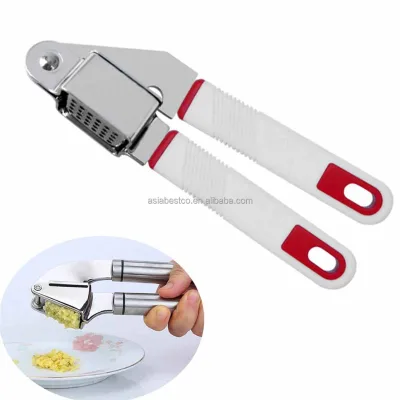
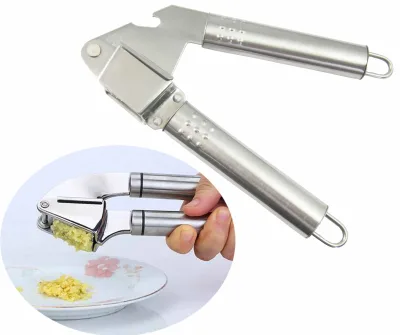
Anti-Slip Garlic Press Durable Stainless Steel Manual Pressure Garlic Masher
$2.40 - $2.70
MOQ: 100 Pieces
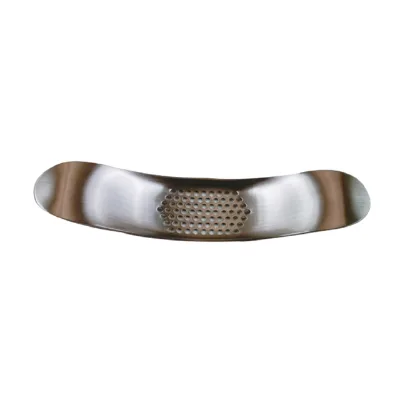
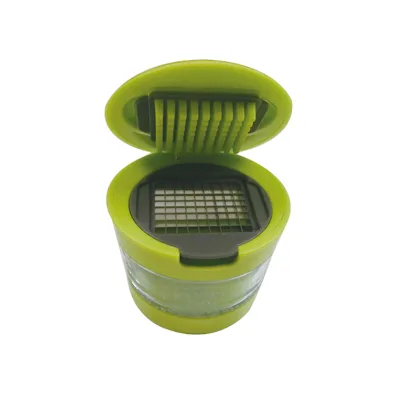
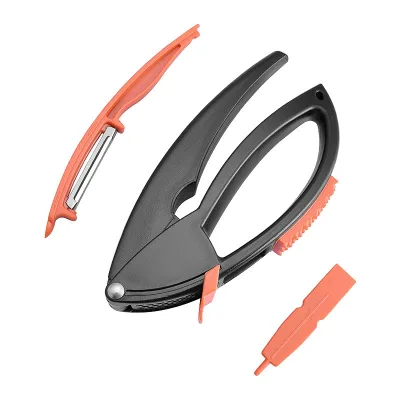


Multifunctional Garlic Press Garlic Muddler
$1.73 - $1.75
MOQ: 200 Pieces
Jinhua Hengyang Cross-Border Trade Limited Liability Company




Comprehensive Sourcing Guide
Strategic Sourcing Guide for Durable Garlic Presses
Understanding the Technical Landscape of Durable Garlic Presses
When sourcing a Durable Garlic Press, buyers must first distinguish between the core functional requirements and the specific material compositions that define longevity. The market for fruit and vegetable tools, specifically garlic presses, presents a variety of configurations ranging from simple metal units to complex composite designs. Based on current product observations, the primary material drivers for durability are stainless steel and high-grade metal alloys. Specific model data indicates the use of "Stainless Steel 18/0" combined with "PP" (polypropylene) or "ABS" plastic for handles, which suggests a hybrid construction approach designed to balance structural integrity with user comfort.
The structural design is critical for the "Easy to Held" and "Durable" attributes observed in high-performing units. A press intended for institutional or heavy home kitchen use must withstand the mechanical force required to mash garlic into a paste without deformation. The material specification "Stainless Steel" is frequently cited, yet the grade varies. Some listings specify "Staineless Steel" generally, while others provide the precise "18/0" designation, which refers to a specific chromium-nickel ratio. Buyers should verify that the metal component is indeed 18/0 or a comparable grade that resists corrosion and pitting, as this is the primary failure point in lower-quality presses. Furthermore, the handle material is a key differentiator; while some units feature all-metal construction, others utilize a combination of metal and plastic to reduce weight and improve grip. The observation of a "Silver" or "Green" color finish often correlates with the underlying material treatment, but the finish itself is secondary to the substrate's ability to resist wear.
Compliance, Certification, and Standard Verification
In the B2B procurement of kitchen tools, compliance is not merely a formality but a critical risk mitigation strategy. While the supplied data does not explicitly list third-party certifications like FDA or LFGB, the "Quality: high grade" attribute implies a baseline expectation of safety and durability. Buyers must independently verify that the stainless steel used meets food-grade standards. The presence of "Eco-Friendly" as a feature suggests that manufacturers may be adhering to environmental regulations regarding material sourcing and waste, though this requires specific documentation from the supplier.
Regarding physical standards, the product data references specific dimensions such as "15cm" and "107.56.5cm". These measurements likely represent the standard footprint or the size of the pressing chamber. However, relying on a single standard dimension is risky; a durable press must accommodate various garlic bulb sizes without crushing the user's hand. Buyers should request technical drawings that confirm the internal clearance and the leverage ratio of the press mechanism. The "prod_standard" of 15cm mentioned in the data may refer to a specific model length, but it should not be assumed to be a universal industry standard. Instead, procurement teams should establish their own tolerance limits for dimensions to ensure the tool fits standard kitchen storage and usage patterns. Additionally, the "Dishwasher Safe: Yes" attribute is a significant compliance indicator for durability, as it implies the materials can withstand high-temperature washing cycles without degrading, warping, or losing their finish.
Cost Drivers and Pricing Dynamics
The pricing structure for durable garlic presses is influenced by several variable factors, primarily material composition, manufacturing complexity, and order volume. The observed price range in the market spans from $0.28 to $6.00 USD. This wide disparity indicates that the lowest price points likely correspond to basic, single-material units with minimal packaging, while the higher end reflects complex hybrid designs, custom branding, and premium packaging. The "Single gross weight" of 0.0 kg in some data points is an anomaly that suggests either a data entry error or a specific lightweight model, but generally, the weight of the product (observed at 200g for some units) is a direct cost driver due to shipping logistics.
Material costs are the most significant variable. Stainless steel, particularly 18/0 grade, is more expensive than standard carbon steel or aluminum. The inclusion of PP or ABS plastic handles adds a secondary material cost but can reduce the overall weight and potentially the shipping cost. Packaging also plays a substantial role in the final unit price. The data shows a dichotomy between "Colored Box / in Bag" and "OPP Bag+Carton" configurations. Customized packaging, including "Customized Logo" and "Color Box," adds a premium to the unit cost. Buyers must weigh the cost of premium packaging against the brand value it generates. Furthermore, the "MOQ" (Minimum Order Quantity) varies significantly, ranging from 100 pieces to 5,000 pieces. A lower MOQ, such as 100 pieces, often carries a higher per-unit cost due to the inefficiency of small-batch production, whereas bulk orders of 3,600 or 5,000 units typically unlock lower price tiers. The "Supply Ability" of 10,000 pieces per month suggests that suppliers with this capacity can offer more competitive pricing for large orders, provided the buyer can commit to the necessary volume.
Typical Applications and Usage Scenarios
The intended application of a garlic press dictates the required durability and feature set. The data explicitly categorizes these tools for "Home Kitchen" usage, but the "Commercial Buyer: Institutional B474B Solutions" tag indicates a strong presence in the institutional sector. In a home setting, the "Easy to Held" feature is paramount, as users may have varying levels of hand strength. The press must provide sufficient leverage to mash garlic into a paste without requiring excessive force. In institutional environments, such as restaurants or cafeterias, the frequency of use is much higher. Here, the "Dishwasher Safe" attribute becomes a critical operational requirement to ensure hygiene and reduce labor costs associated with hand washing.
The specific usage function, "Mash The Garlic Into a Paste," requires a robust internal mechanism. A durable press must have a perforated chamber that does not clog easily and a plunger that maintains its structural integrity under repeated pressure. The "Non-Stick" feature observed in some models is highly relevant for institutional buyers, as it reduces the time spent cleaning the device and prevents food residue from hardening. The "Color: Silver" and "Green" options suggest that aesthetic considerations may also play a role in the selection process for commercial kitchens where equipment matching is important. However, functionality should always supersede aesthetics; a press that is difficult to clean or prone to breaking will fail in any high-volume environment.
Supplier Evaluation and Operational Capabilities
Evaluating a supplier for durable garlic presses requires a deep dive into their operational metrics and logistical capabilities. The "Place of Origin" is consistently listed as "China," specifically "Guangdong, China," which is a major manufacturing hub for kitchenware. This location offers a mature supply chain but requires rigorous vetting to ensure quality consistency. The "Port of dispatch" is frequently identified as "Shenzhen Port," a strategic advantage for international shipping due to its proximity to manufacturing centers and robust logistics infrastructure.
Buyers should scrutinize the "Payment term," which is often structured as "T/T: 30% Deposit+70% balance." This standard term indicates a level of trust but also requires the buyer to manage cash flow effectively. The "Sample" availability is a crucial evaluation tool; the data shows that samples are "Available" and in some cases "Freely Sample." This allows buyers to physically test the "Durable" claims before committing to a large order. The "Model Number" variations (e.g., RH-A0039, RH-A0042, RH-10326) suggest that suppliers offer a range of SKUs, and buyers should request samples for multiple models to compare build quality. The "Single volume" of 0 cm in some data points is a red flag that warrants clarification; buyers must ensure that the supplier provides accurate volume and weight data for freight calculations. Additionally, the "Logo: Customized Logo" capability indicates that the supplier has the flexibility for branding, which is essential for B2B buyers looking to establish their own product line.
Quality Control and Long-Term Procurement Considerations
Ensuring long-term value in garlic press procurement requires a robust quality control (QC) framework. The "Quality: high grade" attribute is a self-declared claim that must be validated through independent testing. Buyers should implement a QC protocol that includes stress testing the plunger mechanism to ensure it does not bend or break under maximum load. The "Material: Metal" and "Handle material: Staineless Steel" specifications must be verified through material analysis to confirm the absence of substandard alloys that could lead to rust or failure.
Long-term procurement considerations also involve the "Packing Details." The observation of "Each pc in a polybag /color box" versus "OPP Bag+Carton" highlights the importance of protective packaging. Inadequate packaging can lead to damage during transit, negating the durability of the product itself. Buyers should specify packaging requirements that prevent scratching and deformation. The "Customized Packing" option allows for tailored solutions that can reduce damage rates. Furthermore, the "Supply Ability" of 10,000 pieces per month suggests that the supplier has the capacity to scale, but buyers should verify this capacity against their own demand forecasts to avoid supply chain disruptions. Finally, the "MOQ" flexibility is a key factor; while some suppliers require 3,600 units, others accept 100, allowing buyers to start with smaller orders to test the market before scaling up. By focusing on these operational and quality metrics, buyers can secure a reliable supply of durable garlic presses that meet the rigorous demands of both home and institutional kitchens.
Comparative Analysis of Product Attributes
To facilitate decision-making, the following table summarizes the key attributes observed in the market for durable garlic presses, highlighting the variations that buyers should consider during the sourcing process.
| Attribute Category | Observed Variation | Procurement Implication |
|---|---|---|
| Material Composition | Stainless Steel 18/0 + PP; Stainless Steel + ABS; General Metal | Verify specific alloy grades for corrosion resistance and handle comfort. |
| Packaging Format | Polybag + Color Box; OPP Bag + Carton; Customized Packing | Higher packaging costs correlate with better protection and branding potential. |
| Minimum Order Quantity | 100 PCS to 5,000 PCS | Lower MOQs offer flexibility but higher unit costs; higher MOQs reduce unit price. |
| Color Options | Silver; Green; Silver & Green; Black | Color selection may impact aesthetic matching in commercial kitchens. |
| Functional Features | Non-Stick; Dishwasher Safe; Easy to Held | "Dishwasher Safe" is critical for institutional longevity and hygiene. |
| Dimensions | 15cm; 107.56.5cm | Verify internal clearance for garlic bulb size compatibility. |
| Payment Terms | T/T: 30% Deposit + 70% Balance | Standard industry term; ensure cash flow alignment. |
| Origin & Logistics | Guangdong, China; Shenzhen Port | Proximity to port reduces lead times; verify factory location for audits. |
This comparative view underscores the necessity of a detailed specification sheet when engaging with suppliers. The variation in materials, packaging, and MOQs means that a "one-size-fits-all" approach to sourcing is ineffective. Buyers must align their specific operational needs with the precise attributes of the product to ensure the acquisition of a truly Durable Garlic Press.
FAQs
What materials are used for durable garlic presses?
Durable garlic presses typically use stainless steel, often specified as 18/0 grade, combined with PP or ABS plastic handles. This hybrid construction balances structural integrity with user comfort and resistance to corrosion during repeated use.
Can these garlic presses be safely washed in a dishwasher?
Yes, many durable models are explicitly marked as dishwasher safe, allowing them to withstand high-temperature washing cycles without degrading or losing their finish. This feature is critical for maintaining hygiene in both home and institutional kitchen environments.
How does the minimum order quantity affect pricing?
The minimum order quantity ranges from 100 pieces to 5,000 pieces, with lower MOQs often carrying higher per-unit costs. Bulk orders of 3,600 units or more typically unlock more competitive price tiers due to production efficiency.
Which packaging options are available for these products?
Packaging varies from individual polybags with color boxes to OPP bags inside cartons, with customized packing options also available. Premium packaging adds to the unit cost but provides better protection and branding potential for commercial buyers.
What is the typical supply capacity for these garlic presses?
Suppliers generally demonstrate a supply ability of 10,000 pieces per month, indicating they can scale to meet large demand. Buyers should verify this capacity against their specific forecast to ensure consistent supply without disruptions.
Where are these durable garlic presses manufactured?
These products originate from China, specifically the Guangdong region, which is a major manufacturing hub for kitchenware. The primary port of dispatch is Shenzhen, offering robust logistics infrastructure for international shipping.