Source e-mark led car head lights for Volkswagen, Benz, and Universal Cars
Find 30 e-mark led car head lights from Chinese manufacturers with options for Volkswagen and Benz vehicles. Compare specifications including power, voltage, and certifications like CCC and E-mark to select the right lighting system for your needs.
Key considerations
Products List


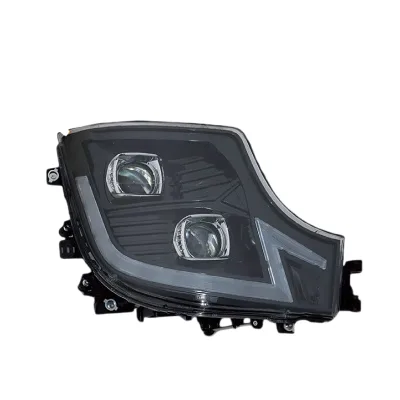
E-MARK R112 69W High Low Beam Universal LED Headlight with Day Running Light
$35.00 - $41.00
MOQ: 100 Pieces


Comprehensive Sourcing Guide
Strategic Sourcing Guide for E-Mark Certified LED Headlight Systems
Navigating the global market for E-mark certified LED car headlight systems requires a disciplined approach that balances technical performance with rigorous compliance verification. For procurement professionals, the core keyword "e-mark led car head lights" signals a specific subset of automotive lighting products designed for road-legal use in markets that mandate strict regulatory adherence. Unlike generic aftermarket lighting, these systems must meet defined photometric and safety standards to ensure vehicle homologation. This guide synthesizes observed product attributes, certification data, and supply chain realities to provide a framework for evaluating potential suppliers without relying on unverified marketing claims.
Technical Architecture and Performance Specifications
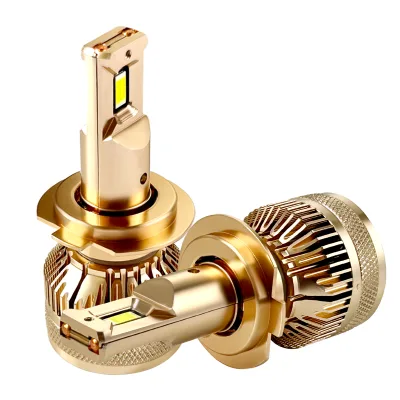
The fundamental engineering of LED headlight systems centers on the interaction between the light-emitting diode, thermal management, and optical design. Based on observed product data, the core material composition for these units frequently involves Aviation Aluminum for the shell, a critical choice for dissipating heat generated by high-power LEDs. Thermal management is paramount; without effective heat sinking, the lifespan of the diode degrades rapidly, compromising the stated operational life of over 30,000 hours.
Power consumption is a primary differentiator in the market. Observed listings indicate power ratings ranging from 41W to 50W for specific models, such as those designated with the model identifier B03113. These units typically operate on a 12V DC input, though some advanced configurations support a broader input voltage range of 9-32V, making them suitable for both standard passenger vehicles and specialized applications like motorcycles or electric cars. The emitting color is predominantly White, with specific variants offering Warm White or Yellow options, which may be required for specific fog light applications or regional regulatory preferences.
Optical performance is defined by the beam angle and luminous flux. A 360-degree beam angle is observed in certain universal fitment models, ensuring omnidirectional illumination, while others are engineered for specific beam patterns like High Beam or Dipped Headlight functions. Brightness metrics, such as 700 lumens, serve as a baseline for lower-power units, but high-performance automotive applications often require significantly higher output. The base type, such as P27W or specific H-series sockets (H4, H7, H11), dictates the physical compatibility with existing vehicle housing. Buyers must verify that the physical dimensions and base type of the LED unit match the vehicle's original equipment manufacturer (OEM) specifications to avoid installation failures.
Regulatory Compliance and Certification Verification
The term "E-mark" refers to the United Nations Economic Commission for Europe (UNECE) regulation that certifies a component's suitability for use on public roads within Europe and other signatory countries. However, the market landscape is complex, and a single product listing may carry multiple certifications to appeal to diverse global markets. Observed data confirms the presence of E-mark, CE, CCC (China Compulsory Certification), DOT (Department of Transportation), SONCAP, and PVOC certifications in various product profiles.
Procurement teams must exercise extreme caution when interpreting these labels. The presence of an E-mark does not automatically imply compliance with DOT standards, which are specific to the United States. Similarly, CCC is mandatory for products sold within China, while SONCAP and PVOC are requirements for Nigeria and Egypt, respectively. A supplier claiming "E-mark" status must provide the specific E-mark number (e.g., E1, E4) and the corresponding regulation number (such as ECE R112 for headlamps) to prove validity. Relying solely on the presence of a certification logo without verifying the documentation is a significant procurement risk.
Furthermore, the standard "80X50X40 cm" observed in product data likely refers to the shipping carton dimensions rather than a product standard, while "Led headlight bulbs" is a generic category descriptor. Buyers should not assume that a product labeled with "E-mark" is automatically compliant with local regulations in their specific destination country. The verification process must include a request for the official test reports issued by an accredited third-party laboratory, confirming that the specific model batch has undergone the required photometric and electrical safety testing.
Cost Drivers and Pricing Dynamics
The pricing of E-mark LED headlight systems is influenced by a confluence of factors, including material quality, certification costs, and order volume. The observed price range in the market spans from $0.10 to $250.00 USD, a variance that reflects the difference between low-power auxiliary lights and high-performance main beam assemblies. The lower end of this spectrum often corresponds to generic, non-certified units or those intended for off-road use, whereas the upper end typically encompasses systems with advanced thermal management, universal voltage support, and full regulatory compliance.
Material costs play a substantial role in the final price. The use of Aviation Aluminum for the heat sink, as noted in product specifications, is more expensive than plastic alternatives but offers superior longevity and performance. Additionally, the power rating of the LED chips directly impacts the cost; units rated at 50W will generally command a higher price point than those in the 41-50W range or lower.
Order volume is another critical cost driver. The Minimum Order Quantity (MOQ) observed in the market varies significantly, ranging from 50 pieces to 300 pieces, with some listings indicating an MOQ of up to 1000 units. Suppliers often offer tiered pricing structures where the unit cost decreases as the order quantity increases. For buyers seeking E-mark certified products, it is essential to understand that the cost of maintaining certification compliance is often baked into the unit price. A supplier offering a price significantly below the market average may be cutting corners on the quality of the LED chips, the thermal interface material, or the certification documentation.
Application Scenarios and Vehicle Compatibility
The versatility of LED headlight systems allows them to be deployed across a wide range of vehicle types. Observed product attributes indicate compatibility with specific car makes such as Volkswagen and Benz, as well as universal fitment options. The scope of application extends beyond standard passenger cars to include motorcycles and electric vehicles, with some systems explicitly designed for "Motorcycle Lighting Systems" or "Electric Cars (Headlights)."
The customization capabilities of these products are a significant advantage for fleet managers and automotive aftermarket distributors. The "Customization: Available" attribute suggests that suppliers can tailor the product to specific requirements, including OEM and ODM support. This flexibility allows buyers to request specific beam angles, color temperatures, or housing designs to match the aesthetic and functional needs of their target market.
However, the "Universal" fitment claim requires careful validation. While a product may be advertised as universal, the physical dimensions and base type (e.g., P27W, H4, H7, H11) must align with the vehicle's existing socket and housing. The "Beam Angle: 360degree" feature is particularly relevant for applications requiring omnidirectional light, but for standard road-legal headlamps, a focused beam pattern is often necessary to prevent glare for oncoming traffic. Buyers should cross-reference the product's technical specifications with the vehicle's manual to ensure that the LED unit will not cause regulatory issues due to improper beam alignment or excessive brightness.
Supplier Evaluation and Quality Assurance
Selecting a reliable supplier for E-mark LED headlight systems involves a multi-layered evaluation process that goes beyond price comparison. The observed product origin data points to China, specifically Shenzhen, Guangdong, as a primary manufacturing hub. While this region is known for its robust electronics supply chain, it also necessitates rigorous due diligence to ensure quality consistency.
Key evaluation criteria should include the supplier's ability to provide comprehensive documentation for all claimed certifications. Buyers should request copies of the E-mark certificates, test reports, and material safety data sheets. The "Delivery: 30 Days" lead time observed in the market provides a benchmark for planning, but buyers must confirm if this lead time applies to stock items or custom orders. The "Port: Shanghai or Ningbo" specification indicates the logistics hubs used by suppliers, which can impact shipping costs and transit times.
Quality control measures are essential to mitigate the risk of product failure. The "Waterproof" and "Shock-Resistant" attributes observed in product listings are critical for automotive applications, where exposure to the elements and road vibrations is constant. Buyers should verify the IP rating (Ingress Protection) for waterproofing and the specific shock resistance standards the product meets. The "prod_packing" details, such as "Color Box+ Carton" or "Hard Carton," also serve as indicators of the supplier's attention to detail; robust packaging is necessary to prevent damage during international transit.
Long-Term Procurement and Supply Chain Resilience
Sourcing E-mark LED headlight systems is not merely a transactional activity but a strategic decision that impacts long-term business operations. The "Life Time: >30000 Hours Above" specification suggests a product designed for durability, but the actual lifespan depends on the quality of the driver circuit and the thermal management system. Buyers should consider the total cost of ownership, including potential warranty claims and the cost of replacing failed units.
The availability of OEM and ODM support is a key factor for long-term partnerships. Suppliers that offer customization can adapt to changing market trends and regulatory updates, ensuring that the product line remains relevant. The "Input Voltage(V): 9-32V" feature, for instance, adds resilience by allowing the product to function across different vehicle electrical systems, reducing the risk of compatibility issues.
Furthermore, the "Standard: as per your requirements" attribute indicates a flexible supply chain capable of meeting specific buyer needs. However, buyers must ensure that any customizations do not compromise the E-mark certification. Modifications to the optical system or electrical components can void existing certifications, requiring re-testing and re-certification. Therefore, any customization request should be discussed with the supplier's engineering team to ensure compliance with relevant regulations.
In conclusion, sourcing E-mark LED car headlight systems requires a balanced approach that prioritizes technical verification, regulatory compliance, and supplier reliability. By focusing on the observed facts regarding power, material, and certification, buyers can navigate the complex market landscape and secure high-quality products that meet the demands of their customers while adhering to international safety standards. The interplay between cost, performance, and compliance defines the value proposition of these products, and a disciplined procurement strategy is essential to maximize returns and minimize risk.
FAQs
What certifications do e-mark led car head lights typically hold?
These lights often carry E-mark, CCC, CE, DOT, SONCAP, and PVOC certifications. Buyers must verify specific E-mark numbers and test reports to ensure compliance with regional regulations like UNECE or DOT standards before purchasing.
How long is the expected life time of these LED headlight systems?
The observed operational life time exceeds 30,000 hours for many models. This longevity depends on effective thermal management using materials like Aviation Aluminum to dissipate heat generated by the high-power LED chips.
Which voltage ranges are supported by universal e-mark led car head lights?
Most units operate on 12V DC, while advanced models support an input voltage range of 9-32V. This broader range allows compatibility with standard passenger vehicles as well as specialized applications like motorcycles and electric cars.
Can suppliers customize the beam angle and color for these headlights?
Customization is available for beam angles, emitting colors like White or Warm White, and specific functions such as High Beam or Dipped Headlight. OEM and ODM support allows buyers to tailor products to specific vehicle fitments.
What is the typical minimum order quantity for e-mark led car head lights?
The minimum order quantity varies, with observed values ranging from 50 pieces to 300 pieces or up to 1000 units. Buyers should check specific supplier requirements as MOQs often influence the final unit pricing structure.
How are these LED headlights packaged for international shipping?
Products are typically packed in Color Boxes with Cartons, Hard Cartons, or Paper Carton Boxes. Robust packaging like Hard Carton ensures protection during transit, with standard shipping dimensions often around 80x50x40 cm for bulk orders.
What is the lead time for delivery of these automotive lighting systems?
The standard delivery lead time is approximately 30 days for stock or custom orders. This timeline applies to shipments departing from ports like Shanghai or Ningbo in China, specifically from manufacturing hubs in Shenzhen.