Source Eco Friendly Cartoon Plush Keychain for Gifts, Events, and Promotions
Compare 30 Eco Friendly Cartoon Plush Keychain options from verified suppliers. Buyers can evaluate customization, certifications, and pricing for gifts, events, and promotional campaigns. These items feature soft materials, custom logos, and various hook types suitable for kids and adults alike.
Key considerations
Products List


Custom Dog 10cm Plush Keychain Cute Puppy Stuffed Animals Plush Keychain
$1.50 - $3.00
MOQ: 100 Pieces


Sloppy Puppy Bag Hanging Ornament Keychain Creative Custom Plush Keychain
$1.99 - $4.99
MOQ: 20 pieces


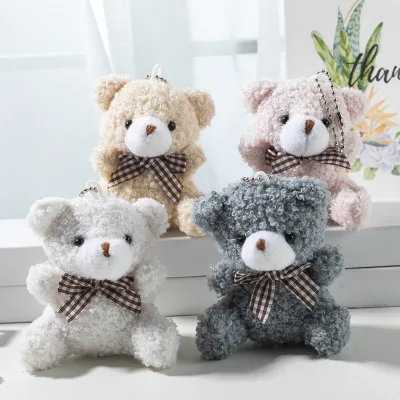
High Quality Custom Plush Toy Keyring Pendant Bear Animals Plush Keychain
$1.37 - $1.49
MOQ: 500 Pieces




Comprehensive Sourcing Guide
Eco Friendly Cartoon Plush Keychain Sourcing Guide
Sourcing eco-friendly cartoon plush keychains requires balancing aesthetic customization with verified material safety and ethical production standards. Buyers must prioritize suppliers who explicitly offer customization for logos and designs while maintaining strict adherence to international safety certifications like CE, En71, and ASTM. The observed market data indicates a wide range of customization options, including hand-made techniques and custom modeling sources, which allows for unique product differentiation without compromising on the soft, huggable qualities essential for this category.
Procurement decisions should focus on verifying the specific material composition and production origin to ensure the "eco-friendly" claim is substantiated by actual manufacturing practices rather than marketing language. While the product list confirms origins in China and Yiwu, buyers must request detailed material specifications for the plush lining and metal alloy hooks to confirm sustainability credentials. Understanding the distinction between standard and custom production times, which range from 3-7 days for samples to 15-20 days for mass production, is critical for aligning inventory planning with realistic delivery expectations.
Product Scope and Observed Listing Signals
The product scope for these items spans from simple keychains to larger plush dolls, with observed listings featuring multicolor options and various hook types such as hook-shaped or buckle styles. Buyers should note that the "eco-friendly" designation often correlates with specific customization capabilities, including the ability to accept customer logos via embroidery or printing on the plush surface. The observed price range of 0.15 to 4.99 USD suggests a highly competitive market where volume and material choices significantly influence the final unit cost, requiring careful negotiation to maintain margins while ensuring quality.
Listing signals indicate a strong emphasis on gift usage, with products frequently marketed for birthdays and as support for embroidered logos on children's items. The observed minimum order quantities vary drastically from 1 piece to 10,000 pieces, offering flexibility for both small boutique orders and large corporate bulk purchases. However, buyers must verify that the "soft comfortable" and "well-stitched" attributes are consistent across different production batches, as these tactile features are primary drivers of consumer satisfaction in the plush toy sector.
Technical Specifications to Verify
Technical verification must begin with the physical dimensions and structural integrity of the keychain components, specifically the metal alloy hooks and the plush body construction. Buyers should confirm that the standard product dimensions, such as the 3.5cm by 5cm specification observed in some listings, align with their branding requirements, while also checking for custom modeling sources that allow for unique shapes. The production standard often depends on the order quantity, meaning that larger batches may adhere to different quality thresholds than small sample runs, necessitating clear contractual definitions for acceptable variance.
Material specifications for the lining and the plush fabric are critical to validating the eco-friendly claim, as the observed data lists "custom" lining materials without specifying the exact composition. Procurement teams must request detailed material safety data sheets to ensure the plush fibers and metal alloys meet the required durability and safety standards for the intended age range, which is noted as 14 years and up in some listings but often intended for younger children in practice. Additionally, verifying the packing method, whether boxed or in OPP bags, ensures the product arrives in pristine condition for retail display.
Compliance and Safety Documentation
Compliance documentation is non-negotiable for plush keychains intended for gifting, requiring suppliers to provide valid certificates for CE, En71, ASTM, CPSIA, and Reach standards. The observed product data explicitly lists these certifications, but buyers must ensure that the specific test reports correspond to the actual production batch and not just a generic template. The presence of BSCI and ISO9001 certificates further indicates a commitment to ethical labor practices and quality management systems, which are essential for maintaining brand reputation in the global market.
Buyers must verify that the test results for the specific metal alloy hooks and plush materials align with the ASTM and En71 standards mentioned in the product listings. Since the observed data includes "Custom" as a modeling source, the safety testing must cover the unique design elements to ensure no small parts or hazardous materials are introduced during the customization process. It is imperative to confirm that the "soft, huggable" nature of the product does not compromise safety, particularly regarding stitching strength and the secure attachment of the hook to the plush body.
Cost Drivers and Commercial Terms
Cost drivers for eco-friendly plush keychains are heavily influenced by the level of customization, including the complexity of the custom design, the type of logo application, and the specific material choices for the plush and lining. The observed MOQ range of 1 to 10,000 pieces allows for flexible entry points, but buyers should be aware that lower quantities often carry a higher per-unit cost due to the setup time for hand-made production and custom packaging. Understanding the relationship between order volume and the 15-20 day mass production lead time is essential for managing cash flow and inventory turnover effectively.
Commercial terms must clearly define the sample time, which is observed to be between 3-7 working days, and the production lead time, which can extend to 20 days or more depending on order quantity. Buyers should negotiate payment terms that reflect the risk profile of custom orders, ensuring that deposits and balance payments are structured to protect against delays or quality issues. The packing specification, ranging from 30-40 pieces per carton to individual boxed units, also impacts shipping costs and should be factored into the total landed cost calculation.
Supplier Qualification and Quality Control
Supplier qualification requires a rigorous assessment of their ability to deliver consistent quality across custom orders, particularly given the hand-made nature of many of these products. Buyers should verify the supplier's track record with OEM and ODM projects, ensuring they have the capacity to handle the "customers logo" customization without compromising the structural integrity of the plush doll or keychain. The observation of specific production models like WH000000 and HW000000 suggests a standardized baseline, but the custom nature of the order means that quality control protocols must be adapted for each unique design.
Quality control checks must focus on the stitching quality, the durability of the metal alloy hooks, and the consistency of the multicolor dyeing process. Since the product is often used as a gift, any defects in the "soft comfortable" texture or loose threads can lead to significant returns and brand damage. Implementing a pre-shipment inspection that verifies the packing standards, such as the cartoon box or OPP bag requirements, ensures that the product arrives in a condition that meets the high expectations of the end consumer.
Long-Term Procurement Checks
Long-term procurement success depends on establishing a reliable supply chain that can scale with demand while maintaining the strict safety and quality standards required for plush toys. Buyers should conduct periodic audits of the supplier's production facilities to ensure continued compliance with BSCI and ISO9001 standards, as well as to verify that the "eco-friendly" material sourcing remains consistent over time. Regular communication regarding design updates and material changes is essential to prevent supply chain disruptions and to ensure that the product remains competitive in the market.
Continuous monitoring of the supplier's ability to meet the observed sample and production lead times is crucial for maintaining inventory levels and meeting customer expectations. Buyers should establish clear performance metrics for defect rates and delivery punctuality, using these data points to drive continuous improvement in the supply chain. By maintaining a close relationship with the supplier and regularly reviewing the technical specifications and compliance documentation, buyers can ensure a sustainable and profitable partnership for the long term.
FAQs
Can I customize the logo on these plush keychains?
Yes, customer logos are accepted for these custom plush keychains. You can choose from embroidery or printed options to brand your items. The product supports OEM and ODM services, allowing for full design customization. This makes them ideal for promotional gifts or personalized merchandise where brand visibility is a priority.
What certifications do these plush toys have?
These plush keychains hold CE, En71, ASTM, CPSIA, and Reach certifications. They also comply with BSCI and ISO9001 standards. These credentials ensure the products meet international safety and quality requirements for children and general use. Buyers can rely on these documented standards for compliance in various global markets.
What is the sample time for custom orders?
The sample time is typically 3-7 working days. For some specific models, it may take 5-7 working days to prepare. This quick turnaround allows buyers to review quality and design accuracy before committing to mass production. It ensures that the final product matches your custom specifications and expectations.
What is the minimum order quantity for these items?
The minimum order quantity is 1 piece. This low MOQ allows buyers to test the market or order small batches for personal use. It supports flexible sourcing strategies for startups or small businesses. You can scale up to larger quantities as needed, with production times adjusting based on the order size.
How are these plush keychains packaged for shipping?
Packaging varies by model, including OPP bags, boxed, or carton options. Standard cartons may hold 30-40 pieces. Some items use cartoon boxes for retail readiness. This flexibility helps optimize shipping costs and product protection. Buyers can specify their preferred packaging style to align with their distribution and retail requirements.
What is the production lead time for bulk orders?
Mass production typically takes 15-20 days. The exact time depends on the order quantity and customization complexity. This timeline allows for quality control and assembly of custom features like embroidery. Buyers should plan their inventory needs accordingly to ensure timely delivery for events or seasonal campaigns.