Source eco-friendly durable glass dinner set for Hotel Restaurant Home
Find and compare 30 eco-friendly durable glass dinner set options featuring glass and stainless steel materials. Evaluate models like JS-AL005 and Glass Dinnerware Sets-021o-038A for hotel, restaurant, and home usage with customizable designs and high mirror polish finishes.
Key considerations
Products List


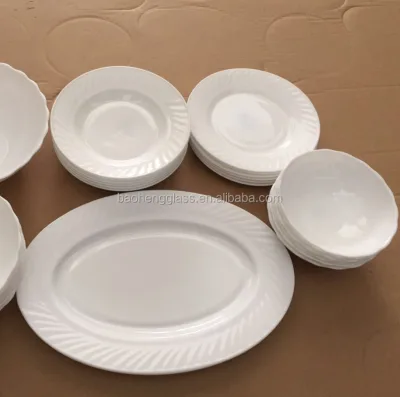
Hot Selling Classic Opal Glassware Tableware 58PCS Opal Glass Dinner Set
$18.50 - $20.00
MOQ: 1750 Pieces


Comprehensive Sourcing Guide
Eco-Friendly Durable Glass Dinner Set Sourcing Guide
Sourcing an eco-friendly durable glass dinner set requires a strategic approach that balances material integrity with sustainable manufacturing practices. The core of this procurement category lies in identifying products that utilize high-quality glass, which offers superior durability and chemical stability compared to many alternatives. Buyers must prioritize suppliers who explicitly state their commitment to eco-friendly attributes, ensuring that the production process minimizes waste and energy consumption while maintaining the structural strength necessary for daily use in hotels, restaurants, and homes.
The market landscape for these dinner sets presents a diverse range of options, from simple handle designs to elegant shapes that cater to various aesthetic preferences. Procurement teams should focus on verifying that the "eco-friendly" claim is backed by tangible product features rather than vague marketing language. This involves cross-referencing observed listing signals, such as specific model numbers and material declarations, to ensure the selected dinnerware meets the rigorous demands of commercial and residential environments without compromising on safety or longevity.
Product Scope and Observed Listing Signals
The observed product scope for glass dinner sets in this category spans a wide variety of configurations, including sets with simple handles, elegant shapes, and transparent clear finishes. Listings indicate that these products are available in both multicolor and unicolor options, with some models featuring fancy colored accents to suit specific branding or interior design needs. Buyers should note that the product range includes distinct model identifiers such as Glass Dinnerware Sets-021o-038A and JS-AL005, suggesting a high degree of customization potential for different market segments.
A critical signal in the current market is the availability of customization services, with many suppliers offering OEM capabilities and tailored production standards. The observed data shows that products are often packed individually in polybags or cartons, and some are presented in suit or box packaging to enhance presentation and protection during transit. Procurement teams must verify that the "customized" standard applies to the specific dimensions and capacities required, as observed specifications range from standard volumes to precise measurements like 320ml capacity with defined height and width parameters.
Technical Specifications to Verify
When evaluating technical specifications, buyers must confirm the material composition to ensure the product is genuinely glass and not a composite or lower-grade alternative. The supplied facts highlight that glass is a primary material, but some listings also reference stainless steel components, particularly in handles or structural reinforcements. It is essential to distinguish between the glass body and any metal accessories, verifying that the "high mirror polish" finish on metal parts is durable and resistant to corrosion, especially for items intended for frequent use in hotel and restaurant settings.
Dimensional accuracy and capacity consistency are paramount for operational efficiency in food service environments. Buyers should verify that the product standard aligns with specific measurements, such as the observed T: 60mm, B: 71mm, and H: 201mm dimensions for certain models, ensuring they fit existing storage and serving infrastructure. Additionally, the "series" capacity designation requires clarification to confirm that the volume per piece matches the intended serving size, preventing discrepancies that could lead to customer dissatisfaction or operational inefficiencies.
Compliance and Safety Documentation
Compliance with international safety standards is non-negotiable for glass dinnerware intended for food contact, particularly when sourcing from global markets. The observed listings mention certifications such as CE / EU, FDA, and EEC, which are critical indicators that the products have undergone rigorous testing for chemical leaching and physical safety. Procurement teams must request current, valid certificates for these specific standards to ensure that the glass and any associated materials do not release harmful substances when exposed to heat or acidic foods.
Beyond material safety, the documentation must address the environmental claims associated with the "eco-friendly" designation. While some background knowledge suggests standards like ASTM D6400 for biodegradability, buyers should rely on the explicit certifications provided in the product data, such as the CE and FDA marks, to validate safety. It is vital to ensure that the supplier can provide a comprehensive compliance dossier that covers the entire supply chain, confirming that the manufacturing process in regions like Anhui, China, adheres to the declared environmental and safety protocols.
Cost Drivers and Commercial Terms
The cost structure for eco-friendly durable glass dinner sets is influenced by several key factors, including the level of customization, material quality, and packaging requirements. The observed MOQ range of 100 to 30,000 pieces indicates that economies of scale play a significant role in pricing, with larger orders likely yielding more favorable unit costs. Buyers should analyze the trade-off between the "simple" and "elegant" styles, as more complex designs or custom finishes may incur higher production costs that are passed on to the purchaser.
Commercial terms regarding delivery and payment are equally critical for managing cash flow and inventory planning. The observed lead time of 30-45 days after receiving the deposit is a standard timeframe that buyers must account for in their supply chain schedules. It is advisable to negotiate clear terms regarding the deposit percentage and the final delivery schedule, ensuring that the "30-45 day" window is strictly adhered to in order to prevent stockouts in high-volume food service operations.
Supplier Qualification and Quality Control
Supplier qualification should focus on verifying the manufacturer's ability to maintain consistent quality across large production runs. The observed data indicates that many suppliers offer "best" quality guarantees and "new" age products, but these claims must be substantiated through on-site audits or third-party quality reports. Buyers should prioritize suppliers who demonstrate a robust quality control process, particularly for glass products where defects like chips or bubbles can compromise safety and aesthetics.
Quality control measures must extend to the packaging and shipping phases to prevent damage during transit. The observed packing methods, ranging from individual polybags to cartons and suits, require validation to ensure they provide adequate protection for fragile glass items. Procurement teams should request samples to test the durability of the packaging under simulated shipping conditions, ensuring that the "each packed in a polybag" or "carton" methods effectively mitigate the risk of breakage before the product reaches the end user.
Long-Term Procurement Checks
Establishing a long-term procurement strategy for glass dinner sets involves regular performance reviews and supplier relationship management. Buyers should implement a system to track product performance over time, monitoring for issues such as chipping, staining, or degradation of the "high mirror polish" finish. This proactive approach allows for early identification of quality drifts and ensures that the supplier continues to meet the "eco-friendly" and durability standards required for the specific application.
Continuous verification of the supplier's compliance status and production capacity is essential for maintaining a resilient supply chain. As market conditions change, buyers must re-evaluate the supplier's ability to meet the observed lead times and MOQ requirements without compromising on quality. Regular audits and open communication channels will help ensure that the partnership remains aligned with the evolving needs of the business, securing a reliable source of high-quality, sustainable glass dinnerware for years to come.
FAQs
Can I order customized eco-friendly durable glass dinner sets?
Yes, customization is available for these glass dinner sets. The products support OEM services and can be tailored to specific needs, with options for unique shapes and styles to match your requirements.
What is the minimum order quantity for these glass dinner sets?
The minimum order quantity varies by product, ranging from 1000 to 10000 pieces. Some listings indicate an MOQ of 1000 pieces, while others may require up to 10000 pieces depending on the specific model selected.
How long does delivery take for these glass dinner sets?
Delivery typically takes 30 to 45 days after receiving the deposit. This lead time applies to the manufacturing and shipping process for the glass dinnerware sets sourced from the specified origin.
Which certifications do these glass dinner sets hold?
These products hold CE, EU, FDA, and EEC certifications. These standards ensure the glass dinner sets meet safety and quality requirements for use in hotels, restaurants, and homes across various international markets.
What packaging options are available for these glass dinner sets?
Packaging options include polybags, cartons, boxes, and suits depending on the specific model. Each item is packed individually in a polybag, while bulk orders may utilize cartons or specialized suit packaging for protection.
Are these glass dinner sets suitable for hotel and restaurant use?
Yes, these sets are designed for use in hotels, restaurants, and homes. They feature durable glass construction and are available in various styles, including classic and simple designs, to suit different dining environments.