Source Eco Friendly Durable Golf Tee for Courses, Practice, and Gifts
Find and compare 30 listings for Eco Friendly Durable Golf Tee options made from plastic, bamboo, or wood. Evaluate specifications like weight, size, and customization to select the right tee for golf courses, practice sessions, or promotional gifts.
Key considerations
Products List


Eco-Friendly Factory Price Bamboo Golf Tees Custom Golf Tees Packaging
$0.01 - $0.02
MOQ: 10000 Pieces


Custom Logo Printed Natural Wooden Bamboo Golf Tee Strong and Durable Golf Tee
$0.02 - $0.04
MOQ: 10000 Pieces


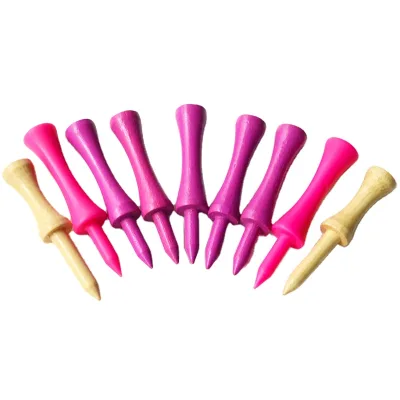


Biodegradable Golf Tees More Durable and Sustainable Eco-Friendly Bamboo Tees
$0.02 - $0.03
MOQ: 5000 Pieces


Professional Custom Eco-Friendly Golf Tees Durable Tees with Printed Logo
$0.20 - $1.50
MOQ: 1000 Pieces


Premium Quality Natural Bamboo Biodegradable Environmentally Friendly Golf Tees
$0.01 - $0.04
MOQ: 20000 Pieces

Comprehensive Sourcing Guide
Eco Friendly Durable Golf Tee Sourcing Guide
Sourcing eco-friendly and durable golf tees requires a nuanced understanding of material science, manufacturing processes, and commercial terms that differ significantly from standard plastic alternatives. Buyers must navigate a market where "eco-friendly" is often a marketing term rather than a certified standard, necessitating rigorous verification of material origins and end-of-life disposal methods. The core challenge lies in balancing the aesthetic and functional demands of golfers with the environmental commitments of the brand, ensuring that the product delivers longevity without compromising on sustainability claims. This guide provides a structured approach to evaluating suppliers, verifying technical specifications, and establishing commercial terms that protect your investment while aligning with corporate social responsibility goals.
The procurement landscape for golf tees is diverse, ranging from traditional bamboo and wood to innovative biodegradable plastics and recycled materials. Each material class offers distinct advantages in terms of durability, cost, and environmental impact, but also presents unique risks regarding supply chain transparency and quality consistency. Buyers must prioritize suppliers who provide clear documentation on material sourcing, such as FSC certification for wood or verified biodegradability standards for polymers. By focusing on evidence-based verification rather than relying solely on supplier assertions, procurement teams can mitigate the risk of greenwashing and ensure that the final product meets both performance expectations and regulatory requirements in target markets.
Product Scope and Observed Listing Signals
The current market for golf tees exhibits a wide range of product variations, with observed listings indicating a price range of $0.01 to $2.52 USD and minimum order quantities (MOQs) spanning from 100 to 50,000 pieces. This broad spectrum suggests that buyers can access both low-volume prototyping options and high-volume production runs, but it also highlights the importance of aligning order volume with supplier capabilities. Products are frequently categorized under specific models such as GT-15, GT-10, GT-12, GT-08, and MLG-GOLF TEES, each potentially representing different material compositions, dimensions, or manufacturing techniques. Buyers should treat these model numbers as identifiers for specific supplier configurations rather than universal industry standards, requiring direct verification of the underlying specifications for each SKU.
Color and customization options are prominent features in the observed data, with common colors including green, white, and blue, and customization available for logos, colors, and sizes. The presence of both "Non-Customized" and "Customized" attributes indicates that suppliers offer a mix of stock items and bespoke solutions, which can impact lead times and unit costs. Packaging varies from simple PE bags to more elaborate paper packages, boxes, or cartons, reflecting different distribution channels and sustainability priorities. Additionally, the observed weight ranges from 0.8g to 15g, suggesting significant variation in material density and tee height, which directly influences performance on the golf course. Buyers must carefully match these physical attributes to their target customer preferences, ensuring that the selected product offers the desired balance of stability, visibility, and environmental profile.
Technical Specifications to Verify
Material composition is the most critical technical specification for eco-friendly golf tees, with observed listings indicating the use of plastic, bamboo, wooden, and bamboo/wooden blends. Buyers must verify the specific type of plastic used, if applicable, to ensure it meets biodegradability or compostability claims, as standard petroleum-based plastics do not qualify as eco-friendly. For wooden and bamboo products, verification of the wood species and treatment processes is essential to confirm durability and resistance to moisture and rot. The observed standard dimensions of 42mm, 54mm, 60mm, 70mm, 83mm, and 100mm provide a baseline for tee height, but buyers should confirm that the selected length aligns with the intended use case, such as driver tees versus iron tees. Additionally, the processing methods, such as printing for logos, should be evaluated for their environmental impact, ensuring that inks and adhesives are non-toxic and compatible with the base material.
Durability and performance characteristics must be validated through practical testing and supplier-provided data, as observed attributes like "Eco-Friendly" and "Durable" are not mutually exclusive but require careful engineering. The observed production time of around 25-30 days for customized orders suggests that lead times can be extended for bespoke designs, which buyers must factor into their inventory planning. Sample availability is a key indicator of supplier reliability, allowing buyers to assess the physical quality, weight, and finish of the product before committing to a large order. Buyers should also verify the origin of production, with observed locations including China, Fujian, and Guangdong, to assess logistics costs and potential supply chain risks. By focusing on these tangible technical details, buyers can make informed decisions that balance sustainability with functional performance.
Compliance and Safety Documentation
Compliance with environmental standards is a primary concern for eco-friendly products, with observed references to ASTM D6400, EN 13432, and EN13432 indicating potential alignment with compostability and biodegradability regulations. Buyers must verify that suppliers hold valid certifications for these standards, as mere reference to them does not guarantee compliance. ASTM D6400 is relevant for plastics intended for commercial composting, while EN 13432 is the European standard for packaging materials recoverable through composting and biodegradation. For wooden and bamboo products, buyers should inquire about forestry certifications such as FSC (Forest Stewardship Council) to ensure sustainable sourcing practices. These certifications provide third-party validation of environmental claims, reducing the risk of regulatory non-compliance and enhancing brand credibility in environmentally conscious markets.
Safety documentation is equally important, particularly regarding the materials used in construction and the finishes applied to the tees. Buyers should request Material Safety Data Sheets (MSDS) to verify that the products are free from harmful chemicals, heavy metals, or toxic adhesives. For printed tees, confirmation that the inks are water-based or soy-based can further support eco-friendly claims. Additionally, buyers should ensure that the products meet general product safety regulations in their target markets, such as CPSIA in the United States or REACH in Europe, even if golf tees are not typically classified as children's products. By prioritizing comprehensive compliance documentation, buyers can protect their brand from potential liabilities and ensure that the products are safe for consumers and the environment throughout their lifecycle.
Cost Drivers and Commercial Terms
Cost structures for eco-friendly golf tees are influenced by material selection, customization complexity, and order volume. The observed price range of $0.01 to $2.52 USD reflects the variability between basic stock items and highly customized, premium materials. Buyers should anticipate higher unit costs for tees made from certified sustainable wood or biodegradable plastics compared to standard plastic alternatives. Customization, including logo printing and color matching, adds to the production cost and may require higher MOQs, as observed with some suppliers requiring 10,000 pieces for customized orders. Packaging choices also impact cost, with eco-friendly packaging materials such as recycled paper or biodegradable bags often carrying a premium over traditional plastic options.
Commercial terms, including payment methods, shipping arrangements, and return policies, should be clearly defined in the purchase agreement. Buyers should negotiate favorable terms for sample orders, as these are essential for quality verification before committing to large-scale production. Lead times, observed to be around 25-30 days for customized orders, should be factored into production schedules to avoid stockouts. Additionally, buyers should clarify responsibilities for shipping and insurance, particularly for international orders from suppliers in China. By understanding the cost drivers and negotiating transparent commercial terms, buyers can optimize their procurement strategy and maintain healthy profit margins while sourcing sustainable products.
Supplier Qualification and Quality Control
Supplier qualification is a critical step in ensuring the reliability and consistency of eco-friendly golf tee supplies. Buyers should conduct thorough due diligence on potential suppliers, verifying their business licenses, production capabilities, and quality management systems. Observations indicate that suppliers offer samples, which should be rigorously tested for durability, material integrity, and compliance with environmental claims. Buyers should also assess the supplier's ability to handle customization, including logo printing and color matching, to ensure that the final product meets brand standards. Additionally, verifying the supplier's origin and production location can provide insights into their logistical efficiency and potential risks associated with geopolitical or environmental factors.
Quality control processes should be established to monitor production consistency and address any defects or deviations from specifications. Buyers should implement incoming quality inspections to verify that the received goods match the approved samples in terms of material, dimensions, weight, and finish. For large orders, third-party inspection services can be engaged to conduct pre-shipment inspections, ensuring that the products meet agreed-upon quality standards before leaving the factory. Buyers should also establish clear communication channels with suppliers to address any issues promptly and maintain a collaborative relationship. By prioritizing supplier qualification and robust quality control, buyers can minimize risks and ensure a steady supply of high-quality, eco-friendly golf tees.
Long-Term Procurement Checks
Long-term procurement success depends on continuous monitoring of supplier performance and market trends. Buyers should regularly review supplier metrics, including on-time delivery rates, product quality consistency, and responsiveness to issues. Establishing key performance indicators (KPIs) for suppliers can help track progress and identify areas for improvement. Additionally, buyers should stay informed about emerging materials and technologies in the eco-friendly golf tee market, such as new biodegradable plastics or innovative wood treatments, to remain competitive and meet evolving consumer demands. Regular audits of supplier practices, including environmental and social responsibility, can ensure ongoing compliance with sustainability goals and regulatory requirements.
Building a resilient supply chain involves diversifying suppliers and maintaining strategic relationships with key partners. Buyers should avoid over-reliance on a single supplier by qualifying alternative sources for critical materials or products. This diversification strategy can mitigate risks associated with supply disruptions, price volatility, or quality issues. Furthermore, buyers should engage in collaborative planning with suppliers to forecast demand and optimize inventory levels, reducing the risk of stockouts or excess inventory. By implementing long-term procurement checks and fostering strong supplier relationships, buyers can ensure a sustainable and efficient sourcing process that supports their business objectives and environmental commitments.
FAQs
What materials are used for eco friendly durable golf tees?
Eco friendly durable golf tees are primarily manufactured from bamboo, wood, or plastic. Bamboo and wooden options are highlighted for their eco-friendly nature and natural durability. Plastic variants offer consistent performance and are often available in green, white, or blue colors. These materials ensure the tees withstand repeated use on golf courses while maintaining structural integrity for various tee heights.
Can I customize the logo and color of golf tees?
Yes, customization is available for logo, color, and size. Buyers can request specific designs or branding to be printed on the tees. The production time for customized orders is typically around 25-30 days. Samples are available for review before bulk production begins. This allows buyers to verify quality and appearance before committing to large orders.
What are the standard sizes for wooden golf tees?
Standard sizes for wooden golf tees include 42mm, 54mm, 60mm, 70mm, 83mm, and 100mm. These lengths cater to different player preferences and club types. Some models also offer sizes like 27mm, 35mm, and 42mm. The variety ensures that golfers can select the optimal height for their swing mechanics and course conditions.
What is the typical MOQ for bulk golf tee orders?
The typical MOQ ranges from 100 to 50,000 pieces depending on the supplier and product type. Some suppliers require a minimum of 10,000 pieces for certain models. Lower MOQs may be available for standard items, while customized orders often have higher thresholds. Buyers should confirm specific MOQ requirements with suppliers to ensure alignment with their inventory needs.
Where are eco friendly golf tees typically manufactured?
Eco friendly golf tees are typically manufactured in China, with specific origins in Fujian and Guangdong provinces. These regions are known for producing bamboo, wood, and plastic golf accessories. The manufacturing processes include printing for customization and standard packaging in PE bags, cartons, or paper packages. Buyers can source directly from these established production hubs.
How are golf tees packaged for shipping?
Golf tees are packaged in PE bags, cartons, or paper packages. Bulk packaging is common for large orders to minimize cost and environmental impact. Some suppliers offer box packaging for retail-ready products. The packaging ensures protection during transit and storage. Buyers can specify their preferred packaging method based on their distribution requirements and sustainability goals.