Source Eco Friendly Manual Noodle Cutter for Hotels, Repair Shops, and Catering
Find 30 Eco Friendly Manual Noodle Cutter options from verified Chinese manufacturers. Compare stainless steel scrapers and high-precision slitter rollers for hotels, machinery repair shops, and general catering use. Evaluate MOQs, certifications, and custom logo availability to select the right tool for your business needs.
Key considerations
Products List
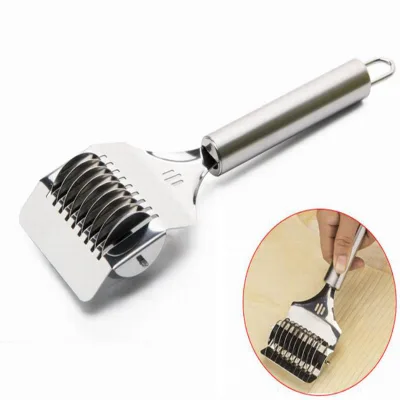


Noodle Cutter Slitter Knife Cut Noodles, Customized Noodle Blade Noodle Cutter
$1100.00 - $1180.00
MOQ: 1 pieces


Japanese Noodle Cutter Knife Cut Noodles Customized Noodle Blade Noodle Cutter
$1100.00 - $1180.00
MOQ: 1 pieces


Comprehensive Sourcing Guide
Eco Friendly Manual Noodle Cutter Sourcing Guide
Sourcing eco-friendly manual noodle cutters requires a nuanced understanding of the current market landscape, where the term "eco-friendly" often intersects with durable, long-lasting materials rather than biodegradable components. Buyers must navigate a product range that spans from simple handheld stainless steel scrapers to more complex, semi-automatic slitting machines designed for high-volume production. The observed market data indicates a significant divergence in product types, with some listings emphasizing manual, low-energy tools while others describe electric or automatic systems. This guide focuses on the manual and semi-manual segments, helping procurement professionals distinguish between simple utensils and industrial-grade slitters that align with sustainability goals through longevity and energy efficiency.
The core keyword "Eco Friendly Manual Noodle Cutter" captures a broad spectrum of equipment, ranging from small-scale kitchen tools to commercial dough sheeting accessories. In the B2B context, sustainability is frequently achieved through the use of high-grade stainless steel, which offers corrosion resistance and a long service life, reducing the frequency of replacement. Buyers should be aware that while some products are explicitly marketed as eco-friendly, others may rely on the durability of materials like SS304 or carbon steel to achieve similar environmental benefits. Understanding this distinction is critical for aligning procurement strategies with corporate sustainability reports and operational efficiency targets.
Product Scope and Observed Listing Signals
The current market listings reveal a wide price range, observed between $0.56 and $2,000,000, which reflects the disparity between simple manual scrapers and complex industrial noodle slitting machines. At the lower end of the spectrum, products are often simple stainless steel tools with minimal packaging, such as OPP bags, and low minimum order quantities (MOQs) starting from just one piece. These items are typically characterized by their lightweight design, with weights around 97 grams, and compact dimensions, making them suitable for small businesses, home kitchens, or as promotional items. The presence of such low-cost items suggests a highly competitive market for basic utensils where volume and customization options, such as logo printing, are key differentiators.
At the higher end of the price spectrum, the product scope shifts towards industrial machinery, such as noodle slitters, which are designed for high-precision cutting and high-volume output. These machines often feature core components like slitter rollers and are built with materials such as SS410, SS304, or carbon steel to withstand rigorous industrial use. The observed MOQs for these complex units can be significantly higher, sometimes requiring a full set or batch purchase, and they come with detailed specifications regarding noodle size, width, and shape. Buyers must carefully evaluate whether their operational needs align with manual tools or if the investment in semi-automatic or automatic slitting equipment is necessary for their production scale.
Technical Specifications to Verify
When evaluating manual noodle cutters, the material composition is a primary technical specification that directly impacts durability and food safety. Stainless steel is the predominant material observed in the market, with specific grades such as SS304 and SS410 being common in industrial applications. Buyers should verify the exact grade of stainless steel used, as SS304 offers superior corrosion resistance compared to SS410, which may be more prone to rust over time. Additionally, the presence of carbon steel in some listings indicates a need for careful inspection to ensure that any non-stainless components are properly treated or coated to prevent contamination and ensure longevity.
Dimensional specifications are equally critical, particularly for products intended to integrate with existing dough sheeting equipment. For instance, industrial slitters may have specific dough sheet width requirements, such as 600mm, and noodle size ranges from 0.8mm to 30mm. Buyers must ensure that the cutter’s dimensions, including roller diameter and slot width, are compatible with their current production line. For manual tools, single package sizes and gross weights, such as 22x7x2 cm and 0.1 kg, are important for logistics and storage planning. Verifying these specifications against the supplier’s technical datasheets is essential to avoid integration issues and ensure that the product meets the desired output quality.
Compliance and Safety Documentation
Compliance with international standards is a key consideration for B2B buyers, particularly when sourcing products for export or use in regulated markets. While some listings mention certifications such as ISOCE, buyers should verify the validity and scope of these certifications, as they may not cover all aspects of food safety or electrical compliance. For manual tools, the focus should be on material safety certifications that confirm the stainless steel is food-grade and free from harmful contaminants. Buyers should request documentation that proves the material composition meets relevant food contact regulations, such as FDA or EU standards, to ensure that the product is safe for direct food handling.
For more complex machines, such as electric noodle slitters, additional safety documentation is required to ensure compliance with electrical and mechanical safety standards. Buyers should verify that the equipment has undergone video outgoing inspections and that core components are covered by a warranty, typically one year for such machinery. It is also important to check for any specific safety features, such as emergency stop buttons or protective guards, which are essential for operator safety in a commercial kitchen or factory setting. Ensuring that the supplier provides comprehensive safety manuals and compliance certificates is crucial for mitigating liability and ensuring smooth operation.
Cost Drivers and Commercial Terms
The cost of eco-friendly manual noodle cutters is influenced by several factors, including material quality, manufacturing complexity, and customization options. For simple stainless steel scrapers, the cost is primarily driven by the price of raw materials and the volume of production, with low MOQs allowing for flexible purchasing. However, for industrial slitters, the cost includes the price of precision-engineered components, such as slitter rollers, and the labor involved in assembly and testing. Buyers should also consider the cost of customization, such as logo printing or specific dimensional adjustments, which may incur additional fees and higher MOQs, typically starting at 1000 pieces for branded items.
Commercial terms, including packaging and shipping, also play a significant role in the total cost of ownership. Products are often packaged in OPP bags for individual items, while larger machines may require plywood cases or wooden crates for protection during transit. Buyers should negotiate clear terms regarding packaging details, such as carton dimensions and weight, to optimize logistics costs. Additionally, the availability of customization and the supplier’s location, such as Zhejiang or Shandong in China, can impact lead times and shipping costs. Understanding these commercial variables allows buyers to make informed decisions that balance cost efficiency with quality and delivery requirements.
Supplier Qualification and Quality Control
Supplier qualification is a critical step in the sourcing process, particularly when dealing with a wide range of product types and price points. Buyers should prioritize suppliers who provide detailed product information, including material specifications, dimensions, and certification documents. The presence of video outgoing inspections and warranty offerings for core components is a strong indicator of a supplier’s commitment to quality and after-sales support. Additionally, suppliers who offer customization services and have a clear MOQ structure demonstrate flexibility and professionalism, which are valuable traits for long-term partnerships.
Quality control measures should be integrated into the procurement process to ensure that the products meet the specified standards. Buyers should request samples before placing bulk orders to verify the material quality, finish, and functionality of the noodle cutters. For industrial machines, conducting a factory audit or requesting third-party inspection reports can provide additional assurance of manufacturing quality. Establishing clear quality acceptance criteria and communication channels with the supplier is essential for resolving any issues that may arise during production or delivery, ensuring that the final product aligns with the buyer’s expectations.
Long-Term Procurement Checks
Long-term procurement success depends on the ability to monitor supplier performance and adapt to changing market conditions. Buyers should regularly review supplier delivery times, product quality, and responsiveness to ensure that they continue to meet operational needs. For products with customization options, maintaining a clear record of specifications and design files is essential for future reorders and modifications. Additionally, staying informed about industry trends and technological advancements in noodle cutting equipment can help buyers identify opportunities for process improvement and cost savings.
Sustainability considerations should also be integrated into long-term procurement strategies. Buyers should evaluate the environmental impact of their purchases, considering factors such as material recyclability, energy efficiency, and packaging waste. By prioritizing suppliers who demonstrate a commitment to eco-friendly practices, buyers can align their procurement activities with broader corporate sustainability goals. Regularly reviewing and updating procurement policies to reflect these values ensures that the sourcing strategy remains relevant and effective in the long run, supporting both operational efficiency and environmental responsibility.
FAQs
What material is used for the Eco Friendly Manual Noodle Cutter?
The product is constructed from stainless steel, specifically SS410, SS304, or carbon steel options. This metal composition ensures durability and safety for food processing applications while maintaining the eco-friendly attributes required for modern kitchen tools.
Can I customize the logo on the manual noodle cutter?
Customization of the logo is available for buyers who meet the minimum order quantity of 1000 pieces. This service allows businesses to brand the stainless steel utensils with their own identity while adhering to the standard packaging requirements of 144 pieces per carton.
What is the minimum order quantity for the stainless steel scraper?
The standard minimum order quantity is 100 pieces for the single item model. Buyers can purchase this eco-friendly utensil in single units or larger batches, with the product packaged securely in OPP bags to prevent damage during transit.
Where is the Eco Friendly Manual Noodle Cutter manufactured?
The product originates from Zhejiang, China, with some manufacturing activities also noted in Zhengzhou and Shandong regions. These locations serve as the primary production hubs for the stainless steel utensils and related machinery components used in noodle preparation.
How is the manual noodle cutter packaged for shipment?
Each unit is packed in an OPP bag, with 144 pieces fitting into one master carton measuring 43.5 by 33.5 by 43.5 cm. The packaging details ensure safe transport, and the single gross weight is recorded as 0.1 kg per individual package.
What certifications does the stainless steel noodle cutter hold?
The product carries ISOCE certification, indicating compliance with specific quality and safety standards for food contact materials. This certification supports the eco-friendly claim and assures buyers of the material integrity used in the stainless steel construction of the utensil.