Source Eco Friendly Microwave Food Container for Kitchen, Storage, Packaging
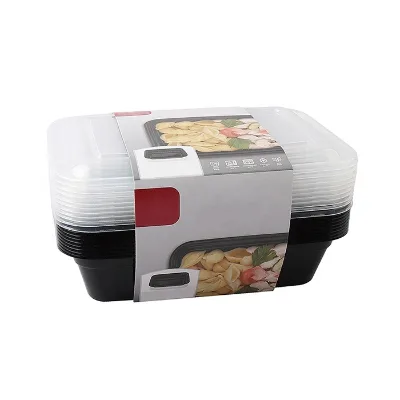
Find 30 verified options for the Eco Friendly Microwave Food Container suitable for kitchen, storage, and packaging. Compare specifications including material, certifications, and customization features from manufacturers in China.
Key considerations
Products List


Disposable Plastic Takeaway PP Microwave Rectangular Food Container with Lid
$0.04 - $0.17
MOQ: 100000 Pieces


Disposable Plastic Food Container Microwave Safe Takeaway Food Packing
$0.03 - $0.03
MOQ: 100000 Pieces


Microwave PP Food Grade Takeaway Disposable Plastic Biodegradable Food Container
$0.03 - $15.00
MOQ: 10000 Pieces

Lunch Box Biodegradable Microwave Cornstarch Food Container for Takeaway Food
$0.02 - $0.43
MOQ: 10000 Pieces


Disposable Microwave Biodegradable Cornstarch Food Container with Lid
$0.03 - $0.04
MOQ: 100000 Pieces

Comprehensive Sourcing Guide
Strategic Sourcing Guide for Eco-Friendly Microwave Food Containers
Understanding Material Composition and Thermal Performance
The foundation of sourcing eco-friendly microwave food containers lies in a rigorous analysis of material composition and its interaction with thermal energy. In the current market, the primary material observed for these applications is Polypropylene (PP), a thermoplastic polymer renowned for its balance of durability, chemical resistance, and thermal stability. Unlike other plastics that may degrade or release harmful substances under heat, PP is specifically noted for its ability to withstand the temperature ranges typically encountered in microwave heating. The observed data indicates a temperature resistance range of -20 to +120 degrees Celsius, which is a critical specification for buyers to verify. This range ensures that the container remains structurally sound during heating cycles while maintaining integrity during cold storage or freezing, a feature often highlighted as "Oven/Microwave/Fridge/Freezer Safe."
However, the term "eco-friendly" introduces a layer of complexity regarding material sourcing. While PP is recyclable, the eco-friendly claim often extends to the manufacturing process or the inclusion of bio-based alternatives. The product data also references sugarcane containers, suggesting that some suppliers offer plant-based bioplastics as an alternative to traditional petroleum-based plastics. When evaluating these options, buyers must distinguish between the base material and the additives used to achieve specific properties like color or flexibility. The observed product attributes include "Food Grade PP," "Healthy," "Nontoxic," and "Harmless," which are essential indicators that the material does not leach chemicals into food during heating. Buyers should request specific material safety data sheets (MSDS) to confirm that the PP or sugarcane-based material meets the required food-grade standards without the use of BPA or other prohibited substances.
Furthermore, the physical form of the container plays a significant role in its performance. The market offers both square and rectangular shapes, as well as round designs. The shape influences how heat distributes within the container; for instance, round containers may offer more uniform heating, while square containers maximize storage efficiency in refrigerators and ovens. The thickness of the material is another variable, described in the data as "Standard or Customized." Thicker walls generally provide better insulation and durability but may increase the carbon footprint of the product due to higher material usage. Buyers must weigh the trade-off between structural integrity and environmental impact, ensuring that the chosen thickness does not compromise the microwave safety or the eco-friendly narrative of the product.
Compliance Framework and Certification Verification
Navigating the regulatory landscape is paramount when sourcing food-contact products, particularly those intended for microwave use. The safety of the end-user depends heavily on the supplier's ability to provide valid certifications that verify the product's compliance with international food safety standards. The observed product data lists several critical certifications, including FDA (Food and Drug Administration), SGS, ISO9001, CE/EU, CIQ, LFGB, and EEC. These certifications are not merely marketing terms but represent rigorous testing protocols that the product must pass.
The FDA certification is a baseline requirement for products entering the United States market, ensuring that the materials are safe for food contact. Similarly, LFGB (Lebensmittel- und Futtermittelgesetzbuch) is the German food code, often considered stricter than FDA regulations, and is highly valued in the European market. The presence of CE/EU and EEC certifications indicates compliance with European Union directives regarding product safety and environmental standards. ISO9001, while a quality management standard, implies that the manufacturer has a systematic approach to maintaining consistent product quality, which is crucial for large-scale procurement.
Buyers must exercise caution when interpreting these certifications. The data notes that some products list "Customized" standards, which can be ambiguous. A "customized" standard does not inherently mean the product is non-compliant, but it requires the buyer to demand specific test reports for that customized batch. For instance, if a supplier claims a product is "SGS" certified, the buyer should request the specific test report number to verify that the testing was conducted on the exact product model being purchased. Relying on a generic certification claim without verifying the test data can lead to significant compliance risks, including product recalls or legal liabilities.
Additionally, the eco-friendly aspect of the product often requires verification beyond standard food safety. While the data mentions "Eco-Friendly" as a feature, buyers should look for specific environmental certifications or declarations of compliance with local recycling laws. In some regions, products claiming to be biodegradable or compostable must meet specific ASTM or EN standards. The absence of these specific environmental certifications in the general data suggests that buyers need to explicitly ask suppliers for documentation regarding the biodegradability or recyclability of the PP or sugarcane materials. Without this verification, the "eco-friendly" label may be considered greenwashing, which can damage a brand's reputation.
Cost Drivers and Pricing Dynamics
The pricing of eco-friendly microwave food containers is influenced by a complex interplay of material costs, customization levels, and order volumes. The observed price range in the market spans from $0.01 to $13,000, reflecting the vast difference between a single sample unit and a bulk industrial order. This wide range underscores the importance of understanding the cost drivers before entering negotiations. The primary cost driver is the material itself. Standard PP is generally more affordable than sugarcane-based bioplastics or other bio-materials. However, the price of these bio-materials can fluctuate based on agricultural yields and processing technology costs.
Customization is another significant factor affecting price. The data indicates that customization is "Available" and that the product model can be "Customized." This includes custom shapes, sizes, colors (observed as Multicolor or Bicolor), and printing requirements. The surface disposal processes, such as glossy or matte lamination, and craft techniques like printing, die-cutting, carving, and bending, all add to the production cost. Suppliers offering "Manufacturer Direct" advantages may offer lower prices by eliminating middlemen, but the cost of setting up custom molds and printing plates must be factored into the unit price.
Minimum Order Quantity (MOQ) also plays a critical role in the final cost per unit. The observed MOQ range is from 1 to 100,000 units. For buyers seeking to test the market or fulfill small orders, an MOQ of 1 PC is available, allowing for sample acquisition without significant financial commitment. However, this comes at a premium price per unit. As the order volume increases, the unit cost typically decreases due to economies of scale. Buyers should be aware that the "Free Sample" or "Freely" sample offers mentioned in the data often come with conditions, such as the buyer covering shipping costs or agreeing to a future bulk order.
It is essential to note that the "Standard or Customized" specification for thickness and size directly impacts the material usage and, consequently, the price. A thicker container or a larger size will inherently cost more due to the increased amount of raw material required. Buyers should request a detailed cost breakdown that separates material costs, tooling fees, and processing charges. This transparency helps in identifying where savings can be made, such as by standardizing the thickness or reducing the complexity of the printing design.
Typical Applications and Functional Requirements
Eco-friendly microwave food containers serve a diverse range of applications, extending beyond simple food storage to encompass packaging, storage, and tableware functions. The observed usage categories include Food, Tableware, Thermal, Shoes, Spice, Sundries, Garage, and Bedding, though the primary focus for microwave-safe containers remains on food-related applications. The "Freshness Preservation" feature is a key functional requirement, ensuring that food remains safe and palatable during storage and reheating. This is particularly important for meal prep services, catering companies, and retail food packaging.
The versatility of these containers is highlighted by their suitability for various environments, including the Kitchen. The "Oven/Microwave/Fridge/Freezer Safe" attribute indicates that these containers are designed for a full lifecycle of food handling, from freezing to reheating. This multi-functional capability reduces the need for consumers to transfer food between different containers, enhancing convenience and reducing waste. The "Modern Stylish" appearance design and "Multicolor" options also cater to the retail market, where aesthetics play a crucial role in consumer choice.
For the takeaway industry, the "Takeaway Plastic Container" keyword suggests a strong demand for portable, durable, and leak-proof solutions. The "Square, Rectangle" and "Round" shapes offer different advantages for stacking and transport. Square containers maximize space in delivery bags and refrigerators, while round containers may be preferred for specific types of food like soups or salads. The "Large" specification indicates that suppliers offer various sizes to accommodate different portion requirements, from single servings to family-sized meals.
Furthermore, the "Stocked" feature mentioned in the data suggests that some suppliers maintain inventory of standard models, allowing for faster delivery times. This is beneficial for buyers with urgent needs or those who want to minimize lead times. However, for highly customized orders, the lead time may be longer due to the need for mold creation and production setup. Buyers should align their application requirements with the supplier's capabilities, ensuring that the chosen container design meets the specific thermal and mechanical demands of the intended use case.
Supplier Evaluation and Quality Assurance Protocols
Selecting the right supplier is a critical step in the procurement process, requiring a thorough evaluation of their capabilities, reliability, and commitment to quality. The data highlights "Manufacturer Direct" as a key advantage, which implies that the supplier is the original producer rather than a trading company. This direct relationship can lead to better pricing, more transparent communication, and greater control over the production process. However, buyers must verify this claim by checking the supplier's business license and factory audit reports.
Quality control is another vital aspect of supplier evaluation. The "Standard or Customized" production standard suggests that suppliers may have flexibility in their quality assurance processes. Buyers should insist on a robust quality control plan that includes incoming material inspection, in-process quality checks, and final product testing. The presence of certifications like SGS and ISO9001 is a positive indicator, but buyers should also request specific quality control reports for the products they intend to purchase. These reports should detail the results of tests for temperature resistance, chemical migration, and physical durability.
The "Customization" capability of the supplier is also a key evaluation criterion. The data mentions that the supplier accepts OEM or ODM orders, which means they can produce products based on the buyer's design or create a design from scratch. Buyers should assess the supplier's design team and their ability to translate concepts into manufacturable products. The "Surface Disposal" options, such as glossy or matte lamination, and the "Craft" techniques like printing and die-cutting, should be evaluated for their consistency and quality. High-quality printing and finishing are essential for maintaining the brand image and ensuring that the product meets the "Modern Stylish" aesthetic requirements.
Additionally, the "Location" of the supplier, such as Guangzhou or Shandong in China, can impact logistics and lead times. Buyers should consider the proximity of the supplier to their target markets and the efficiency of their shipping partners. The "Export Carton" or "Carton or Plastic Film Packed" packaging options should be evaluated for their ability to protect the products during transit. Proper packaging is crucial to prevent damage and ensure that the products arrive in perfect condition.
Long-Term Procurement and Sustainability Considerations
Sourcing eco-friendly microwave food containers is not just a one-time transaction but a long-term strategic decision that impacts a brand's sustainability goals and market positioning. The "Eco-Friendly" feature is a growing demand in the global market, driven by increasing consumer awareness of environmental issues. Buyers should consider the long-term implications of their material choices, including the recyclability and biodegradability of the products. While PP is recyclable, the actual recycling rates depend on local infrastructure and consumer behavior. Therefore, buyers should explore partnerships with suppliers who are actively involved in recycling programs or who use post-consumer recycled (PCR) materials.
The "Customized" nature of the product allows for continuous improvement and adaptation to changing market trends. Buyers should work with suppliers to develop products that not only meet current regulatory requirements but also anticipate future standards. This proactive approach can help mitigate the risk of obsolescence and ensure that the product remains competitive in the long run. The "Manufacturer Direct" relationship can facilitate this collaboration, as the supplier is more likely to invest in research and development for custom solutions.
Furthermore, the "Advantages" listed, such as "Food Grade PP, Healthy, Nontoxic, Harmless," should be consistently maintained over time. Buyers should establish a long-term quality assurance agreement with the supplier to ensure that the product specifications remain consistent across all production batches. This includes regular audits and re-testing of materials to verify that the product continues to meet the required safety and environmental standards.
Finally, the "Free Sample" and "Freely" sample offers provide an opportunity for buyers to test the product's performance and quality before committing to a large order. Buyers should use these samples to conduct their own internal testing, including microwave heating tests, drop tests, and chemical migration tests. This due diligence is essential for building a reliable supply chain and ensuring that the products meet the high standards expected by consumers. By focusing on long-term relationships and continuous improvement, buyers can secure a steady supply of high-quality, eco-friendly microwave food containers that align with their brand values and sustainability goals.
FAQs
What certifications do eco friendly microwave food containers have?
These containers typically hold FDA, SGS, and ISO9001 certifications. Some products also list CE, LFGB, and EEC approvals. Buyers must verify specific test reports for customized batches to ensure compliance with international food safety standards.
How does material composition affect microwave safety?
Polypropylene (PP) is the primary material used due to its thermal stability between -20 and +120 degrees Celsius. This range ensures structural integrity during heating and freezing. Sugarcane-based bioplastics are also available as eco-friendly alternatives to traditional plastics.
Can I request custom shapes and sizes for these containers?
Yes, customization is available for shapes like round, square, and rectangular designs. Buyers can specify sizes ranging from standard to large dimensions. Thickness and printing requirements can also be tailored to meet specific packaging or storage needs.
What is the minimum order quantity for samples?
The minimum order quantity can be as low as one piece for samples. Free samples are often available, though shipping costs may apply. Bulk orders typically benefit from lower unit prices due to economies of scale.
Which features ensure freshness preservation during storage?
Containers are designed with freshness preservation features suitable for food, tableware, and thermal applications. They are safe for use in ovens, microwaves, fridges, and freezers. This multi-functional capability helps maintain food quality across various temperature conditions.
How does pricing vary with customization levels?
Prices range from $0.01 to $13,000 depending on order volume and customization. Factors like material type, lamination, and printing add to the cost. Manufacturer direct sales often offer better pricing by eliminating middlemen and reducing tooling fees.
What are the standard packaging options for export?
Products are typically packed in export cartons or plastic film. Some suppliers offer carton or plastic film packing options. The packaging ensures safe transport and protection during shipping to international destinations like the US or Europe.