Source eco-friendly minimalist glass water bottle with lid for Beverages, Coffee, and Tea
Compare 30 listings for an eco-friendly minimalist glass water bottle with lid featuring screw-on caps, BPA-free materials, and customizable logos. Options include vacuum insulated and uninsulated designs suitable for juices, milk, and spirits.
Key considerations
Products List


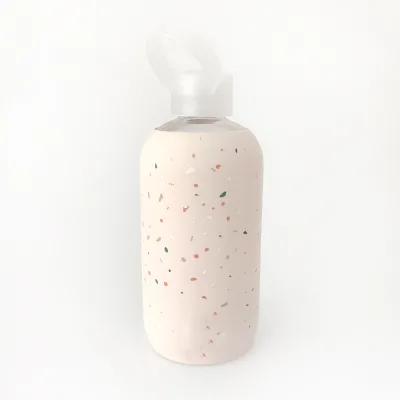
Eco Friendly Reusable Clear Drinking Glass Water Bottles with Custom Logo
$0.10 - $0.80
MOQ: 5000 Pieces


Custom Promotion Gift Use 320ml 420ml 500ml Glass Water Bottles with Lids
$0.24 - $0.30
MOQ: 10000 Sets






Comprehensive Sourcing Guide
Strategic Sourcing Guide for Eco-Friendly Minimalist Glass Water Bottles with Lids
The global shift toward sustainable packaging and reusable beverage containers has elevated the demand for glass water bottles that combine environmental responsibility with minimalist aesthetics. For B2B procurement professionals, sourcing an eco-friendly minimalist glass water bottle with a lid requires a nuanced understanding of material properties, supply chain logistics, and regulatory compliance. This guide synthesizes observed market data and technical specifications to provide a disciplined framework for evaluating suppliers and products. The focus remains on verified attributes such as material composition, sealing mechanisms, and capacity standards, ensuring that procurement decisions are grounded in factual evidence rather than marketing assertions.
Material Composition and Structural Integrity
The foundational element of any eco-friendly bottle is its primary material. In the current market, glass remains the premium choice for beverage containment due to its non-porous nature, chemical inertness, and infinite recyclability. High-confidence data confirms that the core material for these products is glass, specifically designed to be BPA-free and safe for a wide array of liquids. The structural integrity of the bottle is often dictated by its shape, with market observations indicating both round and square bottle profiles. Round bottles are prevalent for ergonomic handling, while square designs offer distinct shelf appeal for minimalist branding.
The thickness and weight of the glass are critical factors that influence durability and shipping costs. While specific wall thickness metrics are not universally standardized across all listings, the presence of a "Wide Opening" feature suggests a design optimized for easy filling, cleaning, and the addition of ice or fruit. This design choice also facilitates the "Dishwasher Safe" attribute, a crucial selling point for commercial buyers and end-users alike. The glass must withstand thermal shock if used for hot beverages like coffee or tea, although the data distinguishes between uninsulated and vacuum-insulated variants. Buyers must verify whether the specific glass formulation supports the intended thermal application, as uninsulated glass is more susceptible to temperature-induced breakage compared to double-walled vacuum options.
Lid Engineering and Sealing Mechanisms
The functionality of a glass bottle is inextricably linked to its lid system. The observed market data highlights a "Screw-on Lid" and "Screw Cap" as the dominant sealing types. This mechanical interface provides a reliable barrier against leakage, a critical requirement for transport and daily use. The "Leak Proof" attribute is frequently cited, yet the actual performance depends on the gasket material and the precision of the threading. Procurement teams should request sample testing to verify the seal integrity under pressure and vibration conditions typical of logistics.
A significant trend in the minimalist aesthetic is the use of alternative materials for the lid components. Observations include "Bamboo Screwed Lid" options, which align with the eco-friendly narrative by introducing renewable, biodegradable elements. However, the integration of bamboo with glass requires careful attention to the interface where the two materials meet. The "Customized" surface handling and "Logo" acceptance indicate that suppliers are prepared to offer branding opportunities, which often involve laser etching on the glass or printing on the lid. The "Wide Opening" design also pairs well with various lid types, allowing for versatile usage scenarios ranging from water and juice to wine and spirits.
Capacity Standards and Volume Specifications
Standardization in volume is essential for inventory management and consumer expectation. The market data reveals a diverse range of standard capacities, reflecting the versatility of glass bottles for different beverage categories. Common standard sizes include 150ml, 250ml, 300ml, 350ml, 420ml, 500ml, 750ml, and 1000ml. In imperial measurements, these correspond to sizes such as 8-16 oz, 16oz, and 500ml. The specific model numbers, such as "SLD" or "MEM23-0523-43," often correlate with these volume tiers.
The variation in capacity allows buyers to target specific market segments. Smaller volumes (150ml-300ml) are ideal for single-serve beverages, juices, or sample packs, while larger capacities (500ml-1000ml) cater to hydration needs for sports, office environments, or outdoor activities. The "150-1000ml" range suggests a flexible production line capable of accommodating custom orders. When evaluating suppliers, it is vital to confirm that the stated standard sizes are available in the specific glass thickness and lid configuration required. The "Carton, Pallet" and "Carton Package" packing methods indicate that these bottles are designed for bulk industrial shipping, necessitating robust internal packaging to prevent breakage during transit.
Regulatory Compliance and Safety Certifications
For B2B buyers, compliance with international safety standards is non-negotiable. The supplied data lists several critical certifications, including "SGS," "FDA," "LFGB," "CE / EU," "CIQ," "EEC," and "LFGB." These certifications verify that the glass and lid materials are free from harmful substances and are safe for food and beverage contact. The "FDA" certification is particularly relevant for the North American market, ensuring compliance with US Food and Drug Administration regulations. Similarly, "LFGB" and "CE" are essential for European markets, addressing food safety and general product safety directives.
The "BPA Free" attribute is a baseline requirement for modern glass bottles, but it should be backed by third-party testing reports. Buyers must verify that the certifications apply to the entire product assembly, including the lid gaskets and any decorative elements. The "OEM&ODM: Welcome" status suggests that suppliers are equipped to handle custom compliance requirements, but the burden of proof for specific regional standards remains with the buyer. It is prudent to request current, valid certification documents for the specific batch or model being procured, as certifications can expire or be updated.
Cost Drivers and Procurement Economics
Understanding the cost structure of glass bottles is essential for budgeting and margin analysis. The observed price range in the market spans from $0.08 to $4.75 USD, a significant variance driven by factors such as capacity, glass thickness, lid material, and customization level. The "MOQ" (Minimum Order Quantity) data indicates a range of 20 to 10,000 units, with specific high-confidence observations pointing to 5,000 pieces as a common threshold for standard models. This suggests that smaller buyers may face higher per-unit costs or need to aggregate orders to meet supplier requirements.
Lead times are another critical cost driver. The data cites a "10 days" lead time for production, which is relatively short but may vary based on the complexity of customization. The availability of "Free Samples" and "Free Samples" allows buyers to validate quality before committing to large orders, mitigating the risk of costly mistakes. The "Customized" surface handling and "Logo" acceptance add value but may extend lead times or increase unit costs. Buyers should factor in the cost of "Carton, Pallet" packaging, as glass is heavy and fragile, requiring substantial protective materials that contribute to the overall landed cost.
Supplier Evaluation and Quality Control Protocols
Selecting the right supplier requires a rigorous evaluation process beyond price comparison. The "Place of Origin: Jiangsu, China" and "prod_origin: China" indicate that the majority of supply comes from this region, known for its manufacturing capabilities. However, buyers should not assume uniform quality across all suppliers. Key evaluation criteria include the supplier's ability to provide "Free Samples," their responsiveness to "OEM&ODM" requests, and their adherence to the stated "Certification" standards.
Quality control should be integrated into the procurement lifecycle. Given the fragility of glass, a robust inspection protocol is necessary. Buyers should verify the "Leak Proof" and "Dishwasher Safe" claims through independent testing. The "Wide Opening" design should be inspected for smooth edges to prevent injury. Additionally, the "Recyclable" attribute of the glass must be verified against local recycling infrastructure to ensure the product's end-of-life impact aligns with sustainability goals. The "Industrial Use: Water / Drinking" specification confirms the primary application, but buyers should also assess the bottle's suitability for other listed uses such as "Beverage, Wine, Vodka, Whiskey, Liquor" or "Cosmetics."
Long-Term Procurement and Application Versatility
The long-term viability of a glass bottle product depends on its adaptability to changing market trends and consumer preferences. The data indicates a broad "Application" range, including "Beverage, Juice, Water, Milk, Coffee, Tea," as well as "Food," "Medicine," and "Personal Care Product." This versatility makes glass bottles a strategic choice for companies looking to diversify their product lines or enter new markets. The "Vacuum Insulated" and "Uninsulated" options allow buyers to cater to different consumer needs, from hot beverage retention to cold drink freshness.
Sustainability remains a core driver for long-term procurement. The "Recyclable" nature of glass, combined with the "BPA Free" and "Eco-friendly" positioning, aligns with global regulatory trends and consumer sentiment. However, buyers must consider the environmental impact of the "Bamboo Screwed Lid" and other components, ensuring that the entire product lifecycle supports the eco-friendly narrative. The "Customized" nature of the product allows for brand differentiation, which is crucial for maintaining market relevance. By focusing on verified specifications and maintaining strict quality control, buyers can secure a supply chain that supports both immediate commercial goals and long-term sustainability objectives.
FAQs
What certifications are required for these glass bottles?
The products commonly hold FDA, LFGB, SGS, CE, and EEC certifications. These verify safety for food and beverage contact, ensuring compliance with international standards for North American and European markets before bulk orders.
Can I get free samples before placing a large order?
Yes, free samples are available for most models to validate quality. Buyers should request these to test the leak-proof seal and wide opening design before committing to the standard minimum order quantity of 5000 pieces.
What is the typical lead time for production?
The standard lead time is approximately 10 days for production. This duration may vary slightly depending on the complexity of customization requests, such as adding a specific logo or altering the surface handling finish.
Which lid types are available for these bottles?
Screw-on lids and bamboo screwed lids are the primary options available. These sealing mechanisms ensure a leak-proof barrier, with the bamboo option adding an eco-friendly aesthetic to the minimalist glass design.
What capacity sizes are standard for this product line?
Standard capacities range from 150ml to 1000ml, including specific sizes like 300ml, 500ml, and 750ml. These volumes support various applications from single-serve juices to larger beverage containers for sports or office use.
How much is the minimum order quantity for these bottles?
The minimum order quantity is typically 5000 pieces for standard models. Some suppliers may accept orders as low as 2000 or up to 10000 units, depending on the specific customization and packaging requirements.
Are these bottles suitable for hot beverages like coffee?
Yes, they are suitable for hot beverages, though insulation type varies. Uninsulated glass handles heat but requires care, while vacuum-insulated variants offer better thermal retention for coffee, tea, and milk applications.