Source Eco-Friendly Minimalist Table Mat for Home, Restaurant, Outdoor
Compare 30 listings for eco-friendly minimalist table mat options featuring rectangular and round shapes suitable for home, restaurant, and outdoor use. Buyers can evaluate customization, cleaning ease, and material specs across models like LK76090 and DC004.
Key considerations
Products List

Household Commercial Use Table Mat Kitchen Restaurant Table Decor Placemat
$0.90 - $1.00
MOQ: 3000 Pieces

High Temperature Resistant Table Mat Kitchen Dining Table Protector Placemat
$0.38 - $0.48
MOQ: 3000 Pieces


Safe Environmentally Friendly Place Mat Dining Table Daily Use Placemat
$0.90 - $1.00
MOQ: 3000 Pieces


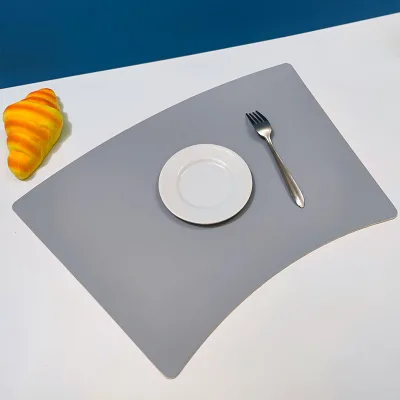








$0.50 - $0.60
MOQ: 3000 Pieces


Comprehensive Sourcing Guide
Strategic Sourcing Guide for Eco-Friendly Minimalist Table Mats
The global demand for sustainable home and hospitality textiles has driven a significant shift toward eco-friendly minimalist table mats. For procurement professionals, navigating this category requires a precise understanding of material composition, dimensional specifications, and the operational realities of manufacturing in major production hubs. This guide synthesizes available market data to provide a structured approach for sourcing these products, ensuring that buyers can identify suppliers who align with both aesthetic requirements and environmental standards without relying on unverified marketing claims.
Understanding Material Composition and Physical Attributes
The foundation of any successful procurement strategy for table mats lies in the selection of appropriate materials and physical characteristics. In the current market, products vary significantly in their construction, ranging from woven textiles to synthetic composites. A critical observation from current product listings indicates that materials such as PU (Polyurethane) are prevalent, often selected for their durability and specific surface properties. These materials are frequently paired with nonwoven backing techniques, which provide structural integrity and prevent slippage on various table surfaces.
When evaluating physical attributes, buyers must distinguish between different shape profiles and weight specifications. The market offers both rectangular and round configurations, with some listings specifying square shapes as well. Dimensional standards are not uniform; observed specifications include sizes such as 30x40cm, 30x45cm, and 28x43x1.6cm. These variations dictate the suitability of the mat for different table settings, from compact dining areas to large banquet halls. Weight is another critical metric, with observed product weights ranging from 55g to 125g per unit, and some bulk packaging specifications noting a single gross weight of 22.500 kg.
The surface finish and pattern play a vital role in the "minimalist" aesthetic. While some products feature printed designs, others utilize a "finished" pattern approach that relies on texture rather than color. The "Easy to Clean" attribute is a standard requirement for this category, ensuring that the mats can withstand daily use in home, restaurant, and outdoor environments. Furthermore, the "Non-Toxic Washable" feature is a key differentiator, suggesting that the materials used do not leach harmful substances during cleaning processes, a crucial consideration for family and commercial use.
Technical Specifications and Dimensional Standards
Technical specifications serve as the blueprint for quality assurance and inventory planning. Procurement teams must verify that the product model numbers align with the intended application. For instance, specific models like LK76090, LK71028, and LK71557 represent distinct product lines with unique dimensional and functional profiles. The thickness of the mats is another technical parameter that influences performance; observed ranges indicate a thickness between 1.8mm and 2.0mm, which is often associated with a balance of cushioning and stability.
Packaging standards are equally important for logistics and retail presentation. The market exhibits a diversity in packaging methods, including hangtags, OPP bags, stickers, and color boxes. Some products are shipped in cartons, which is essential for bulk orders to prevent damage during transit. The "Qty/CTN" (Quantity per Carton) is often listed as "Tba" (To Be Advised), indicating that this figure is flexible and dependent on the specific order volume and packaging configuration negotiated with the supplier. Buyers should explicitly confirm the carton quantity to optimize shipping costs and storage space.
The "Single package size" is a critical data point for freight calculations. Observed dimensions for single packages can reach up to 45x30x20 cm, which significantly impacts the volumetric weight of shipments. When sourcing for international markets, understanding these dimensions is essential for calculating freight charges and determining the maximum number of units that can be loaded into a standard shipping container. Additionally, the "Selling Units" are typically listed as single items, but bulk purchasing agreements often alter this unit structure for efficiency.
Compliance, Certification, and Environmental Claims
In the realm of eco-friendly products, verification of compliance and certification is paramount. While the term "eco-friendly" is widely used, it must be substantiated by tangible evidence. The only certification explicitly noted in the available data is FSC (Forest Stewardship Council), which pertains to wood and paper products. However, for table mats made from PU or nonwoven fabrics, FSC certification may not be directly applicable unless the product involves paper-based components. Buyers should not assume that a product is certified based solely on marketing language; instead, they must request specific documentation from the supplier.
The "Non-Toxic" attribute observed in several listings suggests a commitment to safety, but this should be verified through third-party testing reports. Procurement teams should inquire about compliance with international safety standards for textiles and household goods, such as REACH in Europe or CPSIA in the United States. The "Customized" and "OEM & ODM" capabilities listed in the data indicate that suppliers are willing to adapt products to meet specific regulatory requirements, but the buyer must provide clear specifications for these adaptations.
It is crucial to avoid conflating "eco-friendly" with "biodegradable" or "recyclable" without evidence. The durability and waterproof features observed in the product data suggest that these mats are designed for longevity, which is a form of sustainability in itself. However, the end-of-life disposal of PU materials remains a complex issue. Buyers should engage suppliers in discussions about the lifecycle of the product and whether the manufacturer has take-back programs or utilizes recycled content in their production processes.
Cost Drivers and Pricing Dynamics
The pricing of eco-friendly minimalist table mats is influenced by a complex interplay of factors, including material costs, customization levels, and order volume. The observed price range in the market spans from $0.38 to $8.90 USD, a wide variance that reflects differences in material quality, size, and feature sets. Lower-priced items typically correspond to basic models with standard dimensions and minimal customization, while higher-priced items often feature advanced materials, custom branding, or specialized packaging.
The Minimum Order Quantity (MOQ) is another significant cost driver. The observed MOQ range is from 1 to 3000 units, offering flexibility for both small startups and large retailers. However, lower MOQs often come with a higher unit price due to the fixed costs of setup and production runs. Conversely, larger orders benefit from economies of scale, reducing the per-unit cost. Buyers must balance their inventory needs with their cash flow constraints to determine the optimal order size.
Customization is a primary factor that increases costs. Features such as logo printing, custom colors, and tailored dimensions require additional tooling and production time. While the data indicates that "Logo Printing" is available, some listings specify "Without Logo Printing" as a standard option. Buyers seeking a minimalist aesthetic without branding can often secure lower prices by opting for the standard configuration. Additionally, the "Four Seasons" usage claim suggests that the product is designed for year-round use, which may justify a higher price point due to the versatility and durability of the materials.
Supplier Evaluation and Operational Capabilities
Selecting the right supplier requires a thorough evaluation of their operational capabilities and geographic location. The majority of the observed products originate from China, with specific mentions of Guangdong as a production hub. This region is known for its robust manufacturing infrastructure and supply chain efficiency, particularly for textiles and synthetic materials. However, buyers should not rely solely on the region; they must verify the specific factory's capacity and track record.
The ability to offer "OEM & ODM" services is a strong indicator of a supplier's flexibility and technical expertise. This capability allows buyers to co-develop products that meet specific market demands, from unique shapes to specialized materials. The "Customized" attribute further supports this, suggesting that suppliers are willing to adapt their production lines to accommodate unique requirements. Buyers should assess the supplier's response time, communication clarity, and willingness to provide samples before committing to a large order.
Quality control is another critical aspect of supplier evaluation. The "Characteristic: Durable" and "Feature: waterproof" attributes highlight the performance expectations for these products. Buyers should request evidence of quality control processes, such as in-line inspections and final random inspections (FRI). The "Single gross weight" and "Single package size" data points should be cross-referenced with the supplier's actual shipping documents to ensure accuracy and prevent discrepancies that could lead to additional costs or delays.
Typical Applications and Market Segmentation
The versatility of eco-friendly minimalist table mats makes them suitable for a wide range of applications. The observed usage categories include Home, Restaurant, Outdoor, and Kids Use, indicating a broad market appeal. In the home sector, these mats serve both functional and decorative purposes, adding a touch of modern style to dining areas. The "Modern" style and "Rectangular" or "Round" shapes cater to contemporary interior design trends.
For the restaurant and hospitality industry, the "Easy to Clean" and "Non-Toxic Washable" features are essential. These mats must withstand frequent washing and heavy use while maintaining their aesthetic appeal. The "Waterproof" attribute is particularly valuable in outdoor settings, where exposure to rain and spills is common. The "Four Seasons" designation suggests that the product is designed to perform well in varying weather conditions, making it ideal for patio dining or outdoor events.
The "Kids Use" category highlights the safety and durability of the product. Parents and caregivers look for mats that are non-toxic, easy to clean, and resistant to wear and tear. The "Lightweight" nature of some models, with weights as low as 55g, makes them easy for children to handle and move. This versatility allows buyers to target multiple market segments with a single product line, maximizing their return on investment.
Long-Term Procurement Considerations and Quality Assurance
Sourcing eco-friendly minimalist table mats is not just a one-time transaction but a long-term partnership that requires ongoing management. Buyers should establish clear quality assurance protocols to ensure consistency across orders. This includes defining acceptable tolerances for dimensions, weight, and color. The "Standard" dimensions observed, such as 30x40cm and 30x45cm, should be strictly adhered to, with any deviations clearly communicated and approved.
Sustainability is a long-term consideration that extends beyond the initial purchase. Buyers should work with suppliers to continuously improve the environmental impact of their products. This could involve exploring alternative materials, reducing packaging waste, or optimizing logistics to lower carbon emissions. The "Customized" and "OEM & ODM" capabilities of suppliers can be leveraged to develop new products that align with evolving sustainability goals.
Finally, buyers should maintain open communication with their suppliers regarding market trends and customer feedback. The "Multiple Options" for color and the "Customized Accepted" status indicate that the market is dynamic and responsive to consumer preferences. By staying informed and adaptable, buyers can ensure that their product offerings remain competitive and relevant in the long term. Regular reviews of supplier performance, including on-time delivery and quality consistency, are essential for maintaining a reliable supply chain.
Comparative Analysis of Product Attributes
To facilitate decision-making, the following table summarizes key attributes observed in the market, highlighting the variations that buyers should consider during the sourcing process.
| Attribute | Observation Range / Options | Procurement Consideration |
|---|---|---|
| Shape | Rectangular, Round, Square | Match table geometry; Rectangular is most common. |
| Material | PU, Nonwoven Backing | Verify durability and washability; PU offers waterproofing. |
| Dimensions | 30x40cm, 30x45cm, 28x43x1.6cm | Confirm exact size for packaging and display fit. |
| Weight | 55g - 125g (per unit) | Affects shipping costs and perceived quality. |
| Thickness | 1.8mm - 2.0mm | Impacts cushioning and stability on table surfaces. |
| Packing | Hangtag, OPP Bag, Sticker, Color Box, Carton | Select based on retail presentation and bulk shipping needs. |
| Customization | Logo Printing, Color, Size | Essential for branding; verify MOQ and cost implications. |
| Usage | Home, Restaurant, Outdoor, Kids | Ensure material safety and durability for intended use. |
| Feature | Waterproof, Non-Toxic, Washable, Durable | Critical for compliance and customer satisfaction. |
| Origin | China (Guangdong) | Standard manufacturing hub; verify factory audit status. |
This comparative analysis underscores the importance of detailed specification checks. While the market offers a wide array of options, the buyer's success depends on selecting the right combination of attributes that align with their specific business needs and customer expectations. By rigorously evaluating these factors, procurement professionals can secure a reliable supply of high-quality, eco-friendly minimalist table mats that drive value for their organizations.
FAQs
What customization options are available for these table mats?
Customization is available for logo printing and product specifications. Buyers can request OEM and ODM services to tailor colors and dimensions, though some standard models ship without logos.
Which shapes and sizes are offered for minimalist table mats?
Products come in rectangular, round, and square shapes with various standard sizes. Common dimensions include 30x40cm, 30x45cm, and 28x43x1.6cm depending on the specific model selected.
How can buyers verify the material composition of the mats?
Materials often include PU with nonwoven backing for durability. The product data confirms specific material types and backing techniques to ensure structural integrity and slip resistance.
What is the minimum order quantity for purchasing these mats?
The minimum order quantity ranges from 1 to 3000 units depending on the supplier. Lower MOQs allow for smaller trial orders, while larger volumes may reduce per-unit costs.
Can these table mats be used in outdoor and restaurant settings?
Yes, the mats are designed for home, restaurant, outdoor, and kids use. They feature waterproof and easy-to-clean properties suitable for high-traffic and varied environmental conditions.
How are the products packaged for shipping and retail?
Packaging options include hangtags, OPP bags, stickers, color boxes, and cartons. Buyers should confirm the quantity per carton as this figure is often to be advised based on order specifics.