Source eco-friendly modern bar station for bars, hotels, and clubs
Find 30 listings for the eco-friendly modern bar station designed for commercial use. Buyers can compare specifications, materials, and prices from verified suppliers to find the right solution for bars, hotels, and clubs.
Key considerations
Products List



Comprehensive Sourcing Guide
Strategic Sourcing Guide for Eco-Friendly Modern Bar Stations
Procuring a modern bar station that aligns with eco-friendly principles requires a nuanced approach to supplier evaluation, material verification, and technical specification. The global market for commercial kitchen and bar equipment has shifted significantly toward sustainable manufacturing practices, yet buyers must navigate a landscape where marketing claims often outpace verified data. This guide provides a disciplined framework for sourcing bar stations, specifically focusing on the intersection of modern design, operational efficiency, and environmental responsibility. By adhering to strict evidence-based criteria, procurement teams can mitigate risk and ensure that the acquired assets meet both aesthetic and functional demands without relying on unverified assertions.
Understanding the Technical Specifications of Modern Bar Stations
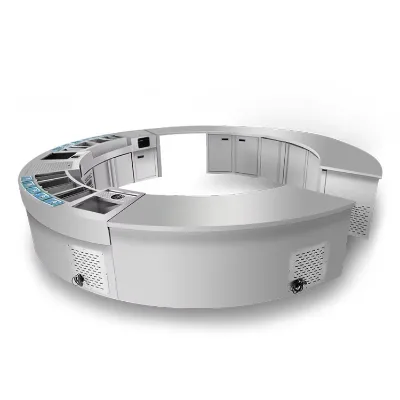
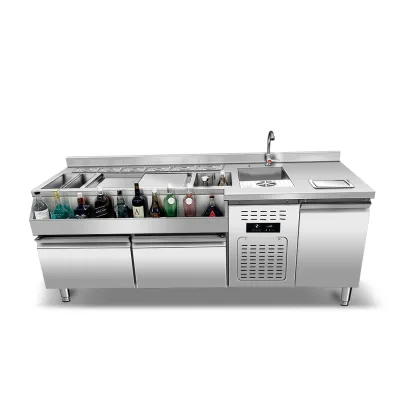
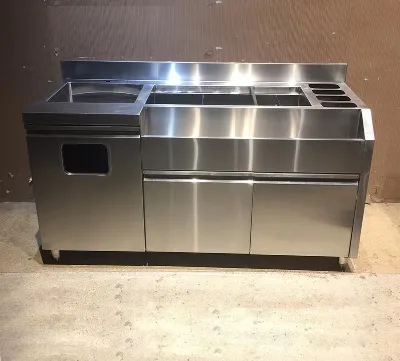
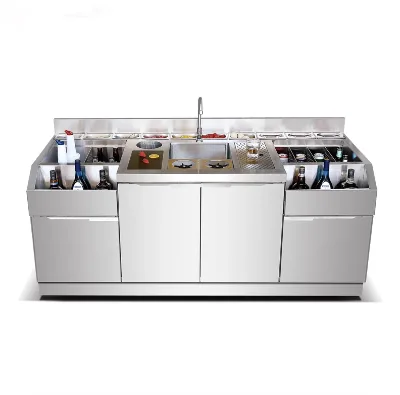
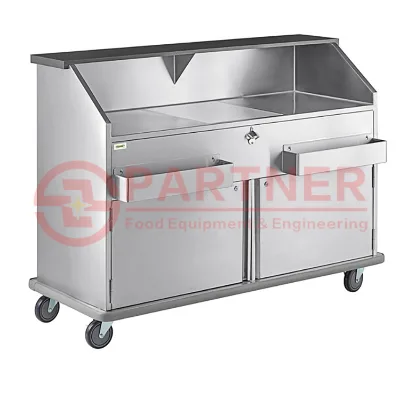
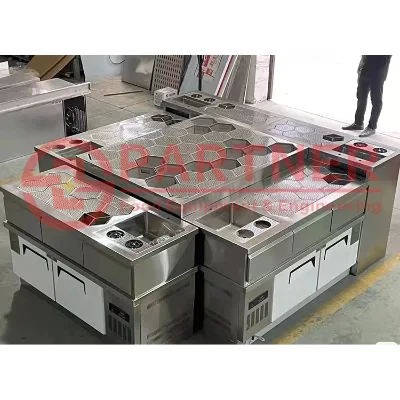
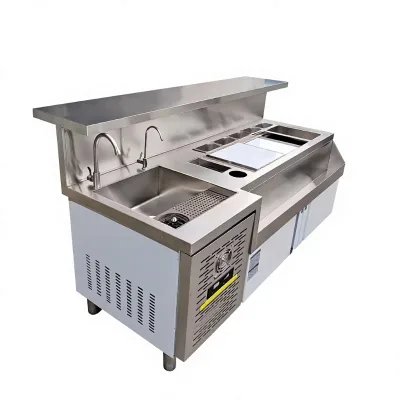
The foundation of a successful procurement strategy lies in a precise understanding of the technical specifications that define a modern bar station. Based on observed market data, the core product category is often identified as a "Bar Station" or "Cocktail Workstation," designed for high-traffic environments such as hotels, clubs, and commercial kitchens. A critical technical attribute is the material composition. The most prevalent and durable material observed in this sector is stainless steel, specifically grades 201 and 304. The distinction between these grades is vital for longevity and corrosion resistance, particularly in wet bar environments where exposure to water, alcohol, and cleaning chemicals is constant.
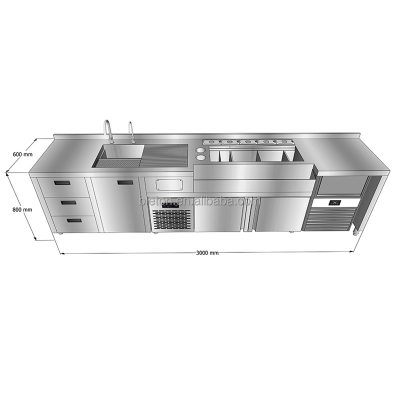
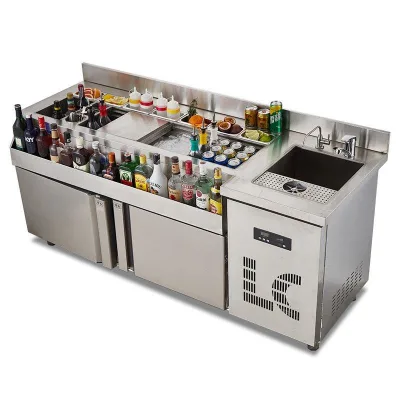
Power requirements and source are also defining technical parameters. Most modern units operate on standard electrical voltages of 110V or 220V, with a typical power consumption rating around 200W. This low power draw suggests that the "electric" power source is often utilized for specific integrated functions, such as ice storage cabinets or refrigeration units, rather than the entire structure. The physical dimensions of these units are rarely standard; instead, "Customized Size" and "Customized Shape" are the norm. Buyers should expect to work with suppliers who offer modular designs, with single package sizes ranging from approximately 130x80x100 cm to 200x85x45 cm, depending on the specific configuration. The "Single Gross Weight" can vary significantly, with observed data indicating weights of 50 kg to 100 kg per unit, necessitating careful planning for logistics and installation.
Evaluating Eco-Friendly Claims and Material Sustainability
When the core keyword includes "eco-friendly," the buyer must scrutinize the material lifecycle and manufacturing processes. In the context of stainless steel bar stations, "eco-friendly" often refers to the recyclability of the material and the durability of the product, which reduces the frequency of replacement. Stainless steel is inherently recyclable, but the sourcing of the raw material and the energy intensity of the smelting process are factors that require verification. Some suppliers list "Eco-friendly" as a specific feature, but this label should be treated as an observation rather than a guaranteed certification without supporting documentation.
Buyers should verify if the stainless steel used (201 or 304) is sourced from suppliers with transparent supply chains. The "201" grade is generally more cost-effective but may have lower corrosion resistance compared to "304," which is the industry standard for high-end commercial applications. While the product data indicates a "Modern Design" and "Silver" or "Stainless Steel" color, the environmental impact of the finishing process (e.g., polishing, coating) is often omitted from standard product listings. To ensure an eco-friendly procurement, buyers should request data on the energy efficiency of the manufacturing facility and the waste management protocols employed during the production of the bar station. The presence of a "Core Component" such as an ice storage cabinet also introduces energy consumption considerations; verifying the energy rating of these integrated components is essential for a truly sustainable purchase.
Compliance, Certification, and Regulatory Verification
Navigating compliance and certification is a critical step in the sourcing process, particularly for equipment destined for international markets. While some background information suggests the existence of standards like ISO 9001 or ISO 14001, and certifications such as CE, these should not be assumed to apply to every listed product without explicit verification. The "High-confidence facts" provided do not confirm that all bar stations possess these certifications. Therefore, the procurement strategy must include a mandatory request for current, valid certificates from the specific supplier being considered.
Buyers should explicitly ask for proof of compliance with local safety standards in the destination country. For instance, electrical components must meet the specific voltage and safety regulations of the region where the bar station will be installed. The "Warranty" period observed in the market is typically 1 year or 12 months, which serves as a baseline for quality assurance but does not replace the need for independent safety testing. If the product is intended for use in a hotel or restaurant, local health and safety codes regarding food contact surfaces and electrical safety must be met. The "Place of Origin" is listed as Guangdong or Shandong, China, regions known for manufacturing, but this does not automatically imply compliance with Western standards. A rigorous compliance check involves requesting test reports for electrical safety, material safety for food contact, and structural integrity before finalizing any order.
Cost Drivers and Pricing Dynamics in the Bar Station Market
The pricing of modern bar stations is influenced by a complex array of factors, including material grade, customization level, and logistical complexity. The observed price range in the market is extremely broad, spanning from $0.37 to $10,000. This wide variance indicates that the "product" can range from small, simple accessories to fully integrated, custom-built commercial workstations. The lower end of the spectrum likely represents basic components or smaller units, while the higher end reflects complex, multi-functional stations with integrated refrigeration and custom engineering.
The "MOQ" (Minimum Order Quantity) is another significant cost driver, with observed ranges from 1 set to 5,000 units. For buyers seeking a single unit or a small batch, the cost per unit will be higher due to the lack of economies of scale. Conversely, large orders can leverage the "OEM ODM Acceptable" capabilities of suppliers to reduce costs through bulk material purchasing and streamlined production. The "Packing" method, often a "Wooden Case" or "Carton Box," also impacts the final landed cost. Wooden cases provide superior protection for heavy, custom items but add significant weight and shipping volume compared to standard cartons. Buyers must calculate the total cost of ownership, including shipping via DHL, EMS, UPS, FedEx, or sea freight, as the "Single Gross Weight" of 50-100 kg per unit can make air freight prohibitively expensive for large orders.
Typical Applications and Operational Efficiency
The versatility of modern bar stations makes them suitable for a wide range of applications, from high-end nightclubs to commercial kitchens and private residences. The "Application" field typically lists bars, hotels, clubhouses, and restaurants, while the "Usage" field expands this to include home and commercial kitchen ware. The "Advantage" of these units is often described as "Easy Operation High Efficiency" or "Professional," suggesting that the design prioritizes workflow optimization. A well-designed bar station minimizes the distance a bartender must travel to access ingredients, tools, and ice, thereby increasing service speed during peak hours.
The "Function" is described as "Multipurpose," indicating that these units are not limited to drink preparation but may also serve as storage or display areas. The "Customized Size" and "Customized Shape" attributes allow for seamless integration into existing bar layouts, maximizing floor space utilization. For commercial applications, the durability of the stainless steel construction is paramount, as the equipment must withstand constant use and rigorous cleaning. The "Style" is noted as "Modern Design," which often implies sleek lines, minimalist aesthetics, and a focus on functionality. When selecting a bar station for a specific application, buyers should prioritize the "Capacity" requirements, which are often "Customizable" or "As Request," ensuring the unit can handle the expected volume of service.
Supplier Evaluation and Quality Control Protocols
Evaluating suppliers requires a focus on their ability to deliver consistent quality and adhere to the specific customization requests of the buyer. The "Brand Name" observed includes both specific names like "Bleton" and "Zibo Cook," as well as generic "OEM" labels. This indicates a market where both branded and white-label products are available. Buyers should prioritize suppliers who demonstrate transparency in their manufacturing process and provide clear documentation for their materials and components. The "Place of Origin" being in China (Guangdong or Shandong) suggests a mature supply chain, but buyers must verify the specific factory's capabilities.
Quality control should be a continuous process, not just a final inspection. Buyers should establish a protocol for pre-shipment inspections, focusing on the integrity of the stainless steel welds, the functionality of electrical components, and the accuracy of the custom dimensions. The "Warranty" of 1 year is a standard offering, but the terms of the warranty—such as what is covered and the process for claims—should be clearly defined in the contract. Additionally, the "Shipping" options (DHL, EMS, UPS, FedEx, Sea, Air) should be evaluated based on the buyer's timeline and budget. For heavy, custom units, sea freight is often the most cost-effective, but the lead time must be factored into the project schedule.
Long-Term Procurement Considerations and Lifecycle Management
The decision to procure a modern bar station is a long-term investment that extends beyond the initial purchase price. Buyers should consider the lifecycle management of the equipment, including maintenance, repair, and eventual replacement. The "Material" of stainless steel offers a long lifespan, but the finish and structural integrity can degrade over time if not properly maintained. The "Customized" nature of these units means that replacement parts may not be readily available off-the-shelf, making it crucial to negotiate spare parts availability with the supplier at the time of purchase.
Sustainability also plays a role in long-term considerations. A bar station that is built to last reduces the environmental impact associated with manufacturing and disposing of equipment. The "Eco-friendly" claim should be supported by the supplier's commitment to sustainable practices throughout the product's lifecycle. Buyers should also consider the energy efficiency of integrated components like ice storage cabinets, as these can contribute significantly to the operational costs of a bar. By focusing on durability, energy efficiency, and maintainability, buyers can ensure that their investment in a modern bar station delivers value over many years of operation.
| Feature Category | Key Observation | Procurement Action |
|---|---|---|
| Material | Stainless Steel 201/304 | Verify grade certification for corrosion resistance. |
| Dimensions | Customized Size/Shape | Provide precise site measurements to avoid fitment issues. |
| Power | 110V/220V, 200W | Confirm voltage compatibility with local grid standards. |
| MOQ | 1 Set to 5,000 Units | Negotiate pricing based on order volume and lead time. |
| Warranty | 1 Year / 12 Months | Clarify coverage terms for electrical and structural components. |
| Packaging | Wooden Case / Carton | Assess shipping costs based on weight and volume. |
| Origin | Guangdong/Shandong, China | Verify factory audits and compliance with local regulations. |
In conclusion, sourcing an eco-friendly modern bar station requires a meticulous approach that balances technical specifications, sustainability claims, and cost considerations. By adhering to the evidence-based criteria outlined in this guide, buyers can make informed decisions that align with their operational needs and environmental goals. The key to success lies in rigorous supplier evaluation, clear communication of requirements, and a commitment to verifying all claims before finalizing the procurement.
FAQs
What materials are used for eco-friendly modern bar stations?
Stainless steel grades 201 and 304 are the standard materials used. These metals offer high durability and recyclability, which supports eco-friendly goals by reducing replacement frequency in commercial environments.
Can these bar stations be customized for specific spaces?
Yes, customized size and shape options are widely available. Buyers can request specific dimensions and configurations to fit unique layouts in hotels, clubs, or commercial kitchens without compromising structural integrity.
How do I verify the electrical safety of these units?
Verify safety by checking for voltage compatibility with 110V or 220V standards. Ensure the supplier provides test reports for electrical components, as these units often include integrated functions like ice storage cabinets.
What is the typical warranty period for these bar stations?
The typical warranty period is one year or 12 months. This baseline coverage applies to most units, but specific terms regarding parts and labor should be confirmed directly with the supplier before purchase.
Which shipping methods are available for these heavy units?
Shipping options include DHL, EMS, UPS, FedEx, sea freight, and air freight. Given the gross weight ranges from 50 to 100 kg, sea freight is often the most cost-effective choice for large orders.
What is the minimum order quantity for these products?
The minimum order quantity can range from one set to 5000 units. Smaller orders may have higher per-unit costs, while bulk purchases leverage OEM capabilities to reduce overall expenses significantly.
Where are these bar stations typically manufactured?
These units are typically manufactured in Guangdong or Shandong, China. These regions host mature supply chains, but buyers must verify specific factory compliance with local and international safety standards.