Source Eco Friendly Modern Closet Underwear Organizer for Home
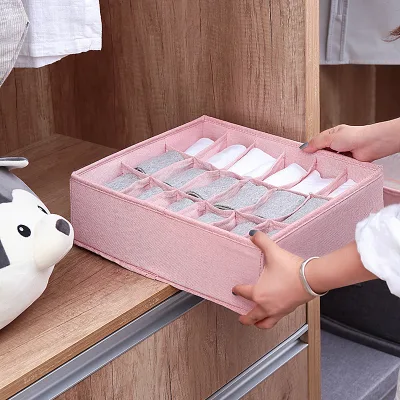
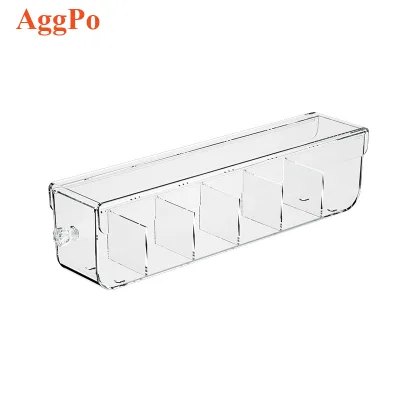
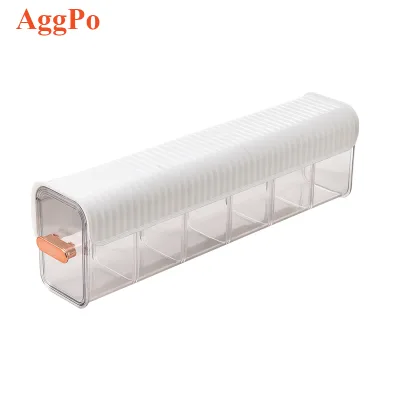
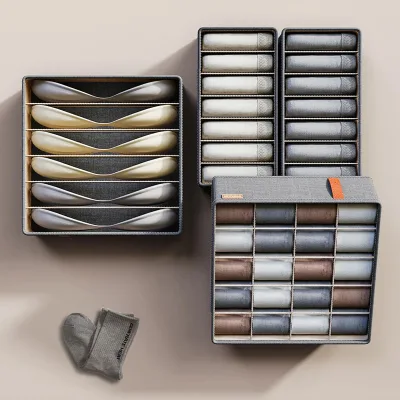
Find 30 eco friendly modern closet underwear organizer options from Chinese manufacturers. Compare non-woven and fabric storage boxes with foldable, dust-proof features for apparel and sundries organization. These durable bins offer OEM customization and stable designs for efficient space-saving in bedrooms and closets.
Key considerations
Products List


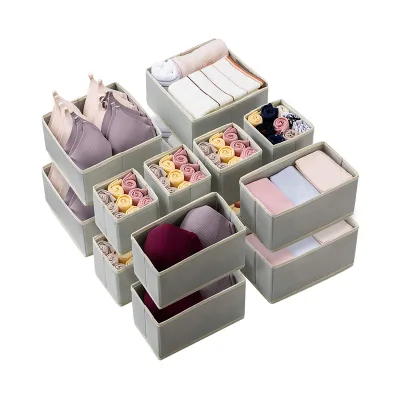
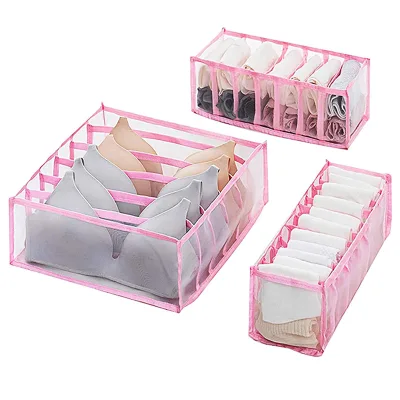
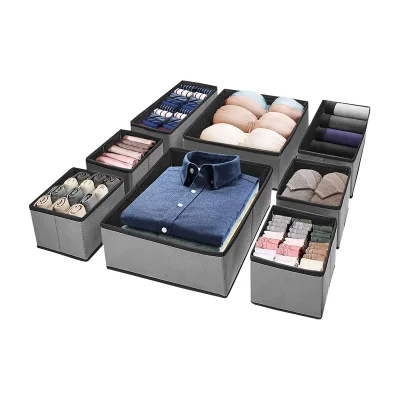
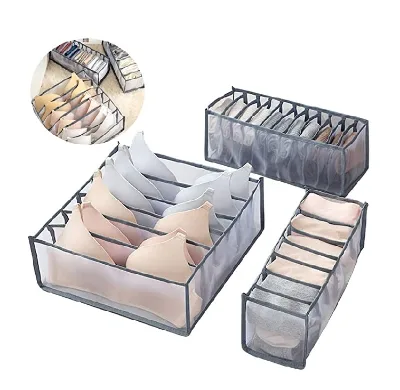






Comprehensive Sourcing Guide
Eco Friendly Modern Closet Underwear Organizer Sourcing Guide
Procuring eco-friendly modern closet organizers requires identifying products that balance sustainable material usage with functional storage needs for apparel and sundries. The available market data indicates a strong presence of non-woven and fabric-based storage boxes designed specifically for underwear and socks, often featuring foldable designs to maximize space efficiency. Buyers should prioritize items explicitly labeled as eco-friendly and reusable, ensuring the material composition aligns with environmental goals while maintaining the structural integrity required for daily household use.
When evaluating potential listings, focus on the specific product attributes that define the modern organizer category, such as rectangular shapes and dust-proof capabilities. The observed product range includes various models with dimensions ranging from compact 18-liter capacities to larger 35x24x9cm units, offering flexibility for different closet configurations. It is essential to verify that the selected organizer meets the specific customization needs of your brand, as many suppliers offer OEM and ODM services to tailor colors, sizes, and branding to your exact requirements.
Product Scope and Observed Listing Signals
The current market for these organizers is characterized by a diverse range of models, including specific SKUs like SNY-016 and FK2643, which cater to varying storage depths and layer configurations. Listings frequently highlight features such as durability, lightweight construction, and stability, which are critical for maintaining organization in high-traffic areas. Buyers must carefully distinguish between single-layer and multi-layer options, as the functional scope varies significantly between a simple bin and a complex, stackable system designed for deep storage.
Observations of product listings reveal that packaging methods, such as OPP bags or cartons, vary by model and order volume, directly impacting logistics planning. The color options are often customizable, with grey and other OEM colors available, allowing for brand consistency across different storage solutions. It is crucial to note that while some products are pre-folded, others may require assembly or specific handling to ensure they remain dust-proof and maintain their shape during transit and initial setup in the retail environment.
Technical Specifications to Verify
Technical verification must begin with precise dimensional analysis, as the standard sizes observed range from 28x28x12cm to 32x32x32cm, with some models offering custom dimensions. Buyers should confirm the exact internal volume and external footprint to ensure compatibility with existing closet shelving or drawer systems. The material composition, specifically non-woven fabric, requires validation to ensure it meets the expected durability and weight-bearing capacity for storing heavier items like denim or multiple layers of clothing without sagging.
Further technical checks should focus on the functional features listed, such as the presence of locks, waterproofing, and foldability mechanisms. While some models are explicitly described as waterproof and foldable, others may only offer dust-proofing, necessitating a clear understanding of the intended storage environment. Verifying the layer configuration, whether one, two, or three tiers, is essential for optimizing vertical space, and buyers should request physical samples to test the stability and ease of use of these multi-layer systems before committing to large orders.
Compliance and Safety Documentation
While specific certification data like OEKO-TEX or GOTS appears in background contexts, buyers must actively request current compliance documentation to verify the eco-friendly claims of the non-woven materials. It is insufficient to rely on general marketing terms; instead, procurement teams should demand test reports confirming the absence of harmful substances and the safety of the fabric for direct contact with clothing. This due diligence ensures that the "eco-friendly" label is backed by verifiable standards rather than unverified assertions, protecting the brand from potential regulatory issues or consumer backlash.
Safety documentation should also address the structural integrity of the storage boxes, particularly regarding the stability and load-bearing limits of the foldable designs. Buyers need to ensure that the products meet general safety standards for household storage items, preventing collapse or failure under normal usage conditions. Requesting a declaration of conformity for the specific models being sourced is a critical step to validate that the manufacturing processes adhere to the necessary safety protocols for consumer goods.
Cost Drivers and Commercial Terms
Commercial terms are heavily influenced by the Minimum Order Quantity (MOQ), which varies significantly across the observed product range from 30 units up to 2000 pieces. The specific MOQ of 1008 or 2000 pieces for certain models indicates that economies of scale play a major role in pricing, and buyers must align their order volumes with these thresholds to achieve competitive unit costs. Understanding these thresholds is vital for budgeting, as ordering below the standard MOQ may result in significantly higher per-unit prices or require a custom production run.
Pricing structures are further driven by the level of customization required, including OEM branding, specific color requests, and unique dimension adjustments. The observed price range of 0.39 to 8.96 USD reflects the variance between standard off-the-shelf items and highly customized solutions. Buyers should negotiate based on the total volume and the complexity of the customization, ensuring that the final cost per unit remains within the target margin while accounting for packaging variations like OPP bags versus cartons.
Supplier Qualification and Quality Control
Supplier qualification should prioritize manufacturers located in established production hubs like Zhejiang, China, where the supply chain for non-woven and fabric storage solutions is mature. Buyers must verify the supplier's capacity to handle the specific MOQs observed, such as 2000 pieces, and their ability to maintain consistent quality across large batches. It is essential to assess their track record for delivering products that meet the stated features of being durable, lightweight, and dust-proof, as these are key performance indicators for the category.
Quality control protocols must be established to verify that the final products match the technical specifications provided in the listing, including dimensions and material thickness. Implementing a pre-shipment inspection is crucial to check for defects in the foldable mechanisms, stitching quality, and the integrity of the dust-proof seals. Buyers should also confirm that the packaging, whether in cartons or OPP bags, is robust enough to prevent damage during international shipping, ensuring the product arrives in perfect condition for retail display.
Long-Term Procurement Checks
Long-term procurement success depends on establishing a reliable supply chain that can consistently meet fluctuating demand without compromising on the eco-friendly attributes of the product. Buyers should monitor the supplier's ability to maintain the specific material standards and customization capabilities over time, ensuring that the product remains stable and durable. Regular audits of the manufacturing process can help identify any deviations in quality or material sourcing that might affect the product's environmental claims or functional performance.
Continuous evaluation of the product's market performance is necessary to ensure that the chosen organizers continue to meet customer expectations for space-saving and aesthetic appeal. Buyers should gather feedback on the ease of use and maintenance of the storage boxes, as these factors directly influence repeat orders and brand loyalty. By maintaining open communication with the supplier regarding future design iterations and material innovations, buyers can ensure their product line remains competitive and aligned with evolving sustainability trends.
FAQs
What materials are used for these storage boxes?
The storage boxes are primarily made from non-woven fabric or general fabric materials. These materials ensure the products are lightweight, durable, and eco-friendly for storing underwear and socks in modern closets.
Can I customize the size and color of the boxes?
Yes, OEM and ODM customization are available for both size and color. You can request specific dimensions like 32x32x32cm or other custom sizes, and colors can be tailored to your brand requirements through the supplier.
What is the minimum order quantity for these organizers?
The minimum order quantity varies by model, typically ranging from 1008 pieces to 2000 pieces. Some specific models may require a minimum of 2000 pieces, so please check the specific product model details before ordering.
Are these storage boxes foldable and dust-proof?
Yes, most of these storage boxes are designed to be foldable for easy storage when not in use. They also feature dust-proof capabilities to keep your underwear and socks clean and protected from environmental contaminants.
Where are these storage boxes manufactured?
These storage boxes are manufactured in Zhejiang, China. The products originate from this region, which is known for its manufacturing capabilities in producing eco-friendly and durable storage solutions for apparel and sundries.
How are the products packed for shipping?
The products are packed in either OPP bags or cartons depending on the specific model. This packaging ensures the storage boxes remain stable and protected during transit to your location while maintaining their quality.