Source eco-friendly modern acrylic sign frame for Home, Shop, Office
Compare 30 listings for eco-friendly modern acrylic sign frame options featuring custom shapes, vertical orientation, and durable electroplated finishes. Buyers can evaluate specifications like 3mm thickness, square designs, and assembly ease for home decoration, exhibition displays, and flower shop arrangements.
Key considerations
Products List

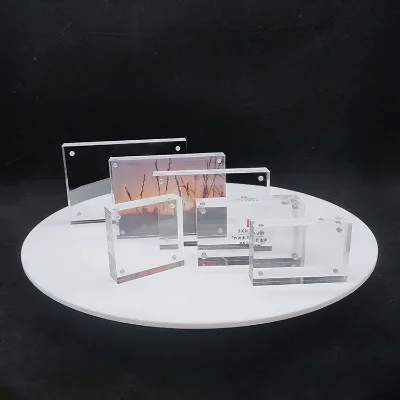


Golden Stroke Sign Holders and Picture Frames Acrylic Chalkboard Signs Signage
$3.99 - $38.90
MOQ: 100 Pieces


Comprehensive Sourcing Guide
Strategic Sourcing Guide for Eco-Friendly Modern Acrylic Sign Frames
Understanding Material Composition and Surface Engineering
When sourcing eco-friendly modern acrylic sign frames, the primary focus must be on the raw material integrity and the surface engineering processes that define the product's longevity and aesthetic appeal. The core material in question is acrylic, a transparent thermoplastic often favored for its glass-like clarity and superior impact resistance. In the context of modern design, the material is frequently processed to achieve a polished finish, which enhances light transmission and provides a sleek, high-end appearance suitable for contemporary interiors. The surface treatment is a critical differentiator; while some products may undergo electroplating to add metallic accents or protective layers, the fundamental requirement for an "eco-friendly" designation often hinges on the recyclability of the acrylic resin and the absence of harmful volatile organic compounds (VOCs) during the manufacturing process.
Buyers must verify the specific thickness specifications of the acrylic sheets used. In observed market data, thicknesses such as 3mm and combinations like 3mm+5mm are common, directly influencing the structural rigidity and the weight of the final unit. A 3mm thickness generally offers a balance between transparency and durability for standard display applications, while thicker combinations may be required for larger signage or high-traffic environments. The shape of the frame is typically square, aligning with modern minimalist trends, though custom shapes are available through supplier customization services. The orientation of the frame is predominantly vertical, designed to maximize visibility in retail or exhibition settings. It is essential to distinguish between the material properties of the frame itself and the potential for the product to be used in outdoor environments; while some acrylic products are rated for outdoor use due to UV resistance, the specific eco-friendly claims must be validated against the actual polymer formulation used by the manufacturer.
Technical Specifications and Customization Capabilities
The technical landscape of modern acrylic sign frames is defined by a high degree of customization, allowing buyers to tailor products to specific branding or spatial requirements. The standard model numbers, such as DY1105 or HD-A017, often serve as baselines for production, but the "Type: Custom Products" attribute indicates that the supply chain is flexible enough to accommodate unique dimensions and design requests. Standard sizing often adheres to common photo frame dimensions like 4x6 inches, 5x7 inches, and 8x10 inches, yet the availability of "customized" standards suggests that buyers are not limited to these fixed metrics. For applications requiring precise fitment, such as in flower shops or specific retail displays, the ability to specify exact dimensions is a critical procurement factor.
Customization extends beyond dimensions to include printing and finishing techniques. Suppliers frequently offer silk screen printing and UV printing capabilities, which are essential for applying logos, instructional text, or decorative graphics directly onto the acrylic surface. The printing method chosen can impact the durability of the graphics; UV printing generally offers superior fade resistance compared to traditional methods, which is vital for frames intended for long-term display. The color of the acrylic is another variable; while transparent color is the standard for showcasing the material's clarity, "custom" color options allow for brand alignment. Furthermore, the assembly process is a key technical specification. Products described as having "Easy Assembly" features reduce the labor costs and time required for installation, a significant consideration for buyers managing large-scale rollouts in supermarkets, specialty stores, or home decoration projects. The weight of the unit, often ranging from 0.3kg to 0.37kg for standard models, is a direct result of the material thickness and the inclusion of any additional hardware or backing materials.
Compliance, Certification, and Environmental Claims
Navigating the "eco-friendly" aspect of acrylic sign frames requires a rigorous approach to compliance and certification verification. While the market often references certifications like FSC (Forest Stewardship Council), it is important to note that FSC primarily applies to wood and paper products, not acrylic plastics. Therefore, buyers should not assume that a wood-based certification automatically applies to an acrylic frame unless the product explicitly combines materials and carries specific dual certifications. The term "eco-friendly" in the context of acrylics should be scrutinized against the manufacturer's actual production standards. Buyers must request documentation regarding the recyclability of the acrylic resin, the energy efficiency of the manufacturing process, and the absence of toxic additives in the surface treatments.
Since specific certification statuses are not universally guaranteed across all listed products, procurement teams must treat environmental claims as observations that require validation rather than absolute facts. The "Condition: New" and "Feature: Durable" attributes suggest a product lifecycle that minimizes waste, but this must be backed by data. For instance, the durability of the acrylic ensures that the frame does not need frequent replacement, which is an indirect but significant contribution to sustainability. Buyers should verify if the supplier adheres to international standards for plastic safety and environmental impact. The "prod_standard" field often lists dimensions, but for environmental compliance, buyers need to look for specific environmental management system certifications (such as ISO 14001) or product-specific environmental declarations. Without explicit supplier-provided data, any claim of being "eco-friendly" should be treated as a hypothesis to be tested through sample evaluation and third-party audit reports.
Cost Drivers and Procurement Economics
The pricing structure for acrylic sign frames is influenced by a complex interplay of material costs, customization levels, and order volume. The observed price range in the market spans from $0.14 to $79.99, a wide variance that reflects the difference between basic, off-the-shelf units and highly customized, premium-grade frames. Several factors drive these costs. First, the thickness of the acrylic is a primary cost driver; thicker sheets (e.g., 3mm+5mm) naturally cost more than thinner variants (3mm) due to the increased material volume. Second, the complexity of the surface treatment, such as electroplating or specialized UV printing, adds to the manufacturing expense. Third, the level of customization plays a significant role; "Custom Products" with unique model numbers or dimensions typically incur higher unit costs and potentially higher Minimum Order Quantities (MOQs).
The MOQ range observed, from 1 to 200 units, offers flexibility for different buyer profiles. Small businesses or those testing a new design can start with an MOQ of 1, while larger retailers may leverage higher volumes to negotiate better unit prices. The "Selling Units: Single item" attribute indicates that the market supports both bulk and individual purchases, but the economic efficiency usually improves with volume. Buyers should also consider the packaging costs, as the "prod_packing" often involves bubble bags and white boxes or cartons, which adds to the overall unit cost. Additionally, the lead time for delivery, which can be within 15 days for small orders, impacts the total cost of ownership when factoring in inventory holding costs and potential rush fees. Understanding these cost drivers allows buyers to make informed decisions that balance budget constraints with quality and customization needs.
Supplier Evaluation and Operational Reliability
Selecting the right supplier for eco-friendly modern acrylic sign frames requires a thorough evaluation of their operational capabilities and geographic location. The supply chain for these products is heavily concentrated in specific regions of China, with Hubei, Zhejiang, and Ningbo emerging as key production hubs. Each location may offer distinct advantages; for example, Ningbo is a major port city, which can facilitate smoother logistics and export processes, while Hubei and Zhejiang may offer specialized manufacturing clusters. Buyers should verify the "Place of Origin" for each supplier to ensure alignment with their logistical preferences and to assess the potential for supply chain disruptions.
Reliability is further determined by the supplier's ability to meet delivery timelines and maintain consistent quality. The "Delivery Time: Small Order Within 15 Days" metric provides a benchmark for expected lead times, but buyers must confirm if this applies to customized orders or if customization extends the timeline. The "Assembly: Easy Assembly" feature is a strong indicator of a supplier's attention to user experience, suggesting that they have designed their products for efficiency. When evaluating suppliers, buyers should look for evidence of a robust quality control process, including pre-shipment inspections and adherence to the stated "prod_standard" dimensions. The "Type: Custom Products" attribute implies that the supplier has the engineering capacity to handle bespoke requests, which is a valuable asset for buyers with unique requirements. However, the lack of specific supplier names in the data necessitates a cautious approach, focusing on verifying the supplier's track record through references and sample testing rather than relying on brand reputation alone.
Quality Control and Long-Term Procurement Strategy
Implementing a robust quality control (QC) strategy is essential for ensuring that the acrylic sign frames meet the expected standards for durability and aesthetics. The "Feature: Durable" attribute should be validated through physical testing, such as impact resistance checks and UV exposure simulations, especially for frames intended for outdoor use. The "Antitheft: Not Antitheft" specification highlights a potential vulnerability that buyers must address through supplementary security measures if the frames are used in high-risk environments like exhibitions or specialty stores. Quality control should also encompass the verification of the "Surface Treatment," ensuring that the polishing or electroplating is uniform and free from defects that could compromise the visual appeal.
For long-term procurement, buyers should prioritize suppliers who demonstrate a commitment to continuous improvement and adaptability. The "Customization: Available" feature suggests that the supply chain is responsive to market changes, which is crucial for maintaining a competitive edge. Buyers should establish clear communication channels with suppliers to ensure that any changes in design or material requirements are handled efficiently. Additionally, the "Usage" categories, ranging from home decoration to flower shops and supermarkets, indicate that the product has versatile applications. This versatility allows buyers to diversify their product offerings without needing to source from multiple specialized vendors. However, the "Recommended use: Outdoor" attribute requires careful validation, as not all acrylic products are suitable for prolonged outdoor exposure. Buyers should develop a standardized testing protocol to verify the suitability of each batch for its intended environment, ensuring that the "eco-friendly" and "modern" attributes are maintained throughout the product's lifecycle. By focusing on these strategic elements, buyers can build a resilient supply chain that delivers high-quality, sustainable acrylic sign frames consistently.
FAQs
What materials are used for eco-friendly modern acrylic sign frames?
These frames are primarily constructed from acrylic, a transparent thermoplastic offering glass-like clarity. The material often features a polished surface treatment, though some variants may include electroplating for added durability and aesthetic appeal.
Can I customize the dimensions of these acrylic sign frames?
Yes, customization is available for most products, allowing for unique dimensions beyond standard sizes like 4x6 inches or 5x7 inches. Buyers can request specific thicknesses such as 3mm or 3mm+5mm to suit their display requirements.
How long does delivery take for small orders of these frames?
Small orders typically have a delivery time of within 15 days. This lead time applies to standard production runs, though complex customizations might require additional processing time depending on the specific supplier capacity.
Which surface treatments are applied to these acrylic sign frames?
Common surface treatments include polishing and electroplating to enhance visual appeal and protect the material. Some frames also feature silk screen printing or UV printing for applying logos and graphics directly onto the acrylic surface.
Where are these acrylic sign frames typically manufactured?
Production is concentrated in specific regions of China, including Hubei, Zhejiang, and Ningbo. These locations serve as key manufacturing hubs, offering various logistical advantages for export and distribution to international buyers.
What is the minimum order quantity for these custom sign frames?
The minimum order quantity ranges from 1 to 200 units depending on the supplier and product type. This flexibility allows buyers to start with small quantities for testing or place larger orders for bulk distribution needs.
How durable are these acrylic sign frames for outdoor use?
The frames are designed to be durable, with some products explicitly recommended for outdoor applications. The acrylic material provides impact resistance, though specific UV resistance and longevity claims should be verified against the manufacturer's technical data.