Source Eco Friendly Plastic Water Bottle with Handgrip for Travel, Gym, and Daily Use
Find 30 Eco Friendly Plastic Water Bottle with Handgrip options suitable for climbing, self-driving travel, and daily drinking. Buyers can compare materials like Tritan and PP, sizes, and customization features from verified suppliers in China.
Key considerations
Products List
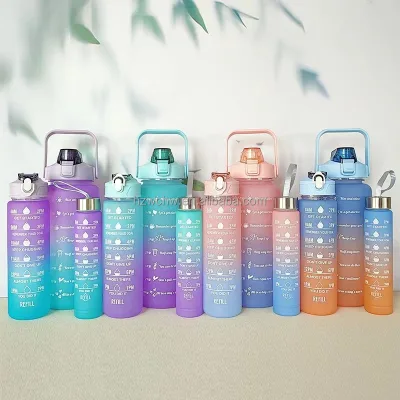
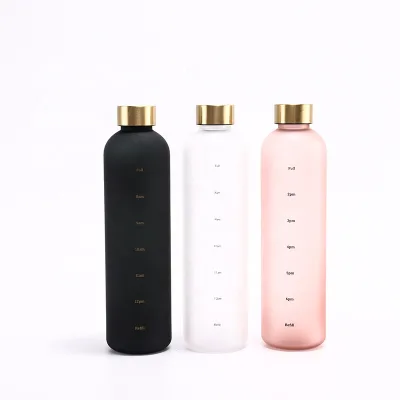

Cheap Sports Plastic Drinking Water Bottle Water Bottle Fitness with Handle
$0.75 - $1.10
MOQ: 1000 Pieces


Eco Friendly Reusable BPA Free Leakproof Plastic Sports Water Bottle with Straw
$1.18 - $1.28
MOQ: 1000 Pieces
Comprehensive Sourcing Guide
Strategic Sourcing Guide for Eco-Friendly Plastic Water Bottles with Handgrip
The global demand for sustainable hydration solutions has intensified, driving procurement teams to seek eco-friendly plastic water bottles that combine durability with functional design elements like handgrips. For B2B buyers, navigating this market requires a disciplined approach that separates marketing assertions from verifiable product attributes. The core keyword "eco-friendly plastic water bottle with handgrip" points to a specific segment of drinkware where material science, manufacturing processes, and supply chain logistics intersect. This guide provides a structured framework for evaluating suppliers and products, ensuring that procurement decisions are grounded in factual evidence and technical reality rather than unverified claims.
Technical Specifications and Material Composition
When sourcing water bottles, the material composition is the primary determinant of both environmental impact and functional performance. In the current market, products labeled as eco-friendly often utilize materials such as Tritan, PCTG, or Polypropylene (PP). These materials are distinct from traditional polyethylene terephthalate (PET) or polycarbonate (PC) in their chemical stability and recyclability profiles. Tritan and PCTG are copolyesters known for their clarity and resistance to staining, while PP offers high thermal resistance and flexibility.
A critical technical specification to verify is the capacity and physical dimensions. Standard models in this category often feature a capacity of 1000ml (32oz) or 1.0L, with dimensions typically ranging around 29cm in height and 7.3cm in diameter. The inclusion of a handgrip or rope accessory is a common design feature intended to enhance portability for activities such as climbing, self-driving travel, and general outdoor use. Buyers must confirm whether the handgrip is an integrated part of the mold or a separate accessory, as this affects the assembly process and potential points of failure.
Furthermore, the thermal properties of the bottle are essential. While some listings suggest thermal insulation capabilities, it is important to note that single-walled plastic bottles, particularly those made of Tritan or PP, generally do not provide significant thermal insulation compared to double-walled stainless steel alternatives. The boiling water attribute is often listed as "Not Applicable" for these specific plastic variants, indicating a maximum usage temperature that excludes boiling water. Procurement teams should verify the specific temperature limits of the material to ensure suitability for intended applications, such as carrying cold beverages or room-temperature water.
Compliance, Certification, and Environmental Claims
The term "eco-friendly" is frequently used in marketing but requires rigorous verification against tangible certifications. In the context of plastic drinkware, buyers should look for evidence of compliance with international standards such as ISO certifications, which indicate that the manufacturer adheres to specific quality management protocols. While some background information may reference FSC (Forest Stewardship Council) certification, this is typically associated with paper and wood products rather than plastic bottles, and its relevance to a plastic water bottle should be treated with skepticism unless explicitly documented.
Instead of relying on generic "eco-friendly" labels, buyers should prioritize products that explicitly state recyclability. Many suppliers list their products as "Recyclable" and "Eco-Friendly," which aligns with the material properties of Tritan and PP. These materials are widely accepted in recycling streams, provided they are properly sorted. However, the presence of a "Thermal Insulation" feature in some listings suggests a dual-walled construction, which can complicate the recycling process due to the difficulty of separating different material layers.
Buyers must also scrutinize the "Anti-corrosion coating" attribute. While this feature is beneficial for durability, it is more commonly associated with metal containers. For plastic bottles, this may refer to a specific surface treatment or coating applied to the exterior. It is crucial to verify that any coatings used are non-toxic and do not compromise the food-grade safety of the product. The "Direct Drinking" usage method implies that the bottle must meet food-contact safety standards, which should be validated through supplier documentation rather than assumed.
Cost Drivers and Pricing Dynamics
The pricing of eco-friendly plastic water bottles is influenced by several variables, including material costs, customization requirements, and order volume. The observed price range in the market spans from $0.10 to $7.90 USD, a wide spectrum that reflects differences in material quality, design complexity, and branding. The lower end of this range typically corresponds to basic, unbranded units with minimal customization, while the higher end often includes complex designs, premium materials, or extensive branding services.
Minimum Order Quantity (MOQ) is a significant cost driver. Suppliers may offer MOQs as low as 2 pieces for sample orders, with a standard sample lead time of 2-3 days. However, for full production runs, MOQs can range significantly, with some suppliers requiring 3,000 pieces or more. This disparity highlights the importance of aligning order volume with budget constraints. Bulk purchasing often reduces the unit cost, but it also increases the initial capital outlay and storage requirements.
Customization is another key factor affecting cost. The ability to accept "Customized Logo" and "Customized Color" options adds value but incurs additional setup fees and potentially higher per-unit costs. Suppliers offering "OEM" (Original Equipment Manufacturer) services allow buyers to brand the product, but this requires clear communication regarding design files and approval processes. The "Stocked" status of certain items can also influence pricing, as ready-to-ship inventory may command a premium compared to made-to-order items.
Typical Applications and Usage Scenarios
The versatility of plastic water bottles with handgrips makes them suitable for a wide range of commercial and personal applications. The "Climbing" and "Self-driving Travel" occasions listed in product attributes indicate a strong fit for outdoor and adventure activities. The handgrip or rope accessory is particularly valuable in these scenarios, allowing users to attach the bottle to backpacks or gear for easy access during movement.
In the commercial sector, these bottles are targeted at various buyer types, including caterers, canteens, restaurants, fast-food services, and specialty stores. The "Unisex" attribute and "All-Season" availability make them a versatile choice for promotional campaigns, corporate gifts, and retail distribution. The "Minimalist" and "Modern" styles appeal to contemporary consumer preferences, while the "Classic" style ensures broader market acceptance.
The "Food & Beverage Manufacture" and "TV Shopping" segments represent specific channels where these products are often distributed. The ability to customize colors (White, Black, Pink, Blue, Yellow, Green) allows buyers to align the product with brand identity or seasonal themes. However, the "Holiday Selection: Not Support" attribute suggests that these products are not specifically designed for holiday-themed packaging or gifting, which may limit their utility in certain seasonal marketing campaigns.
Supplier Evaluation and Verification
Selecting the right supplier requires a comprehensive evaluation of their capabilities, location, and reliability. The primary manufacturing hubs for these products are located in Zhejiang and Guangdong, China, regions known for their robust plastic manufacturing infrastructure. Buyers should verify the "Place of Origin" to ensure it aligns with their logistical preferences and quality expectations.
When evaluating suppliers, buyers should request detailed product specifications, including the exact material composition (Tritan, PCTG, or PP), dimensions, and capacity. The "Single gross weight" of 1.0 kg and "Single package size" of 31x10x10 cm are critical data points for calculating shipping costs and storage requirements. Additionally, the "Package" details, such as "1pc/polybag" or "1pcs/polybag/white box," should be confirmed to ensure they meet the buyer's packaging standards.
Payment terms are another critical aspect of supplier evaluation. Common terms include a 30% deposit and 70% balance before shipment, which is standard in the industry. Buyers should also assess the supplier's ability to handle "Customized Logo" requests and verify their sample lead time, which is typically 2-3 days. The "Commercial Buyer" list provided by suppliers can serve as a reference for their experience in serving similar markets, but buyers should conduct their own due diligence to ensure the supplier has a proven track record in their specific niche.
Quality Control and Long-Term Procurement
Maintaining consistent quality is paramount in B2B procurement. Buyers should implement a robust quality control (QC) process that includes pre-production samples, in-line inspections, and final random inspections. The "Recyclable" and "Eco-Friendly" claims must be backed by third-party testing or certification to ensure they are not merely marketing fluff. Regular audits of the supplier's production line can help identify potential issues with material consistency, molding defects, or labeling errors.
Long-term procurement considerations involve building a sustainable supply chain. Buyers should prioritize suppliers who demonstrate a commitment to environmental responsibility, such as using recyclable materials and minimizing waste during production. The "Stocked" status of certain items can provide a buffer against supply chain disruptions, but reliance on inventory should be balanced with the flexibility of made-to-order production to avoid overstocking.
Furthermore, buyers should consider the lifecycle of the product. A bottle that is durable, easy to clean, and recyclable offers better long-term value than one that degrades quickly or cannot be recycled. The "Direct Drinking" usage method implies that the bottle must maintain its integrity over repeated use, which requires high-quality materials and precise manufacturing. By focusing on these factors, buyers can ensure that their procurement strategy supports both business objectives and environmental goals.
Comparative Analysis of Product Attributes
To facilitate decision-making, the following table summarizes key attributes observed in the market for eco-friendly plastic water bottles with handgrip. This comparison highlights the variability in specifications and helps buyers identify products that best match their requirements.
| Attribute | Observation A | Observation B | Observation C |
|---|---|---|---|
| Material | Tritan or PCTG | PP | Plastic (General) |
| Capacity | 1000ml / 32oz | 1.0 L | Variable |
| Dimensions | 29*7.3cm | Middle Size | 31X10X10 cm (Package) |
| Accessories | WITH LID, WITH ROPE | WITH LID | WITH ROPE |
| Style | Minimalist, Classic, Modern | Sport | Classic |
| Certification | ISO | ISO | Not Specified |
| MOQ | 2 PCS | 3000 PCS | 2-10000 |
| Origin | Zhejiang, China | Guangdong, China | Zhejiang, China |
| Eco-Claim | Recyclable, Eco-Friendly | Recyclable | Eco-Friendly |
| Boiling Water | Not Applicable | Not Applicable | Applicable (Note: Contradiction) |
This table illustrates the need for careful verification. For instance, while some listings claim "Applicable" for boiling water, others state "Not Applicable." This discrepancy underscores the importance of confirming the specific material limits before making a purchase. Similarly, the variation in MOQs from 2 to 3,000 pieces requires buyers to align their order volume with their budget and storage capabilities.
In conclusion, sourcing eco-friendly plastic water bottles with handgrips requires a meticulous approach that balances technical specifications, compliance, cost, and supplier reliability. By adhering to the guidelines outlined in this guide, buyers can make informed decisions that meet their business needs while contributing to a more sustainable future. The key lies in verifying every claim, understanding the nuances of material science, and maintaining a long-term perspective on supply chain management.
FAQs
What materials are used for eco friendly plastic water bottles with handgrip?
These bottles are typically made from Tritan, PCTG, or Polypropylene (PP). These materials offer clarity and durability while being recyclable and suitable for direct drinking without thermal insulation for boiling water.
Can I customize the logo on these water bottles?
Yes, customized logos are acceptable for these products. Suppliers often offer OEM services allowing buyers to add specific branding, though this may require design file submission and approval before production begins.
What is the minimum order quantity for these bottles?
Minimum order quantities vary significantly, ranging from 2 pieces for samples to 3,000 pieces for bulk production. Buyers should verify specific MOQ requirements with suppliers before placing a full production order.
How long does it take to get a sample?
Sample time is typically 2 to 3 days for these plastic water bottles. This allows buyers to verify product quality, dimensions, and customization options before committing to a larger manufacturing run.
Which certifications do these manufacturers hold?
Some manufacturers hold ISO certification for quality management protocols. Buyers should verify specific documentation to ensure compliance with food-contact safety standards and other relevant international requirements for plastic drinkware.
What capacity options are available for these bottles?
Standard capacity options include 1000ml or 32oz, which equals 1.0 liter. These sizes are common for outdoor activities like climbing and self-driving travel, fitting well with the handgrip design for portability.