Source eco-friendly plastic pull-ring can for beverage, food, and oil packaging
Compare 30 verified listings for eco-friendly plastic pull-ring can options suitable for beverages, food, and oil packaging. Buyers can review specifications like volume, sealing types, and customization features to find the right supplier for their needs.
Key considerations
Products List
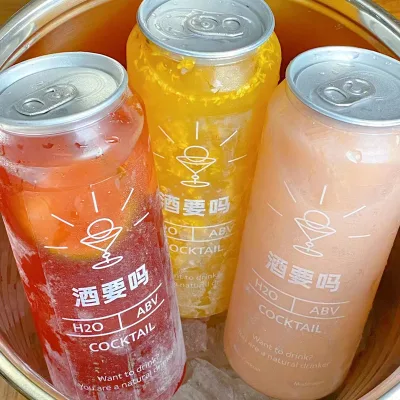


Pull Ring Plastic Beverage Bottle Food Grade Pet Cans with Aluminum Lid
$0.09 - $0.16
MOQ: 1000 Pieces


Pull-Ring Plastic Bottles Fruit Juice Soda Water Plastic Ring-Pull Jar Pet Can
$0.11 - $0.15
MOQ: 5000 Pieces

Customized Plastic Juice Beer Packing Bottle Sealed Can with Pull Ring Lid
$0.11 - $0.15
MOQ: 5000 Pieces




Comprehensive Sourcing Guide
Strategic Sourcing Guide for Eco-Friendly Plastic Pull-Ring Cans
Navigating the B2B market for eco-friendly plastic pull-ring cans requires a disciplined approach that balances material science, regulatory compliance, and supply chain reliability. The term "eco-friendly" in the context of plastic packaging often refers to the use of specific polymer types like PET (Polyethylene Terephthalate) or the implementation of design features that facilitate recycling and reduce material usage. For procurement professionals, the primary challenge lies in distinguishing between marketing claims and verifiable product attributes. This guide synthesizes observed market data and technical specifications to provide a framework for evaluating potential suppliers and products that meet the criteria for sustainable, functional plastic packaging.
Understanding Material Composition and Structural Integrity
The foundation of any eco-friendly plastic container lies in its material composition. In the current market, PET is a dominant material choice for beverage and food packaging due to its clarity, strength, and recyclability. When sourcing plastic pull-ring cans, buyers must verify that the "Plastic Type" is explicitly listed as PET or a comparable recyclable polymer. The observed product data indicates that PET is a standard material attribute for these items, often paired with specific sealing mechanisms.
The structural design of the can is equally critical. The "Sealing Type" is frequently identified as a Screw Cap, which offers a reliable barrier against leakage. However, the "Pull-Ring" mechanism mentioned in the core keyword suggests a specific opening style that may differ from standard screw caps or wide-mouth lids. While the provided data lists "Lid Type" as "Wide Mouth Lid" and "Sealing Type" as "Screw Cap," the integration of a pull-ring system requires careful engineering to ensure the cap remains secure during transport while allowing for easy, one-handed opening. Buyers should request technical drawings to confirm the mechanical integrity of the pull-ring attachment point, ensuring it does not compromise the "Leak Proof" feature that is a standard attribute for high-quality containers.
Furthermore, the "Shape" of the container varies significantly in the market, ranging from "Round" to "Square" and "Straight Barrel" configurations. The "Volume" specifications observed in the market data are diverse, including 200 ml, 210 ml, 250 ml, 330 ml, 350 ml, 500 ml, and 650 ml options. The specific shape and volume must align with the intended product's viscosity and dispensing requirements. For instance, a "Square" or "Arc" shape might be preferred for shelf stability, while a "Straight Barrel" or "Stout" shape might be chosen for ergonomic handling. The "Single gross weight" of 1.000 kg per package unit provides a baseline for logistics planning, though this will vary based on the specific volume and wall thickness of the can.
Compliance, Certification, and Environmental Standards
In the realm of eco-friendly packaging, certification is not merely a formality but a critical verification of environmental claims. Buyers must demand proof of compliance with recognized international standards. The observed data lists "ISO" and "SGS" certifications, which are strong indicators of a supplier's commitment to quality management systems and product safety. However, the specific environmental standard relevant to "eco-friendly" claims must be explicitly defined. Is the plastic post-consumer recycled (PCR)? Does it meet specific biodegradability standards, or is the "eco-friendly" claim based on the material's high recyclability rate?
The "prod_standard" field in the market data lists various capacities such as 250ml, 330ml, 355ml, 500ml, 700ml, and 1000ml, which often correlate with regional regulatory requirements for beverage labeling and volume accuracy. For food and beverage applications, the container must also comply with food safety regulations. The "Usage" attribute in the data includes "Food" and "Beverage," necessitating that the plastic material is food-grade. Buyers should verify that the supplier can provide migration test results to ensure no harmful substances leach from the PET plastic into the contents, especially if the product is acidic or fatty.
Additionally, the "Certification" field mentions "CNAS," which is a national accreditation body in China. While this indicates a level of testing capability, international buyers should prioritize suppliers who hold certifications recognized in their target markets, such as FDA approval for the US or EFSA compliance for Europe. The "Feature" attribute "Eco-Friendly" is a broad claim; therefore, the specific environmental standard, such as a specific ISO 14001 certification for environmental management or a specific recycling symbol (e.g., #1 for PET), should be requested to substantiate the claim.
Cost Drivers and Minimum Order Quantity (MOQ) Analysis
The cost structure of eco-friendly plastic pull-ring cans is influenced by several variables, including material costs, mold complexity, and order volume. The observed "MOQ" (Minimum Order Quantity) range in the market is substantial, spanning from 200 to 500,000 units. This wide range suggests that suppliers offer different tiers of engagement, from small-batch prototyping to mass production. The "MOQ" of 3000 units is also noted for specific tin can applications, but for plastic variants, the threshold can be lower or higher depending on the customization level.
Price is a significant factor, with observed listed prices ranging from $0.01 to $0.92 USD per unit. This variance is likely driven by the volume, the complexity of the pull-ring mechanism, and the degree of customization. A standard, clear, round can with a simple screw cap will likely be at the lower end of the price spectrum. Conversely, a custom-colored, square can with a specialized pull-ring lid and vacuum insulation features will command a higher price. The "Insulation Type" listed as "Vacuum Insulated" is an unusual attribute for standard plastic cans and may indicate a specific high-value product line or a data inconsistency that requires clarification. If vacuum insulation is a requirement, the cost will be significantly higher due to the complex manufacturing process.
Customization is a major cost driver. The "Customization" attribute is marked as "Available," and "Logo" customization is "Customized." Adding a custom logo, especially with "White Coating" or "Cmyk or Panton Color" printing, adds to the unit cost. The "Printing" requirements must be balanced against the MOQ; higher customization often requires higher MOQs to amortize the setup costs of the printing plates and molds. Buyers should negotiate based on the "Selling Units" being "Single item" for samples, but plan for bulk orders to achieve the most competitive pricing.
Typical Applications and Functional Requirements
The versatility of plastic pull-ring cans makes them suitable for a wide array of applications. The "Industrial Use" is primarily identified as "Beverage," but the "Usage" also includes "Food" and specific applications like "Packing for Edible Cooking Oil" and "Lubriant." The "Application" data explicitly mentions "Edible Cooking Oil" and "Lubriant," indicating that these containers can handle viscous liquids as well as beverages. The "Inside Handing" feature, described as "Finishing, Golden Oil," suggests a specific coating or treatment to prevent corrosion or interaction with the contents, which is crucial for oil-based products.
The "Shape" and "Volume" must be matched to the application. For beverages, the "Round" or "Straight Barrel" shapes with volumes like 330 ml or 500 ml are standard. For cooking oils or lubricants, the "Rectangle" shape or larger volumes like 4 Litres (noted in the standard field) might be more appropriate. The "Sealing Type" of "Screw Cap" is essential for liquids to prevent leakage, while the "Pull-Ring" feature adds convenience for consumers who need to open the can quickly without tools. The "Leak Proof" feature is a non-negotiable attribute for any liquid application, and buyers should request drop-test results to verify this claim under various shipping conditions.
Supplier Evaluation and Verification Protocols
Evaluating suppliers for eco-friendly plastic cans requires a rigorous vetting process. The "Place of Origin" is predominantly "Zhejiang, China" and "Anhui, China," which are major manufacturing hubs. However, the presence of multiple origins suggests a fragmented supply chain. Buyers should verify the specific factory location to ensure it aligns with their logistics strategy. The "Brand Name" is listed as "OEM&ODM," indicating that most suppliers are contract manufacturers rather than brand owners. This is typical for the industry, but it means the buyer's brand identity will be the primary differentiator.
When evaluating a supplier, check for "OEM/ODM: Accepted" status and confirm their capacity for "Custom Order" acceptance. The "Sample" attribute is listed as "Freely," which is a positive sign for initial product testing. However, buyers should clarify if the "Freely" sample includes shipping costs or if there are any hidden fees. The "prod_packing" details, such as "Standard Export Carton," "Ploybag, Carton Box, Pallets, Stretch Film," are critical for ensuring the product arrives in good condition. The "Single package size" of 1X1X1 cm is unusually small and likely refers to a sample unit or a specific component; the actual bulk packaging dimensions must be confirmed to calculate shipping costs accurately.
Quality Control and Long-Term Procurement Strategy
Quality control (QC) is paramount when sourcing plastic packaging. The "Certification" of "ISO" and "SGS" provides a baseline, but buyers should implement their own QC protocols. This includes checking for visual defects, verifying the "Leak Proof" seal integrity, and ensuring the "Pull-Ring" mechanism functions smoothly without breaking. The "Color" is listed as "Clear," but if custom colors are required, the "Print" capabilities for "White Coating" and "Cmyk or Panton Color" must be tested for color consistency and adhesion.
For long-term procurement, establishing a stable relationship with a supplier who can maintain consistent quality is essential. The "Customization" and "Logo" options allow for brand differentiation, but the supplier must be able to reproduce these consistently over time. The "Standard" capacities (250ml to 1000ml) suggest a modular approach to production, which can be advantageous for scaling orders. Buyers should also consider the environmental impact of the packaging beyond the material itself, such as the recyclability of the "Carton" and "Pallets" used for shipping.
Comparative Analysis of Product Attributes
To facilitate decision-making, the following table summarizes key attributes observed in the market for eco-friendly plastic pull-ring cans:
| Attribute Category | Observed Specifications | Verification Requirement |
|---|---|---|
| Material | PET, Plastic, Tin (for comparison) | Confirm food-grade PET; check for PCR content. |
| Sealing Type | Screw Cap, Wide Mouth Lid | Verify pull-ring integration does not compromise seal. |
| Volume Range | 200 ml to 650 ml (and up to 4 Litres) | Match volume to product viscosity and shelf needs. |
| Shape | Round, Square, Straight Barrel, Rectangle | Ensure shape optimizes shelf space and handling. |
| Certification | ISO, SGS, CNAS | Request specific environmental and food safety certs. |
| MOQ Range | 200 to 500,000 units | Negotiate based on initial order volume and growth. |
| Customization | Logo, Color, Shape, Volume | Confirm print quality and color matching capabilities. |
| Origin | Zhejiang, Anhui, China | Verify factory location and logistics capabilities. |
Conclusion
Sourcing eco-friendly plastic pull-ring cans involves a careful balance of technical specifications, regulatory compliance, and cost management. By focusing on verified material attributes like PET, ensuring robust sealing mechanisms, and demanding clear evidence of environmental certifications, buyers can mitigate risks and secure high-quality packaging solutions. The diverse range of volumes, shapes, and customization options available in the market allows for tailored solutions that meet specific brand and functional needs. Ultimately, success in this procurement category depends on rigorous supplier evaluation, clear communication of requirements, and a commitment to quality control throughout the supply chain.
FAQs
What certifications do eco-friendly plastic pull-ring can suppliers hold?
Suppliers typically hold ISO, SGS, and CNAS certifications to verify quality and safety standards. These credentials confirm compliance with international management systems and product testing requirements for food-grade materials like PET.
Which customization options are available for these plastic containers?
Customization is available for logos, colors, and shapes including round, square, or rectangular designs. Buyers can request specific printing methods like white coating or CMYK colors to match their brand identity requirements.
Can buyers obtain free samples before placing a bulk order?
Yes, free samples are often available for initial product testing and quality verification. Buyers should clarify if shipping costs are included, as the sample itself is provided at no charge for evaluation purposes.
What is the typical minimum order quantity for these plastic cans?
The minimum order quantity ranges from 200 to 500,000 units depending on the supplier and customization level. Specific product models may require a minimum of 3,000 units to amortize mold and setup costs effectively.
How are these cans sealed to ensure they are leak-proof?
Most units utilize a screw cap sealing type to guarantee a leak-proof barrier for liquids. This design ensures the container remains secure during transport while maintaining the integrity of the contents like beverages or oils.
What volume capacities are offered for these eco-friendly plastic containers?
Available volumes include 200 ml, 250 ml, 330 ml, 500 ml, and up to 1000 ml or 4 liters. Specific shapes like straight barrel or arc are matched to these capacities for optimal storage and handling.
Which materials are used to construct these sustainable plastic cans?
The primary material used is PET plastic, known for its clarity, strength, and recyclability. Some variants may also feature tin construction for specific applications like cooking oil packaging with specialized internal coatings.