Source Eco-Friendly Textured Zinc Alloy Buttons for shirts, jeans, and coats
Find 30 options for Eco-Friendly Textured Zinc Alloy Buttons suitable for shirts, jeans, and coats. Buyers can compare styles, sizes, and customization features from verified suppliers in Zhejiang.
Key considerations
Products List


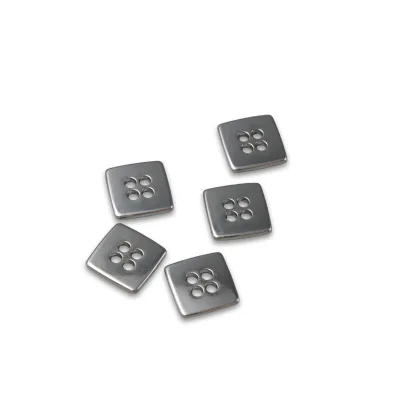


Custom Pattern Logo Zinc Alloy 12mm Press Metal Buttons Garment Snap Buttons
$0.03 - $0.04
MOQ: 10000 Pieces


Custom Pattern Logo Zinc Alloy 12mm Press Metal Buttons Garment Snap Buttons
$0.06 - $0.13
MOQ: 1000 Sets


Zinc Alloy Made Four Parts Button Custom Logo Stamped Gold Metal Snap Press Buttons
$0.03 - $0.04
MOQ: 1000 Pieces

Washable Zinc Alloy Button Making Customized Engraved Logo Coat Snap Press Button
$0.03 - $0.04
MOQ: 1000 Pieces


Comprehensive Sourcing Guide
Strategic Sourcing Guide for Eco-Friendly Textured Zinc Alloy Buttons
Understanding Material Variations and Product Definitions
When initiating a procurement strategy for eco-friendly textured zinc alloy buttons, the buyer must first navigate the complex landscape of material definitions found in current market listings. The term "zinc alloy" is frequently used in B2B contexts to describe metal buttons, yet the supplied product data reveals a significant divergence in material composition across available inventory. While the core keyword specifies zinc alloy, the observed product attributes include listings explicitly categorized as "Plastic," "Resin," and "Metal" without further granularity on the specific alloy composition. This discrepancy necessitates a rigorous verification process where the buyer must confirm that the "Metal" designation specifically refers to zinc alloy rather than other base metals like brass or steel.
The supply chain data indicates that "Resin" buttons are a dominant category, often featuring "Stripes" patterns and "Color Matching" capabilities. These resin options are distinct from the metal-based requirements of the core keyword. However, the presence of "Hanging Plating" as a listed technic suggests that some metal buttons may undergo surface treatments that could align with eco-friendly claims if the plating process adheres to specific environmental standards. The "Eco-Friendly" attribute is explicitly listed for certain square-shaped, silver-colored items, but this attribute is not universally applied across all metal or resin entries. Consequently, the buyer cannot assume that all textured metal buttons in the market are eco-friendly; this must be verified on a per-supplier basis. The distinction between "Vintage" and "Fashion" styles also plays a role, as textured finishes are often associated with vintage aesthetics, but the material composition remains the primary determinant of environmental impact.
Technical Specifications and Dimensional Requirements
Precision in technical specifications is critical when sourcing textured zinc alloy buttons, as the physical dimensions directly impact the functionality and aesthetic of the final garment or accessory. The available data presents a wide range of size specifications, including metric measurements such as "11.5*11.5mm" for square items and a broad spectrum of "L" sizes ranging from 14L to 54L for round variants. These "L" designations typically refer to line measurements, a standard industry convention where one line equals approximately 1/64 of an inch. The observed size range suggests that suppliers offer buttons suitable for diverse applications, from lightweight shirts (smaller sizes) to heavy-duty coats and jackets (larger sizes).
The shape of the buttons is another critical technical variable. The market data shows a coexistence of "Round" and "Square" shapes, alongside "Irregular Shape" patterns. For a textured zinc alloy product, the shape influences the molding or casting process. Round buttons often require a different mold design compared to square or irregular shapes, which can affect the texture depth and uniformity. The "4-Hole Button" and "4-Holes Button" attributes are consistently noted, indicating that the majority of the inventory supports standard sewing applications. However, the presence of "Non Adjustable" attributes in some listings contrasts with "Adjustable" options in others, suggesting that the mounting mechanism or the button's structural integrity may vary. Buyers must ensure that the specific texture and hole configuration match the intended garment construction, particularly for heavy fabrics like denim or wool coats where button strength is paramount.
Compliance, Certification, and Environmental Verification
The "Eco-Friendly" claim attached to certain products requires a deep dive into compliance and certification standards, as this term is often used loosely in the absence of third-party verification. The supplied context lists "CE" as a product standard for specific items, which indicates conformity with health, safety, and environmental protection standards for products sold within the European Economic Area. However, the CE mark alone does not guarantee that the zinc alloy is free from restricted substances or that the manufacturing process is sustainable. The background information mentions "OEKO-TEX," "REACH," "BSCI," "ISO 9001," and "ISO 14001" as potential standards, but these are flagged as low-confidence background data and should not be assumed to apply to specific listings without direct confirmation.
Buyers must actively verify if the "Eco-Friendly" attribute is supported by valid REACH compliance or specific heavy metal restrictions, as zinc alloy buttons can contain lead, cadmium, or nickel if not properly regulated. The "Hanging Plating" technic mentioned in the data introduces a potential environmental concern regarding the chemicals used in the plating process. To ensure true eco-compliance, the procurement team should request test reports confirming that the plating and alloy composition meet the REACH regulation limits for restricted substances. Furthermore, while "ISO 14001" is a recognized standard for environmental management systems, its presence in the background data implies it is not a guaranteed feature of every supplier. Therefore, the buyer must treat the "Eco-Friendly" label as a claim requiring evidence, rather than a default attribute of the product category.
Cost Drivers and Pricing Dynamics
The pricing structure for zinc alloy buttons is influenced by several dynamic factors, including material costs, finishing techniques, and order volume. The observed price range in the market data is extremely narrow, listed as 0 to 0.45 USD. This low range suggests that the majority of the inventory consists of mass-produced, entry-level items where economies of scale significantly drive down the unit cost. However, the "Eco-Friendly" and "Textured" attributes may command a premium over standard, untextured, or non-compliant alternatives, although the provided data does not explicitly quantify this premium. The "Selling Units" are listed as "Single item" for some products, while others imply bulk packaging, which affects the effective unit price.
Material composition is a primary cost driver. Zinc alloy is generally more expensive than plastic or resin, but the cost fluctuates based on global metal prices. The "Hanging Plating" process adds a layer of complexity and cost compared to simple casting or molding. Additionally, the "Customization" availability allows for tailored designs, which can increase costs due to mold creation and setup fees. The "MOQ" (Minimum Order Quantity) ranges from 1 to 20,000, indicating that buyers can source small quantities for sampling or prototyping, but larger orders are required to achieve the lowest price points. The "Stock" status varies, with some items available immediately and others marked as "Not Stock," which can impact lead times and potentially pricing if rush orders are required. Buyers should anticipate that textured, eco-friendly, and customized zinc alloy buttons will likely sit at the higher end of the observed price spectrum, even if the baseline range appears low.
Supplier Evaluation and Operational Capabilities
Evaluating suppliers for zinc alloy buttons requires a focus on their operational capabilities, particularly regarding customization and production flexibility. The data indicates that "Customization" is available, with options for "Logo: as Your Request" and specific "Packing Detail" configurations such as "1gross/Bag" or "1000PCS Per Bag." This flexibility is crucial for brands seeking unique branding and packaging solutions. The "Sample: Free" attribute is a significant positive indicator, allowing buyers to test the quality and texture of the buttons before committing to a large order. However, the "Lead Time" for samples is noted as "7 days sample order lead time: Support," which provides a baseline for planning but may vary for custom metal work.
Geographic origin is another key factor in supplier evaluation. The data consistently points to "Zhejiang" and "Made in China" as the places of origin. Zhejiang is a major manufacturing hub for textiles and accessories, suggesting a mature supply chain with experienced vendors. However, the presence of multiple product models, such as "lemo shirt button 088," "5689," "MS8854," and "ADS0031," indicates a fragmented market with many different manufacturers. Buyers should verify the specific manufacturer behind each model number to ensure consistency in quality and compliance. The "Shipment" options, including "by Air," "by Ship," and "by Train," offer logistical flexibility, but the choice of shipping method will impact the total landed cost and delivery speed. A robust supplier evaluation should include a review of their quality control processes, their ability to meet the "Eco-Friendly" claims with documentation, and their track record for meeting the "7 days" sample lead time.
Quality Control and Long-Term Procurement Strategy
Implementing a rigorous quality control (QC) protocol is essential for sourcing textured zinc alloy buttons, especially when "Eco-Friendly" claims are involved. The QC process should begin with the verification of material composition to ensure the "Metal" designation aligns with zinc alloy specifications and that no prohibited substances are present. The "Weight" of the buttons, listed as "1.1g" for specific items, serves as a useful benchmark for consistency; significant deviations from this weight could indicate issues with casting density or plating thickness. The "Pattern: Irregular Shape" and "Texture" aspects require visual and tactile inspection to ensure the finish is uniform and does not flake or peel, which is a common failure mode for plated metal buttons.
For long-term procurement, buyers should prioritize suppliers who offer consistent "Stock" availability and reliable "Adjustable" or "Non-Adjustable" features as required by the product line. The "Use" cases listed, such as "Shirt," "Jeans," "Coat," "Jacket," "Hat," and "Bags," highlight the versatility of these buttons, but the durability requirements vary significantly across these applications. A button suitable for a shirt may not withstand the stress of a heavy coat. Therefore, the procurement strategy should involve testing buttons under conditions that mimic the final product's usage. Additionally, maintaining a relationship with suppliers who support "Customization" and provide "Free" samples will facilitate continuous product development and adaptation to market trends. By focusing on verified standards, consistent quality, and flexible supply chain partners, buyers can secure a reliable source of high-quality, eco-friendly textured zinc alloy buttons that meet both functional and environmental goals.
FAQs
Can I get free samples for Eco-Friendly Textured Zinc Alloy Buttons?
Free samples are available for many listed products, allowing you to verify texture and quality before ordering. However, some items may be marked as not in stock, which could affect immediate availability. You should confirm the specific model status with the supplier to ensure the sample can be dispatched within the typical seven-day lead time.
What customization options exist for logo and packaging on these buttons?
Suppliers offer logo customization as requested and flexible packing details like one gross per bag or one thousand pieces per bag. You can specify the packing volume to match your demand, but this customization is subject to the supplier's production capacity. Always verify if the requested logo design aligns with the specific button model you select.
Which certifications support the eco-friendly claims for these metal buttons?
Some products list CE as a product standard, indicating conformity with European safety and environmental protections. While the market mentions standards like REACH or ISO 14001, these are not guaranteed for every listing and require direct verification. You must request specific test reports to confirm that the zinc alloy and plating processes meet your eco-friendly compliance requirements.
How do the size specifications vary for round and square buttons?
Round buttons are available in a wide range of L sizes from 14L to 54L, suitable for various garment weights. Square buttons may have specific dimensions like 11.5 by 11.5 millimeters. The size selection depends on the intended use, such as shirts, jeans, or heavy coats, so you must match the dimension to the fabric thickness.
What is the typical price range and minimum order quantity for these buttons?
The observed price range is between zero and 0.45 USD per unit, though this varies by material and customization. Minimum order quantities can range from one piece for sampling up to twenty thousand pieces for bulk production. You should expect lower unit costs for larger orders and verify if the eco-friendly attribute affects the final price point.
Which shipping methods are available for sourcing buttons from Zhejiang?
Suppliers in Zhejiang offer shipping by air, ship, or train to accommodate different logistical needs and urgency levels. The choice of transport method will impact the total landed cost and delivery speed. You should discuss the specific shipment requirements with the vendor to ensure the buttons arrive in time for your production schedule.
Can I find buttons suitable for jackets, hats, and bags in stock?
Many listings indicate usage for jackets, hats, bags, and other apparel, but stock status varies between available and not in stock. You must check the specific inventory level for the desired model number before placing an order. Some items may require production time if they are not currently held in stock.