Source Eco Friendly Tennis Chain for Gifts, Parties, and Promotions
Compare 30 listings of Eco Friendly Tennis Chain necklaces featuring alloy materials and crystal stones. Buyers can evaluate options for parties, promotions, and universal gifting needs with customizable designs from verified suppliers; compare the available evidence and request quotations based on your requirements.
Key considerations
Products List
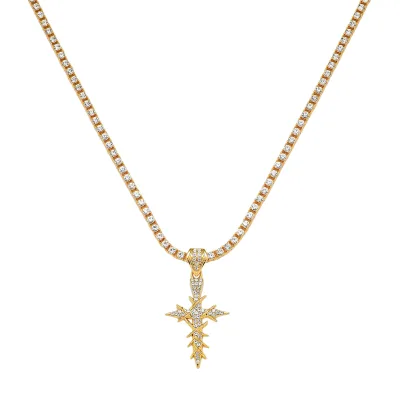


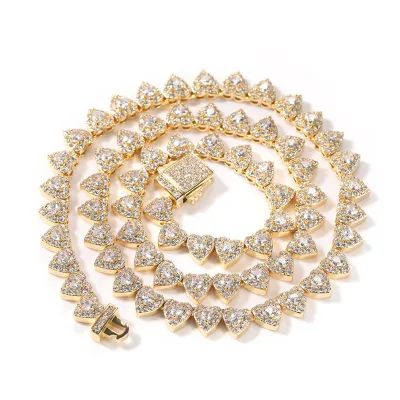


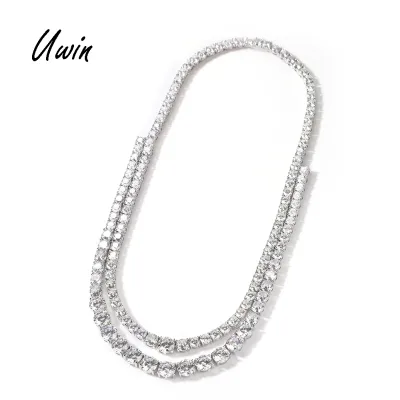


Tennis Chain Moissanite Blue Silver and Gold 3mm - 6mm Custom Gift Praty
$950.00 - $3238.00
MOQ: 1 Pieces


Hot Sale Wholesale Customized Cheapest Gold Bracelet Tennis Chain Bracelet 14K
$279.00 - $287.00
MOQ: 1 Pieces


Fashion Hip Hop Streetware Men Jewelry 3mm Iced out Single Row Tennis Chain
$19.00 - $21.00
MOQ: 30 Pieces


Comprehensive Sourcing Guide
Eco Friendly Tennis Chain Sourcing Guide
Sourcing eco-friendly tennis chains requires distinguishing between marketing claims and verified material attributes, as the observed listings reveal a mix of zinc alloy, stainless steel, and plated options. Buyers must scrutinize the "Eco-Friendly" feature tag against the actual metal composition, noting that while some items are die-cast zinc alloy, others utilize stainless steel, which offers different durability and recycling profiles. The presence of "Third Party Appraisal" certificates suggests a pathway for verification, but procurement teams must confirm that the specific eco-claim applies to the manufacturing process or material sourcing rather than just the final product finish.
Commercial viability depends heavily on the observed price volatility, ranging from $0.10 to over $3,200, which indicates a wide spectrum of product tiers from simple promotional keychains to high-end jewelry. This disparity necessitates a clear definition of the intended application, whether for universal promotional gifts or specific fashion statements, as the "Hiphop" and "Retro" styles observed cater to distinct market segments. Procurement strategies should align the budget with the required plating quality, such as gold or silver plating, and the complexity of the inlay technology, ensuring that cost-saving measures do not compromise the structural integrity of the link chain or the setting of the main stones.
Product Scope and Observed Listing Signals
The product scope for eco-friendly tennis chains encompasses a diverse array of items, including pendant necklaces, keychains, and promotional gifts, all sharing a common aesthetic of link chains and crystal or rhinestone accents. Observed listings highlight specific models like the Tennis Ball Keychain and Metal Racquet Keychain, which utilize abstract or heart-shaped patterns and are often marketed with customization options for logos and branding. This variety allows buyers to source items for different occasions, from parties to general promotions, while maintaining a consistent visual theme of sparkling stones set in claw settings within alloy or steel frames.
Listing signals indicate a strong emphasis on customization, with many suppliers offering OEM services and customized logos to meet specific brand requirements. The "Unisex" and "Female" gender tags suggest that the product line is versatile, though the "New" and "Newu" age descriptors point to a focus on contemporary fashion trends rather than vintage reproduction. Buyers should note that while the "Eco-Friendly" attribute is present, it appears alongside standard industrial processes like die-casting and polished surface treatments, requiring careful validation to ensure the environmental claims align with the actual production methods used for these specific alloy and steel components.
Technical Specifications to Verify
Technical verification must begin with the material composition, as the listings explicitly mention both zinc alloy and stainless steel, which have vastly different environmental footprints and durability characteristics. Buyers should confirm the specific metal type for each order, as the "Eco-Friendly" claim may be more robust for stainless steel due to its recyclability compared to zinc alloy, which often involves more energy-intensive refining processes. Additionally, the plating options, including gold and silver finishes, require scrutiny to ensure they are applied using methods that minimize hazardous waste, a critical factor when the product is marketed as environmentally responsible.
Dimensional and structural specifications are equally critical, with observed data showing lengths of 24 inches and single package sizes of 12.0x10.0x8.0 cm, alongside varying weights around 0.050 kg. The inlay technology, specifically the claw setting, must be verified for its ability to securely hold the crystal or rhinestone main stones without excessive adhesive use, which could undermine eco-claims. Buyers should also validate the "Customized" size and model number capabilities, ensuring that the die-casting process can maintain precision without generating excessive scrap material, thereby supporting the sustainability goals of the procurement initiative.
Compliance and Safety Documentation
Compliance documentation for these products should prioritize the "Third Party Appraisal" certificates observed in the listings, which serve as a baseline for verifying safety and material claims. Procurement teams must request detailed reports from these third-party appraisers to confirm that the jewelry meets international safety standards for heavy metals and chemical content, particularly since the items are intended for direct skin contact and are marketed as "Best" quality. The absence of specific certification names in the provided data means buyers must explicitly ask for the issuing body and the scope of the appraisal to ensure it covers the specific eco-friendly assertions made by the supplier.
Safety documentation must also address the "Customized" nature of the products, as branding and logo application processes can introduce new chemical or physical risks. Buyers should verify that the surface treatment, described as polished, does not involve hazardous solvents or abrasive materials that would contradict the "Eco-Friendly" label. Furthermore, the "OEM" and "Logo" customization options require clear guidelines on the inks or adhesives used, ensuring they are non-toxic and compliant with relevant environmental regulations, thereby protecting the brand from liability and ensuring the product remains safe for the intended "Universal" or "Female" user base.
Cost Drivers and Commercial Terms
Cost drivers for eco-friendly tennis chains are heavily influenced by the choice of metal, plating thickness, and the complexity of the customization process. The observed price range of $0.10 to $3,238 reflects the difference between simple promotional keychains and more elaborate pendant necklaces with high-quality plating and intricate stone settings. Buyers must understand that the "Eco-Friendly" attribute often commands a premium, as sustainable sourcing and manufacturing processes typically incur higher operational costs compared to standard mass-production methods, necessitating a clear budget allocation for these specific value-added features.
Commercial terms should be negotiated with attention to the Minimum Order Quantity (MOQ), which ranges from 1 to 500 units, offering flexibility for both small test orders and large-scale distribution. The "Selling Units" are listed as single items, but bulk pricing structures should be clarified to ensure that the per-unit cost decreases appropriately with volume. Additionally, the "Customized" nature of the products implies that lead times may vary based on the complexity of the logo application and the specific model number selected, requiring precise communication of delivery expectations to avoid supply chain disruptions.
Supplier Qualification and Quality Control
Supplier qualification should focus on verifying the "Third Party Appraisal" credentials and the specific manufacturing capabilities for die-casting and polishing processes. Buyers must ensure that the supplier has a proven track record of maintaining the "Best" quality standard while adhering to the "Eco-Friendly" claims, which may require on-site audits or detailed questionnaires regarding their waste management and material sourcing practices. The presence of "OEM" and "Logo" customization services indicates a mature supply chain, but the buyer must confirm that the supplier can consistently deliver the required specifications for the "Tennis Ball Keychain" and "Metal Racquet Keychain" models without compromising on the structural integrity of the link chains.
Quality control protocols must be rigorous, given the diverse range of materials from zinc alloy to stainless steel and the variety of plating options. Inspections should verify the consistency of the "Claw Setting" for the main stones and the uniformity of the "Polished" surface treatment across all units. Since the products are marketed for "Party" occasions and "Promotion Gifts," the visual appeal and durability of the "Link Chain" are paramount. Buyers should implement a sampling strategy that tests the "Customized" elements for accuracy and the "Eco-Friendly" claims for authenticity, ensuring that the final product meets the high expectations of the target market.
Long-Term Procurement Checks
Long-term procurement checks should include periodic re-verification of the "Eco-Friendly" status and the supplier's adherence to evolving environmental standards. As regulations regarding jewelry materials and manufacturing processes tighten, buyers must ensure that the "Third Party Appraisal" remains current and that the supplier continues to use sustainable practices in their die-casting and surface treatment operations. This proactive approach helps mitigate the risk of supply chain disruptions due to non-compliance and ensures that the brand's reputation for sustainability is maintained over time.
Supply chain resilience also depends on monitoring the stability of the "Customized" production capabilities and the availability of key materials like zinc alloy and stainless steel. Buyers should establish a relationship with the supplier that allows for flexible adjustments to order volumes and specifications, given the observed MOQ range and the potential for model number changes. Regular performance reviews should assess the supplier's ability to meet the "Best" quality standard and deliver on time, ensuring that the "Eco-Friendly Tennis Chain" remains a reliable and profitable component of the product portfolio for years to come.
FAQs
What materials are used in Eco Friendly Tennis Chain products?
Tennis chain products in this category are mainly made from zinc alloy or stainless steel alloy, with some items offering silver plated or gold plated finishes. Crystals and rhinestones are set using claw setting technology. Because material composition varies by model, buyers should confirm the exact metal type and plating for each listing before ordering samples.
Can I customize the pendant letter or logo on a tennis chain?
Yes, customization is available on listed items, including customized logos and OEM production. Many models support customized sizes, and alloy pieces are shaped by die-casting before polishing. Buyers typically provide artwork or a reference design, then confirm the letter shape, plating color, and chain style with the supplier before bulk production begins.
Which chain styles and lengths are offered for these tennis chains?
Listed necklaces are pendant necklaces using a link chain, with a length of 24 inches. Chain options shown include a 4mm tennis chain in gold or silver colorways, and some listings let you buy the pendant only without a chain. Always confirm chain width, length, and clasp details for the specific model you intend to order.
How should I choose between gold plated and silver plated tennis chains?
Choose based on your target customer and price point. Gold plated finishes suit hiphop and retro styling, while silver plated versions appeal to unisex and everyday looks. Both platings are applied over alloy materials, so durability depends on plating thickness and wear conditions. Request samples of each finish and test color retention before committing to bulk quantities.
What packaging do single tennis chain units ship in?
Single items are sold as one selling unit with a package size of 12.0 by 10.0 by 8.0 centimeters and a single gross weight of 0.050 kilograms. This compact packaging suits retail-ready shipments and promotion gift use. Confirm whether retail boxes, poly bags, or custom logo packaging are included, since packaging details can differ between models and suppliers.
What is the typical MOQ range for eco friendly tennis chains?
Observed MOQ values in this category range from 1 to 500 pieces, so low-quantity trial orders are often possible. Small MOQs help you test designs, plating colors, and letter pendant styles before scaling up. However, MOQ depends on the specific model, customization level, and supplier capacity, so request exact MOQ terms in writing for each item you shortlist.
Can these tennis chains be used for promotion gifts and party occasions?
Yes, listed usage includes promotion gifts, and occasions include party wear, making them suitable for event giveaways, branded merchandising, and retail. Keychain variants such as tennis ball keychains are explicitly positioned for promotion gifts. Eco-friendly and polished surface treatments are listed features. Confirm customization lead times early if you need branded items delivered before a specific event or campaign date.
How can I verify the quality of a tennis chain before bulk ordering?
Listed products reference third party appraisal as the certificate type, so ask suppliers for appraisal documentation covering plating and materials. Then order samples to check claw setting tightness, link chain strength, polish quality, and plating color consistency. Comparing samples across several suppliers, including those in Zhejiang and Guangdong, China, helps you identify which vendor meets your quality expectations.