Source Eco-Friendly XPE Floating Mat for Pools, Lakes, and Beaches
Compare 23 eco-friendly XPE floating mat options from verified suppliers. Buyers can review dimensions, weight capacity, and customization features for water park and outdoor applications.
Key considerations
Products List

$33.00 - $135.00
MOQ: 1 Pieces


$33.00 - $135.00
MOQ: 1 Pieces


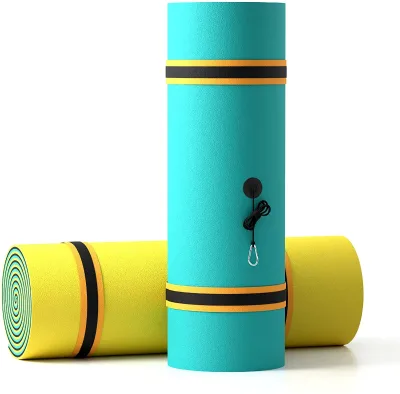
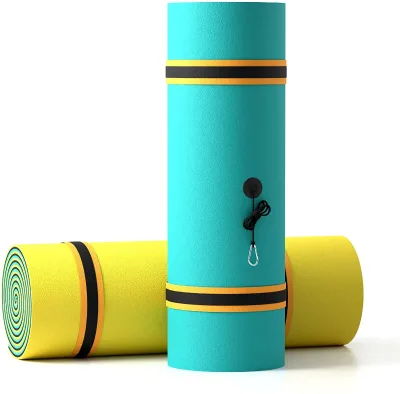
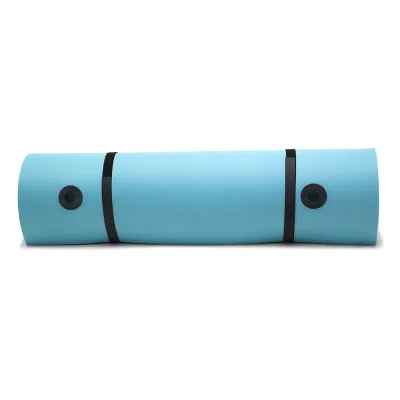
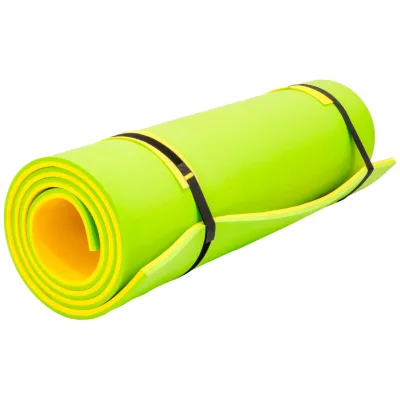
XPE Water Relax Float Mat for Ultimate Outdoor Entertainment and Relaxation
$0.60 - $1.00
MOQ: 30 Pieces
Comprehensive Sourcing Guide
Strategic Sourcing Guide for Eco-Friendly XPE Floating Mats
The global demand for sustainable aquatic recreation equipment has elevated the profile of XPE (Crosslinked Polyethylene) floating mats as a premier choice for commercial and recreational buyers. These mats offer a unique combination of buoyancy, durability, and environmental responsibility, making them essential for water parks, amusement centers, and private aquatic facilities. Sourcing these products requires a disciplined approach to verify material integrity, confirm certification claims, and align technical specifications with operational needs. This guide provides a comprehensive framework for procurement professionals evaluating eco-friendly XPE floating mats, ensuring decisions are grounded in verified product attributes and industry standards rather than marketing assertions.
Understanding Material Composition and Physical Properties
The foundation of a reliable XPE floating mat lies in its cellular structure and material composition. Unlike traditional open-cell foams that absorb water and degrade over time, XPE is characterized by a closed-cell structure. This architectural feature is critical for performance, as it ensures zero water absorption. When sourcing, buyers must verify that the product explicitly states "Closed Cells" and "0% Water Absorption" as core attributes. This property prevents the mat from becoming waterlogged, which would otherwise compromise buoyancy and increase the risk of mold or bacterial growth.
The material itself is identified as "Eco-Friendly," a designation that should be scrutinized against the supplier's specific manufacturing processes. In the context of XPE, this typically implies the use of non-toxic, recyclable materials that do not release harmful off-gassing. The density of the foam is a primary indicator of quality and load-bearing capacity. Observed market data indicates a density range of 33kg/M3 to 35kg/Square for these products. A higher density generally correlates with greater durability and resistance to compression, which is vital for high-traffic areas. Buyers should request specific density test results to ensure the product meets the required 35kg/Square specification for heavy-duty applications.
Hardness is another critical physical parameter. The Shore C hardness for these mats typically ranges between 15 and 25. This range provides a balance between comfort and structural integrity, allowing the mat to flex under pressure without bottoming out. Tensile strength, measured in kilopascals (kPa), is equally important for longevity. The observed tensile strength range of 160-450kPa suggests a robust material capable of withstanding significant stress during use. Procurement teams must ensure that the specific batch of mats being purchased falls within these verified numerical ranges to guarantee safety and performance.
Technical Specifications and Dimensional Customization
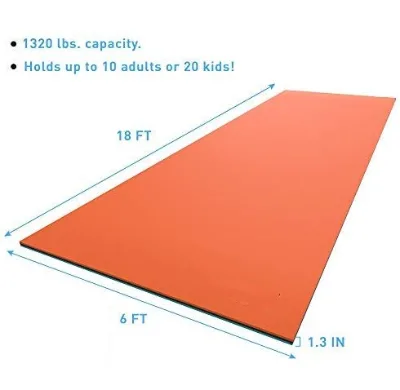
One of the most significant advantages of sourcing XPE floating mats is the availability of extensive customization options. The product line supports "Customized" dimensions, allowing buyers to tailor the mats to specific pool layouts or vessel requirements. Standard sizes observed in the market include dimensions such as 260603.3cm, 270903.3cm, and larger configurations like 5501853.3cm. The thickness of these mats is consistently noted at 3.3cm or 4cm, with the 4cm variant offering enhanced buoyancy for heavier loads.
Buyers should evaluate the available size options against their intended application. For instance, a smaller mat of 2001003.3cm might be suitable for individual lounging, while a massive 5501853.3cm unit could serve as a communal platform. The "OEM" (Original Equipment Manufacturer) standard allows for further tailoring of the product model, such as the KP-FM01 designation, to match specific branding or functional requirements. It is essential to verify that the "Dimension" attribute aligns with the "Customized Water Mat" description provided by the supplier.
The weight capacity of these mats is a decisive factor in procurement. Verified data indicates a maximum capacity of 500kg, supporting up to 10 people. This capacity is derived from the "Strong Buoyancy" attribute and the "Closed Cells" structure. However, buyers must distinguish between the theoretical maximum capacity and the recommended safe load, especially when considering dynamic forces like jumping or splashing. The "Lightweight" nature of the mat, combined with its "Convenient" carryability, makes it ideal for facilities that require frequent reconfiguration or storage.
Compliance, Certification, and Safety Standards
Navigating the regulatory landscape for aquatic equipment is paramount for risk management. The primary certification observed for these products is ISOCE, which suggests adherence to international quality and safety management systems. Additionally, the product documentation references a "CE" certification, indicating compliance with European safety, health, and environmental protection standards. While the "Allowable Passenger" limit is sometimes linked to certification data, buyers must treat these claims as observations that require independent verification rather than absolute guarantees.
When evaluating compliance, procurement teams should look for explicit documentation regarding the "Eco-Friendly" claim. This often involves checking for material safety data sheets (MSDS) that confirm the absence of harmful substances like phthalates or heavy metals. The "UV Resistant" attribute is another critical compliance factor, particularly for outdoor applications. Mats exposed to direct sunlight must be verified to resist degradation from ultraviolet radiation, ensuring that the color remains stable and the material does not become brittle over time.
The "Condition" of the product is listed as "New," which is a standard expectation but should be confirmed in the contract to avoid receiving refurbished or damaged goods. Furthermore, the "Standard" attribute is noted as "XPE" or "OEM," which serves as a baseline for material quality. Buyers should request a certificate of analysis for each batch to confirm that the "Closed Cells" structure and "0% Water Absorption" claims are met through third-party testing. Without such verification, the "Top Quality" designation remains an unproven assertion.
Cost Drivers and Economic Considerations
The pricing of eco-friendly XPE floating mats is influenced by several variables, including material density, customization complexity, and order volume. The observed price range in the market spans from $0.6 to $135 USD, reflecting the vast difference between small, standard-sized units and large, custom-engineered platforms. The minimum order quantity (MOQ) typically ranges from 1 to 30 units, offering flexibility for both small businesses and large-scale operators.
Material costs are a primary driver of the final price. The use of "Eco-Friendly" XPE foam, which often involves more expensive raw materials and processing techniques compared to standard polyethylene, contributes to the higher end of the price spectrum. Customization, such as specific dimensions or color schemes (e.g., Yellow, Green, Blue, Orange), adds to the production complexity and cost. Buyers should anticipate that "Customized" orders will carry a premium over standard "Solid Color" or pre-defined options.
Packaging is another cost factor to consider. The standard "Carton" or "Carton Box" packaging ensures safe transport but adds to the overall weight and shipping volume. For international procurement, the "prod_origin" of China is a common source, which may influence logistics costs and lead times. Buyers should calculate the total landed cost, including shipping, duties, and insurance, rather than focusing solely on the unit price. Understanding the relationship between density, size, and price is essential for budgeting, as larger, denser mats will naturally command higher prices.
Typical Applications and Operational Use Cases
The versatility of XPE floating mats makes them suitable for a wide array of applications. The "Application" attribute specifies "Outdoor / on Water," highlighting their primary use in aquatic environments. They are explicitly designed for "Amusement Park" settings, where durability and safety are non-negotiable. The "Suitable for" attribute lists "Unisex, Women, Men, Girls, Boys," indicating that these mats are appropriate for all demographic groups, making them ideal for family-oriented venues.
In water parks, these mats serve as floating loungers, exercise platforms, or safety barriers. Their "Waterproof" feature and "Strong Buoyancy" ensure they remain functional even in rough water conditions. The "Colourful" and "Solid Color" options allow for aesthetic customization to match the branding of the facility. For commercial operators, the "Convenient" carry and "Lightweight" nature of the mats facilitate easy storage and deployment, reducing labor costs associated with maintenance.
The "Type" of product is categorized as "Water Park" or "Other Swimming Supplies," suggesting broad applicability beyond just amusement parks. They can be used in hotels, resorts, private pools, and even for emergency flotation training. The "Floating Mat" description underscores their primary function, but the "XPE Foam Floating Mat" designation highlights the specific material technology that differentiates them from traditional inflatable or rubber alternatives. Buyers should assess their specific operational needs to determine if the 500kg capacity and 10-person limit align with their expected foot traffic and usage patterns.
Supplier Evaluation and Quality Control Protocols
Selecting the right supplier is critical to ensuring the longevity and safety of the floating mats. Buyers should prioritize suppliers who provide transparent documentation regarding the "ISOCE" certification and "CE" compliance. The "prod_packing" method, whether "Carton" or "Carton Box," should be evaluated for its ability to protect the product during transit, especially given the "Lightweight" nature of the mats which can be susceptible to compression damage.
Quality control should focus on verifying the "Closed Cells" structure and "0% Water Absorption" claims. Buyers can request samples for independent testing to confirm the density (33-35kg/Square) and Shore C hardness (15-25). The "Tensile" strength of 160-450kPa should also be validated to ensure the material can withstand the stresses of commercial use. Additionally, the "UV Resistant" property must be tested to confirm that the mats will not degrade under prolonged sun exposure.
When evaluating suppliers, look for those who offer "Customized" solutions and have a track record of delivering "Top Quality" products. The "prod_model" and "prod_standard" should be clearly defined in the contract to avoid ambiguity. Suppliers should be willing to provide detailed specifications for each size option, from the 260603.3cm variant to the 5501853.3cm platform. Transparency regarding the "prod_origin" and the manufacturing process is essential for verifying the "Eco-Friendly" claims.
Long-Term Procurement and Lifecycle Management
Investing in eco-friendly XPE floating mats is a long-term strategy that requires careful lifecycle management. The "New" condition of the product at delivery is just the starting point; buyers must plan for maintenance and eventual replacement. The "Waterproof" and "UV Resistant" attributes contribute to a longer lifespan, but regular inspections are necessary to detect signs of wear, such as surface abrasion or loss of buoyancy.
Procurement teams should establish a schedule for checking the "Weight Capacity" and structural integrity of the mats. Over time, even high-quality XPE foam may experience slight compression, which could affect the "Strong Buoyancy" performance. Buyers should maintain a stock of spare mats to ensure continuous operation in case of damage or loss. The "Customized" nature of the product means that replacement parts or new orders may need to be aligned with the original specifications to maintain consistency across the facility.
Sustainability is a key consideration for long-term procurement. The "Eco-Friendly" material should be evaluated for its end-of-life options. While XPE is recyclable, buyers should inquire about the supplier's take-back programs or recycling partnerships. This aligns with the broader goals of environmental responsibility and can enhance the facility's reputation. By focusing on verified specifications, robust quality control, and transparent supplier relationships, buyers can ensure that their investment in XPE floating mats delivers value and safety for years to come.
FAQs
What certification does the eco-friendly xpe floating mat have?
The product holds ISOCE certification for quality and safety management. It also references CE compliance for European standards, though independent verification is recommended for specific batches to ensure the closed-cell structure and zero water absorption claims are met.
How much weight can the eco-friendly xpe floating mat support?
The mat supports a maximum capacity of 500kg, accommodating up to ten people. This load limit relies on its strong buoyancy and closed-cell foam structure, which prevents water absorption and maintains stability during use in outdoor or water park environments.
Can I order customized dimensions for the eco-friendly xpe floating mat?
Yes, customized dimensions are available to fit specific pool layouts or vessel requirements. Buyers can select from standard sizes like 260 by 60 cm or request OEM models, with thickness options ranging from 3.3 cm to 4 cm for enhanced buoyancy.
What is the minimum order quantity for the eco-friendly xpe floating mat?
The minimum order quantity ranges from one to thirty units depending on the supplier. This flexibility allows small businesses to test the product while larger operators can place bulk orders, with pricing varying significantly based on the selected size and customization level.
Which material properties ensure the eco-friendly xpe floating mat is durable?
The mat features closed cells with zero water absorption and a density between 33 and 35 kg per square meter. Its tensile strength ranges from 160 to 450 kPa, and it includes UV resistance to prevent degradation from prolonged sun exposure in outdoor applications.
How is the eco-friendly xpe floating mat packaged for shipping?
The product is packaged in carton boxes to ensure safe transport and protection against compression damage. This packaging method is standard for the lightweight mats, though buyers should verify the specific packing details to prevent issues during international shipping from China.
What colors are available for the eco-friendly xpe floating mat?
Standard options include solid colors such as yellow, green, blue, and orange. Customized color schemes are also available to match facility branding, ensuring the colorful mats meet the aesthetic requirements of amusement parks, water parks, or private aquatic facilities.