Source electric ground multi-joint robot for Handling Palletizing Loading
Find 30 electric ground multi-joint robot units with varying payload capacities and degrees of freedom. Buyers can compare specifications like 180kg maximum portable weight, 0.05mm position repetition accuracy, and 4-axis configurations for industrial applications.
Key considerations
Products List


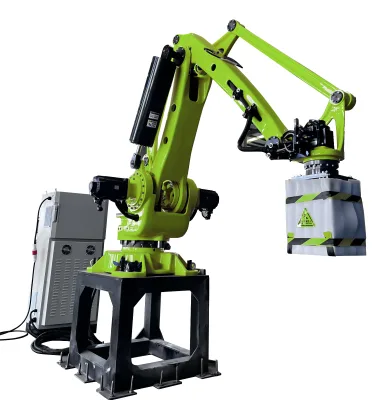
Jointed Arm Robots, Horizontal Joint Manipulators, and Multi-joint Palletizing Equipment.
$24066.85 - $24578.92
MOQ: 1 sets


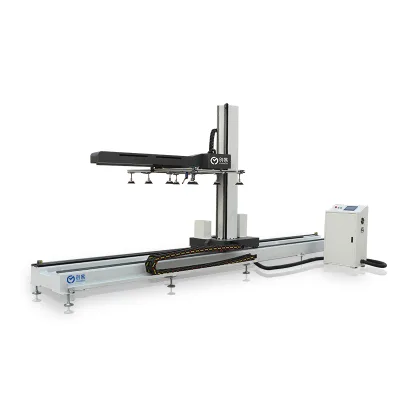


Comprehensive Sourcing Guide
Strategic Sourcing Guide for Electric Ground Multi-Joint Robots
Understanding the Technical Architecture and Operational Capabilities
When evaluating electric ground multi-joint robots, specifically those categorized as column robots or vertical joint systems, buyers must first scrutinize the fundamental mechanical and control architectures. The observed market data indicates a prevalence of 4-axis configurations, often described as "Vertical Joint 4 Degrees" or "Vertical Joint 4 Degrees of Freedom." This specific architecture is critical for applications requiring precise vertical reach and rotational stability. The drive mode for these units is consistently electric, distinguishing them from hydraulic or pneumatic alternatives and offering cleaner operation suitable for indoor environments.
A key technical differentiator is the control mode. High-performance units in this category utilize Continuous Path Control, which allows the robot to move smoothly along a defined trajectory rather than point-to-point. This capability is essential for complex tasks such as welding, painting, or intricate assembly lines where path continuity affects product quality. The payload capacity varies significantly across the product range. Some units are engineered for heavy-duty handling with a maximum portable weight of up to 180kg, while others are optimized for lighter, high-precision tasks with a payload capacity of 30kg. Buyers must align the robot's payload rating with their specific application requirements, noting that the "Maximum Portable Weight" often refers to the end-effector capacity rather than the total arm weight.
The power requirements are another vital specification. The observed voltage configurations include both 220V and 380V electrical equipment, necessitating careful verification of the facility's power infrastructure. Power consumption figures, such as 16.7kW, and power capacity ratings like 11kVA, serve as benchmarks for energy budgeting and electrical load planning. Furthermore, the working radius is a defining geometric constraint; specifications indicate a working radius of 1800mm for certain models, which dictates the physical footprint and reach envelope within the production cell. Position repetition accuracy is a critical metric for quality assurance, with observed data suggesting a precision of 0.05mm for high-end units. This level of accuracy is indispensable for applications demanding tight tolerances, such as precision assembly or micro-manufacturing.
Compliance Verification and Certification Standards
In the global B2B procurement landscape, verifying compliance with international standards is non-negotiable. The supplied product data highlights a strong emphasis on certification, with ISO 9001:2000 and CE marking appearing as frequent attributes. These certifications indicate that the manufacturing processes adhere to specific quality management systems and that the equipment meets European safety, health, and environmental protection requirements. However, buyers must treat these as observations of specific listings rather than universal guarantees for every unit in the market.
The "Certification" field often lists "ISO" and "CE" together, suggesting a dual compliance approach. While ISO 9001:2000 is explicitly mentioned, general references to ISO9001 and ISO14001 appear in background contexts. It is imperative for the buyer to request current, valid certificates from the supplier rather than relying on generic marketing claims. The "Standard" field also references CE, reinforcing the safety compliance aspect. For buyers operating in regions with strict regulatory environments, verifying that the specific model's CE certification covers the intended application and voltage configuration is essential.
Additionally, the "Production Scope" is noted as "Product Line," implying that the manufacturer may offer a range of compliant models. Buyers should ensure that the specific model number, such as "JL" or "KW1180M-3200," is covered under the cited certifications. The "Automatic Grade" is listed as "Full-Automatic," which often triggers specific regulatory requirements regarding machine safety and operator protection. Ensuring that the robot's control system and safety interlocks meet the relevant regional standards is a prerequisite for safe deployment.
Cost Drivers and Pricing Structure Analysis
The financial landscape for sourcing electric ground multi-joint robots is characterized by a wide variance in pricing, with observed listed prices ranging from $3,300 to $999,999 USD. This broad spectrum reflects differences in payload capacity, precision, brand reputation, and the complexity of the control systems. The lower end of the range likely corresponds to entry-level models with standard specifications, while the upper end encompasses high-performance units with advanced features, heavy payloads, or custom configurations.
Several factors drive these costs. The "Automatic Production Line" attribute, described as "Comprehensive," suggests that the robot is part of a larger, integrated system, which can significantly increase the total cost of ownership. The "Flexible Production" capability, labeled as "Intelligent Manufacturing," implies the inclusion of sophisticated software and connectivity features that add value but also cost. The "Single gross weight" of 600.000 kg for certain units indicates substantial material usage and shipping costs, which are often factored into the final price.
Buyers must also consider the "Selling Units," which are listed as "Single item," meaning the quoted price typically covers the robot unit itself. However, additional costs for installation, integration, and training may not be included in the base price. The "Warranty" terms, such as "Overseas Services" and a "1 Year" warranty on core components, influence the long-term cost structure. A longer warranty or more comprehensive service coverage often correlates with a higher initial purchase price but reduces long-term operational risk. The "Marketing Type" is noted as "Ordinary Product," which may suggest that these are standard off-the-shelf items rather than highly customized solutions, potentially offering more predictable pricing.
Typical Applications and Operational Scenarios
The versatility of electric ground multi-joint robots makes them suitable for a diverse array of industrial applications. The "Main Purpose" is explicitly defined as "Handling, Palletizing, Loading and Unload," indicating their primary role in material movement and logistics. The "Application" field lists "Load," reinforcing their utility in lifting and transporting heavy objects. With a maximum portable weight of 180kg, these robots are ideal for heavy palletizing tasks, machine tending, and assembly line loading.
For applications requiring higher precision, the 0.05mm position repetition accuracy makes these units suitable for tasks such as precision assembly, inspection, and delicate material placement. The "Installation Method" is specified as "Ground," which is the standard configuration for heavy-duty robots that require a stable base to handle significant payloads and moments. This ground-mounted design is particularly effective in environments where floor space is available and stability is paramount.
The "Production Scope" of "Product Line" suggests that these robots can be integrated into various stages of manufacturing. Whether for a comprehensive automatic production line or a flexible intelligent manufacturing cell, the 4-axis vertical joint design provides the necessary reach and dexterity. The "Continuous Path Control" mode further expands their utility to applications requiring smooth, continuous motion, such as welding, dispensing, or surface finishing. Buyers should assess their specific workflow requirements against the robot's payload, reach, and accuracy specifications to ensure a suitable match.
Supplier Evaluation and Vendor Selection Criteria
Selecting the right supplier is as critical as selecting the right robot. The "Place of Origin" is listed as "Taiwan, China" and "China," indicating a concentration of manufacturing in these regions. While this provides access to a robust supply chain, buyers must conduct thorough due diligence to ensure the supplier's reliability and quality consistency. The "Showroom Location" in Thailand suggests that some suppliers have a regional presence, which can facilitate local demonstrations and after-sales support.
Key evaluation criteria should include the supplier's ability to provide "After-Sales Service" and "After-sales Service: Yes." The availability of "Overseas Services" is a significant advantage for international buyers, ensuring that technical support and maintenance are accessible regardless of location. The "Customization" attribute being "Available" indicates that suppliers are willing to tailor the robot to specific needs, which is a valuable capability for unique production requirements.
Buyers should verify the "Production Capacity," listed as 1000, to ensure the supplier can meet demand without significant delays. The "Condition" of the product is listed as "New," but buyers should confirm the manufacturing date and storage conditions to avoid purchasing refurbished or aged inventory. The "Single package size" of 270X150X120 cm and "prod_packing" details (such as "Wood" or "Wood Case") are important for logistics planning. A reputable supplier will provide clear packaging specifications to ensure safe transit.
Quality Control and Long-Term Procurement Considerations
Quality control extends beyond the initial purchase and into the long-term operational lifecycle of the robot. The "Warranty of core components" is specified as "1 Year," which sets a baseline for the manufacturer's confidence in their product. However, buyers should investigate the terms of this warranty, including what constitutes a "core component" and the process for claims. The "After-Sales Service" provision is a critical factor in maintaining operational uptime. A supplier that offers proactive maintenance and rapid response times adds significant value.
Long-term procurement considerations also involve the "Automatic Grade" of "Full-Automatic." This implies a high level of integration and reliance on the robot's performance. Buyers should plan for regular maintenance schedules and potential software updates to ensure the robot continues to meet performance standards. The "Power Capacity" and "Voltage" specifications must be monitored to prevent electrical issues that could damage the robot or the facility.
The "Single gross weight" of 600.000 kg highlights the need for robust foundation and installation planning. Proper installation is essential for maintaining the robot's accuracy and longevity. Buyers should verify that the installation site meets the structural requirements for the robot's weight and operational forces. Additionally, the "Condition: New" status should be confirmed upon delivery to ensure the robot has not been compromised during transit or storage.
Final Procurement Strategy and Risk Mitigation
To mitigate risks in the procurement of electric ground multi-joint robots, buyers should adopt a structured approach that prioritizes verification and due diligence. The wide price range and varying specifications necessitate a clear definition of requirements before engaging with suppliers. Buyers should request detailed technical datasheets that confirm the "Degrees of Freedom," "Payload Capacity," and "Position Repetition Accuracy" for the specific model of interest.
Verification of certifications such as ISO 9001:2000 and CE should be a mandatory step, with requests for valid, up-to-date documentation. The "Customization" option should be leveraged if the standard models do not fully meet the application needs. Buyers should also evaluate the supplier's "After-Sales Service" capabilities, ensuring that support is available in the buyer's region.
Finally, the "Production Scope" and "Automatic Production Line" attributes suggest that the robot is part of a larger ecosystem. Buyers should consider the compatibility of the robot with existing systems and the potential for future expansion. By focusing on these critical factors, buyers can make informed decisions that balance cost, performance, and long-term reliability, ensuring a successful integration of electric ground multi-joint robots into their operations.
Comparative Analysis of Key Specifications
| Specification | Observation A | Observation B | Observation C |
|---|---|---|---|
| Model | JL | KW1180M-3200 | KW1030D-1800 |
| Degrees of Freedom | 4-axis | Vertical Joint 4 Degrees | Vertical Joint 4 Degrees of Freedom |
| Max Portable Weight | 180kg | 30kg | 220kg (Standard) |
| Payload Capacity | N/A | 30 kg | N/A |
| Working Radius | N/A | N/A | 1800mm |
| Position Accuracy | N/A | 0.05mm | N/A |
| Voltage | 220V / 380V | N/A | N/A |
| Power | 16.7kw | N/A | N/A |
| Certification | ISO 9001:2000, CE | ISO, CE | ISO |
| Warranty | Overseas Services | 1 Year (Core) | N/A |
| Origin | China | Taiwan, China | N/A |
This table summarizes the diverse specifications found in the market data. It highlights that while the core architecture (4-axis, electric drive) is consistent, the specific capabilities vary widely. Buyers must use this data to filter options based on their specific operational needs, ensuring that the selected robot aligns with their payload, precision, and integration requirements. The variation in origin and certification also underscores the importance of supplier verification.
FAQs
What certifications do these robots hold?
The robots hold ISO 9001:2000 and CE certifications. These indicate adherence to quality management systems and European safety standards, though buyers should verify specific model coverage.
How much payload can the robot lift?
Payload capacity varies by model, with options reaching up to 180kg or 30kg. Buyers must select a unit matching their specific handling requirements to ensure safe operation.
Can the robot be customized for my needs?
Customization is available for these electric ground multi-joint robots. Suppliers offer tailored solutions, allowing buyers to adapt the product line to specific production workflows.
What is the warranty period for core components?
The warranty for core components is 1 year. This baseline coverage applies to critical parts, with overseas services often provided for international buyers requiring long-term support.
Which voltage configurations are supported?
The equipment supports 220V and 380V electrical configurations. Buyers must verify their facility's power infrastructure matches these voltage requirements before installation and operation.
How accurate is the robot's positioning?
Position repetition accuracy reaches 0.05mm for high-end units. This precision is essential for tasks requiring tight tolerances, such as micro-manufacturing or delicate assembly operations.
Where are these robots manufactured?
The place of origin is listed as China and Taiwan, China. Buyers should confirm the specific manufacturing location to assess supply chain reliability and shipping logistics.