Source Foldable Lightweight Rollator Walker for Home, Travel, and Rehab
Explore 30 verified options for the Foldable Lightweight Rollator Walker designed for indoor and outdoor mobility support. Buyers can compare specifications like weight, wheel structure, and folding mechanisms to find the ideal assistive device for home use, travel, or rehabilitation settings.
Key considerations
Products List


Height-Adjustable 4-Wheel Rollator Lightweight Aluminum, Foldable Design with Seat
$85.58 - $91.78
MOQ: 30 Pieces


Lightweight Manual Walker Rollator with Sturdy Seat Design for Elderly
$150.00 - $200.00
MOQ: 1 Pieces

Lightweight Manual Walker Rollator with Sturdy Seat Design Mobility Aids
$150.00 - $200.00
MOQ: 1 Pieces


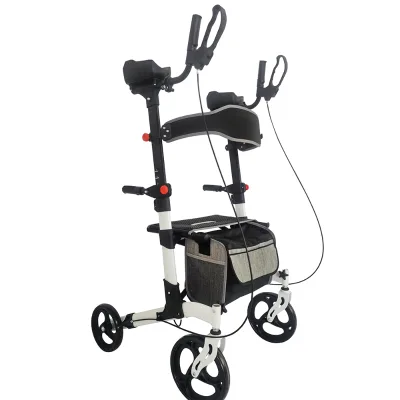

Mobility Aids Lightweight Folding Rollator Walker with Seat for The Disabled
$35.00 - $37.00
MOQ: 100 Pieces

Four Wheel Rollator Rolling Walker with Fold up Removable Back Support
$43.00 - $45.00
MOQ: 100 Pieces


Comprehensive Sourcing Guide
Foldable Lightweight Rollator Walker Sourcing Guide
Procuring a Foldable Lightweight Rollator Walker requires balancing portability with structural integrity, as these devices serve as critical mobility aids for adults who need support while maintaining independence. The core appeal of this category lies in its ability to collapse for easy storage in vehicles or small living spaces, making it ideal for both indoor and outdoor use. Buyers must prioritize models that offer a stable four-wheel structure to ensure safety during ambulation, while also considering two-wheel variants for users who require more compact storage solutions. The observed market includes products with varying weights, ranging from ultra-light 0.5kg frames to heavier 9.7kg units, each serving different user needs regarding durability versus ease of transport.
When evaluating listings, it is essential to distinguish between basic folding frames and more complex rollators equipped with seats, brakes, and adjustable heights. The data indicates a wide range of specifications, including total heights from 80cm to over 120cm, which necessitates careful matching to the end-user’s physical dimensions. Buyers should verify whether the product includes a seat rest, as some models like the WA-4814 are listed without lights or additional features, while others like the TWA965LHF1 offer comprehensive dimensions and load capacities up to 136kg. Understanding these variations helps in selecting the right balance of features for specific patient profiles or retail demographics.
Product Scope and Observed Listing Signals
The current market landscape for foldable lightweight rollators shows significant variation in material composition and design philosophy, primarily centered around aluminum alloys for their optimal strength-to-weight ratio. Listings reveal products with distinct structural configurations, such as the WA-4813 and WA-4807 models, which emphasize specific height adjustments and folding mechanisms. Buyers should note that while some units are marketed as "customized," others are standard non-customized items, indicating that OEM opportunities exist for brands seeking tailored branding or minor design tweaks. The presence of color options like silver suggests a focus on aesthetic neutrality, which is often preferred in medical and assistive device markets to reduce stigma and ensure broad appeal.
Packaging and origin data provide further insight into the supply chain dynamics, with products originating from key manufacturing hubs like Zhejiang and Guangdong in China. The observed packing methods range from individual PE polybags to sturdy cartons, with dimensions such as 80x41x41cm indicating efficient logistics planning for bulk shipments. These packaging details are crucial for calculating landed costs and storage requirements, as improper packing can lead to damage during transit. Additionally, the weight variations, from 1.05kg to 12kg gross weight, highlight the importance of verifying net versus gross weights to ensure accurate freight calculations and compliance with airline or shipping regulations for portable medical equipment.
Technical Specifications to Verify
Technical verification must begin with dimensional accuracy, as improper fit can lead to user discomfort or injury. Buyers should confirm critical measurements such as overall width, length, and height, ensuring they align with the intended user’s anthropometrics. For instance, models like the TWA9202 specify an overall width of 67cm and a seat height of 55cm, which are vital for ensuring proper posture and ease of transfer from the walker to a chair. The adjustable height ranges, such as 89x36x23 cm for certain models, allow for customization but require clear instructions for end-users to set the device correctly. Verifying these specifications against user requirements prevents returns and enhances customer satisfaction in both B2B and B2C channels.
Load capacity and wheel configuration are equally critical technical factors that determine the walker’s suitability for different environments. The observed data includes a loading capacity of 136kg, which is a key selling point for heavier users or those requiring robust support. Buyers must also assess the wheel drive principle, with four-wheel structures offering greater stability compared to two-wheel alternatives. Front wheel diameter, such as the 10-inch option noted in some listings, affects maneuverability and terrain adaptability. Ensuring that the structural integrity matches the stated load capacity is essential, as failures in this area can lead to serious safety liabilities and brand damage.
Compliance and Safety Documentation
Compliance with international standards is non-negotiable for medical mobility devices, and buyers must verify that suppliers hold valid certifications such as CE, RoHS, and ISO. These certifications indicate that the product meets specific safety, environmental, and quality management requirements, which are often mandated by regulatory bodies in target markets. The presence of UL certification in some listings suggests adherence to additional safety standards, particularly relevant for products with electronic components or those sold in regions with strict electrical safety laws. Buyers should request copies of these certificates and verify their authenticity with the issuing bodies to ensure they are current and applicable to the specific product model being sourced.
Beyond certifications, documentation regarding material safety and manufacturing standards is crucial for risk mitigation. Products made from aluminum alloys must comply with relevant material safety regulations to ensure they are free from harmful substances, aligning with RoHS directives. Buyers should also inquire about the testing protocols used to validate load capacity and durability, as these tests provide evidence of the product’s reliability under stress. Understanding the regulatory type, such as whether the device is classified as a non-tilted medical device, helps in navigating import regulations and labeling requirements. Proper documentation not only facilitates customs clearance but also builds trust with healthcare providers and end-users who prioritize safety and compliance.
Cost Drivers and Commercial Terms
Cost structures for foldable lightweight rollators are influenced by material choices, manufacturing complexity, and order volume. Aluminum alloys, while more expensive than steel, offer significant weight savings, which can be a key differentiator in the market. Buyers should analyze the price range of 0.01 to 1250 USD to understand the spectrum from basic components to fully assembled units with premium features. The minimum order quantity (MOQ) ranges from 1 to 300 units, providing flexibility for small businesses and large distributors alike. Understanding these commercial terms helps in negotiating favorable pricing and securing inventory that matches demand forecasts without overstocking.
Packaging and logistics costs also play a significant role in the total landed cost of these products. The observed packing methods, from simple polybags to complex cartons, affect both protection and shipping efficiency. Buyers should consider the carton dimensions, such as 804041cm, when planning warehouse storage and transportation. Additionally, the weight of the product, ranging from 0.5kg to 12kg, impacts freight charges, especially for air shipments where weight is a primary cost driver. Negotiating clear terms regarding packaging standards and shipping responsibilities can help control costs and ensure that the final product arrives in optimal condition, ready for distribution or sale.
Supplier Qualification and Quality Control
Supplier qualification is a critical step in ensuring the reliability and consistency of the supply chain for foldable lightweight rollators. Buyers should assess suppliers based on their production capabilities, quality management systems, and track record in the medical device industry. Factories located in Zhejiang and Guangdong, China, are known for their manufacturing expertise, but buyers must verify their ability to maintain consistent quality across batches. This includes checking for ISO certification and other quality management standards that demonstrate a commitment to process control and continuous improvement. Engaging with suppliers who have a proven history of exporting to your target market can reduce risks associated with regulatory compliance and cultural communication barriers.
Quality control measures should be implemented at various stages of production, from raw material inspection to final product testing. Buyers should establish clear acceptance criteria for dimensions, weight, load capacity, and finish quality. Implementing pre-shipment inspections can help identify defects before the goods leave the factory, reducing the risk of receiving substandard products. Additionally, suppliers should provide detailed product descriptions and specifications, such as the model numbers WA-4814 and TWA965LHF1, to ensure accurate ordering and fulfillment. Building a strong relationship with the supplier through regular communication and feedback can lead to better collaboration and improved product quality over time.
Long-Term Procurement Checks
Long-term procurement success depends on continuous monitoring of product performance and supplier reliability. Buyers should establish a feedback loop with end-users to gather insights on the durability, comfort, and functionality of the rollators in real-world conditions. This feedback can inform future purchasing decisions and help identify areas for product improvement. Regularly reviewing supplier performance metrics, such as on-time delivery rates and defect rates, ensures that the supply chain remains efficient and responsive to market changes. Maintaining open lines of communication with suppliers allows for proactive problem-solving and fosters a partnership that can adapt to evolving customer needs and regulatory requirements.
Additionally, buyers should stay informed about changes in industry standards and regulations that may impact the sourcing of medical mobility devices. Keeping abreast of new certification requirements or material restrictions ensures ongoing compliance and avoids potential disruptions in the supply chain. Periodic audits of supplier facilities and quality control processes can help maintain high standards and identify potential risks before they become issues. By adopting a strategic approach to procurement that emphasizes quality, compliance, and supplier collaboration, buyers can build a resilient supply chain that supports long-term business growth and customer satisfaction in the competitive medical device market.
FAQs
What certifications are available for these walkers?
CE, RoHS, UL, and ISO certifications are available for these products. Some models specifically hold CE and ISO marks. These credentials ensure compliance with international safety and quality standards for medical devices and mobility aids.
Can I customize the design of the rollator?
Yes, customization is available for many models. Buyers can request specific features or modifications to suit particular needs. Non-customized options are also offered for standard requirements. This flexibility allows for tailored procurement solutions.
What is the typical weight of a foldable walker?
Weights vary by model, ranging from 0.5kg to 9.7kg net. Lighter aluminum alloy versions weigh around 0.5kg to 2.8kg. Heavier four-wheel models may reach 9.7kg. This range supports both ultra-portable and heavy-duty use cases.
Where are these products manufactured?
Products originate from China, specifically Zhejiang and Guangdong provinces. These regions are known for manufacturing mobility aids. Buyers can source directly from these locations to leverage established supply chains and production capabilities for global distribution.
What is the maximum loading capacity?
The loading capacity is up to 136kg for specific models. This limit ensures safety for adult users. Buyers should verify the exact capacity for each model, as weights and structures vary. This supports reliable daily use for various body types.
How are the products packed for shipping?
Packing includes color boxes, PE polybags, and cartons. Specific models use 1 PCS/PE Polybag or Carton packaging. Carton dimensions vary, such as 80x41x41cm. This ensures safe transit and efficient storage for international logistics and bulk orders.