Source Electric Scalp Healthcare Head Massager for Home, Spa, Office
Compare 30 Electric Scalp Healthcare Head Massager options featuring vibration, pressure, and kneading methods. These devices support home, spa, and office use with customizable designs and various power supplies.
Key considerations
Products List


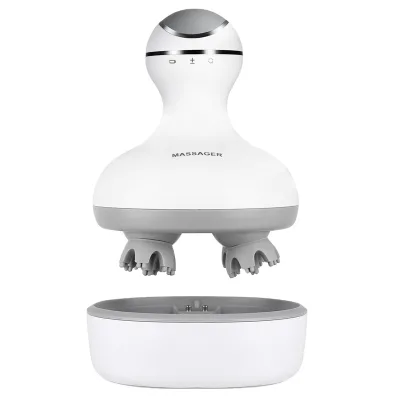
Portable Electric Scalp Head Massager Scalp Stress Relax Handheld Head Massager
$15.00 - $15.99
MOQ: 20 Pieces


Electric Head Massager Comfortable Head Scalp Massage Device with Relaxing Function
$15.00 - $15.99
MOQ: 20 Pieces


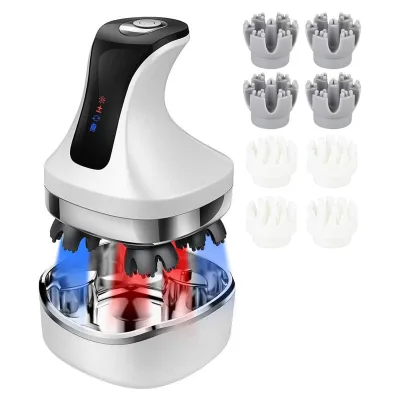
New Trending Electric Waterproof Handheld Head Vibration Head Scalp Massager
$15.00 - $15.99
MOQ: 20 Pieces


Wholesale Cordless Waterproof Electric Scalp Massager Portable Head Massager
$18.00 - $19.00
MOQ: 100 Pieces


Comprehensive Sourcing Guide
Strategic Sourcing Guide for Electric Scalp Healthcare Head Massagers
The global demand for personal wellness devices has driven a significant expansion in the Electric Scalp Healthcare Head Massager market. For B2B procurement professionals, navigating this sector requires a disciplined approach that distinguishes between verified product attributes and generic marketing claims. This guide synthesizes observed market data and technical specifications to provide a framework for sourcing reliable units. Buyers must prioritize verification of functional mechanisms, material composition, and supply chain transparency to mitigate risks associated with product inconsistency and regulatory non-compliance.
Technical Architecture and Functional Mechanisms
The core functionality of electric scalp massagers relies on specific mechanical principles that differentiate them from simple vibration devices. Market observations indicate a divergence in operational principles, with some units utilizing Vibration while others employ Pressure mechanisms. Advanced models often integrate multiple methods, including Kneading, Vibration, and Air Pressure, to simulate manual massage techniques. The power source is predominantly Electric, with specific units operating at 5V voltage, often facilitated through USB connectivity or Battery power supplies.
Material composition is a critical technical differentiator. The supply chain data reveals the use of ABS (Acrylonitrile Butadiene Styrene) and PP (Polypropylene) plastics, often combined with Silicone Materials for the contact points to ensure user comfort and durability. The design type frequently falls under Robotic Massager categories, suggesting automated, multi-axis movement capabilities. When evaluating technical specifications, buyers should verify the prod_model identifiers, such as 111, k116, 116, BME 01, BME-SM1, SSM Head Massager, and JT-T02, as these codes often correlate with specific functional configurations and component tolerances.
Compliance, Certification, and Regulatory Standards
Regulatory compliance is non-negotiable for B2B procurement, particularly when importing consumer electronics. The observed market data explicitly lists ISO and CE certifications as available attributes for certain product lines. These certifications indicate adherence to international safety and quality management standards. However, buyers must exercise caution; the presence of a certification label on a product page does not guarantee that every unit in a shipment possesses valid, traceable documentation.
The prod_standard field in the supply data provides mixed signals regarding physical dimensions versus material standards. Some entries list dimensions like 120mm x 120mm x 95mm or 130110150MM under the standard category, which likely refers to packaging or product form factors rather than industry safety standards. While ISO9001 is a recognized background standard for quality management systems, it should not be assumed as a product-specific attribute unless explicitly verified by the supplier. Procurement teams must request current, valid certificates from the manufacturer for the specific batch being ordered, ensuring that the CE mark corresponds to the relevant Low Voltage Directive and EMC directives applicable to the destination market.
Cost Drivers and Pricing Dynamics
The pricing landscape for electric scalp massagers exhibits significant variance, with observed listed prices ranging from 0.38 USD to 29 USD. This wide disparity suggests a market segmented by quality tiers, feature sets, and brand positioning. The lower end of the spectrum likely corresponds to basic Vibration units with simple ABS construction, while the higher price points may reflect complex Robotic Massager designs with Air Pressure capabilities and premium Silicone components.
Several factors drive these costs. The Power consumption, noted as 5W for some units, influences the cost of internal circuitry and battery capacity. The Customization availability is a major cost variable; suppliers offering OEM&ODM services will charge premiums for branding, packaging design, and specific functional modifications. Additionally, the MOQ (Minimum Order Quantity) ranges from 1 to 500, directly impacting the unit economics. Bulk orders typically reduce the per-unit cost, but the initial investment must be weighed against the Warranty terms, which are observed to be 1 Year for certain models. Buyers should analyze the total cost of ownership, including potential returns and the cost of replacing defective units, rather than focusing solely on the initial purchase price.
Packaging Specifications and Logistics Considerations
Logistics planning requires precise attention to packaging dimensions and weight, as these directly affect shipping costs and storage efficiency. The data presents a variety of packaging configurations. Some units are packed in Gift Box formats, while others utilize Standard Packing or specific carton configurations like 1PC/Carton.
Specific dimensional data points include a Package Size of 13312878 mm and an Outer Box Size of 13.5X13X8 Cm. However, other entries list significantly larger dimensions, such as 12.310.59.5cm or 130110150MM, indicating that packaging varies drastically by model. Weight data further complicates logistics planning. Observed Net Weight/Gross Weight figures include 13.7/14.7kg for bulk shipments, while individual unit weights are listed as 470g or 409g/640g (Net/Gross). The Packing Number is also critical; one observed configuration lists 24PCS per carton, while another specifies 1PC/Carton. Procurement teams must reconcile these conflicting data points by requesting the specific prod_packing details for the exact model number they intend to order to avoid miscalculating freight charges and warehouse space requirements.
Supplier Evaluation and Operational Capabilities
Evaluating suppliers requires a focus on their geographic origin and production capabilities. The supply data identifies Shenzhen, China and Jiangsu as key production hubs, with a general origin listed as China. Shenzhen is renowned for its electronics manufacturing ecosystem, while Jiangsu often hosts large-scale plastic and appliance production facilities.
Buyers should verify the supplier's ability to handle OEM&ODM requests, as this indicates flexibility in product development. The availability of Customization is a strong indicator of a mature supplier capable of adapting to specific market needs. When assessing operational capacity, the prod_model diversity (ranging from BME 01 to JT-T02) suggests that some suppliers offer a broad portfolio, while others may specialize in specific niches. It is essential to confirm that the supplier can maintain consistent quality across different model lines, as the variation in Material (from Plastics to ABS+Silicone) implies different manufacturing processes and quality control checkpoints.
Quality Control Protocols and Performance Verification
Quality control in this sector must address both mechanical reliability and material safety. The Application scope for these devices is broad, covering Home, SPA, and Office environments, which necessitates robust durability testing. The Design Type being classified as a Robotic Massager implies complex moving parts that are prone to wear and tear.
Buyers should implement a rigorous QC protocol that includes:
- Material Verification: Confirming that the ABS and Silicone materials meet the stated prod_standard and are free from harmful substances.
- Functional Testing: Verifying that the Principle of operation (whether Vibration or Pressure) functions smoothly without excessive noise or overheating.
- Electrical Safety: Ensuring the 5V power supply and USB interfaces are safe and compliant with the destination country's electrical standards.
- Packaging Integrity: Checking that the Net Weight and Gross Weight match the shipping documents to prevent damage during transit.
Given the 1 Year Warranty observed in the market, suppliers should have a clear process for handling returns and repairs. Buyers must clarify the terms of this warranty, including whether it covers manufacturing defects only or also covers normal wear and tear.
Long-Term Procurement and Market Sustainability
Sourcing electric scalp massagers is not merely a transactional exercise but a strategic partnership. The Style of these products is categorized as Leisure, indicating a consumer-driven market that is sensitive to trends and design aesthetics. Long-term success depends on the supplier's ability to innovate and adapt to changing consumer preferences.
The Function attributes, such as Music, Timing, and Body Healthcare Massager, suggest that future product iterations may integrate smart features or connectivity. Buyers should evaluate the supplier's R&D capabilities to ensure they can support product evolution. Furthermore, the Color options, such as White, and the Application settings (Home, SPA, Office) indicate a need for versatile product lines that can serve multiple market segments.
In conclusion, successful procurement of electric scalp healthcare head massagers requires a meticulous review of technical specifications, a rigorous verification of certifications like ISO and CE, and a deep understanding of the cost drivers and logistics constraints. By focusing on verified data points and maintaining a skeptical approach to unverified claims, B2B buyers can build a resilient supply chain that delivers high-quality products to their customers. The diversity in prod_model and Material composition offers ample opportunity for differentiation, provided that the buyer conducts thorough due diligence on each specific product line.
FAQs
What power sources do electric scalp massagers use?
These devices primarily use electric power, often operating at 5V via USB or battery supply. Some models feature specific power ratings like 5W, while others rely on battery operation for portability in home or office settings.
Which materials are used in these massagers?
Manufacturers commonly use ABS plastic, PP plastic, and silicone materials for construction. The combination of ABS and silicone ensures durability and user comfort, while some units are simply categorized as plastics for general housing.
Can buyers request customization for these products?
Yes, customization is available for many models, including OEM and ODM services. Suppliers can adapt packaging, branding, and specific functional features like music or timing to meet distinct buyer requirements and market needs.
What certifications are available for these devices?
Certain product lines hold ISO and CE certifications to ensure safety and quality compliance. Buyers should verify that these certificates apply to the specific batch ordered, as they indicate adherence to international standards for electrical devices.
How are these massagers packaged for shipping?
Packaging varies by model, ranging from gift boxes to standard cartons with specific dimensions like 133*128*78 mm. Bulk shipments may contain 24 pieces per carton, while individual units often have net weights around 409g to 470g.
What are the typical MOQ values for orders?
Minimum Order Quantities typically range from 1 to 500 units depending on the supplier and customization level. Lower MOQs allow for smaller trial orders, while higher volumes may secure better pricing for bulk procurement needs.
Where are these products manufactured?
Production origins are primarily located in China, with specific hubs in Shenzhen and Jiangsu. Shenzhen is known for electronics manufacturing, while Jiangsu hosts facilities for plastic and appliance production, ensuring diverse supply chain options.