Source electric self-priming peripheral water pump for irrigation, drainage, and booster systems
Compare 30 listings of electric self-priming peripheral water pump options featuring cast iron bodies and vortex impellers. Buyers can evaluate models with varying head capacities from 30 to 110 meters and flow rates suitable for clarified water applications.
Key considerations
Products List


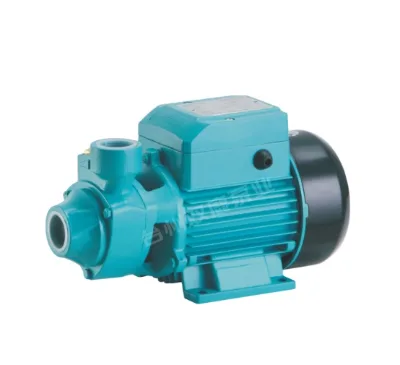


Electric Vertical Self Priming Centrifugal Water Pump with API Certificate
$1000.00 - $10000.00
MOQ: 1 Pieces


Electric Vertical Self Priming Centrifugal Water Pump with ISO Certificate
$1000.00 - $10000.00
MOQ: 1 Pieces


Electric Motor Horizontal Self-Priming Centrifugal Water Pump for Water Supply
$3000.00 - $9000.00
MOQ: 1 Pieces
Comprehensive Sourcing Guide
Strategic Sourcing Guide for Electric Self-Priming Peripheral Water Pumps
Understanding the Technical Architecture and Performance Parameters
When sourcing an electric self-priming peripheral water pump, buyers must first distinguish the specific hydraulic theory and mechanical construction that defines the unit's operational envelope. The core keyword implies a pump capable of handling air-water mixtures to initiate flow without external priming, a feature critical for applications where the pump is installed above the water source. Based on observed product attributes, the market offers units grounded in the "Vortex Pump" theory, which utilizes a specific impeller design to generate the necessary pressure differential for self-priming. The impeller itself is frequently observed in a "Vortex Type" configuration, often constructed from brass to ensure corrosion resistance and durability in water handling applications.
The structural integrity of these pumps is a primary consideration. The pump body is predominantly manufactured from cast iron, providing the robustness required for industrial and agricultural environments. In contrast, the motor body is often constructed from aluminum, offering a balance of weight reduction and heat dissipation. The assembly type is typically identified as a "Single-stage Pump," which simplifies the internal mechanics and reduces potential failure points compared to multi-stage configurations. However, buyers should also be aware of variations where the assembly is classified as a "Booster Pump" or a "Liquid Pump," indicating different intended pressure profiles.
Performance metrics vary significantly across the supply base. Observed data indicates a wide range in maximum head capabilities, with specific models rated between 30-50 meters, others between 50-80 meters, and high-performance units reaching 80-110 meters. Similarly, the maximum capacity is not uniform; listings show capacities ranging from less than 50 liters per minute for compact desktop units to over 400 liters per minute for heavy-duty industrial models. The power source is consistently electric, with voltage options spanning 110V, 220V, 230V, and 380V to accommodate global electrical standards. Frequency is typically standardized at 50Hz or 60Hz. Buyers must verify that the specific model's head and capacity align with their system's hydraulic requirements, as the "Self-Priming" capability does not guarantee performance across all flow rates.
Compliance, Certification, and Regulatory Standards
Navigating the regulatory landscape is essential for B2B procurement to ensure market access and operational safety. The supplied product data highlights "ISO" as a recurring certification standard, suggesting that many manufacturers adhere to international management or quality standards. While some background information mentions "Ce" certification, this should be treated as a background observation rather than a guaranteed attribute for every listed unit. Buyers must explicitly request valid, current certification documents for the specific batch or model they intend to purchase, rather than relying on general category claims.
The production standards also vary. Some listings reference specific power ratings as a standard, such as 0.25kW to 0.75kW, while others list "different" standards, indicating a lack of uniformity across the supplier base. This variability necessitates a rigorous verification process where the buyer confirms the specific standard applicable to the unit's power rating and performance. The origin of the products is frequently cited as China, with specific manufacturing hubs noted in Wenling and Wenzhou. While these locations are known industrial centers, the specific origin must be confirmed on the purchase order to ensure compliance with any trade agreements or country-of-origin labeling requirements.
Furthermore, the material composition plays a role in compliance. The use of cast iron for the pump body and brass for the impeller is standard, but the stator wire in electromagnetic variants may be copper or aluminum. Buyers should verify that the materials used meet the specific environmental and safety regulations of their destination market, particularly regarding lead content in brass components or electrical safety standards for the motor windings. The absence of a universal standard across all listings means that "ISO" certification should be treated as a baseline requirement that must be validated for each supplier engagement.
Cost Drivers and Pricing Structure Analysis
The pricing for electric self-priming peripheral water pumps is influenced by a complex interplay of technical specifications, material costs, and customization options. The observed price range in the market is extensive, spanning from $11.50 to $10,000 USD. This vast disparity is not merely a reflection of brand premium but is driven by fundamental differences in capacity, head pressure, and material quality. A unit with a capacity of less than 50 L/min and a head of 30-50 meters will naturally fall at the lower end of this spectrum, whereas a high-capacity unit exceeding 400 L/min with a head of 80-110 meters will command a significantly higher price.
Material costs are a primary driver. The transition from standard cast iron to specialized alloys or the use of brass impellers versus other materials directly impacts the manufacturing cost. Additionally, the motor construction is a critical cost factor. Units with aluminum motor bodies may differ in price from those with alternative materials, and the inclusion of specific wire types (copper vs. aluminum stator wire) affects the final cost. Customization is a significant variable; the market data confirms that customization is available, and buyers who require specific colors, packaging, or performance modifications should expect a premium. The "OEM" color option and "Customized" packaging indicate that bespoke requests are common and will influence the final quote.
Minimum Order Quantity (MOQ) also plays a role in the effective unit cost. The observed MOQ range is 1 to 500 units. Buyers purchasing single units or small batches will face a higher per-unit price due to the lack of economies of scale. Conversely, orders approaching the 500-unit threshold may benefit from reduced pricing, provided the supplier has the capacity to handle such volume. Lead times and packaging requirements, such as the choice between "Carton" and "Wood Case" packing, can further influence the total landed cost. A wood case, while more expensive, offers superior protection for heavy-duty pumps during international shipping, adding to the overall procurement budget.
Typical Applications and Industry Use Cases
The versatility of electric self-priming peripheral water pumps allows them to serve a diverse array of industries, from residential irrigation to heavy industrial processing. The primary application identified is "Clarified Water Pump," suggesting suitability for water treatment facilities where clean water needs to be moved efficiently. The "Self-Priming Pump" classification makes these units ideal for irrigation systems where the pump is located above the water source, eliminating the need for complex priming mechanisms. This is particularly valuable in agricultural settings where reliability and ease of installation are paramount.
In the domestic and commercial sectors, these pumps are often utilized as "Booster Pumps" to increase water pressure in multi-story buildings or facilities with low municipal pressure. The "Desktop" type and "Clean Water Pump" attributes indicate a niche for smaller, indoor applications where space is limited and noise levels must be managed. The "Electric Pump" designation confirms their suitability for areas with reliable electricity, while the "Motor Pump" classification highlights their integration into larger mechanical systems.
Industrial applications are equally significant. The "Mechanical Pump" and "Wear Pump" attributes suggest durability in environments where the pump may be subjected to abrasive conditions or continuous operation. The ability to handle "Water" as the pressure medium is standard, but the specific design variations, such as the "Vortex Type" impeller, make them suitable for handling water with minor debris or air entrainment. Buyers should match the pump's specific capacity and head range to their application; for instance, a system requiring 100-200 L/min would require a different model than one needing over 400 L/min. Understanding the specific industry context is crucial for selecting the right unit, as a pump designed for irrigation may not be optimized for industrial chemical transfer or high-pressure cleaning.
Supplier Evaluation and Verification Protocols
Evaluating suppliers for electric self-priming peripheral water pumps requires a disciplined approach to verify claims against observed data. The market shows multiple origins, including Wenling and Wenzhou, but buyers must not assume all suppliers from these regions offer identical quality. The first step in evaluation is to request detailed technical datasheets that confirm the specific model number, such as "1ZBD35," "ZX," or "PKSm60," and verify that the stated specifications match the actual product. The presence of "Customization" options is a positive indicator of a flexible supplier, but it also requires clear communication to ensure the final product meets the buyer's exact requirements.
Certification verification is paramount. While "ISO" is listed as a standard, buyers must demand proof of current certification for the specific production batch. Relying on general category claims is insufficient; the supplier must provide valid certificates that cover the specific manufacturing processes and quality control measures used. Additionally, the "Standard" attribute varies, with some units adhering to specific power ratings and others listed as "different." Buyers should insist on a clear definition of the standard applicable to their order to avoid ambiguity.
The supplier's ability to handle packaging and logistics is another critical factor. The observed packing options include "Carton" and "Wood Case." A supplier offering wood case packing for heavy-duty units demonstrates an understanding of international shipping requirements and product protection. Buyers should also inquire about the supplier's experience with the specific voltage and frequency requirements of their target market. The availability of 110V, 220V, 230V, and 380V options is a strong indicator of a supplier's capability to serve global markets, but the buyer must confirm that the specific unit ordered matches their local electrical infrastructure.
Quality Control and Long-Term Procurement Considerations
Ensuring long-term reliability requires a robust quality control strategy that extends beyond the initial purchase. The "Wear Pump" and "Mechanical Pump" attributes suggest that these units are designed for durability, but the actual performance depends on the quality of the cast iron pump body and the brass impeller. Buyers should implement incoming quality inspections that verify the material composition and dimensional accuracy of the components. The "Cable" length, observed at 30cm in some listings, is a specific detail that must be checked to ensure compatibility with the installation site's electrical setup.
Maintenance and spare parts availability are critical for long-term procurement. The "Single-stage Pump" design simplifies maintenance, but the availability of replacement impellers, seals, and motor components must be confirmed with the supplier. The "Automatic Pump" performance attribute indicates that some units may include control systems, which adds complexity to the maintenance requirements. Buyers should request a comprehensive maintenance manual and a list of recommended spare parts before finalizing the order.
The "Customized" nature of the product line means that buyers must maintain clear documentation of all specifications, including color, packaging, and performance parameters. Any deviation from the agreed-upon specifications can lead to operational issues. Furthermore, the "OEM" color option and "Customized" packaging suggest that branding and presentation are important to many buyers. Ensuring that the supplier can consistently reproduce these customizations is essential for maintaining brand identity and customer satisfaction. Finally, buyers should establish a clear communication channel with the supplier for any post-sales support, warranty claims, or technical assistance, ensuring that the long-term relationship is built on trust and reliability.
FAQs
What materials are used for the pump body and impeller?
The pump body is made of cast iron while the impeller is constructed from brass. This combination ensures durability and corrosion resistance for handling water applications effectively.
Which voltage options are available for these electric pumps?
These pumps support multiple voltage options including 110V, 220V, 230V, and 380V. Buyers must verify the specific voltage requirement matches their local electrical infrastructure before ordering.
Can the pump be customized for specific packaging needs?
Yes, customization is available for packaging and other product attributes. Options include carton or wood case packing, allowing buyers to select the best protection for their shipping requirements.
What is the maximum head range for these water pumps?
Maximum head ranges vary from 30 to 110 meters depending on the specific model. Buyers should select a unit with a head rating that matches their system's hydraulic pressure requirements.
How does the pump theory enable self-priming capability?
The pump utilizes vortex theory with a vortex type impeller to generate necessary pressure for self-priming. This design allows the unit to handle air-water mixtures without external priming assistance.
What is the minimum order quantity for these pumps?
The minimum order quantity ranges from 1 to 500 units depending on the supplier. Smaller orders may incur higher per-unit costs compared to bulk purchases approaching the maximum threshold.