Source Electronic Load Luggage Abrasion Tester for Testing, Quality, and Compliance
Compare 30 Electronic Load Luggage Abrasion Tester models from verified Chinese manufacturers. Buyers can evaluate specifications like voltage, weight capacity, and control methods to find the right testing machine for luggage durability assessment.
Key considerations
Products List
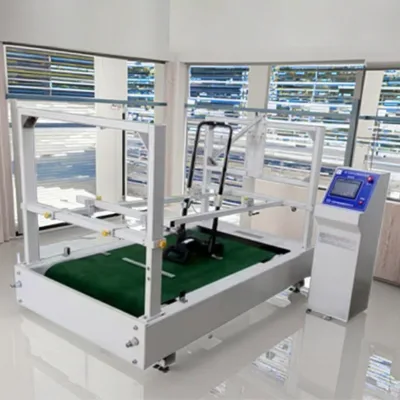
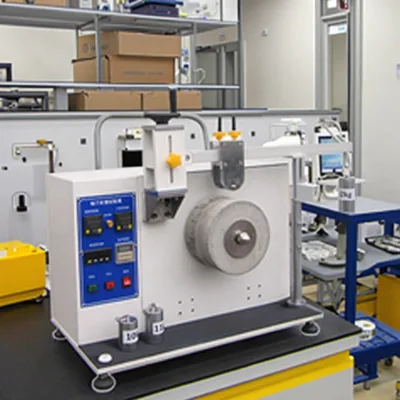


Luggage Wheel Abrasion Test Machine Suitcase Wheel Wear Resistance Tester
$1790.00 - $2490.00
MOQ: 1 Pieces


Luggage Rod Reciprocating Fatigue Testing Machine Suitcase Luggage Pull Rod Fatigue Tester
$1990.00 - $2690.00
MOQ: 1 Pieces
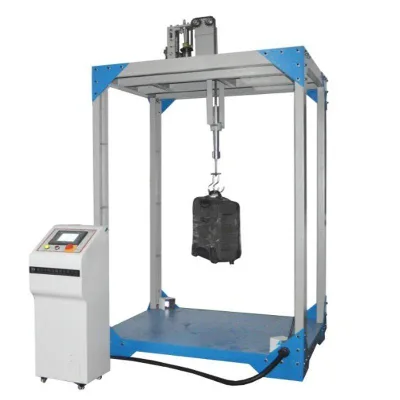
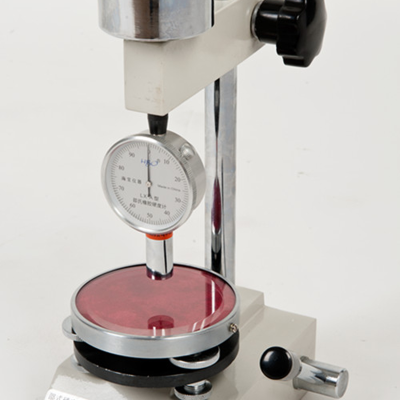
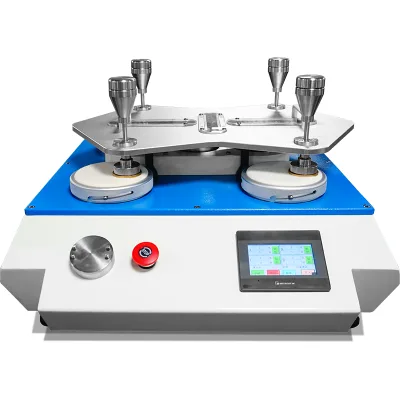


Luggage Handle Testing Machine, Luggage Handle Jerk Vibration Impact Tester Price
$1000.00 - $10000.00
MOQ: 1 Pieces

Luggage Walking Bump Abrasion Test Instrument Luggage Walking Bump Test Machine
$3000.00 - $5500.00
MOQ: 1 Pieces


Comprehensive Sourcing Guide
Strategic Sourcing Guide for Electronic Load Luggage Abrasion Testers
The global demand for durable travel gear has elevated the importance of rigorous quality assurance in the luggage manufacturing sector. Buyers seeking an Electronic Load Luggage Abrasion Tester are looking for equipment capable of simulating real-world wear and tear with high precision. This guide provides a comprehensive framework for sourcing such specialized testing machinery, focusing on the technical realities, compliance requirements, and procurement strategies derived from current market data. The objective is to equip procurement professionals with the knowledge to evaluate suppliers and specifications without relying on unverified claims or generic marketing assertions.
Technical Specifications and Operational Capabilities
When evaluating an Electronic Load Luggage Abrasion Tester, the primary focus must be on the machine's ability to replicate dynamic stress conditions accurately. The core functionality of these devices often centers on a dynamic load mechanism that applies specific forces to luggage wheels and bodies. Based on available market data, these machines frequently operate on an AC220V power supply, which is standard for industrial equipment in many regions, though buyers must verify local voltage compatibility. The control systems have evolved significantly, with modern units often featuring PLC (Programmable Logic Controller) integration and 7-inch LCD screens for intuitive operation. This digital interface allows for precise adjustment of test parameters, such as speed and load duration.
Speed variability is a critical specification for abrasion testing. The equipment should support adjustable test speeds, typically ranging from 0 to 5 kilometers per hour, to simulate various walking or rolling scenarios. The loading method is another decisive factor; electronic load systems offer superior consistency compared to manual or gravity-based systems. The weight of the workpiece, which represents the luggage being tested, is a key constraint. Sourcing data indicates that capable machines can handle workpieces with a mass scope ranging from under 900 kilograms to specific models designed for loads between 1000 and 2000 kilograms. Buyers must match the machine's capacity to their specific product line, ensuring the equipment can accommodate the heaviest luggage they intend to certify.
Furthermore, the physical dimensions of the testing apparatus are essential for facility planning. Single package sizes for these machines vary significantly depending on the model and complexity. For instance, some units may have dimensions around 173x71x150 cm, while more compact or specialized models might measure 67x55x58 cm. The gross weight of the equipment itself is substantial, with observed ranges spanning from 50 kg to 100 kg for smaller units, and heavier industrial models weighing significantly more. Understanding these logistical constraints is vital for warehouse planning and installation.
Compliance Standards and Certification Verification
In the realm of testing equipment, compliance is not merely a formality but a prerequisite for market acceptance. Buyers must approach certification with a disciplined verification strategy. While industry standards such as ISO 4649 and ASTM D5963 are frequently referenced in the context of rubber and tire testing, which often correlates with luggage wheel durability, these specific standards should not be assumed to be automatically met by every listed product. Instead, procurement teams must request explicit documentation proving that the specific model under consideration has been validated against relevant international or national standards.
The protection class of the machine is another critical compliance metric. An IP67 rating, indicating complete protection against dust and temporary immersion in water, is a high standard observed in certain industrial testing environments. However, this attribute should be verified on a per-unit basis, as not all models in a supplier's catalog may share this rating. Additionally, the accuracy grade of the machine is paramount for generating reliable data. High-precision models often feature computer control systems that ensure the test load is applied with minimal deviation. Buyers should demand calibration certificates and traceability records to confirm that the machine's readings align with the required accuracy grades.
Cost Drivers and Pricing Structure Analysis
The pricing landscape for electronic load luggage abrasion testers is characterized by a wide variance, reflecting differences in technology, capacity, and customization. Market observations indicate a price range spanning from approximately 99 USD to 13,500 USD. This broad spectrum suggests that the cost is heavily influenced by the complexity of the control system, the maximum load capacity, and the inclusion of advanced features like digital displays and PLC integration. Lower-priced units may offer basic functionality suitable for internal quality checks, while higher-priced models likely provide advanced data logging, higher precision, and robust construction for third-party certification labs.
The Minimum Order Quantity (MOQ) is another factor affecting the total cost of acquisition. In the current market, many suppliers offer an MOQ of 1 unit, allowing buyers to purchase single items without the pressure of bulk inventory. This flexibility is advantageous for small to medium-sized enterprises or testing labs that require specific configurations without over-investing in stock. However, buyers should be aware that customization options, such as OEM branding or specific graphic designs like hot stamping and screen printing, may incur additional costs or longer lead times. The "Selling Units" are typically listed as single items, reinforcing the trend toward flexible purchasing.
Typical Applications and Industry Use Cases
The primary application of an Electronic Load Luggage Abrasion Tester is to validate the durability of luggage wheels, handles, and structural integrity under repeated stress. These machines are indispensable for manufacturers aiming to ensure their products can withstand the rigors of global travel. The dynamic load capability allows for the simulation of rolling over various surfaces, testing the resilience of the wheel bearings and the housing material. The adjustable speed feature enables the testing of different usage patterns, from slow dragging to rapid rolling, providing a comprehensive profile of the luggage's performance.
Beyond wheel testing, these machines are often used to evaluate the overall structural strength of the luggage body. By applying specific loads and oscillations, manufacturers can identify potential failure points before the product reaches the consumer. The ability to test workpieces with masses up to 1000 kg or more ensures that even heavy-duty travel cases and commercial-grade trolleys can be subjected to rigorous scrutiny. The inclusion of specific test load bars, such as those with lengths of 610mm, and cement rollers with diameters of 196mm, suggests that the equipment is designed to simulate specific, standardized wear patterns found in airport environments and public transport systems.
Supplier Evaluation and Vendor Selection Criteria
Selecting the right supplier requires a thorough evaluation of their technical capabilities and production history. Buyers should prioritize suppliers who demonstrate transparency regarding their product origins. Data indicates that many of these machines originate from specific manufacturing hubs, such as Hunan, China. While the location itself is not a quality guarantee, it provides context for the supply chain and potential logistics costs. Suppliers should be able to provide clear documentation regarding the "Product Name" and "Model Number," such as the GA-8003 or HY-553B, to ensure traceability.
Customization support is a significant differentiator among suppliers. The availability of OEM, ODM, and OBM services indicates a supplier's flexibility in adapting machines to specific client needs. This includes the ability to modify the machine's appearance through logo graphic design techniques like hot stamping or screen printing. However, buyers must ensure that such customizations do not compromise the machine's structural integrity or testing accuracy. The warranty period is another critical metric; a standard one-year warranty is common, but buyers should negotiate terms that cover critical components like the PLC and motor systems.
Quality Control and Performance Assurance
Implementing a robust quality control protocol is essential when integrating new testing equipment into a production line. The first step is a thorough inspection of the machine upon arrival. This includes verifying the single gross weight and package dimensions against the supplier's documentation to ensure no damage occurred during transit. The protection class, such as IP67, should be physically verified to ensure the machine meets the claimed environmental resistance.
Performance validation is the next crucial phase. Before the machine is used for production testing, it should undergo a calibration process to ensure that the electronic load and test speed are accurate. The control method, whether it is a 7-inch LCD screen or a computer-controlled system, should be tested for responsiveness and data integrity. Buyers should also verify the "Accuracy Grade" by running test cycles on known reference samples and comparing the results against expected values. The consistency of the load application, particularly with dynamic load methods, must be monitored over time to prevent drift in test results.
Long-Term Procurement and Maintenance Considerations
Sourcing an Electronic Load Luggage Abrasion Tester is not a one-time transaction but the beginning of a long-term operational relationship. Maintenance planning should begin at the point of purchase. Buyers should inquire about the availability of spare parts, particularly for high-wear components like the cement rollers and test load bars. The dimensions of these parts, such as a roller diameter of 196mm and a thickness of 120mm, should be documented to facilitate future replacements.
The power supply requirements, typically AC220V at 50Hz, should be integrated into the facility's electrical infrastructure to ensure stable operation. Regular maintenance schedules should be established to check the digital display, control systems, and mechanical linkages. The "Mass Scope of Workpiece" capability should be reviewed periodically to ensure the machine remains suitable for the manufacturer's evolving product line. By treating the procurement process as a strategic partnership, buyers can ensure that their testing equipment continues to provide reliable data, supporting the production of high-quality luggage that meets global safety and durability standards.
FAQs
What voltage do electronic load luggage abrasion testers typically use?
These machines typically operate on an AC220V power supply. This standard voltage is common for industrial equipment, though buyers must verify local compatibility before installation.
Which customization options are available for these testing machines?
OEM, ODM, and OBM customization support is available for these units. Buyers can also request specific graphic designs such as hot stamping or screen printing for branding purposes.
How does the dynamic load method function in these testers?
The dynamic load method applies specific forces to simulate real-world wear and tear on luggage. This electronic loading system ensures consistent force application compared to manual methods.
What is the maximum workpiece mass scope for these machines?
The mass scope of workpieces can range from under 900 kilograms to models handling up to 2000 kilograms. Buyers must select a model that matches their heaviest luggage products.
Can these machines operate with adjustable test speeds?
Yes, test speeds are adjustable typically ranging from 0 to 5 kilometers per hour. This feature allows simulation of various rolling and walking scenarios for accurate durability assessment.
What protection class rating do some of these machines have?
Some models feature an IP67 protection class rating for dust and water resistance. This high standard ensures durability in industrial environments, though it must be verified per unit.
What is the standard warranty period for these testing machines?
A standard one-year warranty is commonly provided for these electronic load testers. Buyers should confirm coverage details for critical components like the PLC and motor systems.