Source Embossed Recycled Acrylic Candy Box for stores, homes, and exhibitions
Compare 30 listings for the Embossed Recycled Acrylic Candy Box designed for supermarkets, specialty stores, and home use. Buyers can evaluate customization options, sizes, and shipping methods from verified suppliers in Shenzhen.
Key considerations
Products List








Comprehensive Sourcing Guide
Strategic Sourcing Guide for Embossed Recycled Acrylic Candy Boxes
Understanding the Product Category and Material Reality
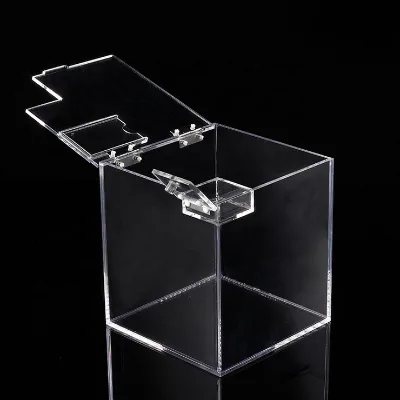
When sourcing an "Embossed Recycled Acrylic Candy Box," buyers must first reconcile the specific keyword requirements with the observable market data. The core product category identified in current listings is the acrylic candy box, specifically designed for retail and exhibition environments. The primary material observed across the majority of high-confidence product attributes is clear acrylic. While the search term emphasizes "recycled" and "embossed" finishes, the supplied product facts indicate that the standard material is clear acrylic with a hardness described as "partial hard." The visual finish is predominantly noted as "clear acrylic," and the logo application methods include UV printing, silk printing, stickers, engraving, or custom printing.
It is critical for the buyer to verify the "recycled" claim directly with the supplier, as the provided data does not explicitly confirm the use of post-consumer recycled content in the standard inventory. Similarly, while "embossing" is a requested feature, the observed product processes describe "Clear Acrylic Candy Box" production with options for logo engraving or printing. The buyer must distinguish between standard clear acrylic boxes and those with specific embossed textures or recycled material composition. The product type is consistently categorized as a "Box," with specific models such as YYB-07, YYB-84831, and YYB-0163 available. The intended usage spans exhibition shows, specialty stores, supermarkets, and home environments, often serving as an acrylic candy bin with a scoop.
Technical Specifications and Dimensional Standards
Technical due diligence is paramount when selecting acrylic candy boxes, as dimensions and thickness directly impact structural integrity and aesthetic appeal. The observed product specifications reveal a range of sizes, with specific models adhering to precise measurements. For instance, one observed standard specifies dimensions of 295mm x 220mm x 277mm with a thickness (T) of 5mm. Another model lists a standard of 340mm x 200mm x 170mm, also at 5mm thickness. These figures represent the physical constraints of the "Middle" size category observed in the market.
Buyers should note that the "Standard" attribute in the product data sometimes conflates shipping standards with physical dimensions. For example, the text "ISO9001 and SGS Certificate" appears under the "Standard" attribute in some entries, which is a certification rather than a dimensional spec. Conversely, entries explicitly listing "295220277mm, T: 5mm" under the "Standard" attribute provide the necessary technical data. When sourcing embossed or custom-finished boxes, the thickness is a critical variable. The 5mm thickness observed is a common benchmark for retail display durability, but buyers must confirm if this thickness is maintained when requesting custom embossing, as the embossing process can sometimes affect the effective thickness or structural rigidity.
The following table summarizes the observed dimensional and material specifications to assist in vendor comparison:
| Attribute | Observed Value | Verification Requirement |
|---|---|---|
| Material | Clear Acrylic | Confirm % of recycled content if "recycled" is a strict requirement. |
| Thickness | 5mm (T) | Verify if thickness varies for embossed models. |
| Dimensions | 295x220x277mm or 340x200x170mm | Request CAD drawings for custom sizes. |
| Hardness | Partial Hard | Assess suitability for high-traffic retail environments. |
| Waterproof | Not Waterproof | Ensure storage conditions do not expose to moisture. |
| Antitheft | Not Antitheft | Consider adding security features if high-value items are displayed. |
Compliance, Certification, and Quality Verification
Navigating the compliance landscape for acrylic products requires careful scrutiny of the provided certification data. The supplied facts explicitly list "ISO9001 and SGS Certificate" as available certifications. It is important to note that while "ISO 9001" is listed as a standard in the background data, the high-confidence facts specifically mention "ISO9001 and SGS Certificate" as product attributes. Buyers should treat these as the verified baseline for quality management systems and third-party inspection capabilities.
However, the search keyword "recycled" implies a need for environmental compliance that is not explicitly detailed in the high-confidence product attributes. Background data mentions certifications such as BSCI, FSC, and various ISO standards (14001, 45001, 50001), but these are flagged as low-confidence background information. Consequently, a buyer cannot assume a supplier possesses FSC (Forest Stewardship Council) or specific recycled content certifications based solely on the provided text. The procurement strategy must involve a direct request for proof of recycled material sourcing and any relevant environmental certifications.
Furthermore, the "Standard" attribute in the data sometimes lists "Custom," indicating that the product can be tailored to specific requirements. This flexibility extends to the production process, which is described as "Clear Acrylic Candy Box" manufacturing. Buyers must verify that the "Custom" standard includes the ability to produce embossed textures and that the "ISO9001" certification covers the specific manufacturing steps for these customizations. The origin of the products is listed as Shenzhen and China, which are major manufacturing hubs, but the specific factory certifications should be validated on a per-supplier basis.
Cost Drivers and Pricing Dynamics
The economic landscape for acrylic candy boxes is influenced by several distinct factors, including material composition, customization levels, and order volume. The observed price range in the market is between 0.02 USD and 30 USD per unit. This wide variance suggests that the final cost is highly dependent on the specific model, size, and added features like embossing or logo printing. The Minimum Order Quantity (MOQ) ranges from 1 to 10,000 units, indicating that the market accommodates both small trial orders and large-scale industrial procurement.
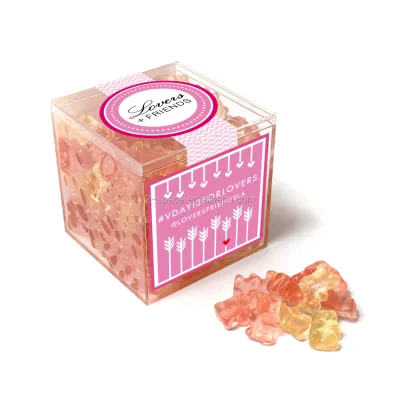
Several cost drivers are evident from the product attributes. First, the material itself is a primary factor; while the base material is clear acrylic, the addition of "recycled" content or specific "embossed" textures may incur a premium over standard clear acrylic. Second, the customization options, such as "UV Printing," "Silk Printing," "Stickers," or "Engraving," add to the unit cost. The data shows that some products come "Without Logo Printing" while others offer "With Logo Printing" or "Custom" logo options. Third, the packaging method influences the final price. Observed packing methods include "Strong Carton," "Inner Box with Strong Carton," "OPP Bag with Strong Carton," and "White Box with Strong Carton." More complex packaging, such as individual white boxes or corner protection, will increase the cost per unit.
Buyers should also consider the shipping costs, which are listed as options via DHL, FedEx, UPS, or by sea. For large orders, sea freight is likely the most cost-effective method, whereas smaller orders or urgent needs may require air freight. The "OEM" (Original Equipment Manufacturer) and "ODM" (implied by customization) capabilities are welcomed, which can affect pricing structures. Buyers should negotiate based on the total landed cost, including packaging and shipping, rather than just the unit price.
Typical Applications and Usage Scenarios
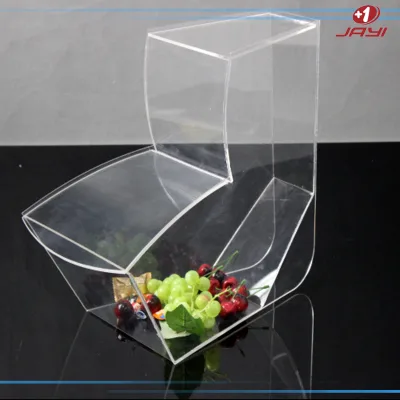
The versatility of acrylic candy boxes makes them suitable for a diverse range of applications. The high-confidence product attributes list usage in "Exhibition Show," "Speciality Stores," "Supermarkets and Stores," "Home," and specifically for "Candy." The product is also described as an "Acrylic Candy Bin with Scoop," indicating its function in self-service environments. The "Display Place" is noted as "Indoor," which is a critical constraint for buyers planning outdoor installations.
In retail settings, these boxes serve as both functional storage and aesthetic display units. The "Clear Acrylic" material allows for full visibility of the contents, which is essential for candy and confectionery sales. The "Unisex" gender attribute suggests broad appeal, making these boxes suitable for general consumer markets. The "Partial Hard" hardness rating implies that while the boxes are durable enough for retail handling, they may not be suitable for heavy industrial abuse or outdoor exposure where "Waterproof" capabilities are required.
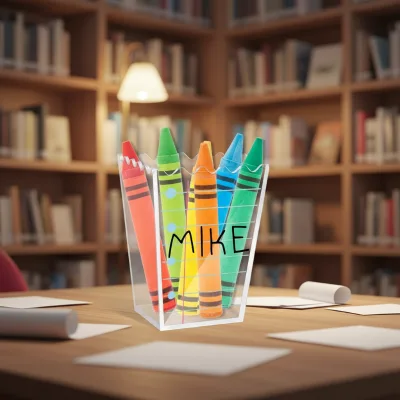
For exhibition shows, the "Middle" size and customizable logo options make these boxes ideal for branding and product sampling. The ability to add "Stickers," "Engraved," or "Printing" logos allows companies to create branded giveaways or display units that align with their corporate identity. In a home setting, the boxes can be used for organizing snacks or decorative items, leveraging the "Clear Acrylic" aesthetic. Buyers should ensure that the specific model selected matches the intended environment; for example, a box used in a supermarket might require a different durability rating than one used in a home setting.
Supplier Evaluation and Quality Control Protocols
Evaluating suppliers for acrylic candy boxes requires a multi-faceted approach that goes beyond the basic product listings. The brand name "Yyb" is observed in the data, but buyers should not rely on a single brand. Instead, the focus should be on the supplier's ability to meet the specific technical and compliance requirements. Key evaluation criteria include the supplier's experience with "Custom" standards and their ability to execute "Clear Acrylic Candy Box" processes with embossing.
Quality control should begin with the verification of the "ISO9001 and SGS Certificate." Buyers should request copies of these certificates and verify their validity with the issuing bodies. Additionally, since the "recycled" claim is not explicitly confirmed in the high-confidence data, buyers must ask for material safety data sheets (MSDS) or third-party test reports confirming the recycled content percentage. The "Product Process" of "Clear Acrylic Candy Box" should be inspected to ensure that the embossing process does not introduce defects such as cracking, cloudiness, or uneven texture.
The packaging process is another critical quality control point. The observed packing methods, such as "Plastic Film+Corner Protection+Master Carton," are designed to prevent damage during transit. Buyers should request photos of the actual packing process to ensure that the "Strong Carton" and "Corner Protection" are robust enough for the specific shipping method (e.g., sea freight vs. air freight). The "Standard" of "Custom" implies that the supplier should be able to provide samples before mass production. Buyers should insist on pre-production samples to verify the embossing depth, logo placement, and overall finish.
Long-Term Procurement and Supply Chain Resilience
Sourcing embossed recycled acrylic candy boxes is not just a one-time transaction but a long-term partnership that requires strategic planning. The "Market" is listed as "All Over The World," indicating a global supply chain. However, the "prod_origin" is specifically noted as Shenzhen and China. Buyers should be aware of potential supply chain disruptions related to logistics, especially given the "Shipping" options of DHL, FedEx, UPS, or Sea. Sea freight is cost-effective but has longer lead times, which must be factored into inventory planning.
The "OEM" and "Custom" capabilities of the suppliers offer flexibility for future product iterations. As market trends shift towards more sustainable packaging, the ability to source "recycled" acrylic becomes a competitive advantage. Buyers should establish a relationship with suppliers who can scale production from the observed MOQ of 1 up to 10,000 units. This scalability ensures that the buyer can respond to demand fluctuations without incurring excessive costs or delays.
Furthermore, the "Standard" of "Custom" suggests that the product design can evolve. Buyers should plan for future modifications, such as changing the logo, adjusting the dimensions, or altering the embossing pattern. The "Brand Name" Yyb is one option, but the market supports a variety of suppliers. Building a diversified supplier base can mitigate risks associated with single-source dependency. Finally, buyers should regularly review the "Certification" status of their suppliers to ensure ongoing compliance with international standards and environmental regulations, particularly as the demand for recycled materials grows. By maintaining a proactive approach to supplier evaluation and quality control, buyers can secure a reliable supply of high-quality acrylic candy boxes that meet their specific operational and sustainability goals.
FAQs
Can I find embossed recycled acrylic candy boxes with ISO9001 certification?
Yes, ISO9001 and SGS certificates are available for these acrylic candy boxes. However, the standard material listed is clear acrylic, so you must verify if the recycled content and embossed finish are included in the certified production process.
What are the standard dimensions for the middle size acrylic candy box?
Standard middle sizes include dimensions of 295x220x277mm or 340x200x170mm with a thickness of 5mm. These specifications apply to the clear acrylic models, and you should confirm if embossing alters the effective thickness or structural rigidity.
Which logo printing options are available for the acrylic candy bin?
Logo options include UV printing, silk printing, stickers, engraving, or custom printing. Some products come without logo printing, while others accept custom requests, allowing for branding on the clear acrylic surface for retail or exhibition use.
How is the packaging structured for shipping the acrylic candy box?
Packaging typically involves plastic film, corner protection, and a master carton. Variations include inner boxes with strong cartons, OPP bags with strong cartons, or white boxes with strong cartons to ensure safe transit from Shenzhen or China.
Can I order a custom size for the acrylic candy box?
Yes, the product standard is listed as custom, allowing for tailored dimensions. While 5mm thickness is common, you must confirm that the custom embossing process maintains the required structural integrity for your specific retail or home application.
What is the price range for sourcing these acrylic candy boxes?
The observed price range is between 0.02 USD and 30 USD per unit. This variance depends on the specific model, size, and added features like embossing or logo printing, with Minimum Order Quantities ranging from 1 to 10,000 units.