Source Endless Marine Climbing Safety Rope for boating, rescue, and mountaineering
Find 30 verified listings for the Endless Marine Climbing Safety Rope suitable for marine mooring, aerial work, and outdoor development. Buyers can compare specifications like diameter, breaking strength, and material options including nylon and polyester from suppliers in China.
Key considerations
Products List


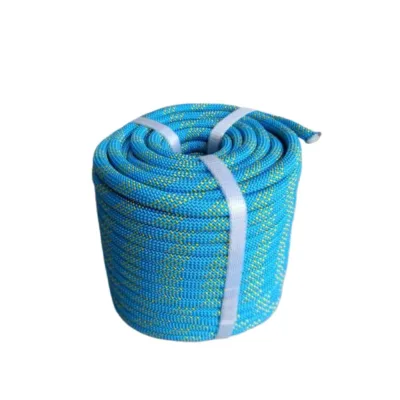


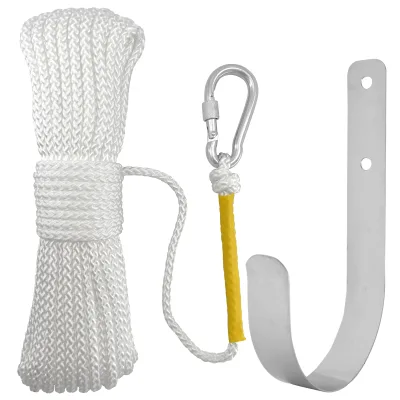

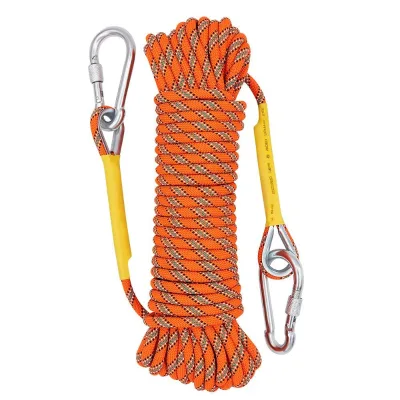


Comprehensive Sourcing Guide
Sourcing Strategy for Endless Marine Climbing Safety Ropes
Understanding Technical Specifications and Material Composition
When sourcing endless marine climbing safety ropes, buyers must first distinguish between the diverse material compositions and structural designs available in the current market. The supplied product data indicates a significant variation in material choices, with specific listings highlighting Nylon for safety ropes and Polypropylene for safety belts, while other entries explicitly cite Polyester as the primary material. This distinction is critical because Nylon offers high elasticity and energy absorption, which is beneficial for dynamic climbing loads, whereas Polyester provides superior UV resistance and lower stretch, often preferred for marine mooring and static applications. The observed product attributes describe "Three-strand rope" configurations with diameters ranging from 6mm to 70mm, and "Eight-strand rope" variants starting at 6mm.
The diameter specifications are particularly vital for procurement decisions. Available data lists specific standard diameters including 8mm, 10mm, 12mm, 14mm, 16mm, 18mm, and 20mm, with a strong emphasis on customized lengths and diameters to meet specific operational needs. For marine environments, the "Eight-Strand Polyester Rope" is noted for being "Sturdy and Durable," while "Nylon Rope" is characterized by "Good Acid Resistance," a property that may be relevant for specific industrial or chemical exposure scenarios. The "Anchor Rope" variants are described as having a "Strong Pulling Force," suggesting a design optimized for high-tension applications rather than pure dynamic climbing.
Buyers should verify the exact strand construction and core material before placing orders, as the term "endless" implies a continuous loop or a specific knotless configuration that may differ from standard cut lengths. The data mentions a "Two-point" fixed mode, which likely refers to the attachment or anchoring mechanism rather than the rope itself, but this highlights the complexity of system integration. The net weight is observed at 0.06KG/M, providing a baseline for calculating total shipment weight and logistics costs. When evaluating technical specifications, procurement teams must cross-reference the claimed diameter and material against the intended application, whether it is for marine mooring, outdoor development, or rock climbing assistance, as the performance characteristics of Nylon and Polyester diverge significantly under load.
Compliance, Certification, and Safety Standards Verification
Navigating the certification landscape for safety ropes requires rigorous verification, as the market presents a mix of international and regional standards. The supplied product facts list a comprehensive array of certifications, including DOT, FDA, CE, ISO, FCC, RoHS, and EN. Specifically, one entry references EN361, which is a European standard for personal fall protection equipment, while another mentions EN564 in the background context. The presence of ISO certification is a high-confidence fact, indicating that the manufacturing process adheres to international quality management systems. However, the listing of "FCC" and "FDA" alongside safety ropes is unusual, as these are typically associated with electronic devices or food contact materials, suggesting that some product listings may be aggregating broad supplier capabilities rather than certifying the rope itself.
Buyers must exercise extreme caution when interpreting these certifications. The "Two-point" fixed mode and "Safety Belts Material: Polypropylene" or "Polyester" attributes must be explicitly linked to the specific certification claimed. For instance, if a supplier claims compliance with EN361, the product must be tested as a complete fall arrest system, not just the rope component. The data also notes that Customization is available regarding standards, with some entries stating "Customization available" as the standard itself. This implies that buyers may need to negotiate specific compliance requirements with the manufacturer rather than relying solely on off-the-shelf certifications.
The "Marine Ropes" are described as "Wear-Resistant," but this is an attribute observation, not a certified performance metric. Buyers should request third-party test reports to verify claims of "Good Acid Resistance" for Nylon ropes or "Sturdy and Durable" characteristics for Eight-Strand Polyester ropes. The presence of multiple certifications in a single listing (e.g., DOT, FDA, CE, ISO, FCC, RoHS, EN) should be scrutinized to ensure they apply to the specific product SKU. In the absence of explicit test data in the provided facts, procurement teams must verify that the Breaking Strength of 800kgs or the Fracture Stress range of 2300kgs-4500kgs corresponds to the certified model. Relying on unverified certification claims can lead to significant safety liabilities, especially in high-risk environments like marine climbing or aerial work.
Cost Drivers and Pricing Structure Analysis
The pricing structure for endless marine climbing safety ropes is influenced by a complex interplay of material costs, customization levels, and order volume. The observed listed price range in the market data spans from 0.2 to 15.5 USD, a variance that reflects the difference between basic safety lines and high-performance, certified climbing ropes. This wide range suggests that price is not a linear function of length but is heavily dependent on the material composition (Nylon vs. Polyester), the strand construction (Three-strand vs. Eight-strand), and the level of certification.
Minimum Order Quantity (MOQ) is a significant cost driver, with observed ranges from 1 to 3250 units. Buyers seeking small quantities may face higher per-unit costs, while those capable of ordering near the upper limit of the MOQ range can likely negotiate more favorable pricing. The data indicates that OEM and ODM services are accepted, which often incurs additional setup fees but allows for branding and specification tailoring. The "High-Quality Packaging Options Include Woven Bags" and other methods like "Bundle, Coil, Reel, Clamshell + Carton" also impact the final landed cost, as specialized packaging for marine or climbing equipment adds to the unit price.
Lead time is another critical factor affecting cost efficiency. The observed delivery window is 15-20 days, which is relatively standard for manufactured goods but can vary based on customization requirements. If a buyer requires a specific diameter, such as the 6mm-50mm range, or a custom length, the lead time may extend beyond the standard window, potentially incurring rush fees. The "Sample" availability is noted as "Aivilable" (Available), which allows buyers to test the product before committing to large orders, though sample costs should be factored into the total procurement budget.
Buyers should also consider the "Net weight" of 0.06KG/M when calculating shipping costs, as freight charges for heavy, dense items like safety ropes can be substantial. The "Selling Units" are listed as "Single item," which may imply flexibility in ordering but could also mean that bulk discounts are not automatically applied. To optimize costs, procurement teams should analyze the total cost of ownership, including the durability of the "Wear-Resistant" marine ropes versus the "Good Acid Resistance" of Nylon, to determine the most cost-effective solution for their specific operational environment.
Typical Applications and Operational Use Cases
The versatility of endless marine climbing safety ropes is evident in the wide range of applications described in the product data. These ropes are designed for marine mooring, outdoor development, rock climbing assistance, and wading sports. The "Scope of Application" extends to Mountaineering, Hiking, Camping, Lifesaving, and Animal rescue, indicating a broad utility across both recreational and professional sectors. The "Usage" field explicitly mentions Magnet Fishing, Rescue, Aerial Work, in Caving, High, highlighting the rope's suitability for specialized industrial and emergency response scenarios.
For marine environments, the "Wear-Resistant" attribute of the marine ropes is a key performance indicator, ensuring longevity in saltwater and high-friction conditions. The "Strong Pulling Force" of anchor ropes makes them ideal for securing vessels or heavy loads. In climbing and rescue operations, the "Multipurpose, Portable and Powerful" nature of the product is emphasized, with a "Breaking Strength" of 800kgs and a "Fracture Stress" up to 4500kgs providing a safety margin for dynamic loads. The "Two-point" fixed mode suggests specific anchoring configurations suitable for complex rescue scenarios or multi-point climbing systems.
The "Customized Length" and "Customized" diameter options allow these ropes to be tailored for specific tasks, such as High altitude work or Caving expeditions where standard lengths may be insufficient. The "Net weight" of 0.06KG/M ensures that the ropes remain portable for hikers and climbers, while the "Sturdy and Durable" Eight-Strand Polyester ropes offer the necessary reliability for lifeguarding and aerial work. Buyers should match the specific application to the material properties; for example, Nylon's "Good Acid Resistance" might be preferred for industrial cleaning or chemical handling, while Polyester's UV resistance is better for outdoor climbing.
Supplier Evaluation and Origin Verification
Evaluating suppliers for endless marine climbing safety ropes requires a focus on origin, capacity, and service flexibility. The supplied data identifies Shandong, China and Binzhou, Shandong as primary production locations, with Hexin mentioned as a brand name. These regions are known for their textile and rope manufacturing capabilities, but buyers must verify the specific factory's capacity to meet their quality and volume requirements. The "OEM/ODM: Accepted" status indicates that suppliers are willing to produce custom-branded or custom-specified products, which is a positive sign for buyers seeking unique solutions.
The "Sample: Aivilable" (Available) feature is a crucial tool for supplier evaluation, allowing buyers to physically inspect the product before committing to a large order. This step is essential for verifying the "High-Quality Packaging Options" and the actual feel and flexibility of the rope. The "Customization available" standard suggests that suppliers are flexible in meeting specific needs, but buyers should confirm the lead time implications of such customization. The "Delivery: 15-20days" lead time provides a baseline for planning, but any deviation due to custom orders should be clearly communicated.
Buyers should also assess the supplier's ability to handle the full range of specifications, from the 6mm-50mm three-strand ropes to the 6mm-32mm standard sizes. The "Selling Units: Single item" policy suggests a flexible ordering process, but the MOQ range of 1-3250 indicates that volume discounts are likely available for larger orders. When evaluating suppliers, it is important to confirm that the Certification claims (ISO, CE, EN361, etc.) are valid and applicable to the specific product line. The presence of multiple certifications in a single listing should be verified to ensure they are not merely marketing fluff but represent genuine compliance with safety standards.
Quality Control and Long-Term Procurement Considerations
Implementing a robust quality control (QC) strategy is essential for sourcing endless marine climbing safety ropes, given the critical nature of their application. The observed attributes, such as "Sturdy and Durable" and "Good Acid Resistance," must be validated through rigorous testing protocols. Buyers should request detailed test reports for Breaking Strength and Fracture Stress to ensure the ropes meet the claimed performance metrics. The "Net weight" of 0.06KG/M should be verified to ensure consistency across batches, as weight variations can indicate inconsistencies in material density or manufacturing quality.
Long-term procurement considerations include the durability of the rope in specific environments. For marine applications, the "Wear-Resistant" property is paramount, and buyers should inquire about the rope's resistance to UV degradation and saltwater corrosion. The "Customized Length" and "Customized" diameter options offer flexibility, but buyers must ensure that the customization process does not compromise the structural integrity of the rope. The "High-Quality Packaging Options" such as "Woven Bags" and "Coil" packaging should be evaluated for their ability to protect the rope during storage and transit, preventing damage that could affect performance.
Buyers should also consider the lifecycle of the rope. The "Advantage: Multipurpose, Portable and Powerful" suggests a long service life, but regular inspection and replacement schedules are necessary to maintain safety. The "Sample" availability allows for initial testing, but ongoing quality checks should be part of the procurement process. The "Delivery: 15-20days" lead time should be factored into inventory planning to ensure a steady supply of safety ropes. Finally, the "OEM/ODM" capabilities should be leveraged to create a consistent supply chain that aligns with the buyer's specific safety and operational requirements, ensuring that the sourced ropes remain reliable and compliant over the long term.
FAQs
What materials are used for endless marine climbing safety ropes?
These ropes are primarily made from Nylon, Polyester, or Polypropylene depending on the specific application. Nylon offers high elasticity for dynamic loads, while Polyester provides superior UV resistance and lower stretch for marine mooring and static climbing scenarios.
Which certifications are available for safety rope products?
High-confidence facts indicate ISO certification is available, along with DOT, FDA, CE, FCC, RoHS, and EN standards. Buyers must verify that specific certifications like EN361 apply to the exact product model and intended safety system before purchase.
How can I customize the diameter and length of these ropes?
Customized lengths and diameters are available to meet specific operational needs. Standard options include diameters from 6mm to 70mm, with specific models offering sizes like 8mm, 10mm, 12mm, and others up to 20mm or more upon request.
What is the typical lead time for delivery of safety ropes?
The standard delivery window is 15 to 20 days for most orders. Customization requirements may extend this timeline, so buyers should confirm the specific lead time with the manufacturer when requesting tailored specifications or packaging options.
Can I order samples before placing a bulk order?
Yes, samples are available for testing the product quality and specifications before committing to large orders. This allows buyers to verify attributes like breaking strength, material feel, and packaging integrity to ensure the rope meets their safety requirements.
What are the minimum order quantities for these safety ropes?
Minimum order quantities range from 1 to 3250 units depending on the supplier and product configuration. Smaller orders may incur higher per-unit costs, while larger volumes near the upper limit often allow for more favorable pricing negotiations.
Where are these safety ropes manufactured?
The primary production locations are in Shandong, China, with specific origins noted in Binzhou. Buyers should verify the exact factory location to ensure it aligns with their logistics preferences and quality assurance requirements for the specific product model.