Source Enterprise 5G Sim Router for Computer, Telephone, Workstation
Find 30 Enterprise 5G Sim Router options from verified suppliers in China. Compare models like TS-WRT2208 and CY001 with features including 4G LTE, Wi-Fi, and CE certification for computer, telephone, and workstation applications.
Key considerations
Products List
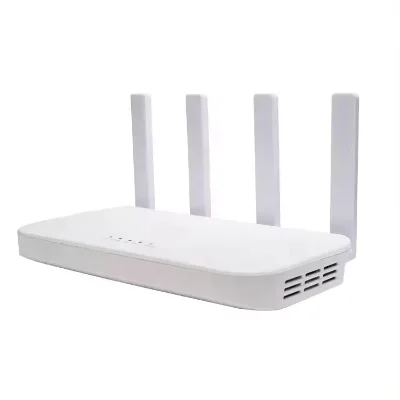


5g CPE WiFi Router WiFi Gateway High Speed Indoor CPE with SIM Card Slot
$120.00 - $200.00
MOQ: 1 Pieces


5g WiFi6 CPE 4G LTE SIM Card Wireless Dual Mode Nsa/SA Wi-Fi 6router 5g SIM Router
$160.00 - $168.00
MOQ: 1 Pieces

5g Mobile Hotspot Modem 5g Wireless WiFi Hotspot Router with SIM Card Slot
$75.00 - $85.00
MOQ: 1 Pieces


Professional Router LTE SIM Card WiFi Router Wireless Hotspot 3G 4G Router
$18.00 - $26.00
MOQ: 1 Pieces


Comprehensive Sourcing Guide
Strategic Sourcing Guide for Enterprise 5G SIM Routers
Procuring enterprise-grade 5G SIM routers requires a disciplined approach that balances high-speed connectivity requirements with rigorous compliance and supply chain stability. For buyers in the telecommunications, industrial automation, and smart infrastructure sectors, the selection process extends beyond simple connectivity speed. It involves a deep analysis of network protocols, architectural reliability, and the specific certifications that validate the hardware for commercial deployment. The following guide outlines the critical dimensions of sourcing these devices, grounded in observable market data and technical specifications.
Technical Architecture and Network Compatibility
The foundation of any enterprise 5G router selection lies in its network compatibility and internal architecture. Modern enterprise devices must support a diverse range of cellular standards to ensure seamless operation across different regions and network generations. Observed market data indicates that viable solutions often support a hybrid portfolio including HSUPA, TD-HSDPA, WCDMA, and 4G LTE. This multi-standard support is crucial for enterprises operating in areas where 5G coverage may be intermittent or where legacy 3G networks still serve as a backup. Furthermore, the internal network stack frequently includes support for SDK, TCP, IP, POE, GPRS, Wi-Fi, GSM, and Wiegand protocols, allowing for flexible integration with existing security and industrial control systems.
Beyond cellular connectivity, the router's architecture dictates its performance under load. High-performance units often utilize a crossbar system architecture combined with multi-CPU configurations and shared memory. This design facilitates efficient data routing and minimizes latency, which is essential for real-time applications. In terms of throughput, buyers should verify if the device operates as a line-rate router or a non-line speed router. While some units advertise transfer rates of 100Mbps or 150Mbps, others in the enterprise segment may support higher rates, such as 867Mbps, particularly when utilizing dual-band Wi-Fi frequencies. The ability to operate in both AP (Access Point) and STA (Station) modes further enhances versatility, allowing the device to function as a gateway or a client depending on the network topology.
Compliance, Certification, and Regulatory Standards
For enterprise procurement, regulatory compliance is not merely a formality but a prerequisite for market entry and operational legality. Buyers must verify that the hardware carries the necessary certifications for the target deployment region. Common certifications observed in the supply chain include CE, RoHS, FCC, RED, and CCC. These marks indicate compliance with electromagnetic compatibility, environmental restrictions on hazardous substances, and radio equipment directives. Additionally, management certifications such as ISO are often required to ensure that the manufacturing process adheres to quality management standards.
When evaluating a potential supplier, it is critical to distinguish between product-level certifications and management-level accreditations. A device may carry CE and RoHS marks, indicating it is safe for use in Europe and compliant with environmental standards, but the factory itself might also need ISO certification to guarantee consistent quality control. Buyers should explicitly request documentation for these certifications rather than relying on product descriptions alone. It is also important to note that while some products may claim adherence to standards like IEC 62443 for industrial security, specific verification of these claims against the actual product documentation is necessary, as not all listed units may satisfy every standard.
Cost Drivers and Procurement Economics
The cost of enterprise 5G routers is influenced by a complex interplay of factors, including chipset technology, antenna configuration, and order volume. The market has observed a significant price range, with units listed between 10 and 1100 USD. This wide variance reflects differences in performance capabilities, build quality, and the inclusion of external antennas versus internal designs. Devices featuring external WiFi antennas, such as those utilizing the Mtk7628 chipset, often command a premium due to their enhanced signal range and stability. Similarly, the inclusion of specific firmware versions, such as OpenWrt/Linux, can impact the price by offering greater customization and control for IT administrators.
Minimum Order Quantity (MOQ) is another critical economic factor. While some suppliers accept small orders, allowing for pilot testing and low-volume deployments, others may require quantities up to 1000 units. This variability necessitates a clear understanding of the buyer's immediate needs versus long-term scaling plans. Buyers should also consider the total cost of ownership, which includes warranty periods. Most enterprise-grade units offer a standard warranty of 12 months or one year, but extended support contracts may be available. The power supply configuration, supporting EU, US, UK, and AU standards, also adds to the logistical cost, as it may require region-specific adapters or power bricks depending on the deployment location.
Typical Enterprise Applications and Deployment Scenarios
Enterprise 5G routers are deployed in a variety of high-demand scenarios where wired connectivity is impractical or insufficient. A primary application is in Fiber to the Home (FTTH), Fiber to the Building (FTTB), and Fiber to the X (FTTX) networks, where the router serves as a critical aggregation point for last-mile connectivity. In these environments, the device must handle high data rates and maintain stability under heavy traffic loads. Another significant use case involves computer, telephone, and workstation connectivity in remote or mobile offices. The ability to support multiple network types, including Ethernet and GSM, makes these routers ideal for temporary sites, construction zones, and disaster recovery operations.
Furthermore, the industrial sector utilizes these routers for machine-to-machine (M2M) communication. The support for protocols like Wiegand allows for direct integration with access control systems and security cameras. In such applications, the router's color and physical design, often available in white or black, may be secondary to its ruggedness and ability to operate in diverse environmental conditions. The firmware, typically available in English, must be robust enough to support remote management and updates, ensuring that the network remains secure and functional without requiring physical intervention.
Supplier Evaluation and Verification Protocols
Selecting the right supplier is as important as selecting the right hardware. Buyers should prioritize suppliers who demonstrate transparency in their product attributes and model numbers. The market contains a variety of model identifiers, ranging from specific codes like TS-WRT2208 and TS-MS6124 to generic designations like CY001. When evaluating a supplier, buyers should verify the origin of the product, with many high-volume manufacturers based in China, specifically in regions like Hubei. The brand name is another indicator of quality; while some products are branded under well-known names like TP-Link or ON-LINK, others may be OEM products or carry proprietary brand names like TENSUN.
A robust evaluation process includes checking the customization capabilities of the supplier. Many enterprise buyers require specific firmware modifications or hardware adjustments to fit their unique network requirements. Suppliers that offer customization services can provide a competitive advantage by tailoring the device to specific operational needs. Additionally, buyers should assess the supplier's ability to handle small orders for initial testing while maintaining the capacity to scale up to large volumes. The availability of original packaging and clear documentation regarding the product's standard dimensions, such as 232012cm, also reflects the professionalism of the supplier's logistics and quality control processes.
Quality Control and Long-Term Procurement Considerations
Ensuring the long-term reliability of enterprise 5G routers requires a proactive approach to quality control. Buyers should establish clear acceptance criteria based on the observed technical specifications, such as transfer rates and network support. It is essential to verify that the actual product matches the claimed specifications, particularly regarding the chipset and firmware version. For instance, confirming that a device runs OpenWrt/Linux and utilizes the Mtk7628 chipset ensures that the buyer receives the expected level of flexibility and performance.
Long-term procurement considerations also involve the supply chain's resilience. Buyers should inquire about lead times and the supplier's ability to maintain consistent stock levels, especially for critical components. The warranty period, typically 12 months, serves as a baseline for quality assurance, but buyers should negotiate terms that cover potential hardware failures or firmware issues. Furthermore, the availability of spare parts and the supplier's technical support capabilities are vital for minimizing downtime. By focusing on these factors, enterprises can build a sustainable procurement strategy that ensures their network infrastructure remains robust and capable of supporting evolving business needs.
Summary of Key Specifications and Attributes
To assist in the final selection process, the following table summarizes the key attributes and specifications observed in the current market for enterprise 5G SIM routers. This comparison highlights the diversity in models, certifications, and performance metrics that buyers must navigate.
| Attribute Category | Specific Observations & Data Points |
|---|---|
| Network Support | HSUPA, TD-HSDPA, WCDMA, 4G LTE, 3G, GSM, GPRS, Wi-Fi, POE, Wiegand |
| Architecture | Crossbar system, Multi CPU, Shared memory |
| Transfer Rates | 100Mbps, 150Mbps, 867Mbps (Max LAN), 101-150Mbps |
| Performance Type | Line-rate router, Non-line speed router |
| Certifications | CE, RoHS, FCC, RED, CCC, ISO (Management) |
| Chipset & Firmware | Mtk7628, OpenWrt/Linux, English Firmware |
| Physical Attributes | Colors: White, Black; Antenna: External; Packing: Original Box |
| Power Supply | EU, US, UK, AU compatible |
| Warranty | 12 months / 1 Year |
| MOQ Range | 0 to 1000 units |
| Price Range | 10 - 1100 USD |
| Origin | China (e.g., Hubei) |
By systematically evaluating these dimensions, buyers can make informed decisions that align with their specific enterprise requirements, ensuring a secure, efficient, and scalable network infrastructure.
FAQs
What certifications do enterprise 5G SIM routers typically have?
These devices commonly carry CE, RoHS, FCC, RED, and CCC certifications for regulatory compliance. Some manufacturers also hold ISO management certification to ensure consistent quality control during production and assembly processes.
Which network standards are supported by these routers?
Supported networks include HSUPA, TD-HSDPA, WCDMA, 4G LTE, 3G, GSM, and GPRS. Additional protocols like TCP, IP, POE, Wi-Fi, and Wiegand are often available for flexible integration with industrial systems.
Can I order small quantities for pilot testing?
Yes, small orders are accepted for many models to facilitate initial testing. However, some suppliers may require quantities up to 1000 units for larger scale deployments, so MOQ varies by vendor.
What is the typical price range for these routers?
The observed price range spans from 10 to 1100 USD depending on specifications. Higher costs often reflect advanced features like external antennas, dual-band Wi-Fi, or specific chipset technologies such as Mtk7628.
How long is the warranty period for these devices?
Most enterprise-grade units offer a standard warranty of 12 months or one year. Extended support contracts may be negotiated separately to cover potential hardware failures or firmware issues beyond the baseline period.
Where are these routers typically manufactured?
Products are primarily sourced from China, with specific origins noted in regions like Hubei. Buyers should verify the place of origin to ensure alignment with their supply chain requirements and logistics planning.
Which firmware versions are available for customization?
English firmware is standard, with options like OpenWrt/Linux available for enhanced control. Customization is often available for specific firmware modifications or hardware adjustments to fit unique network requirements.