Source Enterprise Level Network Server for Surveillance, Monitoring, Integration
Compare 30 Enterprise Level Network Server options including tower and rack models with Intel processors and up to 1000GB storage. Buyers can evaluate specifications for video surveillance, remote monitoring, and network integration systems.
Key considerations
Products List


Premium Performance Server, Workstation, Computer Server for Enterprises
$899.00 - $1499.00
MOQ: 1 Pieces


Robust Server, Workstation, Computer Server with Enhanced Performance
$899.00 - $1699.00
MOQ: 1 Pieces

High Capacity Server, Workstation, Computer Server for Large Data Sets
$950.00 - $1110.00
MOQ: 1 Pieces


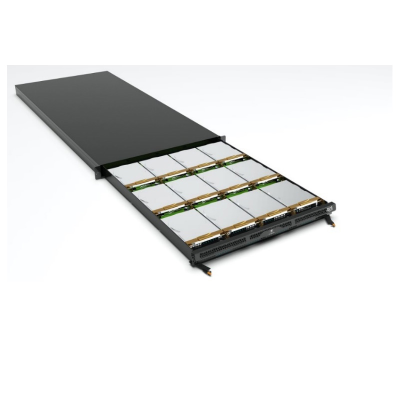

Good Service Thinksystem St550 Tower Server 4u Tower Server Storage Server
$10000.00 - $15000.00
MOQ: 1 Pieces


22U Data Center Server Network Rack network cabinet Network Rack Cabinet
$18.00 - $21.00
MOQ: 10 Pieces


Comprehensive Sourcing Guide
Strategic Sourcing Guide for Enterprise Level Network Servers
Procuring enterprise-level network servers requires a disciplined approach that balances technical performance, compliance verification, and supply chain reliability. The modern data center landscape demands hardware that can support complex workloads while adhering to strict operational standards. Buyers must navigate a market where specifications vary significantly between tower, rack, and workstation configurations. This guide outlines the critical factors for sourcing these systems, drawing on observed market data to inform decision-making without relying on unverified claims.
Technical Architecture and Form Factor Selection
The foundation of any enterprise server procurement lies in selecting the correct system architecture and form factor. The market currently offers a diverse range of options, primarily centered around the X86 Server architecture, which remains the industry standard for general-purpose computing. However, specific applications may require alternative instruction systems, such as RISC, though these are less common in standard enterprise deployments. Buyers must first determine the physical deployment environment, as this dictates the form factor.
Observed product listings indicate a split between Tower and Rack server types. Tower servers, often classified as desktop workstations in certain contexts, provide flexibility for edge locations or smaller server rooms where space is not a primary constraint. These units typically feature dimensions that allow for vertical installation. In contrast, Rack servers are designed for high-density data centers. The observed data highlights a prevalence of 1U and 2U form factors. A 1U server offers a compact footprint of approximately 44mm in height, maximizing density, while a 2U unit provides additional internal space for cooling and expansion, often accommodating more drive bays or larger processors.
Processor selection is equally critical. The supply chain currently features systems powered by Intel Core and Intel Xeon processors. Intel Xeon chips are generally preferred for enterprise environments due to their support for multi-socket configurations and advanced error correction. Buyers should verify the maximum CPU count supported by the chassis, as some models are limited to single-socket operation while others support dual or quad-socket configurations. Memory capacity also varies widely, with observed configurations ranging from 16GB to 128GB of supporting memory. For heavy enterprise workloads, systems with 32GB or higher RAM are often the baseline requirement. Storage capacity is another key differentiator, with many units offering hard disk capacities of 1TB or greater, essential for data-intensive applications.
Compliance, Certification, and Physical Standards
Verifying compliance and physical standards is a non-negotiable step in the procurement process. Enterprise hardware must meet rigorous safety and quality benchmarks to ensure operational stability and regulatory adherence. Buyers should look for certifications such as ISO and CE, which indicate that the product meets international safety and environmental standards. These certifications are particularly important for equipment deployed in regions with strict regulatory frameworks.
Physical dimensions and weight are critical for logistics and data center planning. Observed specifications list various standard dimensions, such as a height of 376mm, width of 165mm, and length of 328mm for certain models, while others may measure 86.1 mm x 447 mm x 790 mm. These variations necessitate precise verification before ordering to ensure compatibility with existing racks and cabling infrastructure. Weight is another factor; a typical unit may weigh around 20kg, which impacts shipping costs and the structural requirements of the installation site.
Packaging standards also play a role in ensuring the hardware arrives in pristine condition. Common packaging methods include cartons and double boxes, designed to protect the server during transit. Buyers should confirm that the packaging is robust enough to withstand international shipping, especially when delivery ports are located in major hubs like Beijing. The condition of the product should be explicitly stated as "New" to avoid receiving refurbished or used units unless specifically requested. Additionally, the "Smartnet" status, often described as "Clean," should be verified to ensure the hardware has no outstanding liens or security flags.
Cost Drivers and Commercial Terms
Understanding the cost structure of enterprise servers is vital for budgeting and total cost of ownership (TCO) analysis. The price range for these systems is broad, observed between $4.9 and $15,000 USD, reflecting the vast difference between entry-level workstations and high-end enterprise racks. Several factors drive these costs, including processor type, memory capacity, storage configuration, and the level of customization available.
Customization is a significant cost driver. Many suppliers offer tailored solutions where buyers can select specific components to match their workload requirements. This flexibility allows for optimization but can increase the unit price. The Minimum Order Quantity (MOQ) is another commercial term to consider, with observed ranges starting from 1 set up to 100 units. For small enterprises, an MOQ of 1 set is advantageous, allowing for pilot deployments without significant capital commitment.
Payment and delivery terms also influence the effective cost. The "Fob" (Free on Board) price term indicates that the seller covers costs until the goods are loaded onto the carrier, after which the buyer assumes responsibility. Lead times can vary, with some suppliers offering rapid delivery of 1-2 days after payment, while others may have longer production cycles. Shipping terms typically include options like DHL, FedEx, UPS, and air freight, each with different cost implications and delivery speeds. Buyers must calculate the total landed cost, including shipping, insurance, and potential customs duties, to get an accurate picture of the investment.
Typical Applications and Workload Requirements
Enterprise-level network servers are deployed across a wide spectrum of applications, each demanding specific performance characteristics. The observed usage cases include video surveillance systems, network integration systems, and remote monitoring systems. These applications require high reliability and continuous uptime, making the choice of server type critical.
For video surveillance and remote monitoring, servers with high storage capacity and robust I/O capabilities are essential. The ability to handle large volumes of data streams without latency is a key requirement. In these scenarios, systems with 1TB or greater hard disk capacity and substantial RAM (up to 128GB) are often necessary to buffer and process video feeds efficiently. Additionally, the "Mobile Workstation" classification suggests that some units may be used in field environments or portable setups, requiring durability and power efficiency.
Conversely, enterprise-level systems designed for general network integration may prioritize processing power and multi-threading capabilities. Models with 12 CPU threads and support for Intel Xeon processors are well-suited for virtualization, database management, and cloud computing tasks. The "Desktop Workstation" and "PC Workstation" classifications indicate versatility, allowing these units to serve as both servers and high-performance workstations. Buyers should align the server's specifications with their specific application needs, ensuring that the hardware can scale as the workload grows.
Supplier Evaluation and Quality Control
Evaluating suppliers requires a focus on reliability, transparency, and quality assurance. While specific supplier names should not be recommended, buyers can assess potential partners based on their adherence to industry standards and their track record. Key indicators of a reliable supplier include clear communication of product attributes, such as the "Lenovo Server TS90X" or "R4900G5" model designations, and the "ThinkSystem ST650 V2 Tower Server." These specific model references suggest a level of standardization and brand recognition.
Quality control should be a priority throughout the procurement process. Buyers must verify that the products meet the stated specifications, including processor type, memory capacity, and storage limits. The "Condition: New" attribute should be confirmed upon receipt, and the "Warranty" terms, often listed as 2 years, should be clearly understood. A robust warranty indicates the supplier's confidence in their product's durability. Furthermore, the "Installation: Vertical" specification should be checked to ensure the server can be mounted correctly in the intended environment.
Suppliers should also provide clear documentation regarding the "Product Origin," which is observed as China for many units. This information is crucial for supply chain transparency and compliance with trade regulations. Buyers should request detailed test results and performance data to validate the server's capabilities before finalizing the purchase. A supplier that is willing to provide this information demonstrates a commitment to quality and customer satisfaction.
Long-Term Procurement Considerations
Sourcing enterprise servers is not just about the initial purchase; it involves long-term planning for maintenance, upgrades, and scalability. The "Warranty: 2year" term provides a baseline for support, but buyers should consider the availability of extended warranties and service contracts. The "Lead Time: 1-2days After Payment" suggests a responsive supply chain, which is beneficial for urgent replacements or expansions.
Scalability is another critical factor. As enterprise needs grow, the ability to upgrade memory, storage, or processors becomes essential. Buyers should select servers that support expansion, such as those with "Max. CPUs" capabilities and ample RAM slots. The "System Architecture: X86 Server" ensures compatibility with a wide range of software and operating systems, including "Windows Server," which is a common choice for enterprise environments.
Finally, buyers should consider the environmental impact and energy efficiency of the servers. While specific power consumption figures may vary, selecting units with efficient processors and cooling systems can reduce long-term operational costs. The "Motor Power: 20kw/27HP" specification, though more relevant to larger systems, highlights the importance of understanding power requirements for data center planning. By focusing on these long-term considerations, buyers can ensure their investment remains valuable and effective for years to come.
Comparative Analysis of Server Configurations
To assist in decision-making, the following table summarizes key differences between observed server configurations based on the provided data. This comparison highlights variations in form factor, processor, and memory to help buyers identify the most suitable option for their needs.
| Feature | Tower Server (e.g., TS90X) | Rack Server (e.g., R4900G5) | Workstation (e.g., ST650 V2) |
|---|---|---|---|
| Form Factor | Tower | 2U Rack | 1U / Desktop |
| Processor | Intel Xeon | Intel Xeon | Intel Core / Xeon |
| RAM Capacity | 16GB - 32GB | 16GB - 128GB | 16GB - 32GB |
| Storage | >= 1TB | >= 1TB | >= 1TB |
| Application | Edge / Small Office | Data Center / High Density | Mobile / Field Use |
| Installation | Vertical | Rack Mount | Desktop / Vertical |
| Warranty | 2 Years | 2 Years | 2 Years |
This table illustrates that while all configurations share common features like storage capacity and warranty terms, the form factor and intended application differ significantly. Buyers should use this comparison to align their technical requirements with the appropriate server type.
Final Procurement Recommendations
In conclusion, sourcing enterprise-level network servers requires a meticulous approach that addresses technical specifications, compliance, cost, and long-term viability. By carefully evaluating the form factor, processor type, and memory capacity, buyers can select hardware that meets their specific operational needs. Verifying certifications and physical standards ensures that the equipment is safe and compatible with existing infrastructure. Understanding the cost drivers and commercial terms helps in budgeting effectively, while supplier evaluation guarantees reliability and quality. Finally, considering long-term procurement factors ensures that the investment remains scalable and sustainable. By following these guidelines, buyers can make informed decisions that support their enterprise's growth and operational excellence.
FAQs
What server form factors are available for enterprise use?
Enterprise servers are available in Tower and Rack form factors. Tower units suit desktop workstations, while Rack units come in 1U and 2U sizes for data centers.
Which processor types power these enterprise network servers?
These systems utilize Intel Core and Intel Xeon processors. Intel Xeon is preferred for enterprise environments due to its robust multi-socket and error correction capabilities.
Can I find servers with high memory capacity options?
Yes, supporting memory capacities range from 16GB to 128GB. Higher configurations like 128GB are suitable for heavy enterprise workloads requiring significant data processing power.
What storage capacity do these servers typically support?
Most units offer hard disk capacities of 1TB or greater. This storage level is essential for data-intensive applications like video surveillance and network integration systems.
Are customization options available for these server models?
Customization is available to tailor systems to specific workload requirements. Buyers can select components to optimize performance while adhering to the observed price range.
What certifications do these enterprise servers meet?
Products often carry ISO and CE certifications indicating international safety compliance. These standards ensure the hardware meets rigorous quality benchmarks for stable operations.
How quickly can these servers be delivered after payment?
Lead times can be as short as 1-2 days after payment. This rapid delivery is supported by major shipping terms like DHL, FedEx, and UPS from Beijing.