Source Environmental Copper Gas Thermocouple for Ovens, Cookers, Heaters
Find 29 Environmental Copper Gas Thermocouple options for gas ovens, cookers, and heaters. Compare CE and RoHS certified models with customizable lengths and digital output signals for reliable temperature sensing in household and industrial applications; compare the available evidence and request quotations based on your requirements.
Key considerations
Products List




Comprehensive Sourcing Guide
Environmental Copper Gas Thermocouple Sourcing Guide
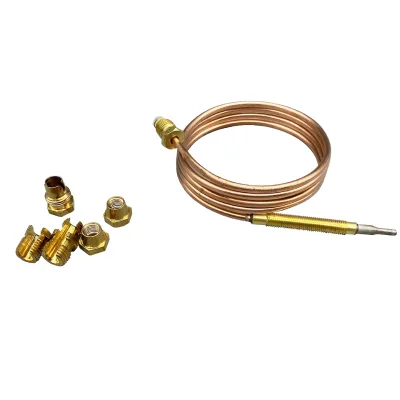
Procuring environmental copper gas thermocouples requires a precise understanding of material composition and sensing technology to ensure reliable flame failure protection in gas appliances. These components typically utilize a thermocouple head composed of 80% nickel and 20% chromium, paired with copper or enamel wire conductors to generate a stable voltage signal. Buyers must verify that the selected unit supports the specific gas sources required for their manufacturing line, such as natural gas, LPG, propane, or butane, as compatibility varies by design.
The sourcing landscape includes a variety of models, such as T11, C2, SNT-128, SNT-111, SNT-112, and SNT-135, each tailored for different installation types like tee configurations. Customization is widely available, allowing for tailored thermocouple lengths ranging from L300 to L1800mm to fit specific appliance chassis dimensions. Sourcing teams should prioritize suppliers who offer OEM support and flexible packaging options, ensuring that the components arrive in export cartons or pallets that protect the delicate sensing elements during transit.
Product Scope and Observed Listing Signals
The current market for gas thermocouples presents a diverse range of listings with prices observed between 0.3 and 65 USD, reflecting significant variation in quality, length, and certification status. Minimum order quantities typically start at 5 units, scaling up to 4000, which accommodates both prototype development and large-scale production runs. Buyers should note that while some listings offer free samples, the availability of these samples is not universal and should be confirmed directly with the supplier before committing to a bulk order.
Product attributes indicate a strong focus on customization, with many suppliers supporting tailored lengths, packaging, and branding requirements. The primary applications span gas ovens, cookers, heaters, water heaters, and outdoor heating units, highlighting the versatility of these safety components. Listings frequently emphasize features such as safe and eco-friendly operation, with materials chosen to prevent carbon deposition, ensuring long-term reliability in high-temperature environments.
Technical Specifications to Verify
When evaluating technical specifications, the sensing type must be confirmed as a thermocouple thermometer, relying on the Seebeck effect to detect flame presence. The cable composition is critical, with options including silicone-insulated copper wires that offer flexibility and heat resistance. Buyers should verify the output signal type, noting that some modern units may provide digital signals, although traditional analog thermocouples remain prevalent in standard gas appliances.
The physical dimensions and standard lengths, such as L300, L600, L900, L1200, L1500, and L1800mm, must align with the appliance design. The thermocouple head material, typically an alloy of 80% nickel and 20% chromium, is essential for generating sufficient millivolt output. Additionally, the installation type, often tee-type, must match the gas valve interface. Verification of the production process, such as normal wirewound techniques, ensures consistent electrical performance across batches.
Compliance and Safety Documentation
Compliance with international standards is non-negotiable for gas safety components. Buyers must request valid certification documents, with CE and RoHS being the most commonly cited marks in the current market. These certifications indicate adherence to European safety directives and restrictions on hazardous substances, which are critical for exporting to regulated markets. ISO9001 certification further demonstrates that the supplier maintains a robust quality management system throughout the production process.
Documentation should also include test reports from accredited laboratories, verifying the thermocouple's response time and voltage output under standard conditions. While some listings mention IEC 17025, buyers should verify if this refers to the testing laboratory's accreditation rather than the product standard itself. Ensuring that the product meets the specific gas appliance standards of the destination country is essential to avoid customs delays or product recalls.
Cost Drivers and Commercial Terms
Several factors influence the final cost of environmental copper gas thermocouples, including the length of the probe, the quality of the copper wire, and the complexity of the packaging. Longer thermocouples require more raw material and labor, driving up the unit price. Customization requests, such as specific lengths or branded packaging, may incur additional setup fees or higher minimum order quantities, affecting the overall cost structure.
Commercial terms often include a one-year warranty, providing a baseline level of protection against manufacturing defects. Buyers should clarify the warranty terms, including the process for claiming replacements and whether shipping costs for defective units are covered. Payment terms and lead times vary by supplier, so it is advisable to negotiate clear delivery schedules that align with production schedules to avoid line stoppages.
Supplier Qualification and Quality Control
Supplier qualification begins with verifying the origin of manufacture, with many reputable producers located in industrial hubs like Ningbo, China. Buyers should assess the supplier's production capacity and their ability to maintain consistent quality across large orders. Requesting references from existing clients in the gas appliance industry can provide insight into the supplier's reliability and after-sales support capabilities.
Quality control processes should include rigorous inspection protocols, such as laboratory testing of each batch for electrical continuity and thermal response. Suppliers offering customized packing solutions often have more mature logistics operations, reducing the risk of damage during shipping. Buyers should also inquire about the supplier's ability to handle recalls or provide technical support for field failures, ensuring a responsive partnership.
Long-Term Procurement Checks
Long-term procurement success depends on establishing a stable supply chain that can adapt to changing market demands and regulatory requirements. Regular audits of the supplier's quality management system help ensure that certifications remain valid and that production processes continue to meet agreed-upon standards. Maintaining open communication channels allows for early identification of potential issues, such as raw material shortages or production delays.
Buyers should also monitor the performance of the thermocouples in the field, collecting data on failure rates and customer feedback. This information can be used to negotiate improvements in product design or material quality with the supplier. By focusing on continuous improvement and strong supplier relationships, companies can ensure the long-term reliability and safety of their gas appliances.
FAQs
What certifications do the gas thermocouples hold?
The products hold CE, RoHS, and ISO9001 certifications. These standards ensure safety and environmental compliance for gas appliances like ovens and heaters. Buyers can verify these documents to confirm the thermocouples meet international quality requirements for industrial and household use.
Which gas types are compatible with this thermocouple?
This thermocouple supports NG, LPG, Propane, and Butane gas sources. It is designed for use in gas ovens, cookers, and water heaters. The device ensures safe operation across various fuel types commonly used in residential and commercial cooking equipment globally.
Can I request custom specifications for this product?
Yes, customization is available with support for OEM services. Buyers can request specific lengths like L300 or L1800mm and tailored packaging. The manufacturer accommodates unique requirements while maintaining the core material quality of enamel wire and copper for reliable performance.
What is the minimum order quantity for this item?
The minimum order quantity ranges from 5 to 4000 units depending on the specific model and customization needs. This flexibility allows small buyers to test samples while supporting large-scale procurement. Buyers should confirm exact MOQs with suppliers based on their specific order volume.
Where are these thermocouples manufactured and shipped from?
These products originate from Ningbo, China, and are shipped using export cartons or pallets. The location ensures efficient logistics for global distribution. Buyers can expect standard packaging that protects the thermocouples during transit to various countries worldwide.
What materials are used in the thermocouple construction?
The thermocouples are constructed from enamel wire, copper, and brass. The sensing head contains 80% nickel and 20% chromium for durability. These materials prevent carbon deposition and ensure accurate temperature measurement for gas appliances requiring reliable safety components.