Source Euro Iv Exhaust Header for Cars, Trucks, and Buses
Find 30 listings for the Euro Iv Exhaust Header from verified Chinese manufacturers. Buyers can compare specifications like material, welding type, and MOQ to select the right automotive exhaust system for their needs.
Key considerations
Products List

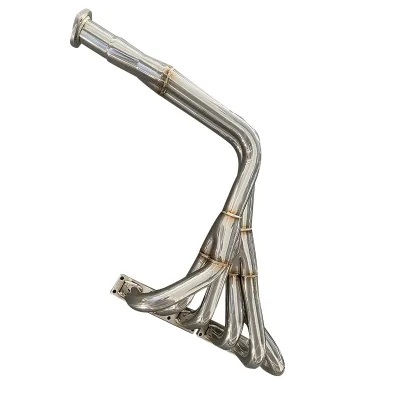
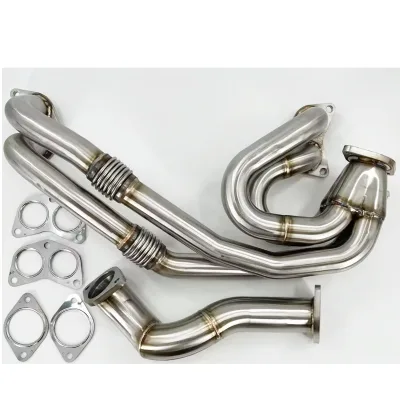
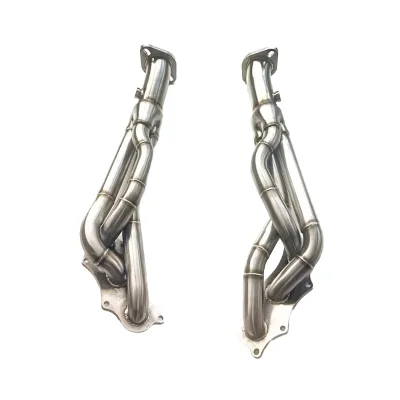
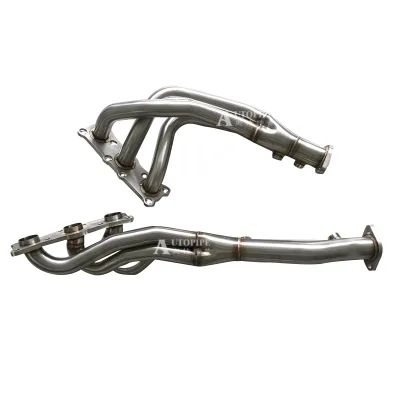
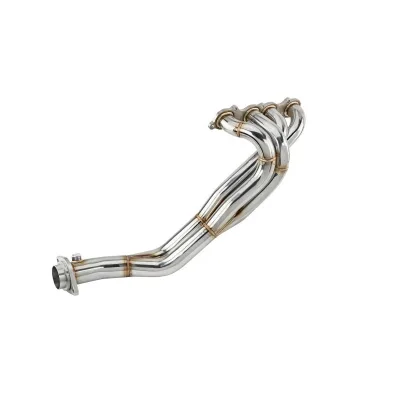


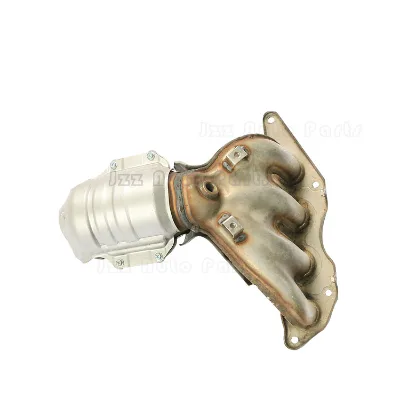
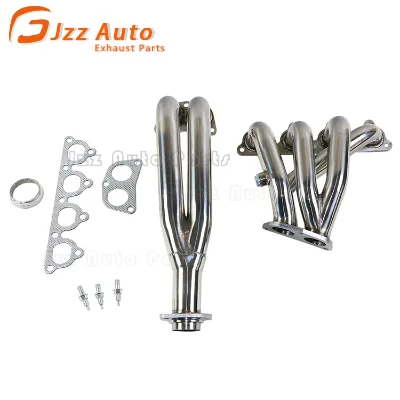


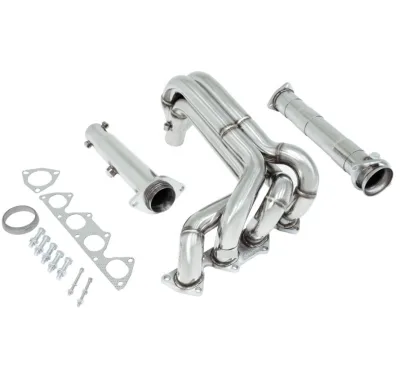

China Factory Supply Exhaust Muffler Universal Three Way Catalyst Converter
$20.00 - $180.00
MOQ: 50 Pieces


Comprehensive Sourcing Guide
Strategic Sourcing Guide for Euro Iv Exhaust Header Systems
Understanding the Technical Landscape of Exhaust Headers
When sourcing an exhaust header, particularly one aligned with Euro IV emission standards, buyers must first distinguish between the core component and the broader exhaust system. The provided product data indicates that the primary item under consideration is an "Exhaust Header," which serves as the initial collection point for exhaust gases from the engine cylinders before they enter the rest of the system. The technical specifications observed in the market reveal a strong reliance on steel-based construction, with specific mentions of "304 Stainless Steel" and general "Steel" variants. This material choice is critical for durability and corrosion resistance, especially given the high-temperature environment of an engine bay.
The manufacturing process is a defining characteristic of these components. The data highlights "Dual TIG WELDING" and "High Temperature TIG Welding" as prevalent techniques. TIG (Tungsten Inert Gas) welding is essential for creating the clean, precise joints required to maintain exhaust integrity and prevent leaks. The thickness of the material is another vital specification, with observed values of "1.5mm" for both wall size and steel sheet thickness. This gauge suggests a balance between structural rigidity to withstand thermal expansion and weight reduction for vehicle performance. Furthermore, the surface finish is noted as "Polished Stainless Steel" with a "Smooth" finish, which not only aids in heat management but also provides a premium aesthetic for performance applications.
It is important to note that while the core keyword focuses on Euro IV compliance, the observed product attributes list "Car Model" as "vintage car" or "universal," and "Car Make" as "Universal Exhaust System." This indicates that the specific Euro IV header is likely a custom-engineered solution or a universal fitment designed to adapt to various engine configurations rather than a direct bolt-on for a single specific model year. The "Single package size" varies significantly, ranging from 58x50x21 cm to 98x45x48 cm, reflecting the custom nature of the product where dimensions are tailored to the specific engine bay constraints of the buyer's application.
Compliance Verification and Certification Standards
Navigating the regulatory landscape for Euro IV exhaust systems requires rigorous verification of supplier certifications. The supplied product facts explicitly mention "ISO9001" as a standard associated with the manufacturing process. ISO9001 is a quality management standard that ensures the supplier has consistent processes in place, which is a foundational requirement for any automotive component manufacturer. However, ISO9001 alone does not certify that the exhaust header meets specific Euro IV emission limits. Euro IV standards are defined by the European Union's emission directives, which dictate limits on pollutants such as nitrogen oxides (NOx), carbon monoxide (CO), and hydrocarbons (HC).
Buyers must understand that the "Product Name" listed as "Exhaust Header" is a component, not a complete catalytic converter system. While the header directs gases efficiently, the actual emission reduction is often handled by downstream components like catalytic converters and particulate filters. Therefore, when evaluating a supplier for a Euro IV compliant header, the buyer must verify that the header design facilitates the optimal flow of gases to the downstream emission control devices without creating backpressure that could hinder the system's overall performance.
The data indicates a "Quality" attribute of "100% Tested." While this is a positive indicator, buyers should demand specific test reports that validate the header's contribution to the vehicle's overall emission compliance. The "Standard" field in the data lists ISO9001, but it does not list specific emission standards like Euro IV or EPA certifications. Consequently, the buyer must treat the "Competitive" price and "Quality" claims as observations that require independent validation. The supplier's origin is listed as "Jiangsu China" and "Anhui, China," regions known for automotive manufacturing, but the buyer must ensure that the specific factory holds the necessary export licenses and compliance documentation for the destination market.
Cost Drivers and Pricing Dynamics
The pricing for exhaust headers is influenced by a complex interplay of material costs, manufacturing complexity, and customization requirements. The observed price range in the market spans from 1 USD to 339.02 USD. This wide disparity is likely driven by the distinction between simple, off-the-shelf universal headers and highly customized, high-performance units. The lower end of the spectrum may represent basic steel headers with minimal finishing, while the higher end likely corresponds to 304 Stainless Steel units with polished finishes, dual TIG welding, and custom engineering.
Material costs are a primary driver. The use of "304 Stainless Steel" is significantly more expensive than standard carbon steel due to the alloying elements required for corrosion resistance and high-temperature stability. The "Thickness" of 1.5mm also adds to the material cost compared to thinner gauges. Additionally, the "Welding" process, specifically "High Temperature TIG Welding," is labor-intensive and requires skilled technicians, which increases the unit cost. The "Single gross weight" varies from 8.000 kg to 21.310 kg, further indicating that heavier, more robust headers command higher prices.
Customization is another major cost factor. The data confirms that "Customization" is available, with options for "Drawing Customization" and "Color: Custom." Custom headers require unique tooling, engineering time, and potentially smaller production runs, all of which drive up the price. The "MOQ" (Minimum Order Quantity) is listed as 50 Sets, 50 Pcs, or 50pcs, suggesting that suppliers are willing to accommodate small batches, but the per-unit cost for these smaller orders will be higher than for bulk purchases. The "Packing" method, described as "in Carton" or "Carton Packing," also adds to the logistics cost, especially given the varying package sizes and weights.
Typical Applications and Fitment Considerations
The application of Euro IV exhaust headers extends across various vehicle segments, though the data points to specific use cases. The "Application" is broadly listed as "Automotive Exhaust System," "Performance Exhaust," and "Auto Exhaust System." This suggests that these headers are suitable for both standard passenger vehicles and high-performance tuning applications. The "Style" is described as "universal exhaust," and the "Car Fitment" is noted as "Other" or "Universal," indicating that these components are designed to be adaptable to a wide range of engine configurations.
However, the "Car Model" attribute specifically mentions "vintage car" and "universal." This is a crucial insight for buyers. Vintage car enthusiasts often seek to modernize older vehicles with Euro IV compliant systems to meet current environmental regulations while maintaining the classic aesthetic. In such cases, the header must be custom-fabricated to fit the unique engine bay of the vintage vehicle. The "Size: custom" and "Single package size" variations support this, implying that the supplier can produce headers to specific dimensional requirements.
For performance applications, the "Application: Performance Exhaust" tag highlights the importance of flow dynamics. A well-designed header reduces backpressure, allowing the engine to breathe more efficiently, which can improve horsepower and torque. The "Dual TIG WELDING" and "Polished Stainless Steel" finish are particularly relevant here, as they ensure the header can withstand the high thermal loads of performance driving without degrading. The "Warranty: 1 years" or "1 year" suggests that suppliers are confident in the durability of their products, but buyers should verify if this warranty covers specific failure modes related to heat or corrosion.
Supplier Evaluation and Sourcing Strategy
Evaluating suppliers for exhaust headers requires a multi-faceted approach that goes beyond the basic product attributes. The data lists the "Brand Name" as "Autopipe," but buyers should not rely on a single brand. Instead, the focus should be on the supplier's capabilities, as evidenced by the "Service: 24 Hours" and "Quality: 100% Tested" attributes. These indicate a commitment to responsiveness and quality assurance, which are essential for B2B procurement.
The "Place of Origin" is listed as "Jiangsu China" and "Anhui, China." These regions have established automotive supply chains, but buyers must verify the specific factory's capacity and history. The "MOQ: 50 Sets" or "50 Pcs" is a significant constraint; buyers with smaller requirements may need to negotiate or find suppliers with lower thresholds. The "Lead time" is not explicitly provided in the data, so buyers must directly inquire about production schedules to ensure timely delivery.
When comparing suppliers, buyers should look for consistency in the "Welding" and "Material" specifications. The presence of "High Temperature TIG Welding" and "304 Stainless Steel" in multiple listings suggests these are industry standards for quality headers. However, buyers must verify that the specific supplier can consistently deliver these specifications. The "Single gross weight" and "Single package size" data can be used to estimate shipping costs, which is a critical factor in the total cost of ownership. Buyers should also check if the supplier offers "Customized service: Drawing Customization," as this capability is often necessary for achieving a perfect fitment in non-standard applications.
Quality Control and Long-Term Procurement
Ensuring long-term reliability of exhaust headers involves a robust quality control (QC) process. The "Quality: 100% Tested" attribute is a strong starting point, but buyers should define what this testing entails. Does it include pressure testing, leak detection, or thermal cycling? The "Warranty: 1 years" provides a baseline for recourse, but a comprehensive QC plan should include pre-shipment inspections and material certification verification.
The "Process" attributes, such as "Surface: Polished Stainless Steel" and "Finish: Smooth," are not just aesthetic; they impact the longevity of the component. A smooth finish reduces the accumulation of carbon deposits and facilitates easier cleaning, which is beneficial for long-term maintenance. The "Thickness: 1.5mm Steel Sheet" is a key specification that must be verified during QC to ensure the header can withstand the thermal expansion and contraction cycles of the engine.
For long-term procurement, buyers should consider the "Customization" aspect as a strategic advantage. The ability to order "Drawing Customization" allows for the creation of headers that are optimized for specific engine configurations, potentially improving performance and compliance over time. The "Service: 24 Hours" attribute suggests that the supplier is responsive to issues, which is vital for maintaining a steady supply chain. However, buyers should also establish clear communication channels for technical support and after-sales service.
The "Product Name: Exhaust Header" and "Type: Exhaust System" indicate that these components are part of a larger ecosystem. Buyers should consider the compatibility of the header with other exhaust system components, such as catalytic converters and mufflers. The "Muffler Type: Rear Muffler" suggests that the header is designed to work with a specific rear-mounted muffler configuration, which buyers must account for in their system design.
Summary of Key Specifications and Compliance Checklist
To facilitate a streamlined procurement process, buyers should utilize the following checklist based on the observed product data. This table summarizes the critical attributes that must be verified during the sourcing process.
| Attribute Category | Key Specification | Verification Requirement |
|---|---|---|
| Material | 304 Stainless Steel / Steel | Verify mill certificates for material grade and thickness (1.5mm). |
| Welding | Dual TIG / High Temperature TIG | Inspect weld quality for porosity and penetration; verify TIG process certification. |
| Standard | ISO9001 | Confirm valid ISO9001 certification for the specific manufacturing facility. |
| Fitment | Universal / Vintage Car / Custom | Validate fitment drawings against the target vehicle's engine bay dimensions. |
| Quality | 100% Tested | Request specific test reports (pressure, leak, thermal) and warranty terms. |
| Packaging | Carton Packing | Verify packaging dimensions (e.g., 58x50x21 cm) for logistics planning. |
| Origin | Jiangsu / Anhui, China | Confirm factory location and export compliance for the destination market. |
| MOQ | 50 Sets / 50 Pcs | Negotiate MOQ based on project scale; confirm lead times for small batches. |
By adhering to these specifications and verification steps, buyers can ensure that the sourced exhaust headers meet the technical, regulatory, and performance requirements of Euro IV standards while maintaining cost efficiency and long-term reliability. The data provided offers a solid foundation for understanding the market landscape, but active engagement with suppliers to confirm specific compliance details remains the most critical step in the procurement journey.
FAQs
What material is used for the exhaust header?
The exhaust header is constructed from 304 Stainless Steel or general Steel. This material choice ensures durability and corrosion resistance suitable for high-temperature engine environments.
Can I request custom dimensions for the header?
Yes, customization is available including drawing customization and custom sizes. Buyers can specify unique dimensions to fit vintage cars or universal applications with specific engine bay constraints.
What is the minimum order quantity for this product?
The minimum order quantity is 50 sets, 50 pieces, or 50 pcs depending on the specific listing. Suppliers require this threshold to initiate production for both standard and custom units.
How is the header welded to ensure quality?
The headers utilize Dual TIG Welding or High Temperature TIG Welding techniques. This process creates precise, clean joints essential for maintaining exhaust integrity and preventing leaks under thermal stress.
Which certifications do the manufacturers hold?
Manufacturers adhere to the ISO9001 standard for quality management. This certification confirms consistent manufacturing processes, though specific Euro IV emission compliance requires further verification of downstream system integration.
What is the typical wall thickness of the header?
The wall size and steel sheet thickness are specified as 1.5mm. This gauge provides a balance between structural rigidity to withstand thermal expansion and weight reduction for vehicle performance.
Where are these exhaust headers manufactured?
Products originate from Jiangsu China and Anhui China. These regions have established automotive supply chains, but buyers must verify specific factory capabilities and export documentation for their target markets.