Source Euro V Exhaust Catalytic Converter for Cars, Trucks, Buses
Find 30 listings for the Euro V Exhaust Catalytic Converter suitable for automotive exhaust systems. Buyers can compare specifications like discharge standards, materials, and carrier types from verified manufacturers in China.
Key considerations
Products List
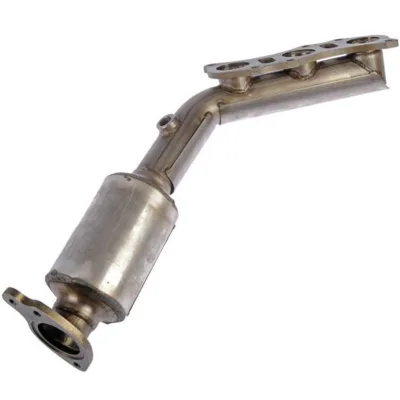


High Quality Catalytic Converter with Cheap Price Muffler Exhaust for Seal
$20.00 - $180.00
MOQ: 50 Pieces


Best Quality Euro 3/4/5 Universal Catalytic Converter for Auto Exhaust
$20.00 - $180.00
MOQ: 50 Pieces


Automobile Catalytic Converter for Effectively Purifying Automobile Exhaust
$20.40 - $168.00
MOQ: 50 Pieces


Comprehensive Sourcing Guide
Strategic Sourcing Guide for Euro V Exhaust Catalytic Converters
Understanding the Core Product and Technical Architecture
The procurement of a Euro V Exhaust Catalytic Converter requires a precise understanding of the component's role within the automotive exhaust system. This device is engineered to reduce harmful emissions from internal combustion engines, specifically targeting the criteria established by the Euro V discharge standard. The core function involves the conversion of toxic gases, such as carbon monoxide, hydrocarbons, and nitrogen oxides, into less harmful substances through catalytic reactions.
When evaluating the technical architecture, buyers must distinguish between the substrate material and the housing construction. The supplied data indicates that the monolith, or the internal structure where the chemical reaction occurs, is typically ceramic, often described as a honeycomb substrate with a density of 400 cpsi (cells per square inch). This ceramic structure provides the necessary surface area for the catalyst coating to function effectively. The housing, which protects the fragile monolith, is constructed from stainless steel, with specific grades like 409 Stainless Steel noted in the specifications. This material choice is critical for withstanding the extreme thermal cycles and corrosive environment of an exhaust system.
The physical dimensions of the converter are a primary constraint in the sourcing process. The inlet diameter is a variable specification that must match the vehicle's existing piping. Observed data lists standard inlet diameters of 2", 2.25", 2.5", and 3". For custom applications, the model number and size are often customizable, with options ranging from direct fit configurations to universal models that require modification during installation. The carrier type can vary between metal and ceramic, though the ceramic honeycomb substrate is the predominant configuration for high-efficiency emission control.
Compliance Verification and Certification Standards
Navigating the regulatory landscape is the most critical step in sourcing Euro V components. The term "Euro V" refers to a specific emission standard, but the market often presents products claiming compliance with a broader range of standards. Buyers must verify that the product explicitly meets the Euro V discharge standard, as some listings may only reference Euro II, III, or IV. The provided facts indicate that standards can range from Euro 2 through Euro 5, as well as Odb and EPA standards, necessitating a careful review of the specific product data sheet.
Certification verification extends beyond the emission standard itself. A compliant supplier should provide documentation for multiple quality and safety certifications. The observed data highlights a cluster of certifications including ISOCE, CCC, E-Mark, RoHS, and TSComponent:Catalytic Converter. Furthermore, manufacturing quality systems are often validated through ISO9001 and Ts16949 certificates. The presence of these certifications is not merely a formality; they indicate that the manufacturing process adheres to international quality management systems and specific automotive industry standards.
It is important to treat these certifications as observations of specific products rather than universal guarantees for every item in a catalog. A buyer must request current, valid certificates for the specific batch of goods being purchased. The E-Mark, for instance, is a mandatory requirement for vehicles sold in the European Union, while CCC is relevant for the Chinese market. RoHS compliance ensures the product does not contain restricted hazardous substances. The "TSComponent" designation suggests adherence to specific technical standards for automotive components. Procurement teams must cross-reference the claimed certifications with the actual regulatory requirements of the destination market to avoid customs delays or legal non-compliance.
Cost Drivers and Pricing Dynamics
The pricing of catalytic converters is influenced by a complex interplay of material costs, manufacturing complexity, and regulatory compliance. The observed price range for these products spans from 1 to 299 USD, a wide variance that reflects differences in size, material grade, and certification levels. The primary cost driver is the precious metal content within the catalyst coating, which is not explicitly detailed in the provided facts but is a known industry factor. However, the material of the housing, specifically the use of 409 Stainless Steel versus other grades, significantly impacts the base cost.
Another significant cost factor is the customization level. Universal models, which offer flexibility in fitting various vehicle types, often carry a different price point compared to direct-fit components designed for specific chassis. The data indicates that customization is available, including the ability to customize the logo and specific dimensions. Customization typically incurs additional costs and may affect the Minimum Order Quantity (MOQ). The observed MOQ range is between 1 and 50 pieces, suggesting that some suppliers offer low-volume trials while others require bulk commitments for custom configurations.
Lead time also plays a role in the total cost of ownership. The data shows delivery times ranging from 10-15 days to within 30 days. Longer lead times may be associated with custom manufacturing runs, while stock items are likely available for faster shipment. Buyers should consider the total landed cost, which includes the unit price, shipping fees (available by sea, air, or express), and any potential tariffs. The origin of the product, specifically from Shandong, China, is a known factor in the supply chain, influencing logistics costs and lead times.
Typical Applications and Vehicle Integration
The application of Euro V catalytic converters is primarily within the automotive exhaust system, serving both passenger vehicles and light commercial vehicles. The data specifies the application as "Automotive Exhaust System," and the component is identified as a "Universal Catalytic Converter" or "Universal Catalytic Converters." This suggests that these units are designed to be adaptable to a wide range of vehicle models, provided the inlet and outlet dimensions match or can be adapted.
The integration of the converter depends heavily on the vehicle's chassis and engine configuration. The noise characteristics of the engine are a critical consideration during integration. The observed data lists various noise sources, including transmission noise, aerodynamic noise, mechanical noise, and combustion noise. A properly functioning catalytic converter must be integrated in a way that does not exacerbate these noise issues. The housing material, being steel, provides structural integrity, but the internal flow dynamics of the ceramic honeycomb substrate must be optimized to minimize backpressure, which can affect engine performance and noise levels.
The displacement of the engine is another factor that influences the selection of the converter. The data references displacement standards ranging from Euro 2 through Euro 6, indicating that the product line covers a wide spectrum of engine sizes and emission requirements. Buyers must ensure that the selected converter matches the engine displacement and the specific emission standard of the vehicle. The "Direct Fit" specification suggests that some models are engineered to replace existing units without modification, which simplifies the installation process and reduces the risk of integration errors.
Supplier Evaluation and Operational Capabilities
Selecting a reliable supplier is paramount for ensuring consistent quality and timely delivery. The data identifies the supplier type as a "Manufacturer," which implies direct control over the production process. This is generally preferable to trading companies, as it allows for better quality control and more transparent communication regarding technical specifications. The supplier's location is noted as Shandong, China, a region known for its manufacturing capabilities.
Key evaluation criteria for suppliers include their ability to support customization, their inventory status, and their quality assurance processes. The data confirms that customization is supported, with options for custom logos and sizes. The availability of "Nave Stock" (likely a typo for "New Stock" or "In Stock") suggests that some suppliers maintain inventory for immediate shipment, which is beneficial for urgent procurement needs. However, buyers should verify the actual stock levels, as availability can fluctuate.
Quality is another critical factor. The data mentions "OEM Quality," indicating that the products are manufactured to meet original equipment manufacturer standards. This is a strong indicator of reliability, but it must be backed by the aforementioned certifications. Buyers should request samples to verify the build quality, including the weld integrity of the steel housing and the condition of the ceramic monolith. The supplier's ability to provide detailed product specifications, including inlet diameters and material grades, is essential for making an informed purchasing decision.
Quality Control and Long-Term Procurement Strategy
Implementing a robust quality control (QC) strategy is essential for mitigating risks associated with catalytic converter procurement. Given the critical role these components play in emission compliance and vehicle safety, QC should begin at the supplier level and extend through the delivery process. Buyers should verify that the supplier conducts rigorous testing on the ceramic substrate and the stainless steel housing. The presence of ISO9001 and Ts16949 certifications suggests a structured approach to quality management, but on-site audits or third-party inspections may be necessary for high-volume orders.
Long-term procurement considerations involve building a sustainable supply chain. This includes establishing clear communication channels with the supplier regarding lead times, which can vary from 10-15 days to 30 days. Buyers should negotiate terms that account for potential delays, especially for custom orders. The packaging method, described as "Carton Box with Pallet or Wooden Case," is important for protecting the fragile ceramic components during transit. Ensuring that the packaging meets the requirements for sea, air, or express shipping is crucial to prevent damage.
Sustainability and compliance are also long-term factors. As emission standards evolve, buyers must ensure that their suppliers can adapt their product lines to meet future regulations. The data shows a range of standards from Euro 2 to Euro 5, indicating that the supplier has experience with multiple generations of emission control. However, buyers should confirm the supplier's roadmap for Euro 6 and beyond to ensure long-term viability. Finally, maintaining a relationship with a manufacturer that supports customization allows for flexibility in adapting to specific vehicle models or market requirements, ensuring a resilient and responsive supply chain.
Comparative Analysis of Product Specifications
To facilitate decision-making, the following table summarizes the key technical and operational attributes observed in the market for Euro V exhaust catalytic converters. This comparison highlights the variability in specifications that buyers must navigate.
| Attribute Category | Observed Specification Range | Key Considerations for Buyers |
|---|---|---|
| Discharge Standard | Euro II, III, IV, V, Odb, EPA | Must explicitly verify Euro V compliance for target markets. |
| Material (Housing) | Stainless Steel, 409 Stainless Steel | 409 grade offers corrosion resistance; verify grade for durability. |
| Monolith Type | Ceramic, Ceramic (Honeycomb) Substrate | 400 cpsi is a common density; check for structural integrity. |
| Inlet Diameter | 2", 2.25", 2.5", 3" | Critical for fitment; ensure exact match or customization capability. |
| Certifications | ISOCE, CCC, E-Mark, RoHS, TSComponent, ISO9001, Ts16949 | Verify validity and relevance to destination country regulations. |
| Customization | Available (Logo, Size, Model) | Assess MOQ impact and lead time for custom orders. |
| Delivery Time | 10-15 Days, Within 30 Days, 3-30 Days | Factor into inventory planning and rush order capabilities. |
| MOQ | 1 - 50 Pieces | Negotiate based on order volume and customization needs. |
| Origin | China, Shandong, China | Consider logistics costs and supply chain stability. |
| Packaging | Carton Box with Pallet, Wooden Case | Ensure packaging protects ceramic monolith during shipping. |
This table serves as a reference point for buyers to structure their inquiries and evaluate potential suppliers. It underscores the importance of verifying specific attributes rather than relying on general product descriptions. By systematically checking each attribute against the requirements of the target application, buyers can minimize the risk of procurement errors and ensure the acquisition of high-quality, compliant Euro V catalytic converters.
FAQs
What certifications do euro v exhaust catalytic converters typically have?
These converters often hold ISOCE, CCC, E-Mark, RoHS, and TSComponent certifications. Some listings also include ISO9001 and Ts16949 to verify quality management systems. Buyers must verify specific certificates for the batch to ensure regulatory compliance in their target market.
Which inlet diameters are available for universal models?
Standard inlet diameters include 2, 2.25, 2.5, and 3 inches. Customizable sizes are also available for specific vehicle requirements. The model number often reflects these dimensions or indicates a direct fit configuration for easier installation.
How long is the delivery time for these converters?
Delivery times range from 10 to 15 days for standard orders. Some suppliers offer delivery within 30 days or 3 to 30 days depending on stock availability. Custom orders may require longer lead times compared to items with new stock availability.
Can I customize the logo and dimensions of the converter?
Yes, customization is available for both logos and specific dimensions. Buyers can request custom sizes to match unique vehicle chassis requirements. This option allows for tailored solutions while maintaining the core stainless steel housing and ceramic monolith structure.
What material is used for the housing and monolith?
The housing is constructed from Stainless Steel 409 to withstand high temperatures. The internal monolith is typically a ceramic honeycomb substrate with 400 cpsi density. This combination ensures durability and effective catalytic conversion of harmful emissions.
Where are these converters manufactured and shipped from?
Products originate from China, specifically the Shandong region. Shipping options include sea, air, and express delivery methods. Packaging is provided in carton boxes with pallets or wooden cases to protect the components during transit.
What is the minimum order quantity for these parts?
The minimum order quantity ranges from 1 to 50 pieces depending on the supplier. Some vendors require a minimum of 50 pieces for certain configurations. Lower MOQs are often available for standard stock items to facilitate smaller trial orders.