Source Euro V Polished Exhaust Catback for BMW, Audi, Volvo
Compare 30 listings for Euro V Polished Exhaust Catback systems designed for BMW, Audi, and Volvo models. Buyers can review specifications, materials, and pricing to find suitable automotive parts for their vehicles.
Key considerations
Products List


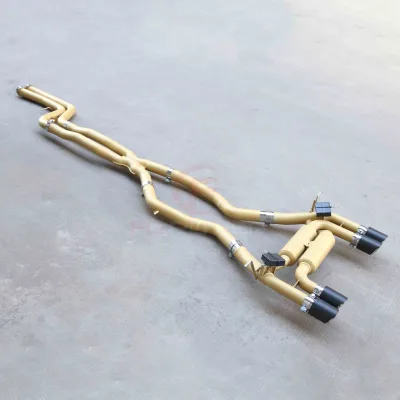
304 Stainless Steel Exhaust Catback for BMW M3 M4 G80 G82 S58 Axleback
$450.00 - $515.00
MOQ: 5 Pieces


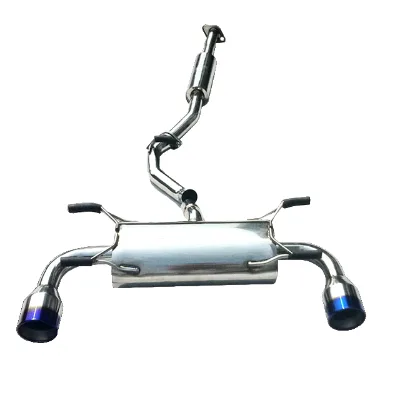


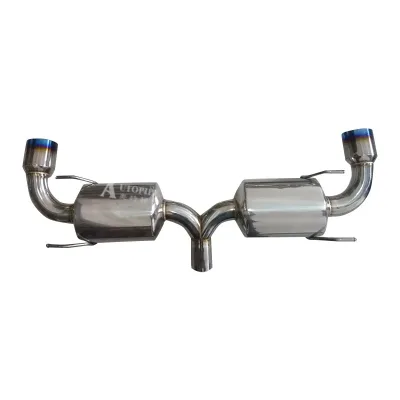
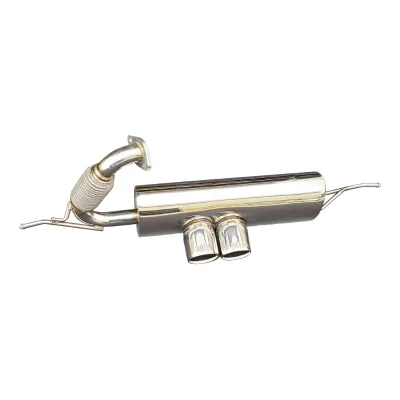
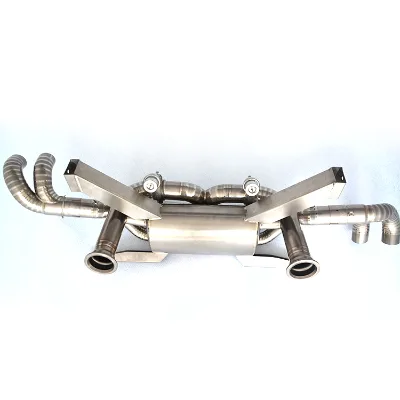
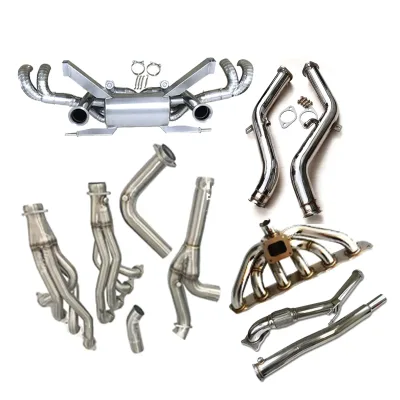
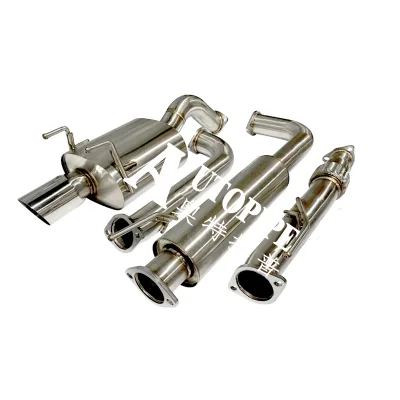
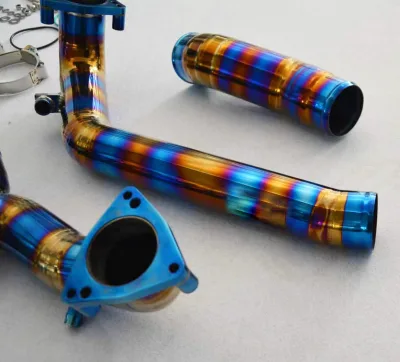


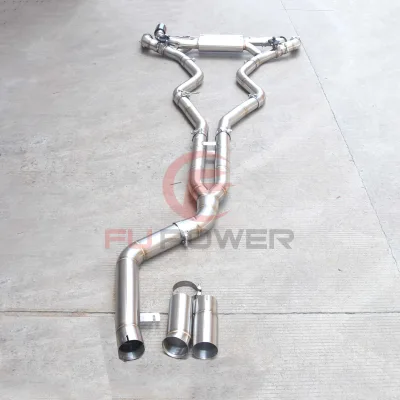
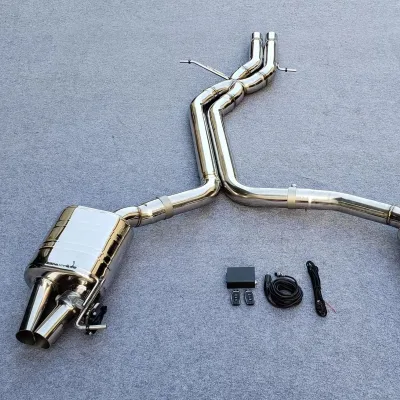
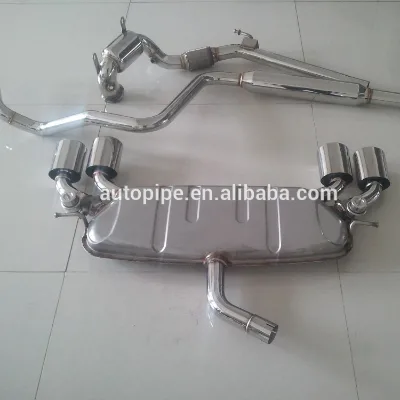


Comprehensive Sourcing Guide
Sourcing Guide for Euro V Polished Exhaust Catback Systems
Understanding the Technical Specifications of Polished Catback Systems
When sourcing a polished exhaust catback system that adheres to Euro V standards, buyers must first dissect the specific technical attributes that define the product's performance and durability. The core keyword implies a focus on the post-catalytic converter section of the exhaust system, designed to reduce noise and improve flow while maintaining a specific aesthetic finish. Based on observed market data, the primary material composition for these systems varies significantly, with 304 Stainless Steel and Titanium Alloy being the most frequently cited materials. The use of 304 Stainless Steel, often abbreviated as SS 304, is a critical observation for buyers seeking corrosion resistance and longevity in automotive applications. Additionally, some listings indicate the use of Alloy materials, which may refer to specific blends designed for weight reduction or thermal management.
The surface treatment process is equally vital to the "polished" aspect of the keyword. The supply chain data indicates that products undergo processes such as Polished, Bushed, and Sand Blasting. A polished finish is not merely cosmetic; it often requires a specific level of surface preparation to ensure the metal does not degrade under high-temperature exhaust conditions. The physical dimensions of these systems are highly variable, with single package sizes ranging from approximately 72x58x27 cm to larger configurations like 153x73x31 cm. Buyers must verify the exact dimensions against their vehicle's underbody clearance and mounting points. Furthermore, the weight of individual units is a logistical consideration, with observed single gross weights around 5.0 kg, though this will fluctuate based on the length of the catback and the density of the chosen material.
Compliance and Certification Verification Protocols
Compliance with emission standards is a non-negotiable aspect of sourcing exhaust systems, particularly when the keyword specifies "Euro V." The Euro V standard dictates the permissible limits for nitrogen oxides (NOx) and particulate matter. While the product listings explicitly mention "Euro V" as a discharge standard, buyers must exercise caution. In the B2B context, a listed standard often refers to the design intent or the regulatory framework the product was engineered to meet, rather than a guarantee that every unit sold passes a specific third-party emission test.
Certification data observed in the market includes ISOCE and ISOTS, specifically noted as "TSComponent:Exhaust Pipe." This suggests that the manufacturing process adheres to specific technical specifications for automotive components. However, the presence of these certifications in a product description does not automatically validate the emission compliance of the final installed product. Buyers should verify if the supplier can provide independent test reports confirming that the specific catback model, when installed on the target vehicle, maintains the vehicle's original emission compliance status. The "Discharge Standard: Euro V" attribute must be cross-referenced with the vehicle's original equipment manufacturer (OEM) specifications. If the vehicle was originally certified to Euro V, the aftermarket catback must not introduce backpressure or flow characteristics that would cause the vehicle to fail a re-test.
Furthermore, the "Main Market" attributes observed include Europe and North America. This geographic distinction is crucial because emission standards vary by region. A system marketed for the European market with a Euro V claim may not be legally compliant for sale or installation in North America, where standards like EPA Tier 2 or CARB may apply. Buyers must ensure that the "Euro V" claim is relevant to the destination market of the final product. The "Quality: 100% Tested" attribute found in some listings is a positive indicator, but it requires clarification on what specific tests were conducted—whether they are pressure tests, flow tests, or emission simulations.
Cost Drivers and Pricing Structure Analysis
The pricing landscape for polished exhaust catback systems is influenced by a complex interplay of material costs, manufacturing complexity, and customization requirements. The observed price range in the market spans from $20 to $1,699 USD. This wide disparity indicates that the keyword "polished exhaust catback" covers a broad spectrum of products, from simple, generic aftermarket pipes to high-performance, custom-fabricated systems using exotic materials like Titanium Alloy.
The primary cost driver is the material selection. Systems constructed from 304 Stainless Steel generally occupy the mid-range of the price spectrum, offering a balance between cost and durability. In contrast, systems utilizing Titanium Alloy or high-grade alloys will command premium prices due to the raw material cost and the specialized welding techniques required. The "Polished" finish also adds to the cost, as it requires additional labor and finishing steps compared to a standard brushed or black-coated finish.
Minimum Order Quantity (MOQ) is another significant factor affecting the unit cost. The observed MOQ range is between 1 and 50 units. Buyers purchasing a single unit or small batches (MOQ 1-10) will likely face a higher per-unit price, potentially approaching the upper end of the observed range. Conversely, bulk orders that meet higher MOQ thresholds (e.g., 50 units) may access lower price points, though the specific discount structure depends on the supplier. Customization is listed as "Available," and this service invariably increases the cost. Options such as "Customized Logo," "Customized Color," and specific model fitments (e.g., "For G80 G82 M3 M4" or "BMW G20 G21 Catback") require dedicated tooling or programming, which adds to the final price.
Typical Applications and Vehicle Fitment
The versatility of polished exhaust catback systems is evident in the diverse range of vehicle models listed in the supply data. The "Specification" attributes reveal that these systems are designed for specific high-performance and luxury vehicles. Common fitments include BMW models such as the M3, M4 (F80, F82, G80, G82), M850i (G15), and the G20/G21 series. There are also specific listings for the Audi B9 S4/S5, Volvo S60/V60, and the Porsche 911/992 Turbo S. Additionally, the data mentions fitments for the GT86/BRZ, indicating a broad application across different manufacturers and engine types.
The "Car Model" and "Car Fitment" attributes often list "Other" or generic terms, which suggests that some suppliers offer universal or semi-universal catback systems. However, the majority of the data points toward highly specific, model-matched products. This specificity is critical for buyers. A catback designed for a BMW M3 will not fit a Volvo S60 without significant modification, which could compromise the "Euro V" compliance and structural integrity. The "Part Number" (e.g., HHEX-C103) and "Model Number" are essential for ensuring the correct fitment. Buyers must match the specific vehicle chassis code and engine code (e.g., S55 for BMW M3/M4) to the product specification to avoid installation issues.
The "Noise Source" and "Automobile Chassis Noise" attributes provide insight into the acoustic engineering of these systems. The data notes that the noise source can be "The Noise of Engine," specifically "Mechanical Noise" or "Aerodynamic Noise," and the chassis noise is linked to "Tire Noise" or "The Brake Noise." While an exhaust catback primarily addresses engine noise, the overall acoustic profile of the vehicle is a combination of these factors. A polished catback system is often chosen to alter the sound profile, reducing drone while maintaining a sporty tone. Buyers should verify that the system's acoustic tuning aligns with their expectations, as the "Polished" finish does not inherently dictate the sound characteristics.
Supplier Evaluation and Manufacturing Capabilities
Evaluating suppliers for polished exhaust catback systems requires a deep dive into their manufacturing capabilities and geographic origins. The observed "Place of Origin" is predominantly China, with specific mentions of Zhejiang and Shanghai. These regions are known for their robust automotive parts manufacturing ecosystems. However, the location alone does not guarantee quality. Buyers should assess the supplier's ability to handle the specific surface treatments required, such as polishing and sandblasting, which demand specialized equipment and skilled labor.
The "Brand Name" attribute, such as "Hiwow," indicates that some suppliers operate under their own branding, while others may offer OEM services. The "Logo: Customized Logo Acceptable" and "Product Packing: Neutral Packing" or "Netural Packing" options suggest flexibility in branding and logistics. For B2B buyers, the ability to customize the logo and packaging is a significant advantage for private labeling. However, buyers must verify the supplier's capacity to maintain consistency in the polishing quality across large batches. Inconsistencies in the finish can lead to customer dissatisfaction and returns.
The "Single Package Size" and "Single Gross Weight" data provide clues about the supplier's packaging efficiency. Larger package sizes may indicate less optimized packing, which increases shipping costs. Buyers should calculate the total landed cost, including freight, by considering the volume and weight of the shipment. The "Selling Units: Single item" attribute suggests that some suppliers are willing to sell individual units, which is beneficial for small-scale testing or prototyping. However, for larger procurement needs, buyers should negotiate for consolidated shipping to reduce per-unit logistics costs.
Quality Control and Long-Term Procurement Considerations
Quality control is paramount when sourcing exhaust systems, as failures can lead to safety hazards and regulatory non-compliance. The "Quality: 100% Tested" attribute is a strong selling point, but buyers must define what "tested" entails. Ideally, the testing should include pressure tests to ensure there are no leaks, flow tests to verify the exhaust efficiency, and corrosion resistance tests to ensure the polished finish and material integrity hold up over time. The "Material: 304 Stainless Steel" and "Titanium Alloy" are known for their durability, but the welding quality is equally important. Poor welding can lead to cracks and failure under thermal stress.
Long-term procurement considerations involve the stability of the supply chain and the availability of spare parts. The "Customization: Available" attribute implies that the supplier can adapt to changing requirements, which is beneficial for long-term partnerships. However, buyers should ensure that the customization process does not compromise the standardization of the product. If a buyer orders a custom catback for a specific fleet of vehicles, they need to be confident that the supplier can reproduce the exact specifications for future orders.
The "Main Market" data showing Europe and North America suggests that the suppliers are familiar with the regulatory environments of these regions. However, buyers should verify that the supplier has a track record of meeting the specific compliance requirements of the target market. For instance, if the product is destined for the European Union, the supplier should be able to demonstrate compliance with relevant EU directives beyond just the "Euro V" discharge standard.
Finally, buyers should consider the "Discharge Standard: Euro V" in the context of future regulatory changes. As emission standards become stricter, the relevance of a Euro V-compliant catback may diminish. Buyers should assess the longevity of the product in the context of evolving regulations. If the goal is to sell or install these systems for a long period, investing in products that are designed to meet or exceed current standards, with the potential to adapt to future requirements, is a prudent strategy. The "Process" of surface treatment, such as "Polished / Bushed / Sand Blasting," also impacts the long-term maintenance requirements. A polished finish may require more frequent cleaning to maintain its appearance compared to a sandblasted or coated finish, which buyers should factor into their total cost of ownership analysis.
Strategic Sourcing Recommendations
To successfully source a polished exhaust catback system that meets the Euro V standard, buyers must adopt a rigorous, evidence-based approach. The wide range of prices, materials, and specifications observed in the market underscores the need for careful vetting. Buyers should prioritize suppliers who can provide clear documentation regarding material composition, surface treatment processes, and certification status. The specific fitment data, such as "For G80 G82 M3 M4" or "BMW G20 G21 Catback," must be matched precisely to the target vehicle to ensure compatibility and performance.
Cost analysis should go beyond the unit price to include logistics, customization fees, and potential rework costs. The MOQ flexibility observed (1-50 units) allows for a phased procurement strategy, enabling buyers to test quality before committing to larger orders. However, the "100% Tested" claim requires verification through independent audits or sample testing. Finally, the long-term viability of the product depends on the supplier's ability to maintain quality consistency and adapt to changing regulatory landscapes. By focusing on these critical factors, buyers can mitigate risks and secure a supply chain that delivers high-quality, compliant exhaust systems.
FAQs
What materials are used for Euro V Polished Exhaust Catback systems?
These systems primarily use 304 Stainless Steel or Titanium Alloy for durability. Some listings also specify Alloy materials for weight reduction. Buyers should verify the specific material grade to ensure corrosion resistance and longevity in high-temperature exhaust conditions.
Which certifications apply to Euro V Polished Exhaust Catback components?
Products often carry ISOCE and ISOTS certifications specifically for exhaust pipe components. While these indicate adherence to technical specifications, they do not guarantee that every unit passes third-party emission tests. Buyers must verify independent test reports for final compliance.
How does the MOQ affect the pricing of Euro V Polished Exhaust Catback systems?
Minimum Order Quantities range from 1 to 50 units, directly influencing the unit cost. Smaller orders typically face higher per-unit prices near the upper range of $1,699, while bulk orders meeting higher thresholds may access lower price points closer to $20.
Can buyers request customized logos and colors for these exhaust systems?
Yes, customization is available for logos and colors on these exhaust systems. Suppliers offer customized logo acceptance and neutral packing options. However, these services require dedicated tooling or programming, which invariably increases the final cost of the product.
What surface treatments are applied to Euro V Polished Exhaust Catback pipes?
Surface treatments include Polished, Bushed, and Sand Blasting processes. A polished finish requires specific surface preparation to prevent degradation under high heat. Buyers should confirm the exact treatment to ensure the aesthetic finish matches their requirements.
Which vehicle models are compatible with these Euro V Polished Exhaust Catback systems?
Fitments include specific models like BMW M3, M4, M850i, Audi S4, S5, Volvo S60, and Porsche 911. Some listings also support GT86 and BRZ models. Buyers must match the vehicle chassis code to the product specification to ensure proper installation.
Where are these Euro V Polished Exhaust Catback systems typically manufactured?
The products originate from China, specifically from regions like Zhejiang and Shanghai. These locations have robust automotive parts manufacturing ecosystems. Buyers should assess the supplier's capability to handle specialized surface treatments like polishing and sandblasting.