Source European Standard Industrial Schuko Plug for Cable, Power Supply, and Industrial Use
Find 30 European Standard Industrial Schuko Plug options from verified Chinese suppliers. Buyers can compare ratings, certifications, and materials for cable, power supply, and industrial applications.
Key considerations
Products List


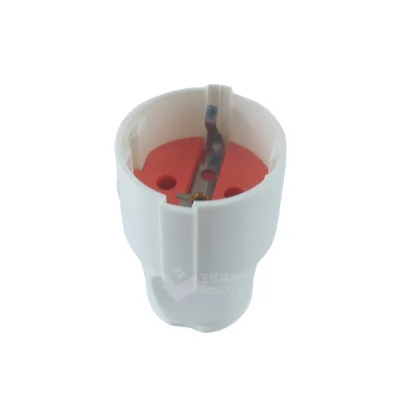
16A Cee European German Schuko AC Power Electrical Plug for Euro Industrial Socket
$0.20 - $0.80
MOQ: 100 Pieces


Comprehensive Sourcing Guide
Sourcing Guide for European Standard Industrial Schuko Plugs
Understanding Technical Specifications and Core Attributes
When sourcing European standard industrial Schuko plugs, buyers must first distinguish between general consumer-grade connectors and the robust industrial variants designed for harsh environments. The product landscape for this core keyword often includes items that adhere to specific dimensional and electrical constraints. Based on available market data, industrial Schuko plugs frequently feature a current rating of 16A, which is a critical threshold for heavy-duty applications where higher loads are expected. Some variants in the market may also support a 10A rating, necessitating careful verification of the specific model's capacity against the intended load.
The physical construction of these plugs is paramount for safety and durability. High-quality industrial units are typically manufactured using Nylon66 or Polypropylene (PP) materials, which offer superior resistance to heat, chemicals, and mechanical stress compared to standard plastics. The insulation material is often specified as PVC or Nylon (PA), ensuring that the internal conductors are protected from environmental factors. The shape of the plug is generally round, designed to fit into corresponding industrial sockets, though some listings may reference specific shape codes like "Ep" or "ADC" interface types. The interface type is a crucial detail, as it determines compatibility with the mating socket and the overall system architecture.
Electrical characteristics extend beyond current and voltage. The operating temperature range is a vital specification, with many industrial-grade units rated to function reliably from -30 degrees up to +80 degrees Celsius. This wide range ensures performance in extreme climates, from freezing outdoor sites to hot industrial workshops. The voltage rating is commonly observed at 230V, suitable for standard single-phase power supplies, though some products may be categorized under low and medium voltage cables. The pole configuration is another essential technical detail; a common configuration for these industrial plugs is 2p+E (two poles plus earth), which aligns with the European standard for grounding. The earth connecting position is often standardized at 6h, ensuring correct alignment during insertion.
Compliance and Certification Verification
Navigating the compliance landscape for European standard industrial Schuko plugs requires a rigorous verification process. The primary standard governing these products is IEC 60309-2, which defines the requirements for industrial plugs, socket-outlets, and couplers. While some background information may reference IEC 60309-1 or EN 50075, the specific product attributes often cite the IEC 60309-2 standard as the governing framework. Buyers must ensure that the supplier can provide documentation confirming adherence to this standard, as it dictates the safety, dimensional, and electrical performance requirements.
Certification is the tangible proof of compliance. The market data indicates a wide array of certifications associated with these products, including CE, CCC, VDE, BSI, T-Mark, SAA, PSE, SABS, UC, and Psb. The CE mark is particularly significant for the European market, indicating conformity with health, safety, and environmental protection standards. Additionally, the RoHS standard is frequently cited, ensuring that the product is free from specific hazardous substances. Other certifications like CCC (China Compulsory Certification) and VDE (German Association for Electrical, Electronic & Information Technologies) are critical for markets in China and Germany, respectively.
It is important to note that not every listed product will possess every certification mentioned in general market descriptions. A specific batch or model might carry CE and RoHS, while another might include VDE and BSI. Buyers should not assume that a product with a CE mark automatically holds VDE or SAA certification unless explicitly stated in the product documentation. The "European Standard" designation often implies compliance with CE and IEC standards, but the presence of other regional certifications like SAA (Australia) or PSE (Japan) suggests a broader export capability. Verification of the specific certificate number and the issuing body is a necessary step in the procurement process to avoid accepting non-compliant goods.
Cost Drivers and Pricing Dynamics
The pricing of European standard industrial Schuko plugs is influenced by several tangible factors, with the observed market range spanning from 0.1 to 5.6 USD. This wide variance is not arbitrary but reflects differences in material quality, certification depth, and production volume. The lower end of the price spectrum often corresponds to basic models with standard materials and minimal certification, while the higher end reflects units with advanced features, such as higher IP ratings, specialized materials like Nylon66, and comprehensive multi-region certifications.
Material composition is a primary cost driver. Plugs constructed from Nylon66 or high-grade PP are more expensive than those using standard PVC or lower-grade plastics due to the superior durability and thermal resistance of the former. The inclusion of specific features, such as a 16A current rating versus a 10A rating, also impacts the cost, as higher-rated components require more robust internal contacts and insulation. Furthermore, the complexity of the manufacturing process, including the precision required for the 6h earth position and the IP44 or IP67 sealing, adds to the production cost.
Order volume plays a decisive role in the final unit price. The Minimum Order Quantity (MOQ) for these products ranges significantly, from 50 units to 50,000 units. Suppliers often offer tiered pricing structures where the unit cost decreases as the order volume increases. A buyer ordering 50 units will likely pay a premium per unit compared to a bulk purchaser ordering 50,000 units. Packaging also influences the cost; options range from simple cartons (60PCS/Carton) to wooden boxes or specialized cartons, with more protective packaging incurring higher logistics and material costs. Buyers must balance the upfront unit price against the total landed cost, considering shipping, duties, and the potential for bulk discounts.
Typical Applications and Usage Scenarios
European standard industrial Schuko plugs are designed for a diverse range of applications, extending far beyond simple household use. The primary application areas include power supply systems for industrial machinery, construction sites, and telecommunication infrastructure. The robust nature of these plugs makes them ideal for environments where reliability is critical. In the construction sector, they are used to power heavy equipment and temporary lighting setups, where the IP44 or IP67 ratings provide necessary protection against dust and water ingress.
Industrial facilities utilize these plugs for connecting machinery that requires a stable and grounded power source. The 16A current rating supports high-power tools and equipment, while the single-phase configuration aligns with standard industrial power distribution in many European regions. The versatility of the product is further highlighted by its use in power stations and overhead or underground cable systems. The ability to operate in extreme temperatures (-30 to +80 degrees) makes these plugs suitable for outdoor installations in varying climates, from arctic conditions to tropical heat.
The specific model variations, such as those designated by codes like 112, I8, or 3AUK, often cater to niche applications. For instance, a model with a specific interface type like ADC might be tailored for specialized cable management systems. The application in telecommunication suggests use in data centers or communication towers where reliable power connectivity is essential for maintaining network integrity. Understanding the specific application environment is crucial for selecting the right plug, as a general-purpose unit may not suffice for a high-vibration or corrosive industrial setting.
Supplier Evaluation and Quality Control
Evaluating suppliers for European standard industrial Schuko plugs requires a focus on transparency, consistency, and quality assurance. The brand names observed in the market, such as Zhc, Xx, and WOER, indicate the presence of multiple manufacturers, each with their own quality standards. Buyers should verify the origin of the products, which is listed as China for many of these items, and assess the supplier's ability to maintain consistent quality across different batches. The presence of certifications like CCC, CE, and ISO is a strong indicator of a supplier's commitment to quality management systems.
Quality control processes should be a central part of the supplier evaluation. Buyers must inquire about the testing procedures used to verify the current rating, voltage tolerance, and insulation resistance. The observation of specific attributes like the "Flat Wire" material shape or "Red Copper Wire" core material suggests that the internal construction is a key area of focus. Suppliers should be able to provide test reports that confirm the product meets the IEC 60309-2 standard and the specified IP ratings. It is also important to check the consistency of the packaging, as variations in packing standards (e.g., 60PCS/Carton vs. Wooden Boxes) can indicate differences in the supplier's logistics capabilities and attention to detail.
When assessing suppliers, buyers should look for evidence of customization capabilities. The availability of customization is a significant advantage, allowing buyers to tailor the product to specific project requirements, such as unique color schemes (White, Blue, Black) or specific model configurations. However, customization often comes with higher MOQs and longer lead times, which must be factored into the procurement timeline. The supplier's ability to handle these custom requests without compromising quality is a key differentiator in the market.
Long-Term Procurement Considerations
Sourcing European standard industrial Schuko plugs is not merely a transactional activity but a strategic decision that impacts long-term operational efficiency. The durability of the product, determined by materials like Nylon66 and the robustness of the IP rating, directly influences maintenance costs and downtime. Investing in higher-quality plugs with comprehensive certifications can reduce the frequency of replacements and the risk of electrical failures, leading to significant cost savings over time.
Supply chain stability is another critical consideration. The wide range of MOQs (50 to 50,000) offers flexibility, but buyers must ensure that the supplier can scale production to meet demand fluctuations. The lead time, while not explicitly quantified in the provided data, is a variable that must be negotiated and managed, especially for customized orders. Buyers should establish a relationship with suppliers who can provide consistent lead times and reliable delivery schedules to avoid production delays.
Finally, the evolution of standards and regulations must be monitored. As safety standards evolve, the products currently in use may need to be replaced to maintain compliance. Suppliers who are proactive in updating their product lines to meet new IEC or regional standards will be more valuable partners in the long run. Buyers should prioritize suppliers who demonstrate a commitment to continuous improvement and regulatory compliance, ensuring that their procurement strategy remains robust and future-proof. By focusing on these long-term factors, buyers can secure a reliable supply of high-quality industrial Schuko plugs that meet their operational needs for years to come.
Comparative Analysis of Product Attributes
To facilitate informed decision-making, the following table summarizes key attributes observed in the market for European standard industrial Schuko plugs. This comparison highlights the variations in specifications that buyers should consider when selecting a supplier.
| Attribute | Observation A | Observation B | Observation C |
|---|---|---|---|
| Current Rating | 16A | 10A | AC Cable (General) |
| Material | Nylon66, PP | PVC | Nylon (PA) |
| IP Rating | IP44, IP67 | IP54 | Not Specified |
| Certifications | CE, CCC, VDE, BSI | CE, RoHS | CCC, CE, ISO, VDE |
| Voltage | 230V | Low/Medium Voltage | Not Specified |
| Pole Configuration | 2p+E | Single Phase | Not Specified |
| Operating Temp | -30°C to +80°C | Not Specified | Not Specified |
| Earth Position | 6h | Not Specified | Not Specified |
| Shape | Round | Ep | Not Specified |
| Brand Examples | Zhc, Xx, WOER | Not Specified | Not Specified |
| Model Examples | 112, I8, 3AUK | I30, AW3, AA8 | identity1 |
This table illustrates that while core attributes like the 2p+E configuration and CE certification are common, specific details such as current rating, material composition, and IP ratings vary significantly. Buyers must cross-reference these attributes with their specific project requirements to ensure compatibility and safety. The diversity in model numbers and brands suggests a highly fragmented market, reinforcing the need for thorough due diligence during the supplier selection process.
FAQs
What certifications are available for these plugs?
These plugs commonly carry CE, CCC, VDE, BSI, and RoHS certifications. Specific models may also include SAA, PSE, or SABS marks depending on the manufacturer and target export region.
What is the current rating for industrial Schuko plugs?
The standard current rating observed for these industrial plugs is 16A. Some specific models in the market may also support a 10A rating, so verify the exact model specification before purchase.
Which materials are used to construct these plugs?
High-quality units are typically manufactured using Nylon66 or Polypropylene (PP) for durability. The insulation material is often specified as PVC or Nylon (PA) to protect internal conductors.
Can these plugs be customized for specific needs?
Yes, customization is available for these products. Buyers can often request specific color options like white, blue, or black, or tailored model configurations to meet project requirements.
What is the operating temperature range for these plugs?
The operating temperature range is rated from -30 degrees up to +80 degrees Celsius. This wide range ensures reliable performance in extreme climates from freezing outdoor sites to hot workshops.
Which standard governs these industrial plugs?
The primary standard governing these products is IEC 60309-2. This standard defines the safety, dimensional, and electrical performance requirements for industrial plugs and socket-outlets.
What is the minimum order quantity for these items?
The minimum order quantity ranges from 50 units up to 50,000 units depending on the supplier and model. Bulk orders often result in lower unit costs compared to smaller quantities.