Source FDM Desktop 3D Printer for Prototyping, Manufacturing, and Education
Explore 30 verified listings for the FDM Desktop 3D Printer to compare build volumes, print speeds, and nozzle configurations. Buyers can evaluate options ranging from compact units to high-temperature models with dual nozzles for diverse manufacturing needs.
Key considerations
Products List




Comprehensive Sourcing Guide
Strategic Sourcing Guide for FDM Desktop 3D Printers
The global demand for additive manufacturing has driven a significant shift toward accessible, high-performance desktop solutions. For procurement professionals evaluating the core keyword "FDM Desktop 3D Printer," the market presents a complex landscape of technical capabilities, compliance requirements, and cost structures. This guide synthesizes observed market data and technical specifications to provide a disciplined framework for sourcing these devices. The objective is to equip buyers with the knowledge to navigate product variations, verify critical attributes, and mitigate supply chain risks without relying on unverified marketing claims.
Technical Architecture and Print Performance
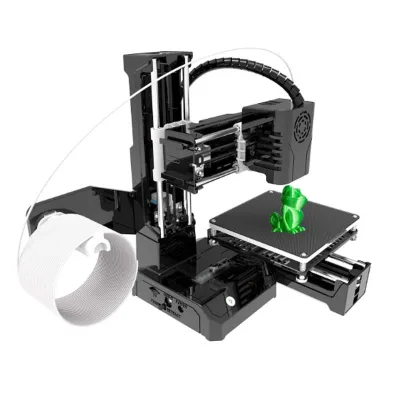
When evaluating FDM (Fused Deposition Modeling) desktop printers, the primary focus must be on the mechanical architecture and the resulting print fidelity. The observed market data indicates a divergence in nozzle configurations and precision levels. Some units feature a Double Nozzle setup, which is advantageous for multi-material printing or support structures, while others utilize a Single Nozzle or Number of Nozzle: 1 configuration. The choice between these depends heavily on the intended application; dual-nozzle systems often command a premium but offer greater versatility in complex geometries.
Precision is a critical differentiator. The data highlights specific resolution metrics, such as X/Y Resolution: 35um and Precision_X/Y: 0.05mm, alongside a Z-axis precision of 0.1mm. These figures represent the theoretical limits of the machine's motion control systems. Buyers must distinguish between these mechanical tolerances and the practical Printing Accuracy: 0.1-0.2mm often cited in general specifications. Furthermore, the Minimum Print Layer Thickness is observed at 0.025mm, which allows for high-detail surface finishes, whereas typical operational ranges may fall between 0.1-0.4mm.
Speed and temperature control are equally vital. Observed Print Speed ranges vary significantly, from 10-40mm/S for high-fidelity models to 500 mm/S Max for rapid prototyping units. The Extruder Temperature capabilities also differ, with standard ranges of 180-230℃ for common filaments and specialized High-Temp Nozzle units capable of reaching 300°C. This thermal capacity directly correlates with the Support materials listed, such as PLA/PETG/ABS/TPU/Nylon. A buyer must verify that the printer's thermal envelope matches the specific engineering plastics required for their production environment.
Physical Dimensions and Build Volume
The physical footprint of the printer and its build volume are decisive factors for facility planning. The market data reveals a wide spectrum of Build Volume and Building Size specifications. Compact units may offer a Building Size: 100X100X100mm, suitable for small jewelry or micro-mechanical parts. In contrast, larger desktop models provide a Build Volume: 225 X 225 X 265 mm or even larger dimensions like 545 * 575 * 645mm.
The external dimensions, often listed as prod_standard or Packing Size, are essential for logistics and installation. Observed packing sizes include 230X90X350mm and 630605230 mm. These dimensions dictate the required workspace and shipping constraints. The Net Weight is another logistical consideration, with observed values such as 16.8kgs. Procurement teams must ensure that the receiving facility can accommodate the weight and dimensions of the unit, particularly if the prod_packing involves a Carton or 1 PCS /Box configuration that requires specific handling equipment.
Compliance, Certification, and Regulatory Standards
Navigating the regulatory landscape is non-negotiable for B2B procurement. The observed certification data includes a robust set of standards: CE, FCC, RoHS, Reach, Weee, PSE, and CCC. These certifications indicate compliance with electrical safety, electromagnetic compatibility, and environmental restrictions in various global markets. For instance, CE and FCC are critical for operations in Europe and North America, while CCC is mandatory for the Chinese market.
Buyers must verify that the specific unit they are purchasing carries the valid certification for their target region. The presence of Reach and Weee compliance suggests adherence to chemical safety and waste disposal regulations, which is increasingly important for corporate sustainability goals. Additionally, the prod_standard of 160x200x250mm may refer to internal safety or dimensional standards that the manufacturer adheres to, but external regulatory compliance should be confirmed via the supplier's documentation. The Condition: New status is a baseline requirement, ensuring that the equipment has not been previously used or modified, which could void certifications.
Cost Drivers and Pricing Dynamics
The pricing for FDM desktop 3D printers exhibits a massive variance, with an observed range of 22.99-133000 USD. This wide spectrum is driven by several key factors. The Power Input requirements, ranging from 12V, 24W for low-power models to 100-120 VAC / 220-240 VAC 360W for industrial-grade desktop units, significantly impact the cost. Higher power consumption often correlates with faster print speeds and the ability to process high-temperature materials like Nylon or ABS.
The Nozzle Diameter of 0.4mm is a standard specification, but the complexity of the extruder system and the Forming Technology: FDM implementation also influence price. Units with advanced features like a 4.3 Inch Full Color Touch Screen and Language: English / Chinese / Operating support interfaces tend to be priced higher. Furthermore, the Slicer Software compatibility, including K9, CURA, Simplify3D, adds value to the ecosystem. The Selling Units: Single item structure suggests that these are typically sold as complete packages, though the MOQ range: 1-10 indicates flexibility for bulk orders. Buyers should analyze the total cost of ownership, including filament costs (Diameter of Filament: 1.75mm, Printing Filament: PLA) and maintenance, rather than focusing solely on the initial purchase price.
Supplier Evaluation and Origin Verification
Geographic origin plays a significant role in the supply chain dynamics. The data indicates that the prod_origin is primarily China, with specific hubs in Shenzhen, China and Guangdong, China. These regions are known for their dense manufacturing ecosystems and supply chain efficiency. However, buyers must conduct rigorous due diligence on the specific supplier. The Customization: Available and Customized: Customized attributes suggest that many manufacturers offer tailored solutions, which can be a double-edged sword. While customization allows for specific branding or feature integration, it can also lead to longer lead times and higher minimum order quantities.
When evaluating suppliers, the prod_model identifiers such as 26ZT0017, T300D Pro, and K9 serve as critical reference points. Buyers should request detailed datasheets that match these model numbers to the specific technical attributes observed. The Single package size: XX cm entry in the data highlights a potential gap in information; buyers must insist on precise packaging dimensions to calculate shipping costs accurately. Furthermore, the Color: Black or Blue options may affect the aesthetic integration of the printer into a professional workspace, though this is often a secondary consideration to performance.
Quality Control and Long-Term Procurement Strategy
Ensuring consistent quality requires a structured approach to acceptance testing. The Printing Speed and Precision metrics observed in the market data must be validated through actual print trials. Buyers should test the Layer Thickness consistency against the claimed 0.025mm minimum and verify the Extruder Temperature stability during extended runs. The Net Weight and Build Volume should be physically verified to ensure the unit matches the specification sheet.
For long-term procurement, the availability of Slicer Software updates and technical support is crucial. The Language support and Display interface usability affect the learning curve for operators. Additionally, the Condition: New status must be maintained through proper storage and handling protocols. The Forming Technology: FDM is a mature process, but the longevity of the machine depends on the quality of the Nozzle Number components and the Diameter of Filament compatibility. Buyers should establish a maintenance schedule that includes nozzle replacement and belt tension checks.
Comparative Analysis of Key Specifications
To facilitate decision-making, the following table summarizes the key technical variations observed in the market data. This comparison highlights the trade-offs between speed, precision, and build volume.
| Feature Category | Low-End / Compact Profile | High-Performance / Large Profile |
|---|---|---|
| Build Volume | 100x100x100 mm | 545 x 575 x 645 mm |
| Nozzle Configuration | Single (1) | Double (2) |
| Print Speed | 10-40 mm/S | Up to 500 mm/S |
| Power Input | 12V, 24W | 360W (100-240 VAC) |
| Precision (X/Y) | 0.1 mm | 0.05 mm |
| Max Temp | 230°C | 300°C |
| Material Support | PLA | PLA, PETG, ABS, TPU, Nylon |
| Display Interface | Standard | 4.3 Inch Full Color Touch |
This comparison illustrates that there is no single "best" printer; the optimal choice depends entirely on the specific application requirements. A buyer focusing on rapid prototyping of small parts may prioritize the compact profile, while a team producing functional end-use parts will likely require the high-performance profile.
Final Procurement Considerations
In conclusion, sourcing FDM desktop 3D printers requires a meticulous alignment of technical specifications with operational needs. The observed data confirms that the market offers a diverse range of options, from basic 160x200x250mm standard units to complex 630605230 mm systems. Buyers must prioritize verification of certifications like CE, FCC, and RoHS to ensure regulatory compliance. The wide price range necessitates a clear definition of budget constraints versus performance requirements. By focusing on the core attributes of nozzle configuration, build volume, and material compatibility, procurement teams can make informed decisions that support their long-term manufacturing goals. The flexibility of Customization: Available and the MOQ range: 1-10 further enhance the sourcing strategy, allowing for scalable adoption of additive manufacturing technologies.
FAQs
What certifications do FDM desktop 3D printers typically hold?
These printers typically hold CE, FCC, RoHS, Reach, Weee, PSE, and CCC certifications. Buyers must verify that the specific unit carries valid certification for their target region to ensure regulatory compliance for electrical safety and environmental restrictions.
How does nozzle configuration affect print versatility?
Some units feature a double nozzle setup for multi-material printing, while others use a single nozzle. Dual-nozzle systems offer greater versatility in complex geometries but often command a premium compared to single-nozzle configurations.
What is the range of build volumes available?
Build volumes range from compact 100x100x100mm units to large 545x575x645mm desktop models. Procurement teams must ensure the receiving facility can accommodate the external dimensions and net weight of the selected unit.
Can these printers support high-temperature engineering materials?
Yes, specialized units with high-temp nozzles can reach 300°C to support materials like Nylon and ABS. Standard units typically operate between 180-230°C for common filaments like PLA and PETG, so thermal capacity must match material requirements.
Where are the primary manufacturing origins for these devices?
The primary manufacturing origins are China, specifically hubs in Shenzhen and Guangdong. Buyers should conduct due diligence on specific suppliers in these regions while verifying model numbers and customization capabilities for tailored solutions.
What is the typical power consumption for these printers?
Power input ranges from low-power 12V, 24W models to industrial-grade 360W units. Higher power consumption often correlates with faster print speeds and the ability to process high-temperature materials, significantly impacting the total cost of ownership.