Source FDA Silicone Card Protectors for Business, Home, Travel
Compare 30 listings for FDA Silicone Card Protectors designed for business, home, and travel use. Buyers can evaluate customization options, material properties like softness, and packaging details from suppliers in China.
Key considerations
Products List


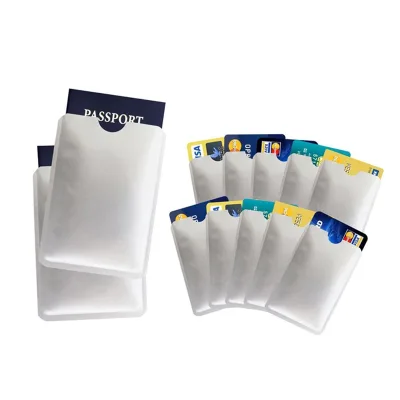
NFC / RFID Blocking Sleeves for Credit Card Protector / Data Protecting
$0.01 - $0.05
MOQ: 500 Minimum


RFID Blocking Card for Protecting Your ID and Credit Card Protector
$0.80 - $1.35
MOQ: 500 Piece/Pieces


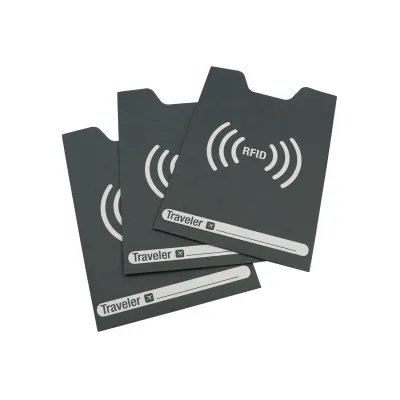

Custom Logo ATM Card Protector RFID Blocking Secure Anti-Sca Card Sleeve
$0.03 - $0.07
MOQ: 1000 Pieces


Comprehensive Sourcing Guide
Strategic Sourcing Guide for FDA-Compliant Silicone Card Protectors
Understanding Material Composition and Physical Properties
When sourcing silicone card protectors, the primary distinction lies in the material formulation and its resulting physical characteristics. The supplied product data indicates a clear divergence in material specifications, with some listings explicitly identifying Silicone as the core material while others reference Acrylic or PVC. For buyers specifically targeting "FDA Silicone Card Protectors," it is imperative to verify that the material attribute is indeed Silicone, as Acrylic and PVC do not inherently meet the same biocompatibility or chemical resistance profiles often associated with FDA-grade silicone. The observed product attributes highlight a "Soft" hardness rating for silicone variants, contrasting with "Partial Hard" ratings found in other listings. This softness is a critical functional attribute, ensuring the protector conforms to the card's shape without adding excessive bulk, which is essential for smooth insertion into wallets or cardholders.
The physical dimensions of these protectors vary significantly across the market. While some data points suggest standard credit card dimensions of 54*85mm or 73*110mm, other entries indicate customizable sizes ranging from 88*60mm to 142*100mm. Buyers must recognize that "FDA" refers to the material safety certification rather than a fixed geometric standard. Therefore, the procurement strategy should prioritize suppliers who can demonstrate that their silicone material meets FDA requirements regardless of the specific size customization. The transparency of the material is another key observation, with some products boasting 99% transparency, a feature that allows for easy identification of the card details without removing the protector. This optical clarity is often a result of the silicone formulation and the molding process, distinguishing it from the potentially opaque or tinted nature of PVC alternatives.
Technical Specifications and Functional Capabilities
The functional requirements for card protectors extend beyond simple physical shielding. The supplied data reveals a spectrum of technological capabilities, ranging from passive protection to active security features. Some listings describe the product as an NFC/RFID blocking card sleeve with a Passive Card power supply mode, designed to prevent unauthorized scanning. These units utilize a Non-Contact Type read-write method and function as Read-only Cards to protect payment information. However, it is crucial to distinguish between the material (silicone) and the security technology (RFID blocking). A silicone protector may be FDA-compliant but lack RFID shielding unless a specific conductive layer or mesh is integrated. Buyers should verify if the "Silicone" listing includes the necessary conductive materials for anti-scan functionality, as the base silicone material itself is an insulator.
Thickness is another critical technical specification that impacts usability. The observed data indicates a thickness range of 0.5-0.84mm. This range is generally considered optimal for card protectors, providing sufficient durability without compromising the ability to slide the card into tight card slots. Products with a thickness outside this range may be too rigid for standard wallets or too flimsy to offer adequate protection against bending or crushing. Furthermore, the Waterproof attribute varies, with some products explicitly marked as "Not Waterproof." For buyers seeking maximum protection for their cards against moisture, it is essential to confirm that the silicone formulation and the sealing method (if any) provide a water-resistant barrier, as standard silicone may not be fully waterproof without specific treatment or design features.
Compliance Verification and Certification Standards
The core keyword "FDA Silicone Card Protectors" implies a need for materials that are safe for contact with skin and potentially food-grade in nature, although the primary application is card protection. The supplied data does not explicitly confirm FDA certification status for any specific product, listing only generic standards like "customize" or material names. Consequently, buyers must treat the "FDA" claim as a verification target rather than an inherent attribute. The background information mentions ISO 13485 and CE certifications, but these are flagged as low-confidence background data and should not be assumed to apply to the specific silicone products without direct supplier confirmation.
When evaluating compliance, buyers should request specific documentation from the supplier. This includes a Certificate of Analysis (CoA) or a Material Safety Data Sheet (MSDS) that explicitly states compliance with FDA 21 CFR regulations for food contact or medical device materials, depending on the intended use case. The absence of a specific certification claim in the product listing does not mean the product is non-compliant, but it necessitates a rigorous due diligence process. Buyers should verify that the silicone used is 100% pure and free from harmful additives like BPA, phthalates, or heavy metals. The "Customized" standard attribute suggests that suppliers may offer tailored compliance solutions, allowing buyers to specify the exact regulatory standard required for their market, whether it be US FDA, EU REACH, or other regional safety standards.
Cost Drivers and Pricing Dynamics
The pricing landscape for silicone card protectors is influenced by several factors, including material quality, customization levels, and order volume. The observed price range in the data is 0.01-2 USD, a wide spectrum that likely reflects the difference between basic, non-customized units and premium, FDA-certified, or RFID-enabled variants. The Minimum Order Quantity (MOQ) ranges from 100 to 1000 units, indicating that smaller buyers may face higher per-unit costs due to setup fees, while larger orders benefit from economies of scale.
Cost drivers for FDA-compliant silicone products are distinct from standard PVC or acrylic alternatives. The raw material cost for high-grade silicone is generally higher, and the manufacturing process requires stricter quality control to ensure the absence of contaminants. Additionally, the "Customized" attribute suggests that any deviation from standard sizes, colors, or packaging will incur additional tooling or setup costs. The "Candy Color" fashion element and "OEM" color options further influence pricing, as custom color matching requires precise formulation and batch consistency. Buyers should anticipate that the lower end of the price range likely corresponds to non-certified or generic silicone, while the upper end may include products with verified FDA compliance and advanced security features.
Supplier Evaluation and Operational Logistics
Selecting the right supplier requires a thorough assessment of their operational capabilities and geographic location. The supplied data indicates origins in China, with specific mentions of Dongguan and Sichuan. Dongguan is a well-known manufacturing hub for electronics and accessories, suggesting a potentially higher concentration of suppliers with experience in precision molding and electronic integration. Sichuan, while also a manufacturing center, may have different logistical implications for shipping and lead times.
Lead times are a critical operational factor, with observed delivery times ranging from 6-10 days to 7-15 days. Sample times are noted as 2-5 days, which is a positive indicator for suppliers who can quickly provide prototypes for quality verification. The Port of shipment is listed as Guangzhou, a major logistics hub that facilitates efficient export. Buyers should evaluate the supplier's ability to meet these lead times consistently, especially when ordering customized products. The "Bulk" packing option versus "Box" or "Carton" packaging also affects logistics costs and product presentation. For high-value orders, secure packaging that prevents damage during transit is essential, and suppliers should be able to demonstrate their packaging standards through photos or descriptions.
Quality Control and Long-Term Procurement Considerations
Ensuring long-term supply chain stability requires a robust quality control (QC) framework. The "Non-Disposable" attribute of the silicone protectors suggests they are designed for repeated use, which places a premium on durability and material integrity. Buyers should implement a QC protocol that includes visual inspections for surface defects, dimensional checks against the specified 0.5-0.84mm thickness, and functional tests for flexibility and transparency. For FDA compliance, periodic third-party testing is recommended to ensure the material properties remain consistent over time and do not degrade due to environmental exposure.
The "Customization" availability offers a strategic advantage for buyers looking to differentiate their products. However, customization introduces complexity in quality assurance. Buyers must ensure that the customization process does not compromise the material's safety or structural integrity. The "Partial Hard" hardness rating in some listings highlights the need for clear specifications; a product that is too hard may crack, while one that is too soft may deform. Long-term procurement should also consider the supplier's capacity for scaling. With an MOQ of up to 1000 units, suppliers should have the production capacity to handle volume increases without compromising lead times or quality.
Comparative Analysis of Product Attributes
To assist in decision-making, the following table summarizes the key attributes observed in the product data, highlighting the distinctions between different product types.
| Attribute | Silicone Variant | Acrylic/PVC Variant |
|---|---|---|
| Material | Silicone | Acrylic, PVC |
| Hardness | Soft | Partial Hard |
| Transparency | 99% (High) | Variable |
| Customization | Available (Customized) | Non-Customized (Some) |
| Security | Passive / RFID Blocking | Passive / Anti-Scan |
| Dimensions | 5485mm to 142100mm | 73110mm, 5485mm |
| Thickness | 0.5-0.84mm | Variable |
| Origin | China (Dongguan, Sichuan) | China |
| Packing | Box, Carton, Bulk | Box, Carton, Bulk |
| Lead Time | 6-15 Days | 6-15 Days |
This comparison underscores that while both silicone and acrylic/PVC options exist, the silicone variant offers superior softness and transparency, making it more suitable for applications requiring a premium feel and high visibility. The "FDA" designation specifically applies to the silicone material, necessitating a careful selection process to ensure the buyer receives a product that meets the required safety standards.
Final Procurement Recommendations
In conclusion, sourcing FDA Silicone Card Protectors requires a balanced approach that prioritizes material verification, technical specification alignment, and supplier reliability. Buyers should focus on suppliers who can provide concrete evidence of FDA compliance rather than relying on general product descriptions. The wide range of customization options, from size to color, allows for tailored solutions, but these must be managed with rigorous quality control to maintain product integrity. By understanding the cost drivers, lead times, and logistical requirements outlined in the data, buyers can make informed decisions that align with their specific procurement goals. The key to success lies in verifying the "Silicone" attribute, confirming the "Soft" hardness, and ensuring the security features match the intended use case, whether it be simple protection or advanced RFID blocking.
FAQs
What material is used for FDA Silicone Card Protectors?
These protectors use silicone as the core material, distinct from acrylic or PVC options. Buyers must verify the material attribute explicitly states silicone to ensure FDA compliance, as other materials do not meet the same safety profiles.
How thick are the silicone card protector variants?
The observed thickness range for these products is 0.5 to 0.84 millimeters. This dimension provides sufficient durability while ensuring the card slides easily into standard wallet slots without adding excessive bulk.
Can I customize the size of the silicone card protector?
Customization is available for standard sizes like 54*85mm or 73*110mm, with options extending to 142*100mm. Buyers should confirm that the supplier can accommodate specific dimensional requests while maintaining material safety standards.
Which certifications should I request for FDA compliance?
Buyers should request a Certificate of Analysis or Material Safety Data Sheet confirming FDA 21 CFR compliance. Generic standards like ISO 13485 or CE are mentioned in background data but require direct supplier confirmation for specific silicone products.
What is the typical lead time for these orders?
Lead times typically range from 6 to 15 days depending on the order specifics. Sample times are shorter, usually taking 2 to 5 days, allowing for quick quality verification before full production begins.
How does the hardness of silicone compare to other materials?
Silicone variants are rated as soft, contrasting with the partial hardness found in acrylic or PVC listings. This softness ensures the protector conforms to the card shape without adding rigidity that could damage wallet slots.