Source Flatback Glass Rhinestones for Garments, Shoes, Bags
Compare 30 listings of Flatback Glass Rhinestones with various sizes, cuts, and back types from manufacturers in China. Buyers can evaluate options for nail art, garments, and shoe decoration based on available specifications and delivery times.
Key considerations
Products List

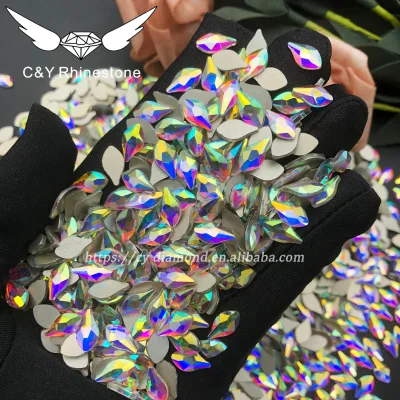
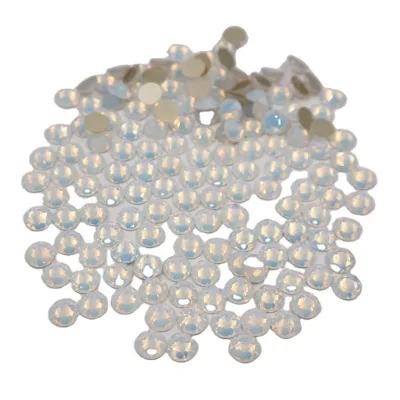
Crystal Ab Glass Loose Beads Glass Material Non-Hotfix Flat Back Rhinestones
$5.50 - $15.50
MOQ: 10 Pieces






Comprehensive Sourcing Guide
Strategic Sourcing Guide for Flatback Glass Rhinestones
Understanding Product Variants and Technical Specifications
The market for Flatback Glass Rhinestones is characterized by a diverse range of specifications that directly influence application suitability and aesthetic outcomes. When sourcing these decorative elements, buyers must first distinguish between the two primary technical configurations observed in current listings: non-hot-fix and hot-fix varieties. The non-hot-fix variants are defined by a flat back surface, often featuring a red plating layer, which requires the application of external adhesive for attachment. These are frequently categorized as loose rhinestones and are available in a wide array of sizes, specifically ranging from Ss3 up to Ss34, with specific standard increments including Ss4, Ss5, Ss6, Ss8, Ss10, Ss12, Ss16, Ss20, Ss30, and Ss34.
In contrast, hot-fix rhinestones are engineered with a pre-applied thermoplastic adhesive layer on the reverse side, allowing for application via heat-activated tools. These products are often described as having a "strong durable glue" backing and are marketed with quality grades such as "6A Hot Fix Rhinestones." The size specifications for hot-fix options typically span from Ss6 to Ss40, with common stock sizes including Ss6, Ss10, Ss16, Ss20, and Ss30. A critical technical differentiator lies in the facet cut, which determines the stone's light refraction and sparkle. Suppliers list specific cut configurations, such as the "2088 Cuts" which feature a complex arrangement of 8 big and 8 small facets, or simpler "14-16 Cuts" designs. The shape is consistently round across these categories, and the style is uniformly flatback, making them ideal for surface embellishment on various substrates.
Material Composition and Quality Grading
The core material for these products is explicitly identified as glass, distinguishing them from plastic or acrylic alternatives. Glass rhinestones offer superior optical clarity, higher refractive indices, and greater durability compared to synthetic polymers. The quality of the glass is often graded by manufacturers, with specific references to "6A" quality levels indicating a high standard of clarity and lack of internal inclusions. The manufacturing process involves precise cutting to achieve specific facet counts, such as the 2088 cut or 16-facet designs, which are essential for maximizing the "bling" effect.
Buyers should verify the consistency of the glass composition and the precision of the cutting process. While some listings mention "2088 Cuts" as a quality descriptor, others refer to the cut as a specification itself. The color options are extensive, ranging from standard white to a full spectrum of colored variations. The physical dimensions are standardized using the "Ss" (Stone Size) system, where a higher number generally indicates a larger diameter. For instance, Ss3 represents a very small stone, while Ss34 or Ss40 represents a significantly larger dimension. Understanding this sizing nomenclature is crucial for inventory management and design planning, as the visual impact changes drastically between Ss4 and Ss30.
Compliance, Certification, and Regulatory Standards
When sourcing glass rhinestones for international markets, particularly for applications involving children's products, textiles, or food-adjacent items, compliance with safety standards is paramount. The supply chain data indicates that products may carry certifications such as CE and RoHS, which are critical for entry into the European market. RoHS compliance ensures that the materials do not contain restricted hazardous substances, while CE marking indicates conformity with health, safety, and environmental protection standards. Additionally, some suppliers reference SGS certification, which implies third-party verification of product quality and safety.
However, it is important to note that certification status can vary by batch and specific product model. Buyers should not assume that every listing includes these certifications without explicit verification. The standard for the product itself is sometimes listed simply as "glass rhinestones," which is a material description rather than a regulatory standard. To mitigate risk, procurement teams must request current test reports and certificates of analysis for each order. This verification process ensures that the glass and any plating or adhesive layers meet the specific regulatory requirements of the destination country. For example, if the rhinestones are intended for garment decoration, the adhesive used in hot-fix variants must also be evaluated for toxicity and flammability.
Cost Drivers and Pricing Dynamics
The pricing of Flatback Glass Rhinestones is influenced by several variables, including the size of the stone, the complexity of the cut, the quantity ordered, and the specific supplier's operational costs. The observed price range in the market spans from $0.01 to $57.40 USD, a wide variance that reflects differences in product quality, packaging, and order volume. Smaller stones like Ss3 or Ss4 typically command lower unit prices due to the higher volume of pieces per weight, whereas larger stones like Ss34 or Ss40 are priced higher per piece but may offer better value per unit of surface area covered.
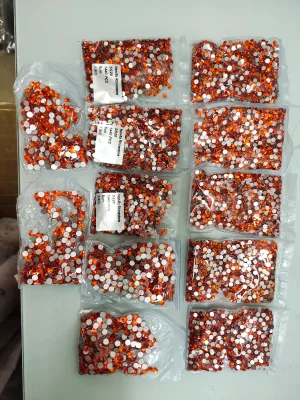
Minimum Order Quantities (MOQ) also play a significant role in the total cost of ownership. Listings show MOQs ranging from 1 unit up to 10,000 units, with a common baseline of 10 bags for loose rhinestones. Bulk purchasing often unlocks lower per-unit costs, but the buyer must balance this against storage costs and cash flow constraints. Packaging is another cost driver; products are typically packed in envelope bags or OPP bags, with specific counts such as 440 pieces per envelope or 1,440 pieces per bag. The packaging method affects the unit price and the ease of inventory handling. Additionally, the inclusion of free samples can reduce the initial cost of evaluation, though shipping costs for these samples may apply depending on the supplier's policy.
Typical Applications and Usage Scenarios
The versatility of Flatback Glass Rhinestones makes them suitable for a broad spectrum of industries and applications. The primary use cases identified include garment decoration, footwear embellishment, bag accessories, and nail art. In the fashion industry, these stones are used to add sparkle to dresses, jackets, and accessories. The non-hot-fix variants are particularly favored for nail art, where they are applied individually with adhesive to create intricate designs. The hot-fix variants are preferred for high-volume garment production, as they can be applied quickly using heat presses or specialized pens.
The "Flat Back" design is essential for these applications, as it allows the stones to sit flush against the surface of the material, providing a smooth finish that is comfortable to wear. The round shape and various color options allow designers to create custom patterns, logos, or abstract art. The durability of the glass ensures that the embellishments remain intact through washing and wear, provided the correct adhesive or heat-setting process is used. For nail art specifically, the small sizes (Ss3 to Ss10) are most common, while larger sizes are often used for statement pieces on bags or shoes. The "2088 Cuts" and similar high-facet designs are particularly popular for creating a premium, high-sparkle look that mimics the appearance of diamonds.
Supplier Evaluation and Procurement Logistics
Evaluating a supplier for Flatback Glass Rhinestones requires a careful assessment of their production capabilities, logistics, and communication standards. Key factors to consider include the supplier's location, with many operations based in China, specifically in regions like Guangdong. This location often indicates access to a robust supply chain for glass manufacturing and cutting equipment. Lead times are another critical metric, with typical delivery windows ranging from 3 to 7 days depending on the quantity ordered. However, buyers must verify these timelines as they can fluctuate based on production schedules and seasonal demand.
Payment terms and shipping methods are also vital components of the procurement process. Common payment methods include T/T (Telegraphic Transfer), Western Union, PayPal, and Money Gram, offering flexibility for different buyer preferences. Shipping is typically handled via major carriers such as DHL, UPS, FedEx, and TNT, ensuring reliable delivery to international destinations. Buyers should also inquire about the supplier's sample policy, as many offer free samples to facilitate quality verification before placing a bulk order. The ability to provide samples is a strong indicator of a supplier's confidence in their product quality. Furthermore, the consistency of the product model numbers, such as NHF102 or KT-HQ02, helps in tracking specific inventory and ensuring repeat orders match previous successful batches.
Quality Control and Long-Term Procurement Strategy
Establishing a robust quality control (QC) protocol is essential for maintaining the integrity of products made with Flatback Glass Rhinestones. Buyers should implement a multi-stage QC process that includes visual inspection of the facets, verification of the flatback surface for uniformity, and testing of the adhesive strength for hot-fix variants. The "2088 Cuts" and "16 Facets" specifications must be verified to ensure the stones meet the promised optical standards. Any deviation in the cut or the presence of chips and cracks can significantly degrade the final product's appearance.
For long-term procurement, building a relationship with a reliable supplier is more beneficial than constantly switching vendors. Consistency in the "6A" quality grade and the specific cut patterns ensures that the final products maintain a uniform look. Buyers should also consider the sustainability of the supply chain, particularly regarding the glass material and the adhesive components. While the current data does not specify environmental certifications beyond RoHS, future sourcing strategies should prioritize suppliers who can demonstrate a commitment to sustainable manufacturing practices. Regular audits of the supplier's production lines and adherence to standards like SGS can help mitigate the risk of quality issues. By focusing on these strategic elements, buyers can secure a steady supply of high-quality Flatback Glass Rhinestones that meet their design and operational requirements.
FAQs
What customization options are available for Flatback Glass Rhinestones?
Customization is available for these Flatback Glass Rhinestones to meet specific design needs. Buyers can select from various sizes ranging from Ss3 to Ss34 and choose between non-hot-fix and hot-fix styles with different facet cuts like 2088 or 16 facets.
Which certifications do Flatback Glass Rhinestones typically carry?
These products often carry CE, RoHS, and SGS certifications to ensure safety and quality compliance. Buyers should verify specific test reports for each batch, as certification status can vary by product model and supplier location in China.
How long does delivery take for Flatback Glass Rhinestones orders?
Delivery time is typically around 3 to 7 days depending on the order quantity. Some listings specify a faster window of 3 to 5 days for certain quantities, with shipping handled via DHL, UPS, or FedEx.
What is the minimum order quantity for Flatback Glass Rhinestones?
The minimum order quantity varies from 1 unit up to 10,000 units depending on the supplier. A common baseline for loose rhinestones is 10 bags, though some vendors accept single unit orders for evaluation purposes.
Can I get free samples of Flatback Glass Rhinestones before ordering?
Yes, free samples are available for many flatback glass rhinestone listings to facilitate quality verification. Buyers should note that while the samples themselves are free, shipping costs may apply depending on the supplier's specific policy.
What payment methods are accepted for flatback glass rhinestone purchases?
Accepted payment methods include T/T, Western Union, PayPal, Money Gram, and Bank Transfer. These options provide flexibility for international buyers, allowing secure transactions through various financial channels.
Which sizes are available for Flatback Glass Rhinestones?
Available sizes range from Ss3 to Ss40, including standard increments like Ss4, Ss6, Ss10, Ss16, Ss20, Ss30, and Ss34. The specific size availability depends on whether the product is a non-hot-fix loose stone or a hot-fix variant.
Where are Flatback Glass Rhinestones manufactured?
These products are manufactured in China, with specific production hubs located in Guangdong. This location provides access to a robust supply chain for glass manufacturing and cutting equipment essential for high-quality rhinestone production.