Source Foldable 2 in 1 Laptop for business, education, and travel
Compare 30 Foldable 2 in 1 Laptop options featuring Intel processors, Windows OS, and various storage capacities. Buyers can evaluate models with integrated graphics, 3G modules, and fingerprint sensors for diverse professional needs.
Key considerations
Products List


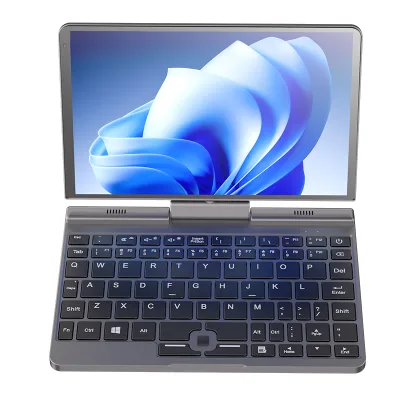
Mini Laptop Notebooks Netbook Laptop PC 14.1 Inch Customized Laptop Computer
$205.00 - $300.00
MOQ: 1 Pieces


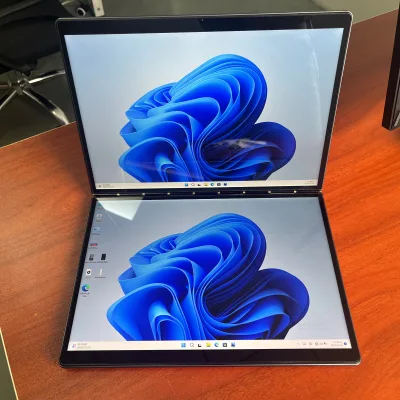
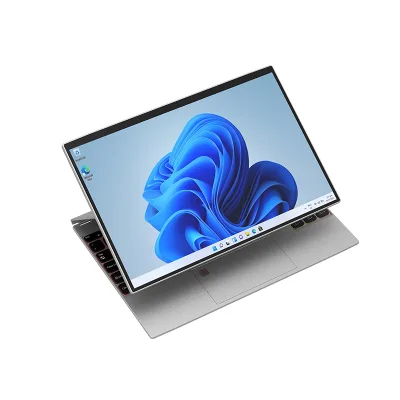
High Quality 15.6 Inch Portable Notebook Laptop with Touch ID Function
$205.00 - $300.00
MOQ: 1 Pieces


Dust-Proof Waterproof and Drop-Resistant Folding Portable Reinforced Laptop
$4000.00 - $5000.00
MOQ: 1 Pieces

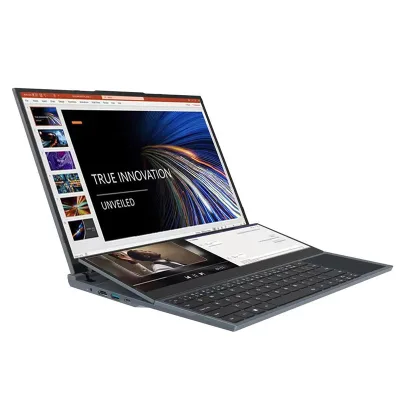
15.6-Inch Rugged Triple-Screen Portable Laptop Supports Expansion and Customization
$3000.00 - $4500.00
MOQ: 1 Pieces





Comprehensive Sourcing Guide
Strategic Sourcing Guide for Foldable 2-in-1 Laptop Solutions
The global demand for versatile computing hardware has accelerated the adoption of foldable 2-in-1 laptops, devices that merge the portability of a tablet with the processing power of a traditional notebook. For B2B procurement professionals, sourcing these units requires a nuanced understanding of component integration, form factor stability, and supply chain reliability. This guide synthesizes available market data and technical specifications to provide a framework for evaluating potential suppliers and defining precise procurement requirements. The focus remains on evidence-based criteria derived from current product listings and industry standards, ensuring that procurement decisions are grounded in verifiable facts rather than speculative marketing claims.
Technical Architecture and Component Verification
When evaluating foldable 2-in-1 laptops, the internal architecture dictates both performance and durability. The core processor brand is a primary differentiator, with Intel-based systems frequently appearing in the mid-to-high-end segments. Specific configurations observed in the market include the Intel N100 and the i7-1265u, offering a spectrum of performance from energy-efficient daily computing to high-performance multitasking. Buyers must verify the specific CPU generation and core count, as the market lists options ranging from quad-core configurations to more advanced architectures.
Memory and storage are equally critical. The RAM capacity in viable units typically ranges from 8GB to 16GB for standard configurations, with some high-end models supporting up to 128GB or 256GB. Storage solutions have shifted significantly toward solid-state drives (SSD), with capacities spanning from 128GB to 1TB. The interface type for these storage drives is predominantly NVMe M.2, which offers superior read/write speeds compared to legacy SATA interfaces. However, procurement teams must be vigilant, as some listings may still reference older standards or mixed configurations. The operating system is generally Windows, optimized for the touch and pen input capabilities inherent to 2-in-1 designs.
Display specifications are a defining characteristic of the foldable form factor. Screen sizes commonly fall within the 14-inch to 15-inch range, balancing portability with usability. The resolution is typically 1920x1080, providing a Full HD experience suitable for business applications. While some units are marketed as widescreen, buyers should confirm the aspect ratio, as specifications vary between 16:9 and 4:3 formats depending on the manufacturer's design philosophy. The weight of these devices is a crucial factor for mobile professionals, with observed ranges between 1.5 kg and 2.0 kg.
Form Factor and Connectivity Specifications
The physical design of a 2-in-1 laptop must accommodate the mechanical stress of folding while maintaining structural integrity. Dimensions are a key metric for logistics and workspace planning. Standard chassis dimensions for these units often approximate 358mm in length and 234mm in width, with a thickness around 18mm. This compact profile is essential for portability but requires precise engineering to ensure the hinge mechanism does not compromise the device's durability.
Connectivity features are essential for modern enterprise environments. Built-in Bluetooth is a standard inclusion, facilitating wireless peripherals and data transfer. The presence of a 3G module varies significantly; some models are equipped with built-in 3G capabilities for remote connectivity, while others are designed without this module, relying on Wi-Fi or external dongles. Procurement teams must explicitly define this requirement during the sourcing phase, as the inclusion of cellular hardware impacts both cost and power consumption.
Additional features such as fingerprint sensors are becoming common for enhanced security, though some budget-friendly or specific industrial models may omit this feature in favor of other authentication methods. Similarly, the support for Miracast (Mira Cast) allows for wireless screen mirroring, a valuable feature for presentations and collaborative work. The installation method is typically mobile, meaning the device is designed for frequent transport rather than fixed desktop integration.
Compliance, Certification, and Origin Verification
In the B2B sector, verifying the origin and compliance of electronic components is non-negotiable. The majority of these devices originate from manufacturing hubs in China, with specific production centers noted in locations such as Shen Zhen. This geographic concentration allows for efficient supply chains but necessitates rigorous due diligence regarding labor standards and environmental compliance.
Buyers must scrutinize the product standards and packaging. Standard packaging often includes a gift box for retail-ready units or a carton box for bulk industrial shipments. The physical dimensions of the product itself, such as 358mm234mm18mm, serve as a standard reference for shipping calculations and storage requirements. For storage components specifically, the standard size is often 2.5 inches, while other internal modules may adhere to dimensions like 44mm44mm32mm.
Certification status is a critical area where buyers must exercise caution. While specific certifications are not always explicitly listed in general product summaries, the presence of a 1-year warranty is a common indicator of manufacturer confidence. However, buyers should not assume compliance with international safety or environmental standards (such as CE, FCC, or RoHS) without explicit verification from the supplier. The absence of a specific certification claim in a product listing does not imply non-compliance, but it does require the buyer to request documentation before finalizing a purchase order.
Cost Drivers and Pricing Dynamics
The pricing of foldable 2-in-1 laptops is influenced by a complex interplay of specifications, customization options, and order volume. The observed price range in the market is extensive, spanning from $2 to $5,000. This wide variance reflects the difference between basic entry-level models and high-performance configurations with premium components. The lower end of the spectrum typically includes units with lower RAM, smaller storage capacities, and less powerful processors, while the upper end encompasses models with 128GB RAM, 1TB SSDs, and top-tier Intel processors.
Minimum Order Quantity (MOQ) is another significant cost driver. The market observes MOQs ranging from 1 unit to 3,000 units. For small businesses or pilot programs, suppliers offering an MOQ of 1 or low quantities are essential. Conversely, large-scale enterprise deployments can leverage higher volume orders to negotiate better unit economics. Customization is a key factor in pricing; suppliers offering OEM/ODM services, including client logo placement and specific hardware configurations, often have different pricing structures compared to off-the-shelf models.
Supplier Evaluation and Quality Assurance
Selecting the right supplier requires a multi-faceted evaluation process. The brand identity of the supplier is often listed as "OEM ODM Clients Logo," indicating a focus on white-label manufacturing. This suggests that the supplier is capable of producing devices under the buyer's brand, but it also means the buyer must verify the underlying manufacturing quality. The product status is consistently listed as "New," ensuring that buyers are not purchasing refurbished or used units unless explicitly stated.
Quality control measures should be a priority during the supplier selection phase. Buyers should request test results for critical components, such as the hinge durability, screen flexibility, and battery life. While specific test data is not always publicly available, the warranty period serves as a proxy for quality assurance. A standard 1-year warranty is common, but buyers should negotiate extended terms for large orders. Additionally, the interface type, such as NVMe M.2, should be verified to ensure compatibility with existing enterprise infrastructure.
Typical Applications and Use Cases
Foldable 2-in-1 laptops serve a diverse range of applications, from general office work to specialized industrial tasks. The primary application is for desktop and laptop environments, offering flexibility for users who need to switch between typing and touch modes. The presence of a built-in 3G module in some models makes them suitable for field workers who require constant connectivity. The quad-core processor and ample RAM capacity support demanding applications such as video editing, data analysis, and multitasking.
The device's portability and screen size make it ideal for sales professionals, educators, and healthcare workers who need to access information on the go. The support for Miracast enhances its utility in meeting rooms, allowing for seamless presentation sharing. However, the absence of a fingerprint sensor in some models may limit their suitability for high-security environments unless alternative authentication methods are implemented.
Long-Term Procurement Considerations
Sourcing foldable 2-in-1 laptops is not a one-time transaction but a strategic decision with long-term implications. Buyers must consider the lifecycle of the device, including the availability of replacement parts and software support. The operating system, typically Windows, requires regular updates to maintain security and performance. The warranty period of 1 year is a baseline; buyers should explore options for extended warranties or service level agreements (SLAs) that cover hardware failures and technical support.
Inventory management is another critical consideration. With a wide range of specifications available, from 8GB to 128GB RAM and 128GB to 1TB storage, buyers must align their inventory with specific user needs to avoid overstocking or understocking. The customization options allow for tailored solutions, but they also introduce complexity in supply chain management. Buyers should establish clear communication channels with suppliers to ensure that custom orders are fulfilled accurately and on time.
In conclusion, sourcing foldable 2-in-1 laptops requires a balance of technical precision, supplier diligence, and strategic planning. By focusing on verified specifications, understanding cost drivers, and prioritizing quality assurance, B2B buyers can secure reliable solutions that meet their organizational needs. The market offers a wide array of options, but success lies in the ability to navigate the complexities of component selection and supplier evaluation.
FAQs
What processor options are available for Foldable 2 in 1 Laptop units?
Available processors include the Intel N100 and the i7-1265u. These options provide a range from energy-efficient daily computing to high-performance multitasking capabilities for business users.
Which RAM and storage configurations can be selected for these devices?
RAM capacities range from 8GB to 16GB, with some models supporting up to 128GB or 256GB. Storage options include SSDs from 128GB to 1TB using NVMe M.2 interfaces for faster data access.
Can buyers find foldable 2 in 1 laptops with built-in 3G modules?
Some models feature a built-in 3G module for remote connectivity, while others are designed without this module. Buyers must explicitly define this requirement as it varies significantly between product listings.
What are the standard dimensions and weight for these laptops?
Standard chassis dimensions are approximately 358mm by 234mm with a thickness of 18mm. The weight typically falls between 1.5 kg and 2.0 kg, ensuring portability for mobile professionals.
How does customization affect the minimum order quantity for these units?
Customization is available for orders ranging from 1 to 3,000 units. Suppliers offering OEM services for client logos often have different pricing structures compared to off-the-shelf models.
What warranty coverage is typically provided for foldable 2 in 1 laptops?
A standard 1-year warranty is commonly provided by manufacturers. Buyers should verify this baseline and consider negotiating extended terms for large enterprise deployments to ensure hardware reliability.