Find Foldable Adjustable Bread Slicer for Bakery, Cafe, and Retail
Source 30 Foldable Adjustable Bread Slicer units from verified Chinese manufacturers. Compare specifications including power, weight, and dimensions for bakery, cafe, and retail applications.
Key considerations
Products List




Efficient Continuous Toast Bread Slicer for Commercial Use in Bakeries
$4428.57 - $5508.32
MOQ: 1 Pieces





Comprehensive Sourcing Guide
Strategic Sourcing Guide for Foldable Adjustable Bread Slicers
Understanding Product Variants and Core Specifications
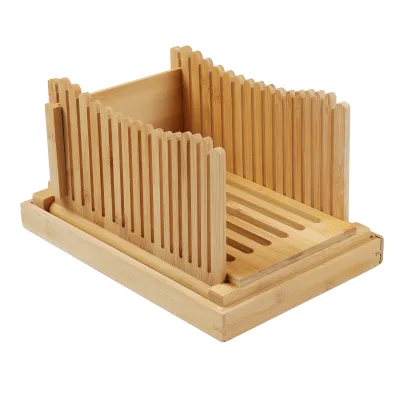
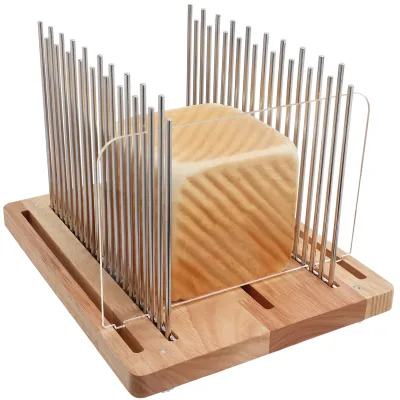
When sourcing a Foldable Adjustable Bread Slicer, buyers must first distinguish between the distinct product categories often conflated in general market listings. The available data reveals two primary operational profiles: compact, foldable storage solutions and industrial-grade electric slicing machinery. The term "foldable" in this context often refers to a specific design standard where the unit features a collapsible structure to optimize storage space, with dimensions such as 35.4×19.1×5.4 cm or 35.4×22×17.5 cm observed in specific models. These compact units are frequently packaged in gift boxes containing 6 to 10 sets, with net weights ranging from 1.15 kg to 1.35 kg per unit. The packaging itself is substantial, with box weights reaching up to 10.32 kg, indicating the inclusion of multiple components or accessories within the carton.
In contrast, the industrial segment focuses on high-volume production capabilities. These units, such as the model identified as HT-QGJ303B, are designed for heavy-duty application in commercial bakeries. The technical specifications for these machines differ significantly, featuring a robust stainless steel construction to ensure hygiene and durability. The physical footprint of these industrial units is considerably larger, with standard dimensions reaching 1320×810×1320 mm. The weight of these machines varies widely depending on the motor and structural components, with observed weights ranging from 47 kg for lighter commercial units to 270 kg for heavy-duty industrial models. The "adjustable" aspect of the core keyword is critical here; the saw blade height is explicitly noted as adjustable, allowing operators to customize slice thickness according to specific product requirements.
The power requirements for these industrial slicers are equally diverse. Buyers may encounter units operating on 220V with a power consumption of 370W, suitable for smaller operations, while larger facilities may require 380V systems with power ratings up to 0.95KW. The output capacity is a key differentiator, with some models capable of processing 20-40 pieces of 6-10 inch cakes per minute, while others focus on whole plate processing at 5-10 pieces per minute. Understanding these distinct specifications is the first step in aligning procurement with actual operational needs, as confusing a compact storage unit with an industrial slicer can lead to significant procurement errors.
Technical Performance and Operational Capabilities
The operational efficiency of a bread slicer is defined by its power source, voltage compatibility, and mechanical precision. The supplied data indicates that these machines are electrically powered, utilizing either single-phase 220V or three-phase 380V power sources. This distinction is vital for international procurement, as the electrical infrastructure of the buyer's facility must match the machine's voltage requirements to prevent damage or operational failure. The power ratings observed range from 0.25kW to 0.95kW, suggesting a wide spectrum of energy consumption based on the intended throughput.
A critical technical feature for adjustable bread slicers is the blade mechanism. The saw blade height is adjustable, a feature that directly impacts the versatility of the equipment. This adjustability allows the machine to handle various bread types, from standard loaves to specialized cakes, ensuring uniform slice thickness. The material composition is predominantly stainless steel, a standard requirement for food processing equipment to meet hygiene regulations and resist corrosion. The condition of the products listed is consistently "New," ensuring that buyers receive equipment in optimal working order without prior wear.
Furthermore, the application scope of these machines extends beyond simple bread slicing. The data notes applications for both bread and cake, indicating a dual-purpose capability. Some models are specifically categorized under "Bakery Equipment," highlighting their role in professional baking environments. The absence of a timing device in certain models suggests that operation is manual or relies on the operator's rhythm, whereas others may integrate more complex control systems. The "Press Series" designation, such as the Fifth series, may indicate a specific generation or mechanical design lineage, though the exact implications of this series number require direct verification with the manufacturer.
Compliance, Certification, and Safety Standards
Ensuring compliance with international safety and food-grade standards is a non-negotiable aspect of sourcing industrial food machinery. While specific certification bodies are not explicitly listed in the provided data, the material specification of stainless steel implies adherence to general food safety hygiene standards. Buyers must verify that the equipment meets the specific regulatory requirements of their target market, such as CE marking for Europe or NSF certification for the United States. The origin of the products is primarily China, with specific manufacturing locations noted in Guangzhou and Henan. This geographic information is useful for logistics planning but does not inherently guarantee compliance; buyers must request current certification documents from the supplier.
The packaging standards also play a role in compliance and safety. The data indicates the use of "Fumigation-Free Wooden Cases" and "Wooden Plywood Strips and Cartons" for industrial units. This is a critical detail for international shipping, as many countries have strict regulations regarding wooden packaging to prevent the spread of pests. The use of fumigation-free materials simplifies the customs clearance process and reduces the risk of shipment delays. Additionally, the standard dimensions provided, such as 760×550×640 mm or 1320×810×1320 mm, serve as reference points for facility planning. Buyers should verify that these dimensions align with their available floor space and that the equipment can be maneuvered through doorways and loading docks.
Cost Drivers and Pricing Dynamics
The pricing of foldable adjustable bread slicers is influenced by a complex interplay of factors, including material costs, power specifications, and production volume. The observed price range in the market spans from $1 to $7,725, a variance that reflects the distinction between compact, low-cost units and high-end industrial machinery. The lower end of this spectrum likely corresponds to the compact, foldable storage-oriented units or basic manual slicers, while the upper end represents heavy-duty electric models with advanced features and higher power ratings.
The Minimum Order Quantity (MOQ) is another significant cost driver. The data shows an MOQ range of 1 to 500 units. An MOQ of 1 allows for small-scale procurement or trial orders, which is beneficial for businesses testing the market or those with limited capital. Conversely, an MOQ of 500 suggests that the supplier is targeting large-scale distributors or manufacturing plants. Buyers should be aware that higher order volumes often result in lower unit costs, but this requires a commitment to significant upfront investment. The packaging quantity, ranging from 6 to 10 sets per box, also affects the total cost and logistics, as it determines the number of shipments required to fulfill an order.
Supplier Evaluation and Origin Verification
When evaluating potential suppliers, the origin of the product is a key factor. The data identifies China as the primary origin, with specific manufacturing hubs in Guangzhou and Henan. Guangzhou is a major industrial center known for its manufacturing capabilities, while Henan is also a significant production base. Buyers should verify the specific factory location to ensure it aligns with their expectations for quality and logistics. The "Customized" attribute is available for some products, indicating that suppliers may offer tailored solutions. However, the "Non-Customized" attribute is also present, suggesting that standard models are widely available.
Buyers must conduct thorough due diligence on supplier capabilities. This includes verifying the supplier's ability to meet the specific power and voltage requirements of the target market. The presence of different power ratings (0.25kW to 0.95kW) and voltages (220V to 380V) indicates that suppliers may offer multiple configurations. Buyers should confirm which configurations are available for their specific order. Additionally, the "Condition: New" attribute confirms that the products are not refurbished, but buyers should still request proof of newness, such as serial numbers or manufacturing dates, to ensure they are receiving brand-new equipment.
Quality Control and Long-Term Procurement Considerations
Quality control is paramount when sourcing food processing equipment. The use of stainless steel is a strong indicator of quality, but buyers should request material certificates to confirm the grade of steel used. The "Foldable Design" standard, with specific dimensions provided, suggests a focus on space efficiency, but buyers must verify the durability of the folding mechanism. Repeated folding and unfolding can lead to wear and tear, so the structural integrity of the hinges and locking mechanisms should be tested.
Long-term procurement considerations include maintenance and spare parts availability. The "Adjustable" saw blade height implies that the blade may need replacement or sharpening over time. Buyers should inquire about the availability of spare parts, such as blades and motors, and the lead time for their delivery. The "Without Timing Device" feature in some models suggests a simpler design, which may reduce maintenance needs but also limits automation capabilities. Buyers should assess whether the level of automation required by their operation matches the features of the available models.
Finally, the packaging and shipping conditions are critical for long-term procurement. The use of "Fumigation-Free Wooden Cases" is a positive indicator for international shipping, but buyers should ensure that the packaging is robust enough to protect the equipment during transit. The weight of the box, ranging from 8.6 kg to 10.32 kg for compact units and significantly higher for industrial models, affects shipping costs and handling requirements. Buyers should factor these logistics costs into their total cost of ownership analysis to ensure a sustainable procurement strategy.
Comparative Analysis of Product Models
To facilitate decision-making, the following table summarizes the key differences between the observed product models based on the supplied data. This comparison highlights the trade-offs between compact storage solutions and industrial-grade machinery.
| Feature | Compact Foldable Unit (W156/W156-A) | Industrial Slicer (HT-QGJ303B) | Heavy-Duty Model |
|---|---|---|---|
| Primary Application | Bread, Cake | Bread, Cake | Bread, Cake |
| Power Source | Electric | Electric | Electric |
| Voltage | Not Specified | 220V / 380V | 380V |
| Power Rating | Not Specified | 370W / 0.95KW | 0.25KW |
| Weight | 1.15kg - 1.35kg | 47kg - 270kg | 50kg |
| Dimensions | 35.4×19.1×5.4 cm | 1320×810×1320 mm | 760×550×640 mm |
| Material | Not Specified | Stainless Steel | Stainless Steel |
| Packaging | Gift Box (6-10 Sets) | Fumigation-Free Wooden Case | Wooden Plywood Strips |
| Adjustability | Foldable Design | Saw Blade Height Adjustable | Saw Blade Height Adjustable |
| MOQ | 1 - 500 | 1 | 1 |
This table illustrates that while compact units offer significant space savings and lower weight, they lack the power and capacity of industrial models. The industrial models, with their stainless steel construction and adjustable blades, are better suited for high-volume production environments. Buyers must carefully weigh these factors against their specific operational requirements to make an informed procurement decision.
FAQs
What are the dimensions of the foldable bread slicer gift box?
The gift box dimensions are 35.4 by 19.1 by 5.4 cm for one model and 35.4 by 22 by 17.5 cm for another. These compact units feature a foldable design to optimize storage space in commercial bakeries.
How much does the industrial bread slicer model weigh?
Industrial bread slicer models weigh between 47 kg and 270 kg depending on the specific configuration. Heavy-duty units like the HT-QGJ303B variant reach 50 kg while larger commercial machines can weigh up to 270 kg.
Can the saw blade height be adjusted on these machines?
Yes, the saw blade height is explicitly adjustable to customize slice thickness for various bread types. This feature allows operators to handle different loaf sizes and ensure uniform slicing for both bread and cake applications.
What power voltage options are available for the slicer?
Available voltage options include 220V for smaller operations and 380V for larger industrial facilities. Buyers must ensure their facility infrastructure matches the specific voltage requirement to prevent operational failure or equipment damage.
Which material is used to construct the bread slicer body?
The bread slicer body is constructed from stainless steel to ensure hygiene and durability. This material resists corrosion and meets general food safety hygiene standards required for professional bakery equipment in commercial environments.
What is the minimum order quantity for these bread slicers?
The minimum order quantity ranges from 1 unit for trial orders up to 500 units for large distributors. Buyers can select lower MOQs for testing the market or commit to higher volumes for reduced unit costs.
How is the industrial bread slicer packaged for shipping?
Industrial units are packaged in fumigation-free wooden cases or wooden plywood strips and cartons. This packaging simplifies customs clearance and reduces the risk of shipment delays while protecting the heavy machinery during transit.